
Lone Ranch Beach
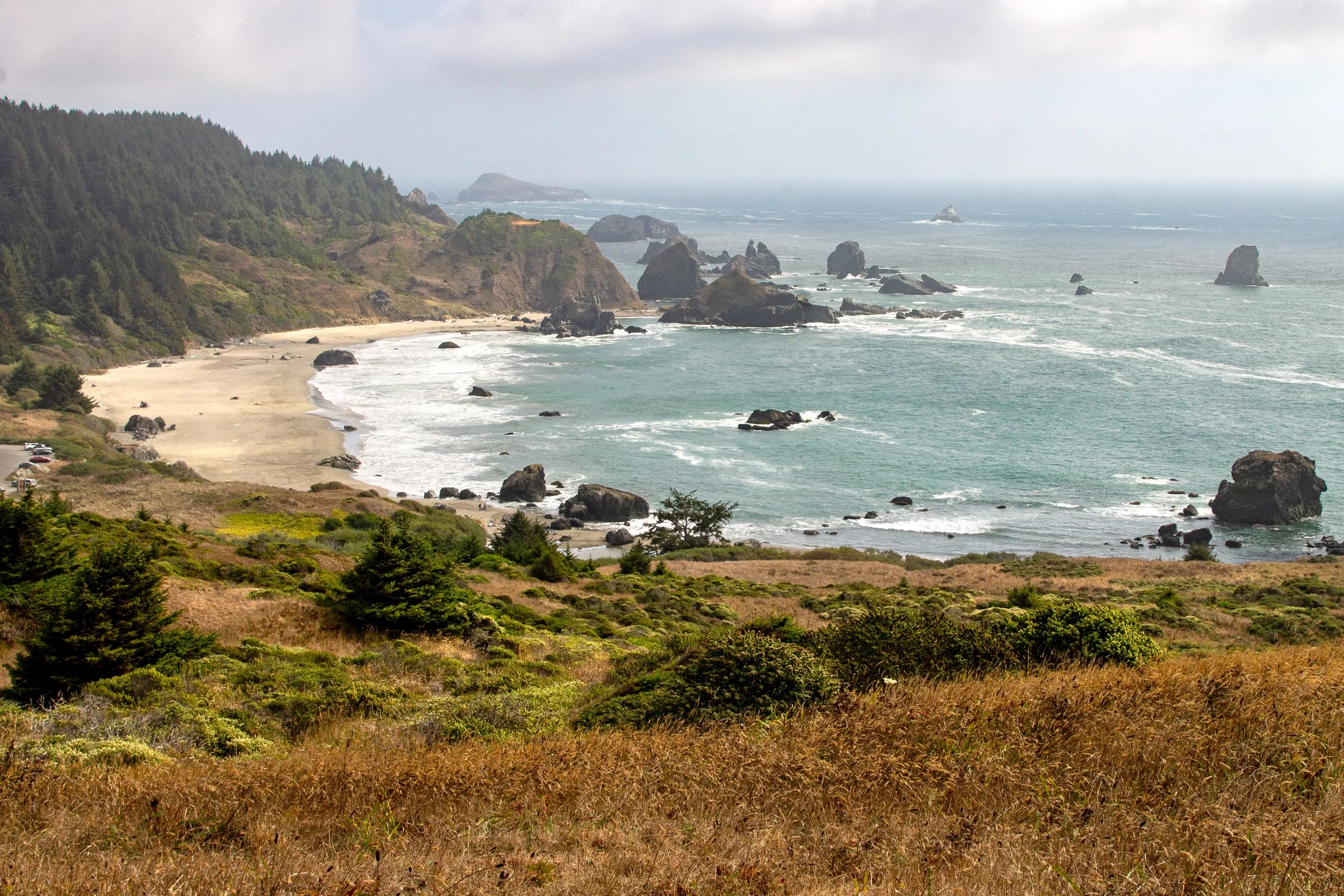
For all the miles of stunning coastline in the Samuel Boardman Corridor, it’s not that easy to get down to the ocean. Two beaches in this remote stretch of the southern Oregon Coast are accessible by car. My favorite of them is Lone Ranch Beach, a sea stack-dotted wonderland that feels like a private world. You can search for agates, visit the hidden bonus beach area, or take the overgrown hiking trail up to Cape Ferrelo. Mostly, though, it’s a place to relax and enjoy the beauty of the ocean in (relative) solitude. Here’s everything you need to know about visiting Lone Ranch Beach.
Lone Ranch Beach
Know before you go
Cost: Parking at Lone Ranch Beach is free.
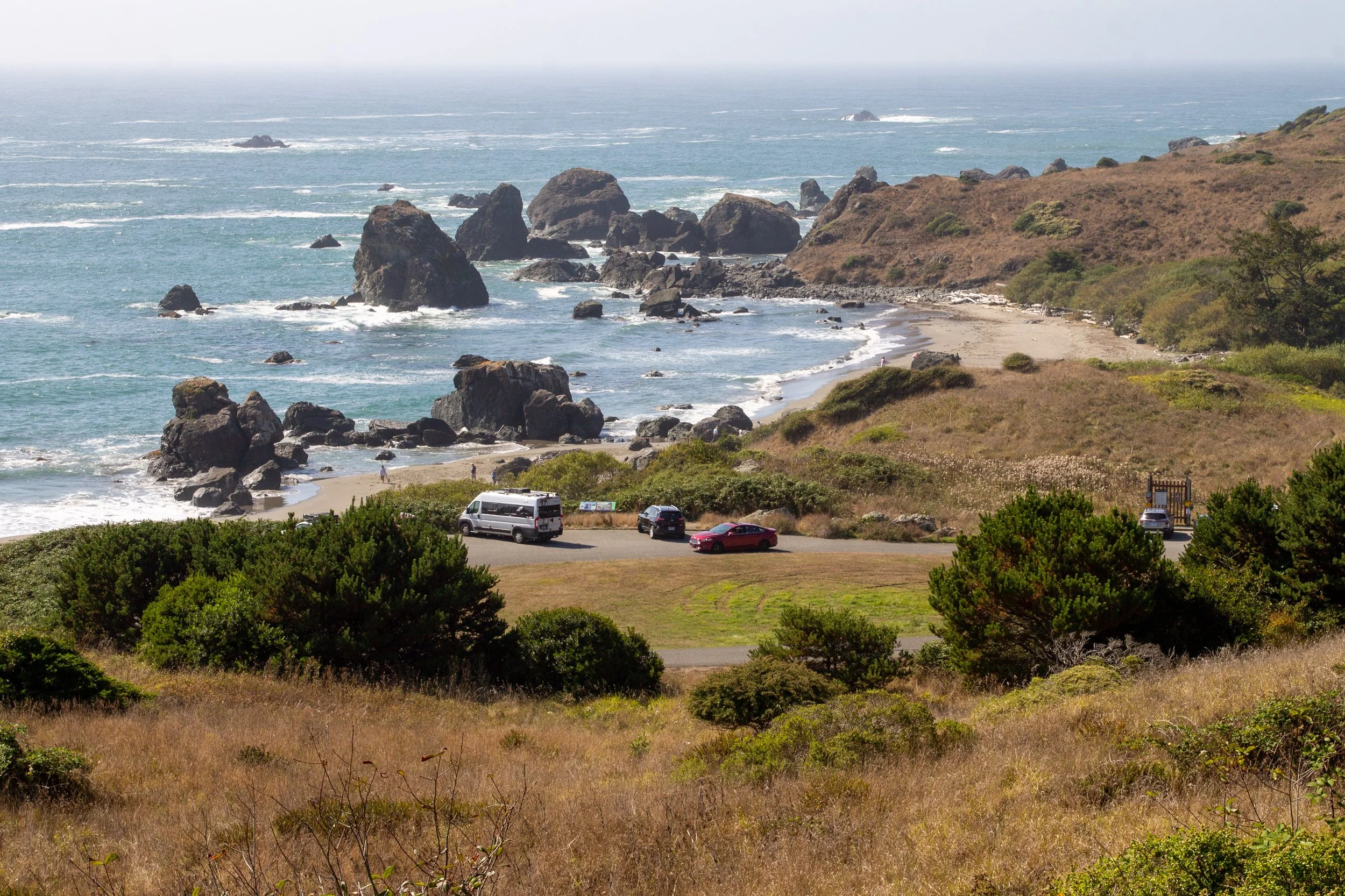
Parking: The parking lot is paved and in good condition. It’s no problem in a low-clearance vehicle. I wouldn’t expect it to fill up, even at popular times.
Restrooms are next to the parking lot.
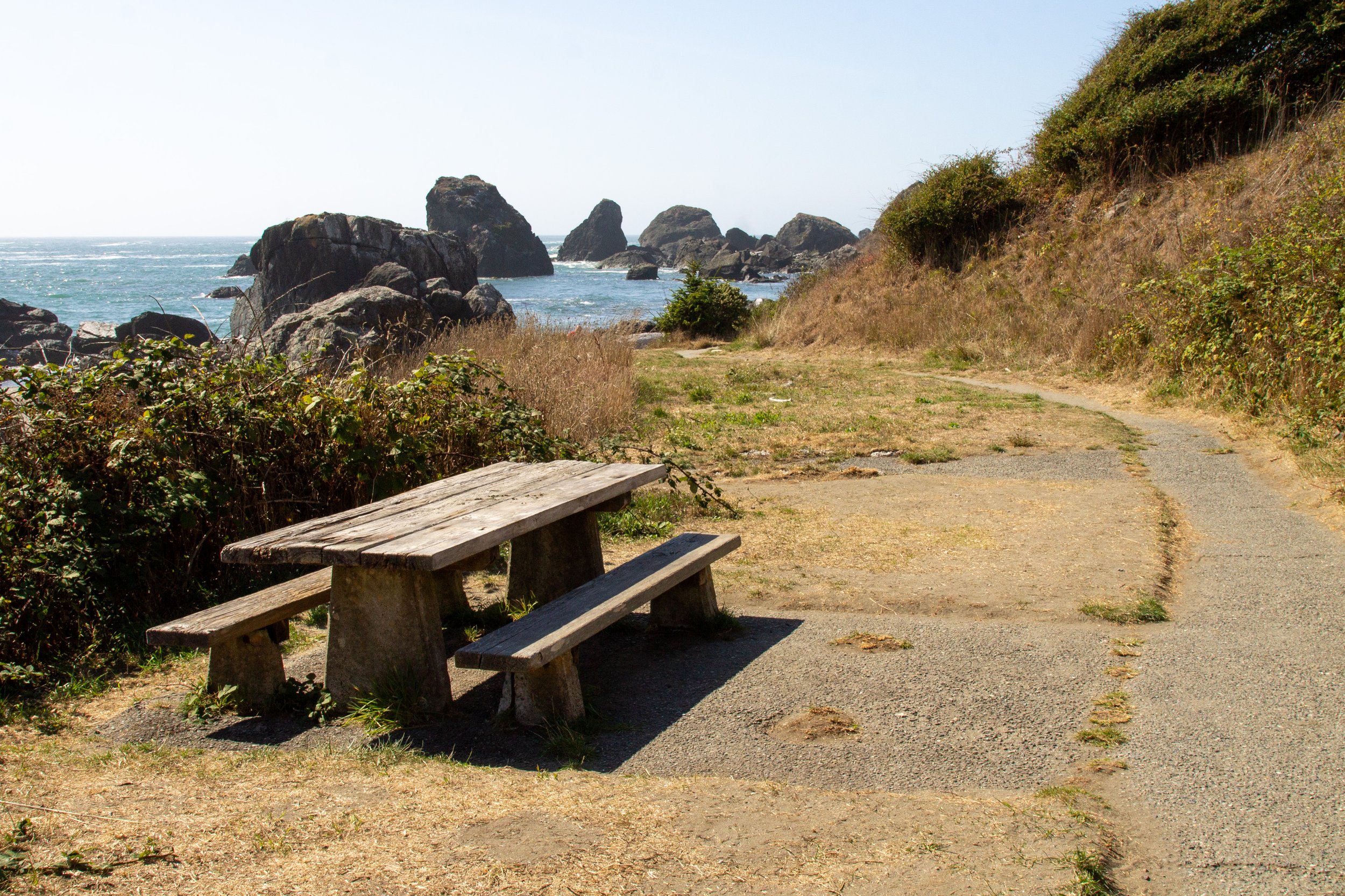
Picnic tables are along the beach access trail. They’re in bad shape. On my last visit, at least one still seemed intact enough for a picnic.
Dogs are welcome on the beach.
The last table standing
Beach access and picnic area
Lone Ranch Beach is the most convenient beach access in the Samuel Boardman Corridor. It’s one of only two beaches that you can visit without hiking. The other, Whaleshead Beach, requires a slightly longer drive on a bumpier road. I think Lone Ranch Beach is prettier of the two, with more sea stacks and more hidden corners to explore.
Beach access trail
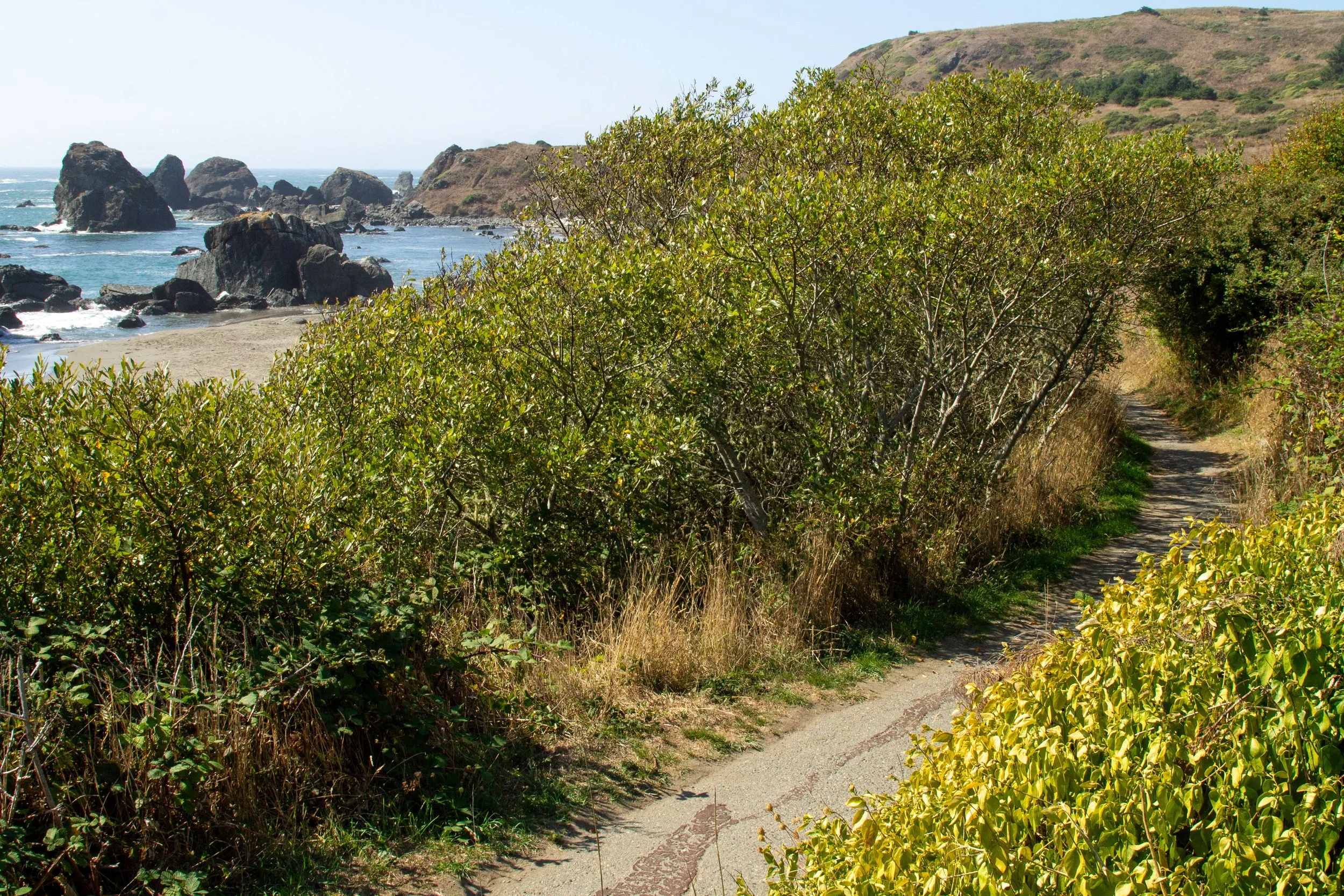
From the parking lot, a short access trail leads to the beach. It’ll take you past the picnic area. I’ve seen other guides mention a row of tables overlooking the ocean, which was true at some point. Today, the tables with beach views are mostly rubble. One of them could still be called table-shaped when I last visited. A couple more are tucked back in the trees, less scenic but usable. I ate my lunch on a rock on the beach instead. Past the picnic area, the access trail ends at the north end of Lone Ranch Beach.
Lone Ranch Beach
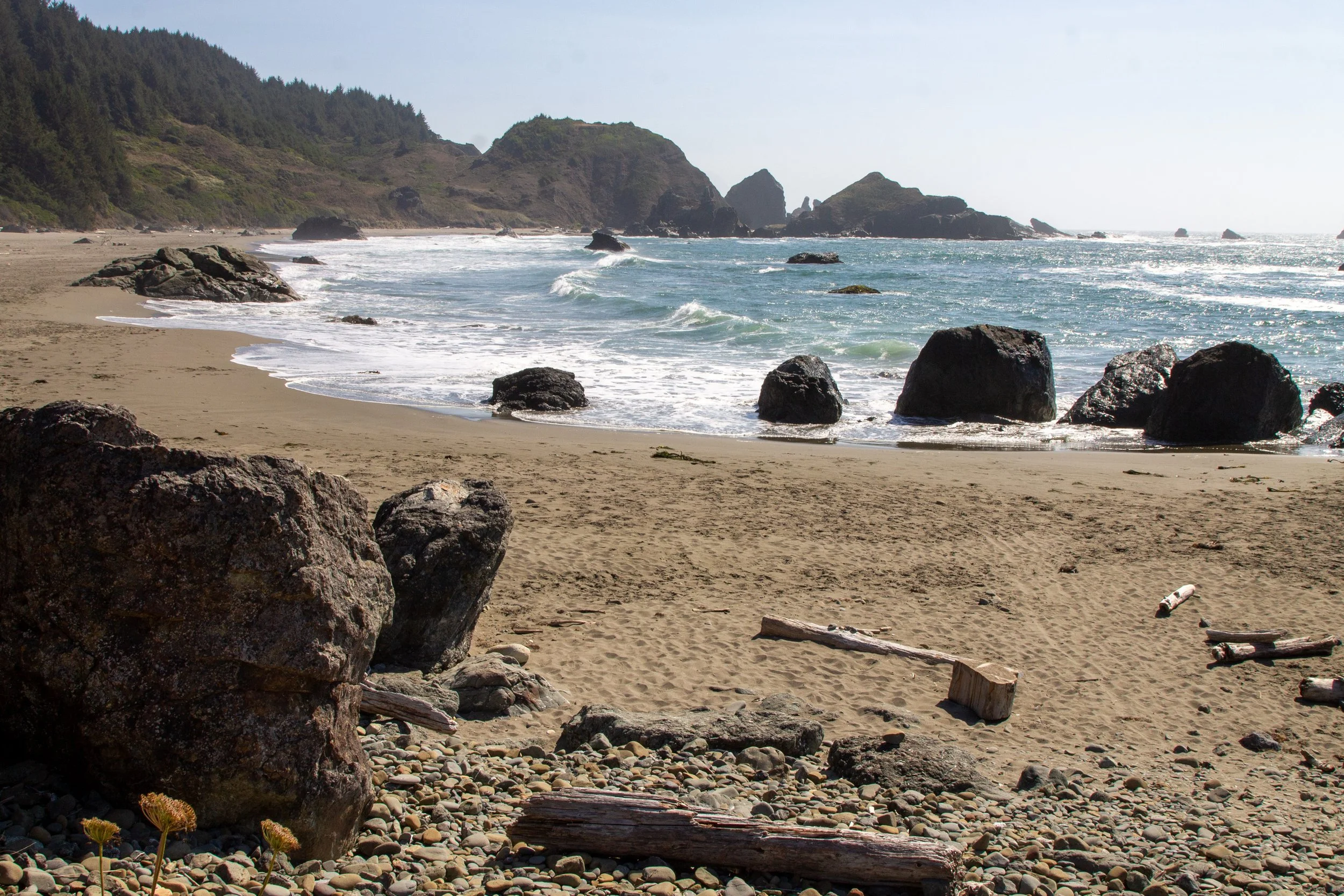
On the beach
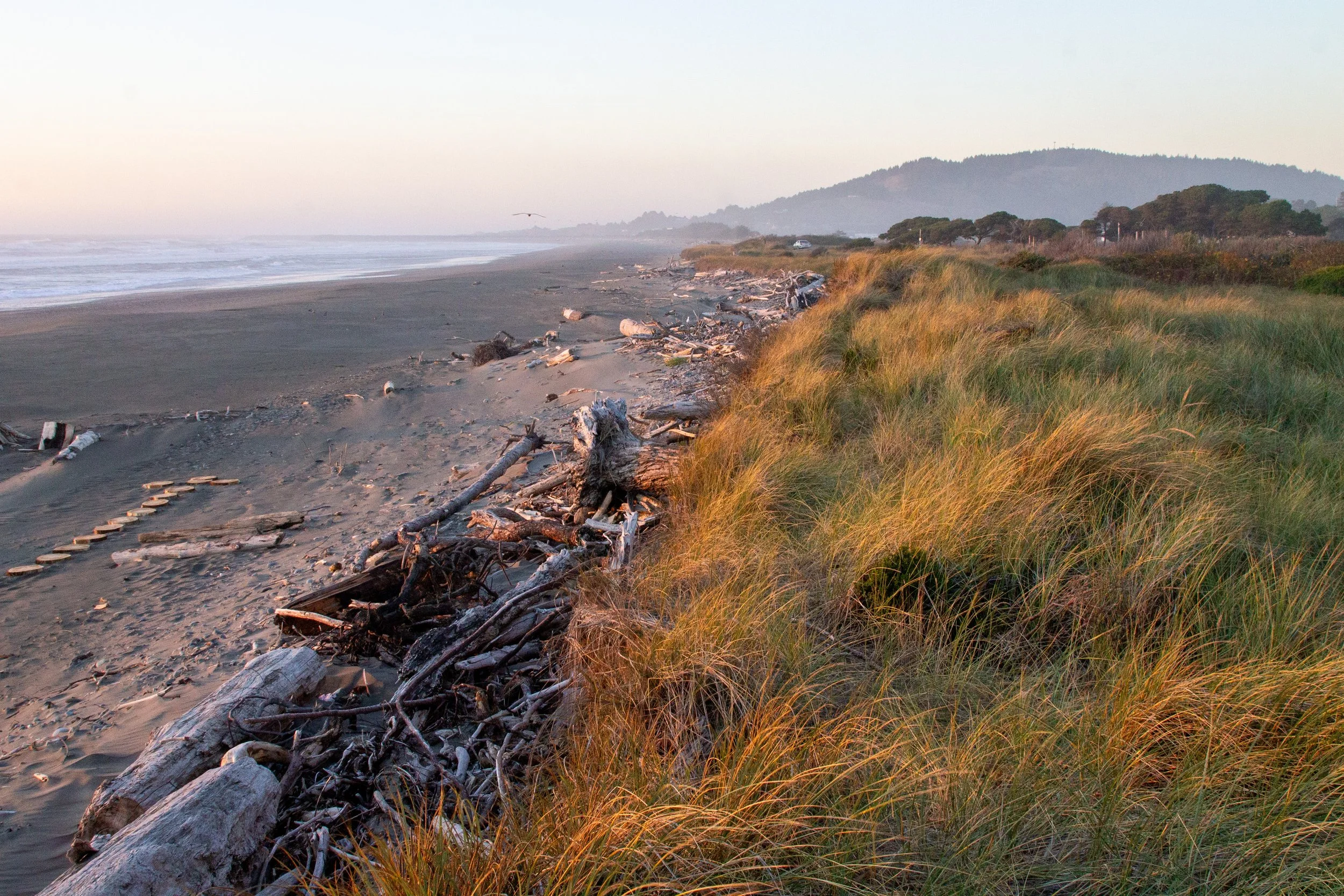
Lone Ranch Beach is a sandy crescent with a border of cobbles and driftwood. It sits beneath steep coastal bluffs, the most prominent of which is Cape Ferrelo at the north end. Two creeks, Lone Ranch Creek and Ram Creek, flow across it. Both are easy to cross without getting wet feet. It’s the kind of place that would be packed if it were any closer to a city. As it is, you’ll probably be one of about four other people on the beach, even on a beautiful summer day. The many rocks and sea stacks around the shoreline add significantly to its charm. They’re part of the Yolla Bolly terrane, a hodgepodge of rock types on the scale of 100-ish million years old. Look for mussels, anemones, and sea stars on them at low tide. At high tide, waves crash against the rocks, while still leaving enough sand for a stroll.
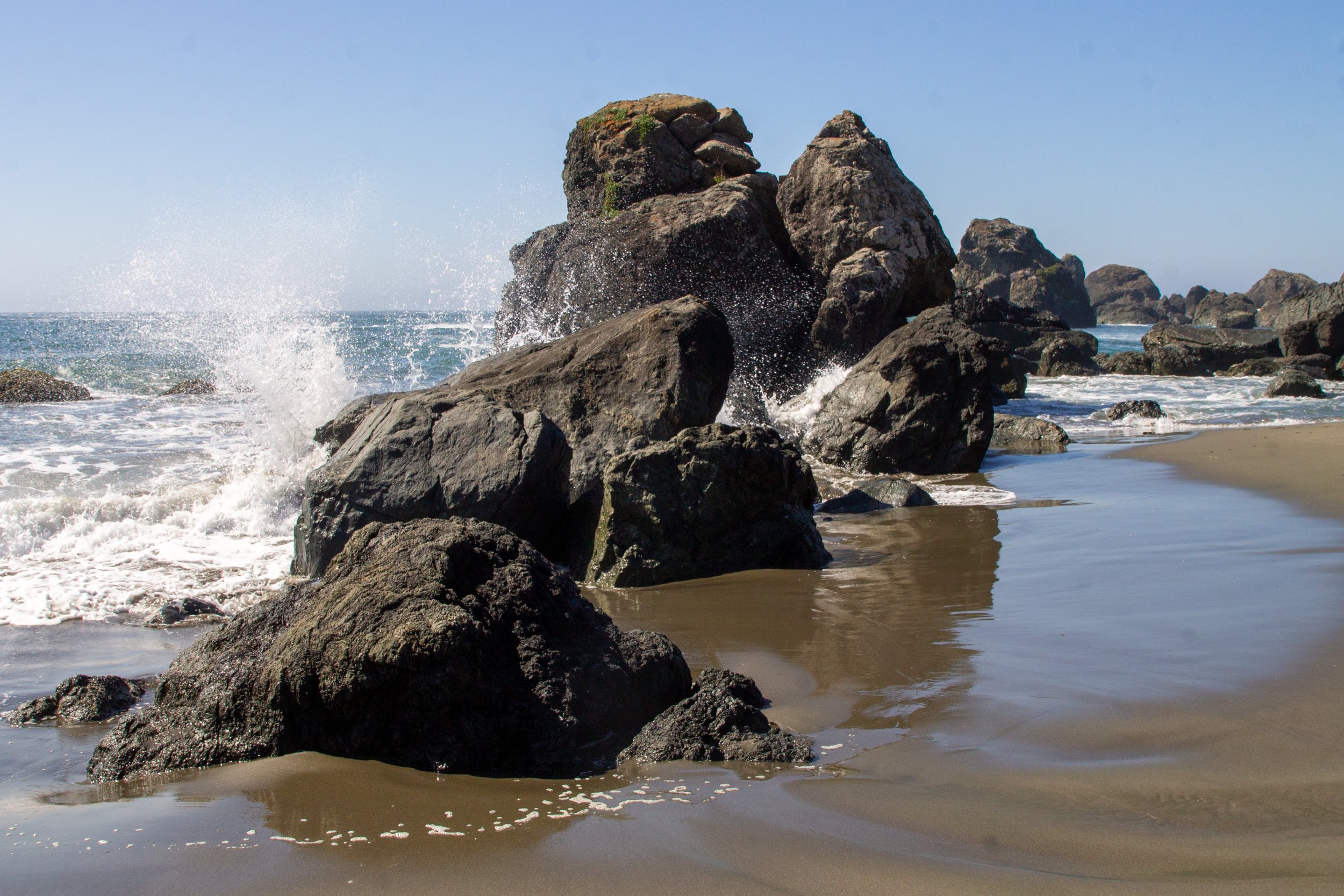
Lone Ranch Beach at high tide
I’ve visited the Samuel Boardman Corridor about a half dozen times. Whenever I go, I pack the agenda too full and end up hurrying between destinations. Yet, Lone Ranch Beach makes me slow down. It’s not so much a quick viewpoint stop as somewhere you’ll want to spend some time. Break out the car snacks. Watch the waves roll in. Seek out the hidden parts. It’s a decent rockhounding beach. You can find some agates and jaspers, and such, especially during a receding tide. You won’t have much competition as you look.
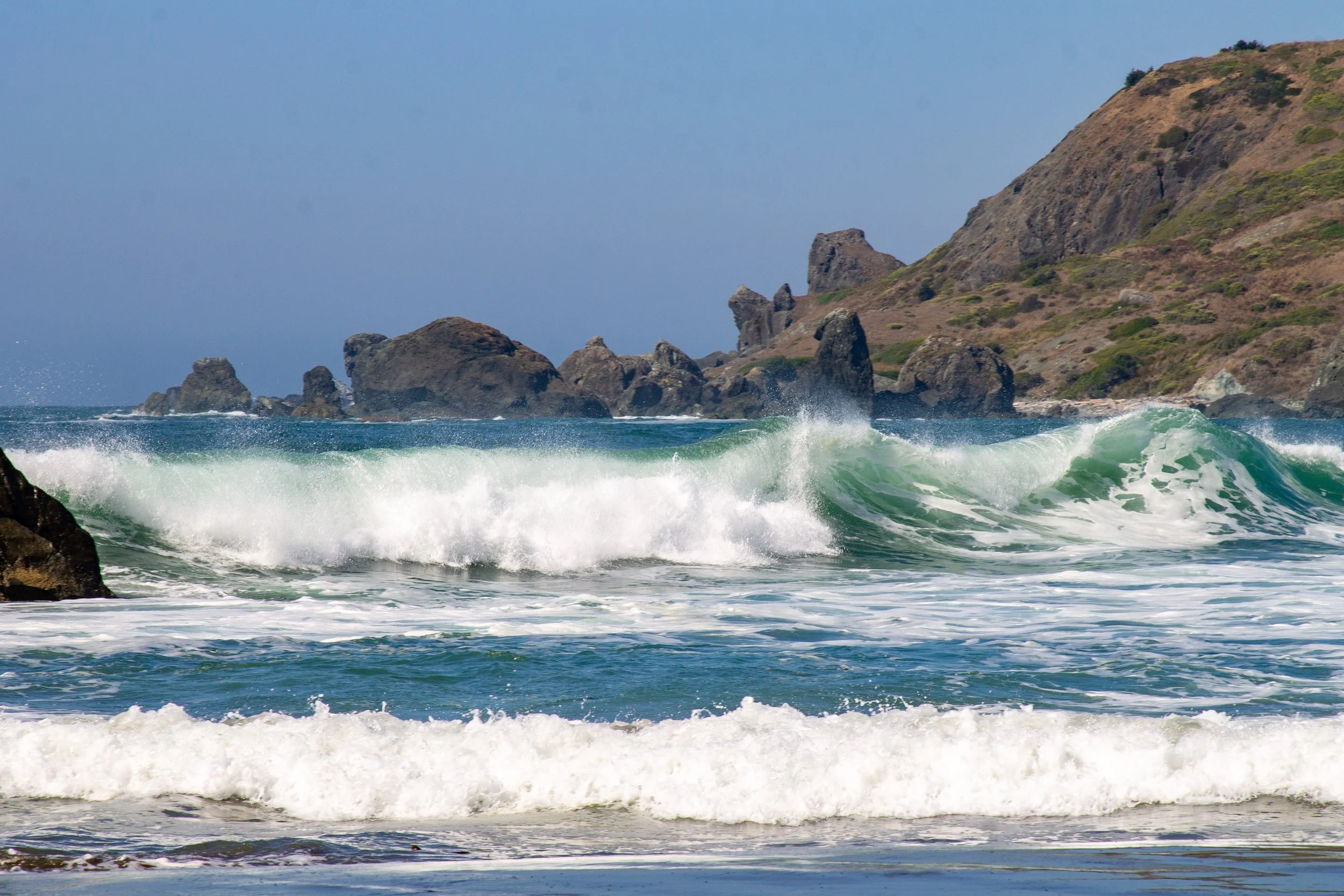
Waves at high tide
The access trail from the parking lot will bring you to the north end of the beach near the base of Cape Ferrelo. At low tide, the cluster of rocks here is a good place to look for tidepool animals. It’s also near where the hiking trail starts to the top of the cape, more on that below. If you have time to explore, I think the most interesting part of the beach is the south side, where a bonus beach area feels like a world you’ve discovered.
The bonus beach
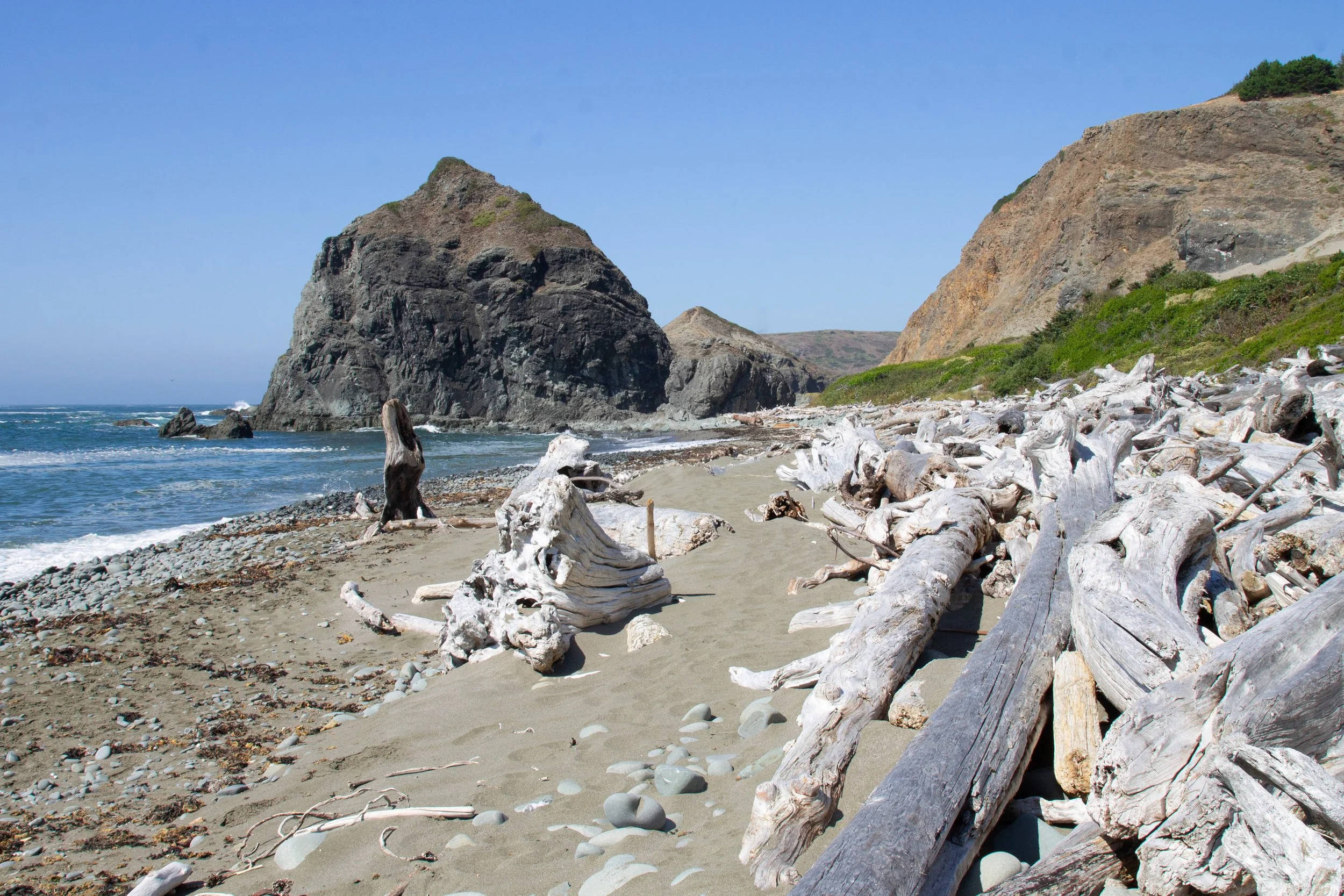
The part no one visits
To find the bonus beach at Lone Ranch Beach, head south toward the rocky outcropping that sticks out into the ocean. When you get close, you’ll see a gap between the bluffs and an offshore monolith. Through the gap is another stretch of beach, this one even more secluded than the already obscure Lone Ranch Beach. When I visited, the main beach had about five or six people on it. The bonus beach had just me and a seal bobbing near the shore.
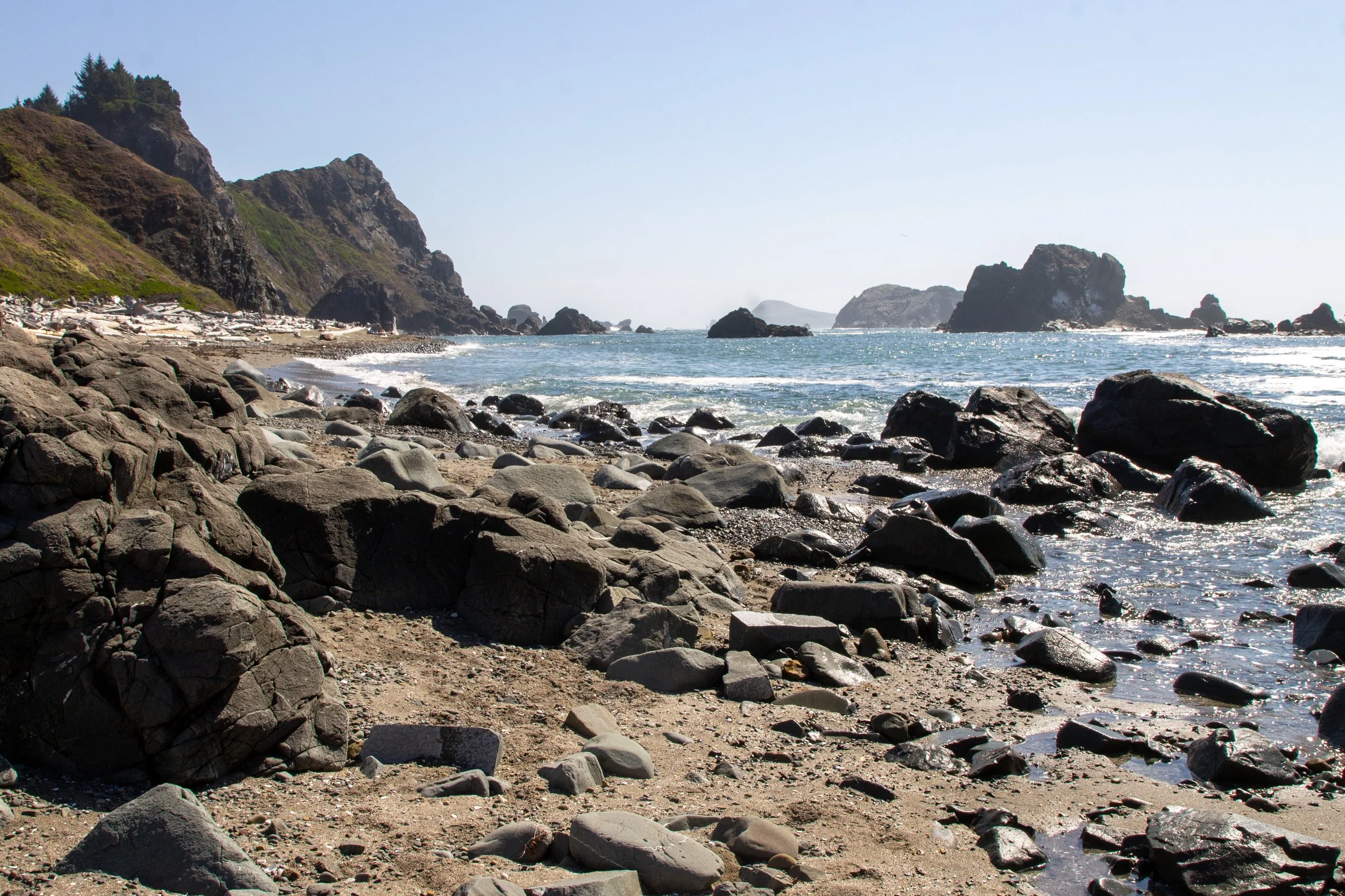
High tide
The bonus beach has more sea stacks and a narrower shore. You don’t have to time your visit around low tide, but a very high tide would make it inaccessible. I visited at high tide, around +6, on a calm day in summer. I had no trouble passing through the gap, but much higher, and I wouldn’t have gone. Low tide would be the best time to visit, when it’s safest to explore and see the tidepool animals. Avoid this part of the beach during storms and high tide events.
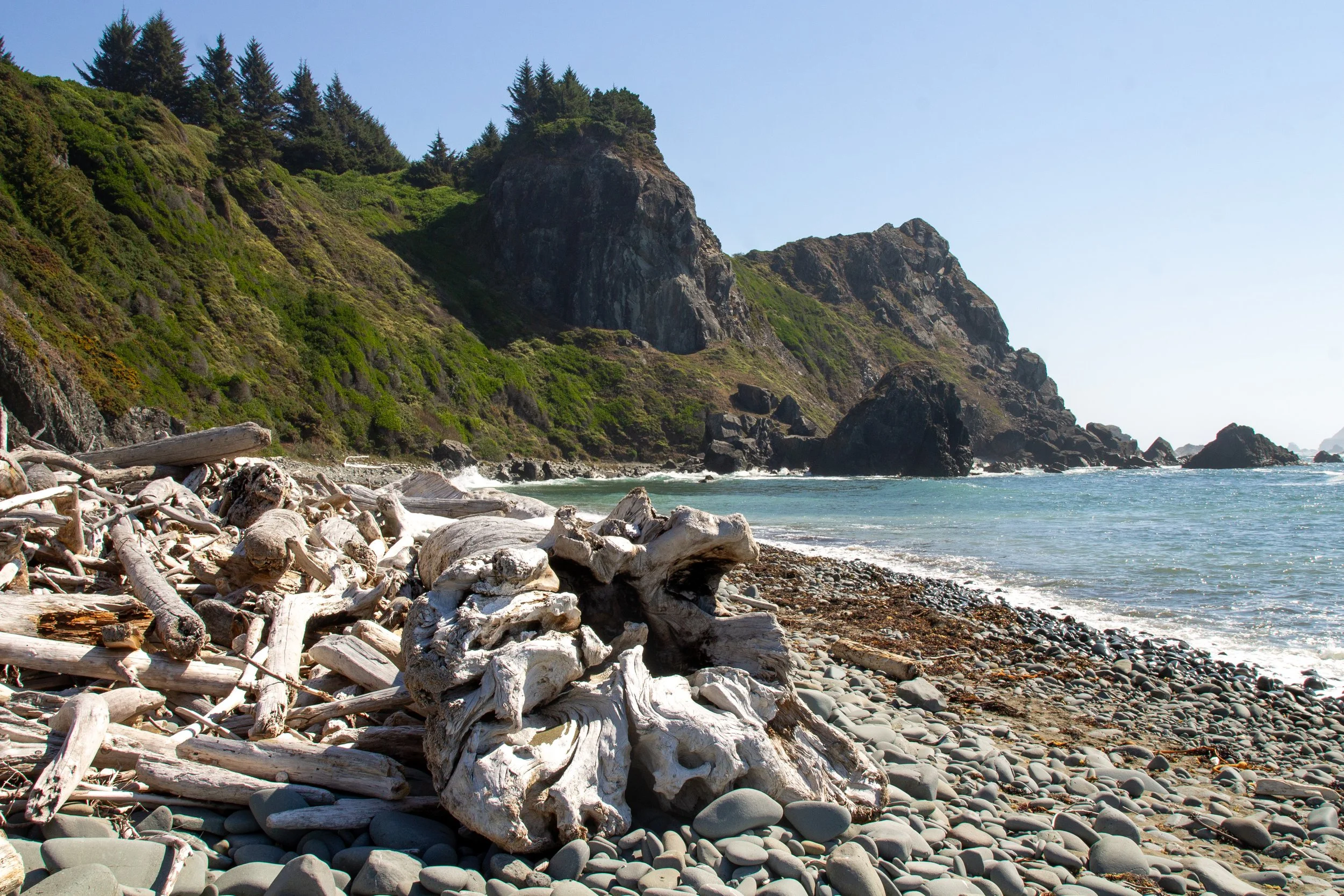
Lone Ranch Beach
Lone Ranch Beach to Cape Ferrelo
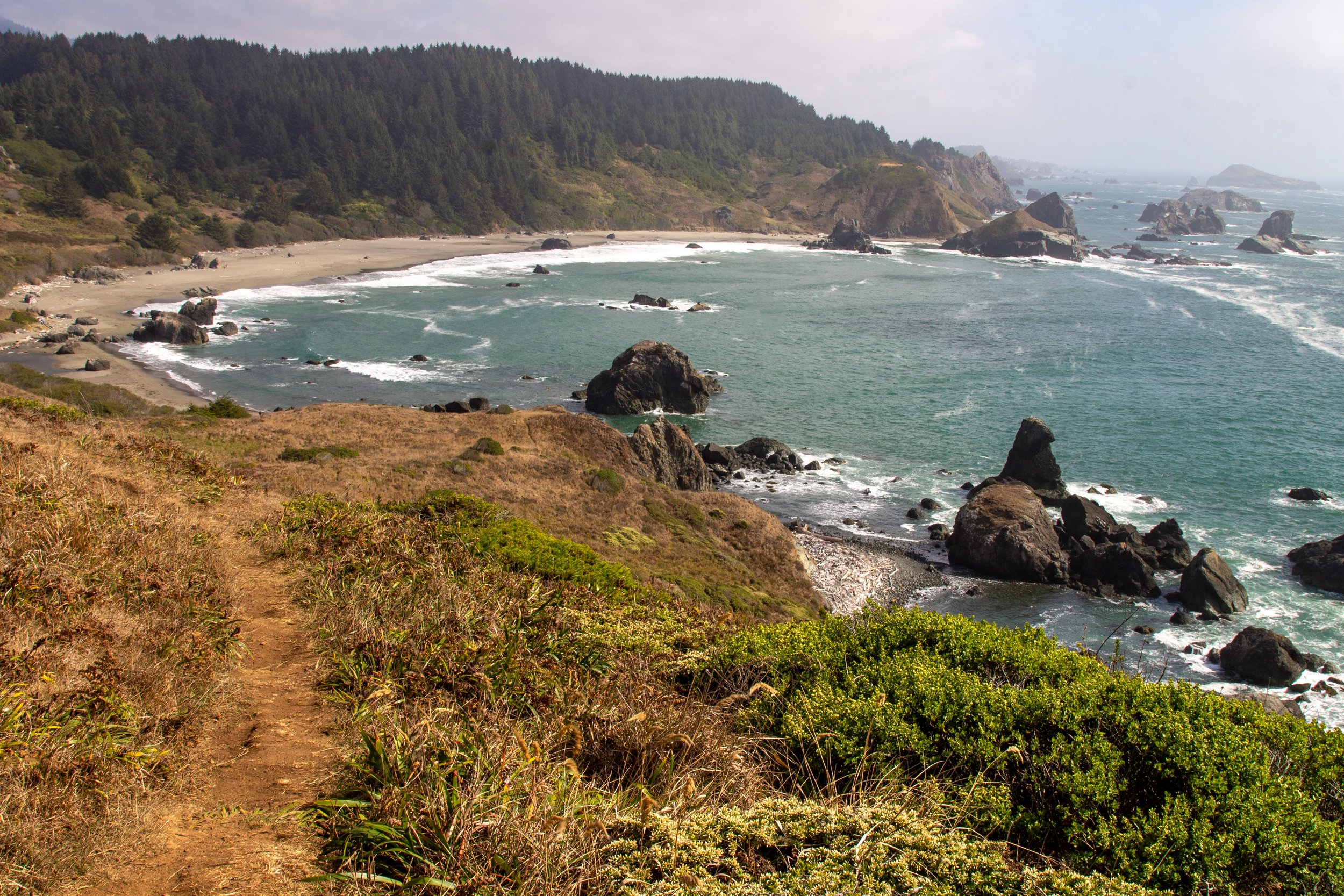
Lone Ranch Beach from Cape Ferrelo
Distance: 1.5 miles, I recommend an out-and-back
Elevation gain: 300 feet
Difficulty: Moderate
I mention the hike to Cape Ferrelo not so much as a recommendation as to give you your options. The trail is hard to find, and you can easily drive to Cape Ferrelo instead. All Trails says that there’s a trail starting a little past the restrooms at Lone Ranch Beach. I don’t know, I looked. All I found was a dense and swampy forest. I think it’s overgrown, and Lone Ranch Creek floods it, at least sometimes. I’d suggest starting from the beach instead. Head to the rocks on the north end and look for the trail heading up the cape. The views from the trail are spectacular, but not better than what you’ll see by driving to Cape Ferrelo and taking the short and easy trail at the top.
Other beaches in the Samuel Boardman Corridor
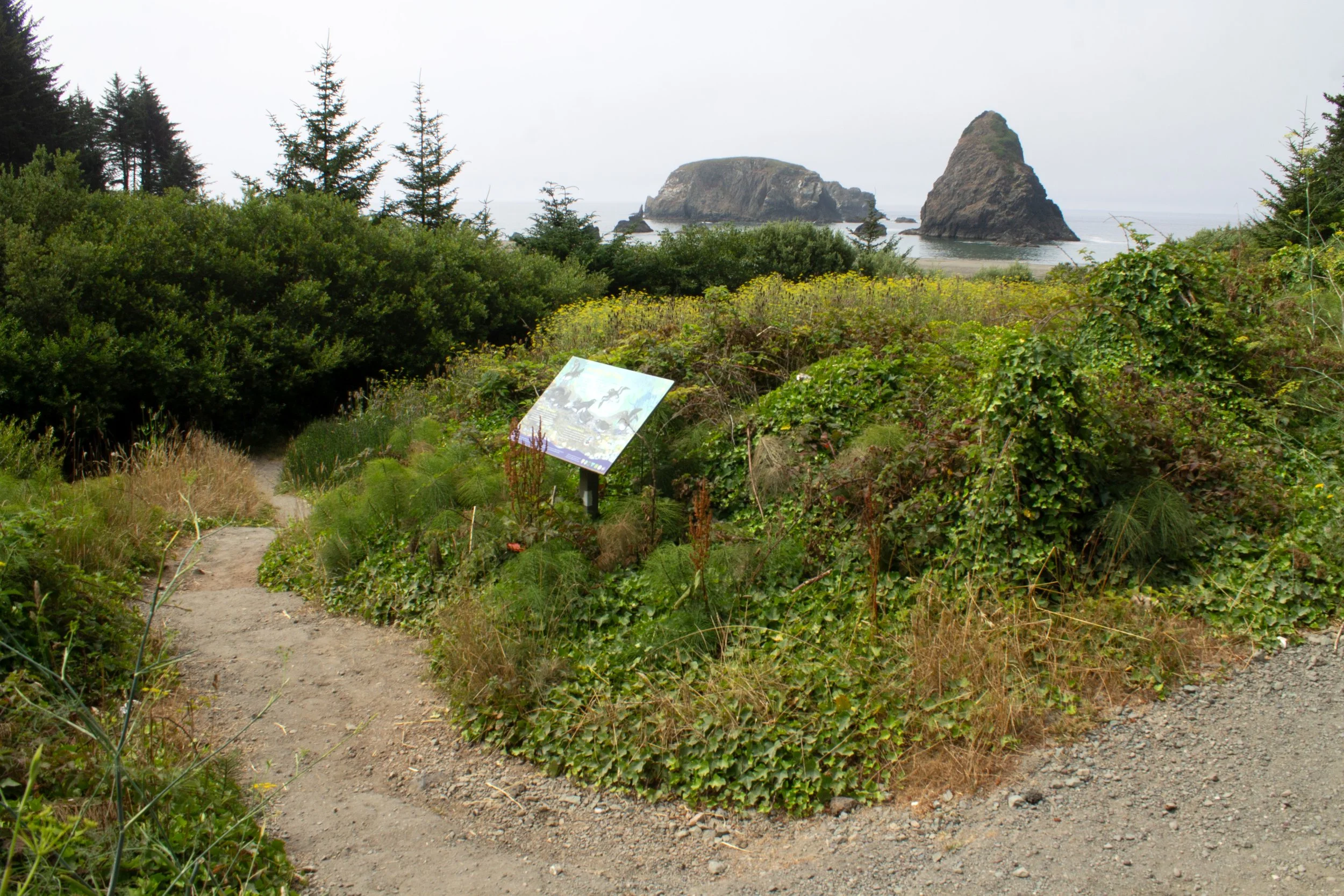
Trail to Whaleshead Beach
Whaleshead Beach is the other beach you can drive to in the Samuel Boardman Corridor. Like Lone Ranch Beach, it has some cool sea stacks just offshore. Its name comes from the largest one, which looks like a spouting whale when the waves hit it at high tide.
The most famous and photographed beach in the Samuel Boardman Corridor is Secret Beach. To get there, you hike about a half mile (one-way) on a moderately difficult trail. Visit at a low to medium tide. Waves cover the beach at high tide. It can be a bit tricky to find if you’re visiting for the first time. Check out my detailed directions.
China Beach is one of the Oregon Coast’s most obscure beaches. Unlike Secret Beach, it’s not internet famous. It’s harder to find, but beautiful enough to justify the bother. The hike there and back is a little over a mile. Check out my detailed directions.
Getting there
Lone Ranch Beach is directly off Highway 101. Look for the turn about 10 minutes north of Brookings, OR. The drive from Portland takes about 5.5 hours.
Enjoy your trip to Lone Ranch Beach!
With love,
Emma
Explore nearby

Find the best stops in the Samuel Boardman Corridor.

Visit stunning Harris Beach, only a few minutes away from Lone Ranch Beach.

Explore the best of Brookings, Oregon.
Check out the best things to do in Gold Beach, Oregon.