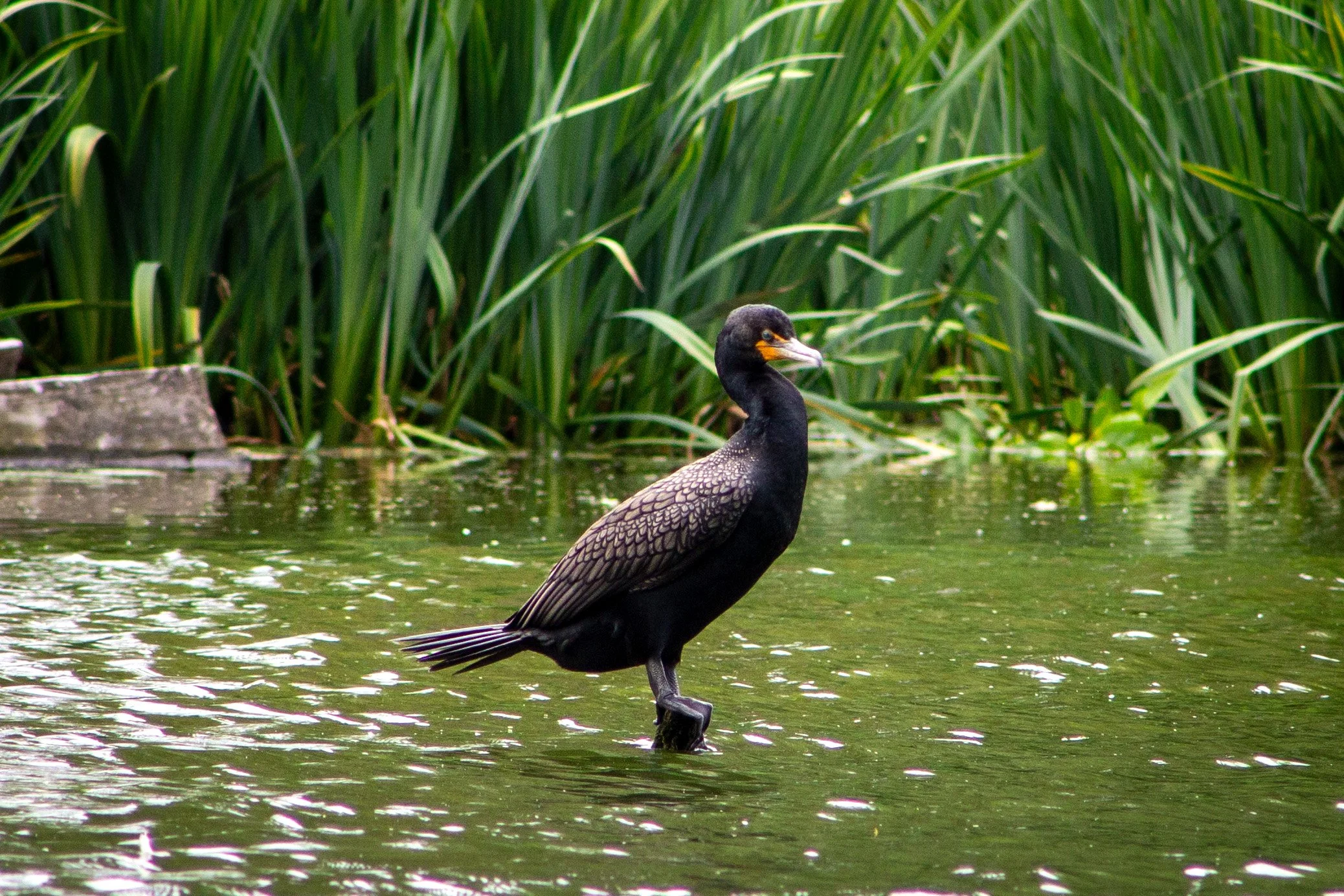
Lately, I’ve been trying to solve all my problems with birdwatching. It’s, of course, not working, but at least I’ve improved at duck identification. Now you can, too. Wapato Lake National Wildlife Refuge is one of Oregon’s newest birdwatching hotspots. The hiking trail opened to the public in 2023. Visit from February through November to see a wonderful variety of birds, plus reptiles, beaver, deer, and more nutria than you could shake a stick at. After your hike, you’ll be near some incredible Willamette Valley wineries. Here’s how to have a great day at Wapato Lake National Wildlife Refuge.
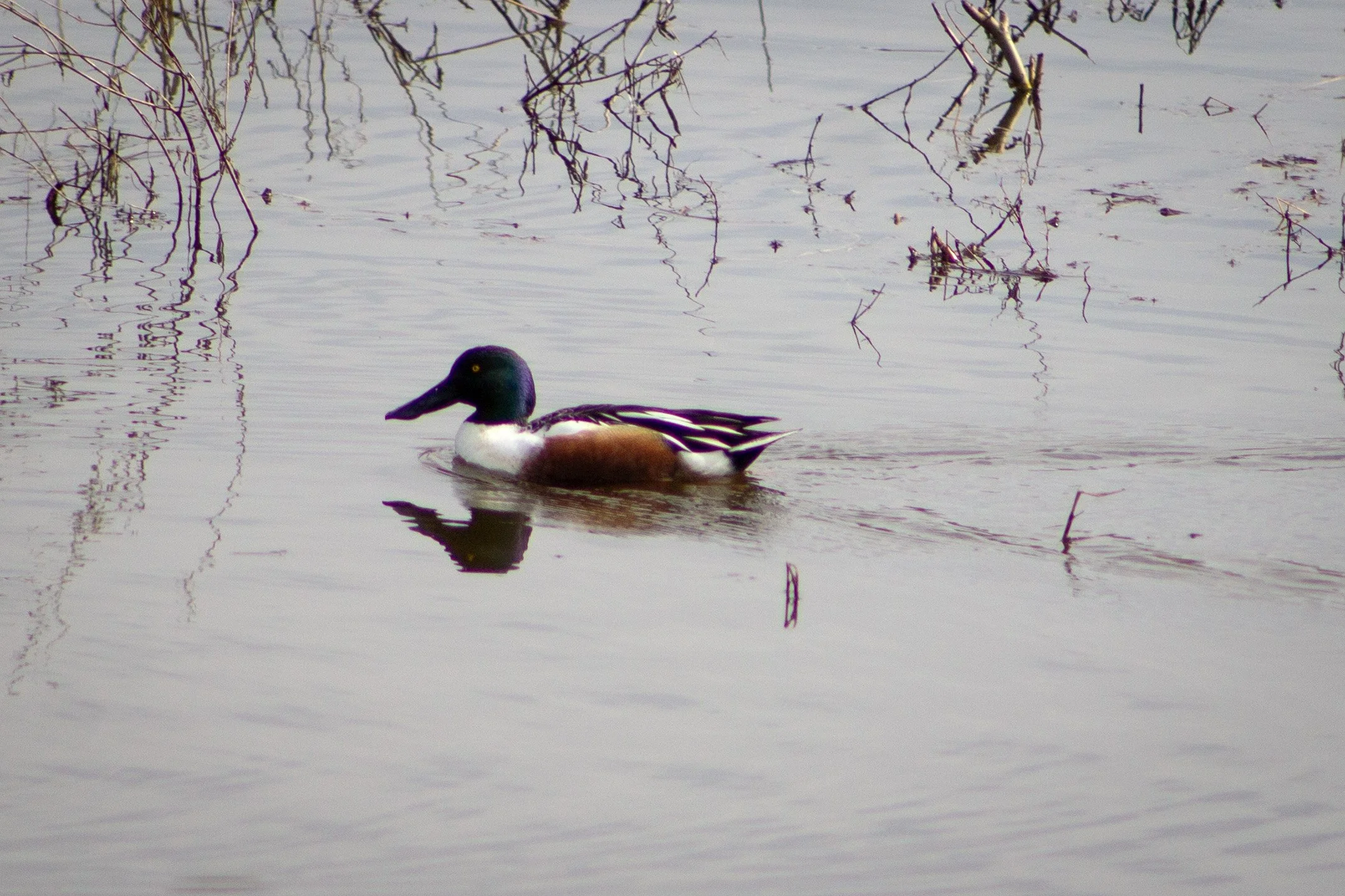
Northern shoveler on Wapato Lake
Know before you go
It’s free to visit Wapato Lake National Wildlife Refuge.
Use this address to navigate to the parking lot: 104 Onion Ln, Gaston, OR 97119.
Dogs, bikes, and jogging are not allowed on the trails.
The restroom by the parking lot was closed when I visited.
Please do not remove anything from the refuge.
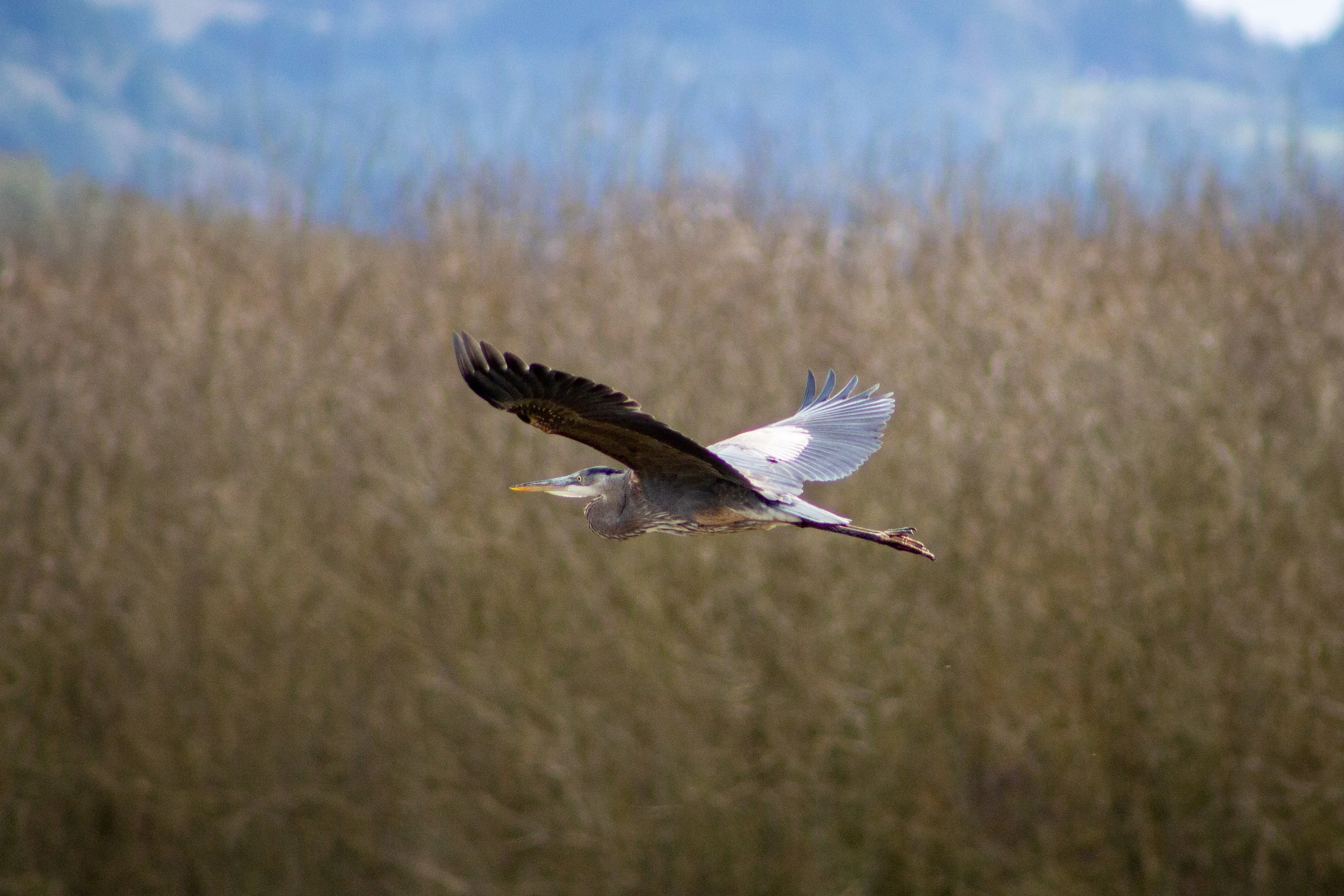
Great blue heron flies over Wapato Lake
When to visit Wapato Lake NWR
Wapato Lake National Wildlife Refuge is open to the public for most of the year.
The trails are fully open from February 16th to September 30th.
The trails are partially open in October, November, and February 1-15th. I’d say there’s still plenty of hiking and birdwatching potential during these months.
In December and January, only permitted hunters can visit.
The refuge is open from sunrise to sunset. Heavy rains can occasionally flood the trails in winter and spring.
Hiking in Wapato Lake National Wildlife Refuge
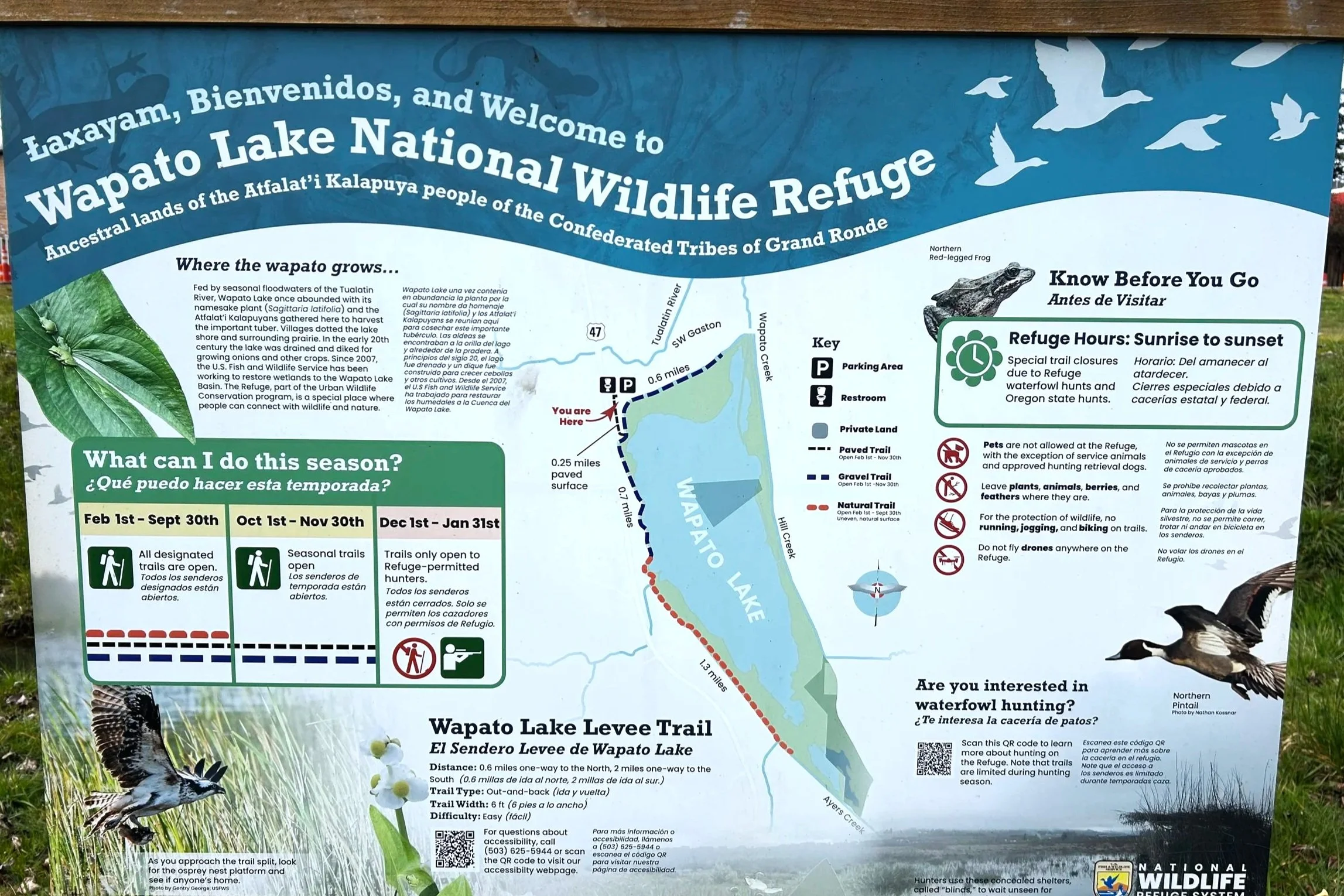
A map is at the trailhead
The Levee Trail
The hiking trail through Wapato Lake National Wildlife Refuge is called the Levee Trail. If you do the whole thing, it’s about 6 miles total. Starting from the parking lot, it’s paved for about a quarter mile, then crosses a footbridge over Wapato Creek. On the other side of the bridge, it splits into two:
To the left, the trail continues about 1.2 miles out and back (round-trip) on a gravel surface.
To the right, it’s about 4 miles out and back (round-trip). It begins as gravel, then switches to grass in 0.7 miles.
The gravel trail is open February through November. The grass trail is open from February 16th to September 30th.
The scenery around the Levee Trail is pretty, but I’d call it more of a wildlife-watching and photography spot than a standalone hiking destination. A lot of buildings are visible from the trail, and you never really get away from the road noise.
Accessibility
The first quarter mile of the Levee Trail is paved, flat, wide, and even. It doesn’t have barriers like steps, including on the bridge over Wapato Creek. Once you cross the bridge, the gravel surface is rougher, but still flat, wide, and fairly even. The trail has a few benches. The grass portion is lumpy and irregular.
The parking lot has ADA parking. The restroom would have been accessible if it had been open. Find details and photos here.
Quick stats
Distance: Up to 6 miles
Elevation gain: Minimal
Difficulty: Easy
Dog-friendly: No, dogs are not allowed.
Pass required: None
Details
From the parking lot, take the paved trail. In 0.25 miles, you’ll reach a footbridge over Wapato Creek where you might spot red-wing blackbirds flitting among the reeds.
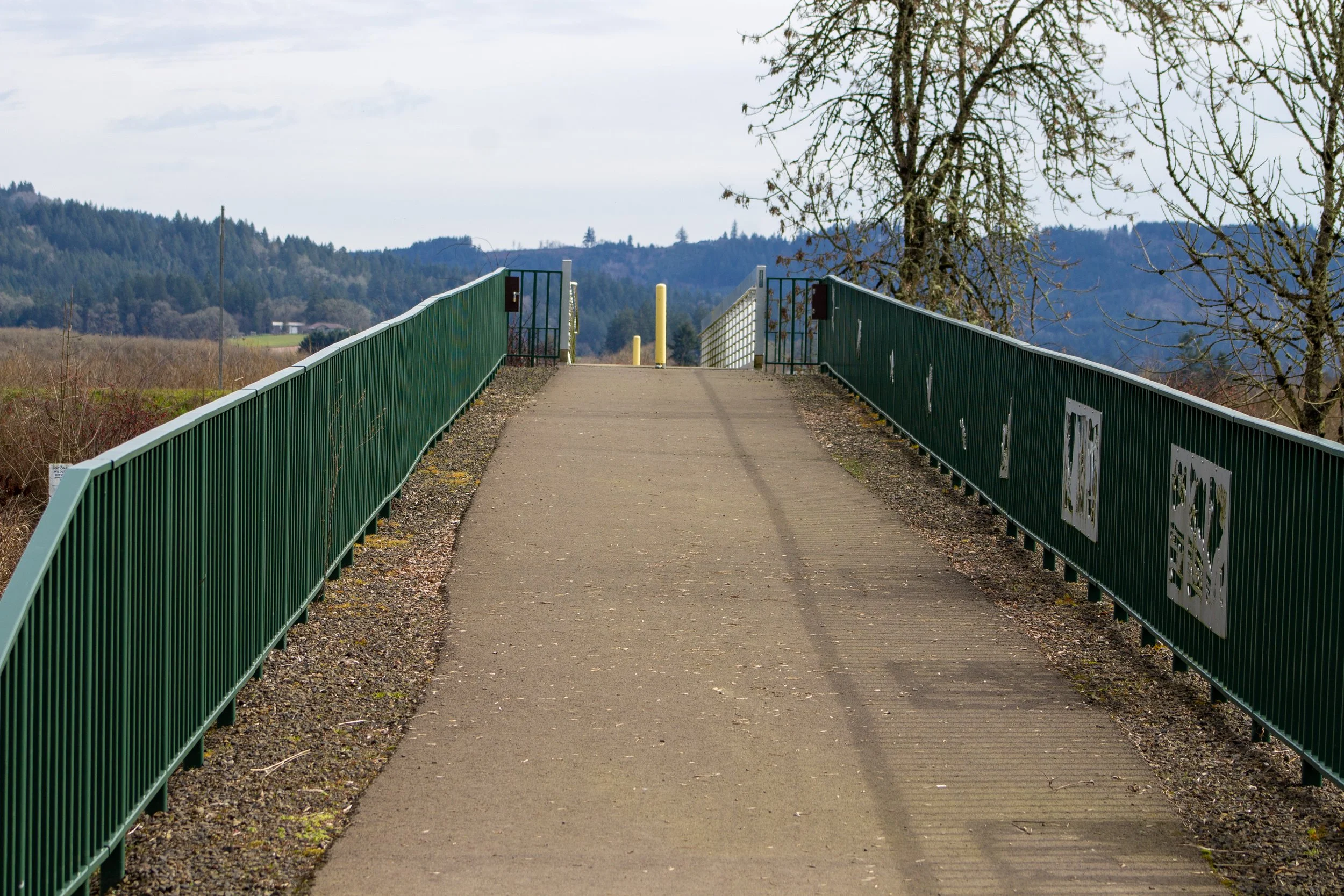
The Levee Trail is paved until Wapato Creek
On the other side of the bridge, the trail splits. You can go either direction. They’re the north and south legs of the Levee Trail. Both are lightly trafficked and have good potential for spotting animals. If you’re trying to choose between them, I saw a little more wildlife to the right, especially once I got to the grass portion of the trail. We’ll head to the left first. This direction explores the north side of Wapato Lake National Wildlife Refuge.
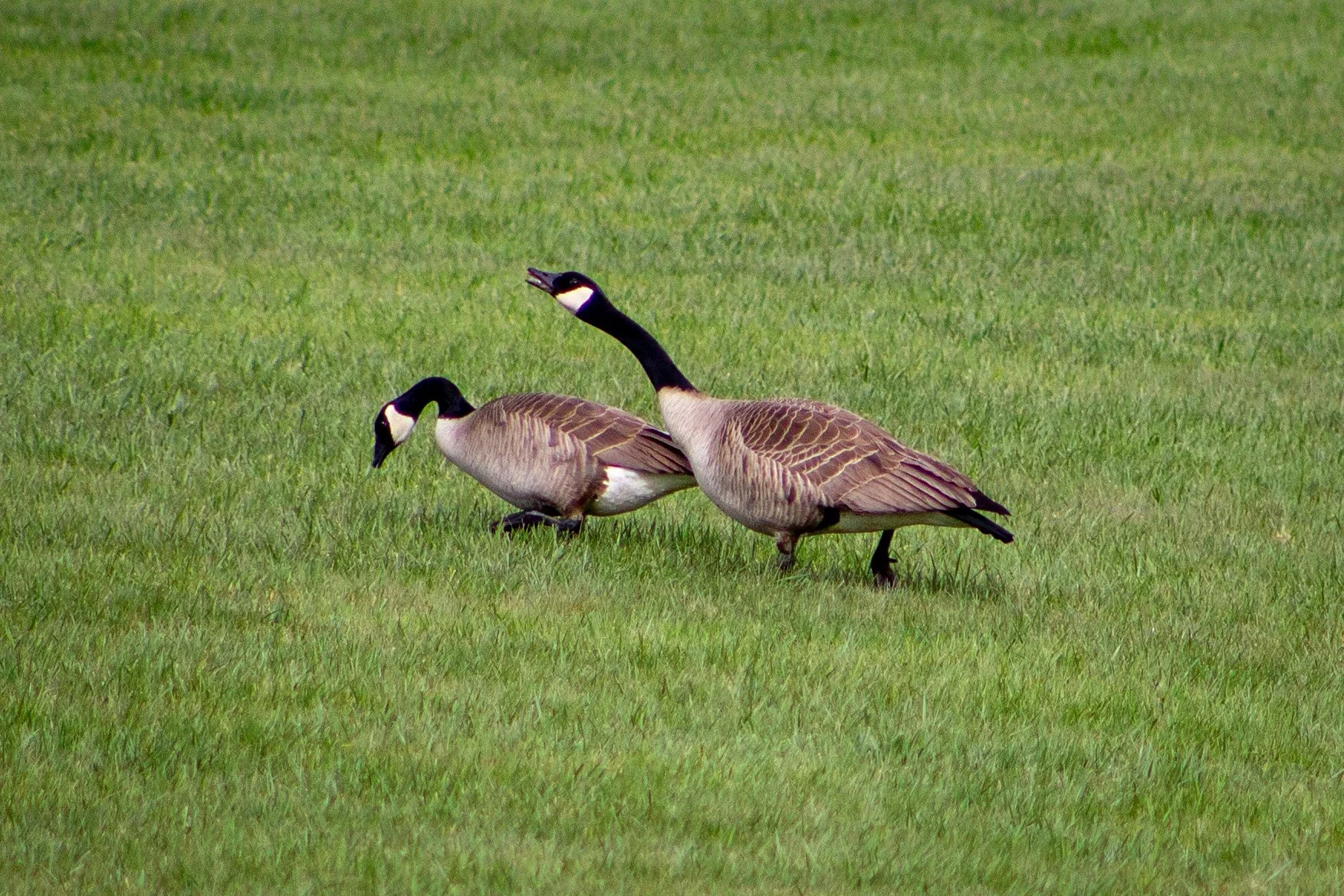
Canada geese in Brown Park
After the bridge, the trail shifts to gravel. You’ll have Wapato Lake on one side and ballfields on the other. Canada geese were in both when I visited. Garter snakes slithered over the trail and curled in the grass. A great blue heron flew over the trail.
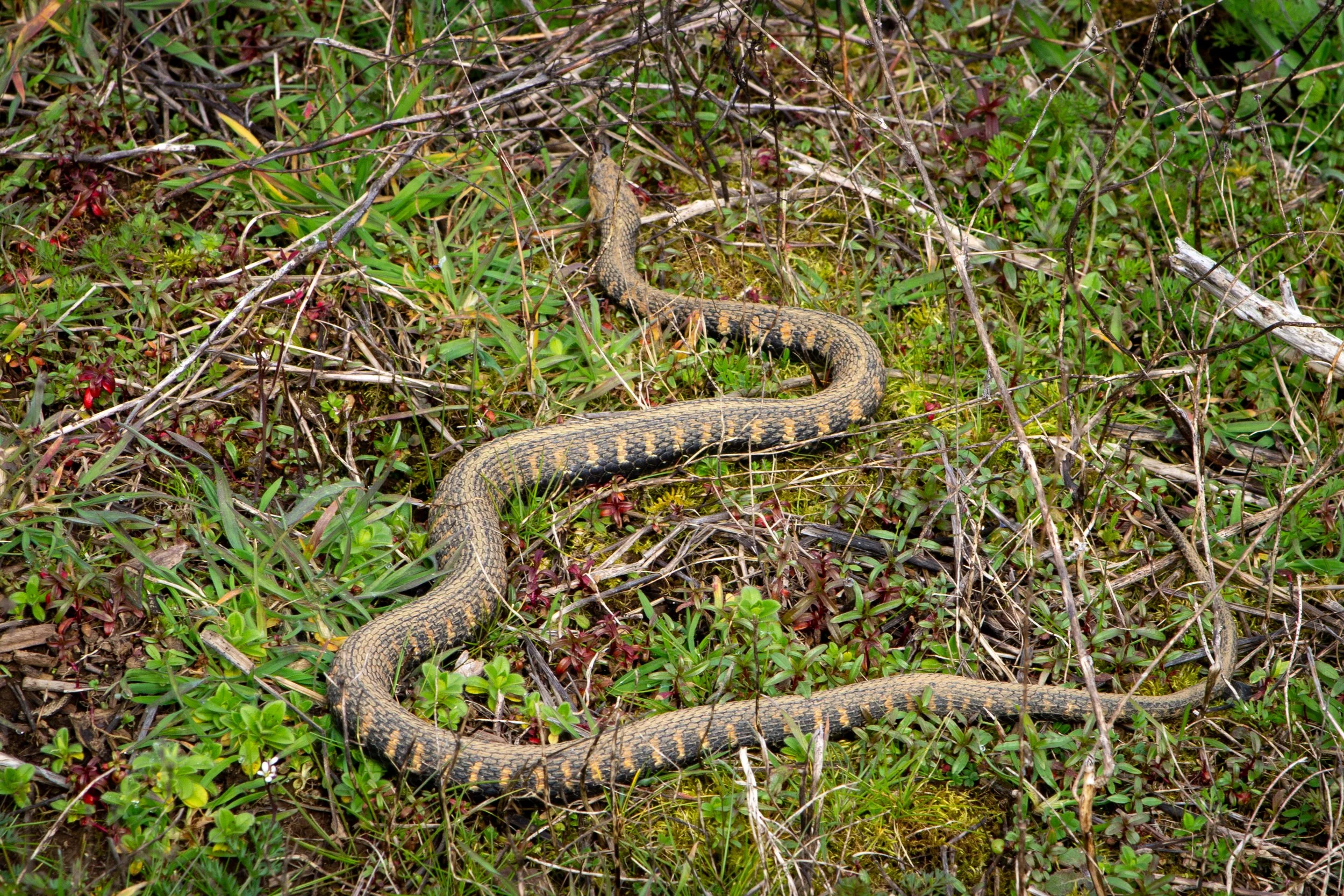
Garter snake by the Levee Trail
About a quarter mile past the bridge, a covered bench overlooks Wapato Lake.
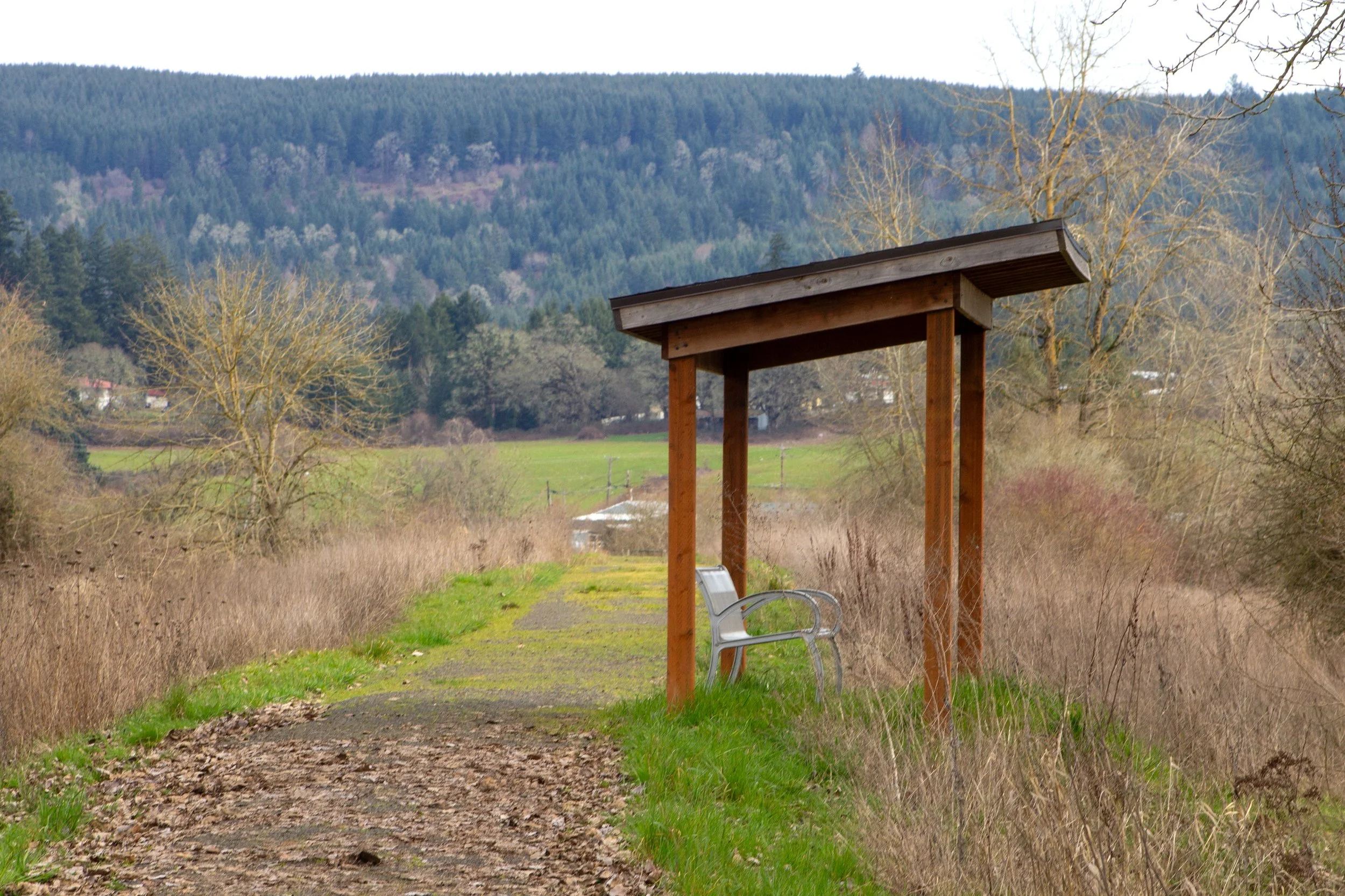
Bench on the Levee Trail
Winter is the best season to see ducks in the Pacific Northwest. Many come to the area for the unfrozen lakes. On an early March visit, plenty were swimming on Wapato Lake, including northern pintails, ring-necked ducks, mallards, buffleheads, coots, and northern shovelers. They were staying pretty far away from the trail. You’ll want to bring binoculars to get a good look.
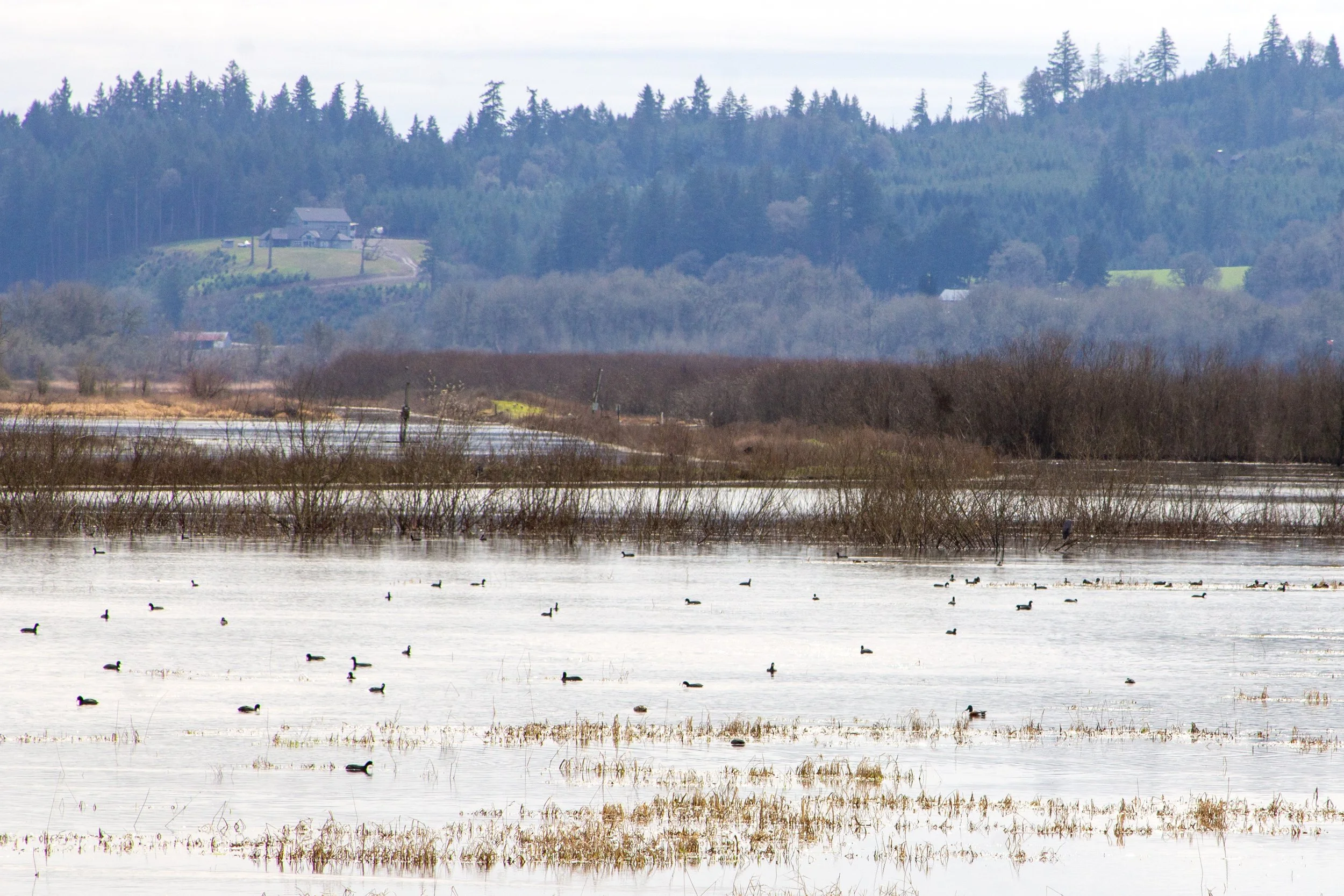
Ducks in Wapato Lake
The north side of the Levee Trail ends at a gate. A hide next to Wapato Lake is a good place to stop for some birdwatching before turning around. I spotted a couple of killdeer wading by the shore here.
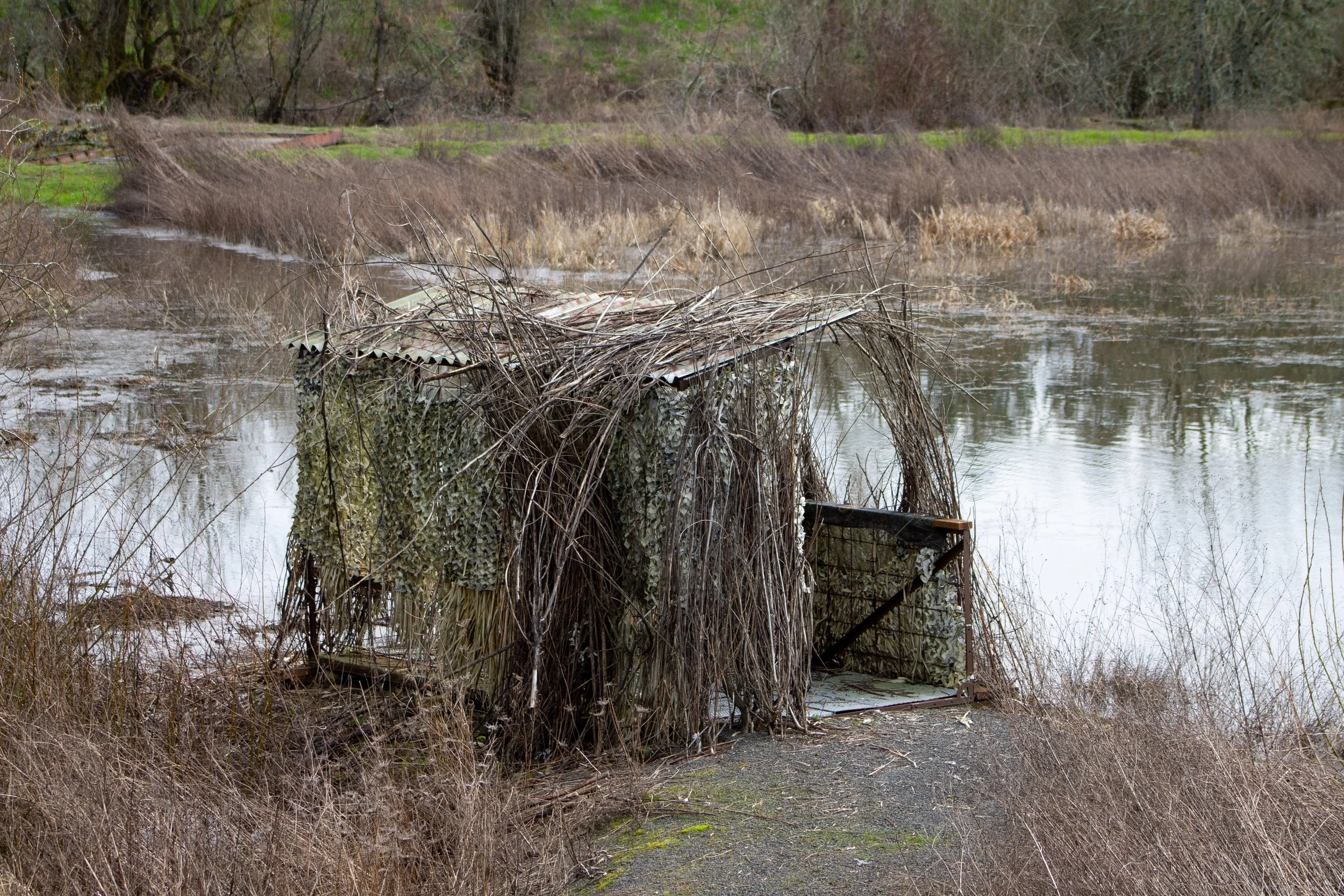
Hide at the end of the Levee Trail
At the gate, turn around and return to the bridge. From here, you can head back to the car or continue on the Levee Trail to explore the south end of Wapato Lake National Wildlife Refuge. It stays gravel for about 0.7 miles before switching to grass. The gravel part is open from February through October. Like the north direction, you’ll be next to Wapato Lake and its many ducks. Look for a beaver dam a little past the bridge.
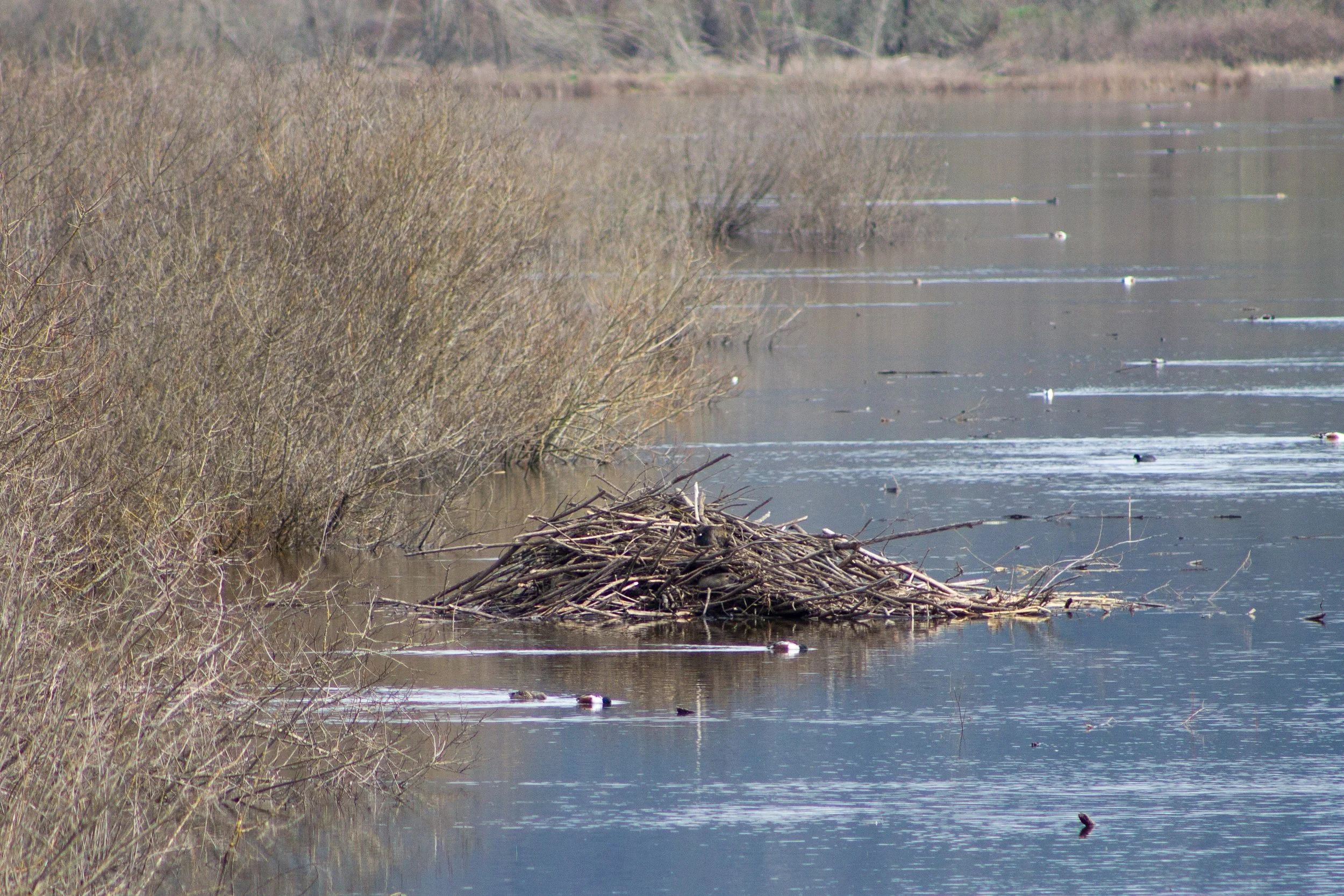
Beaver dam in Wapato Lake
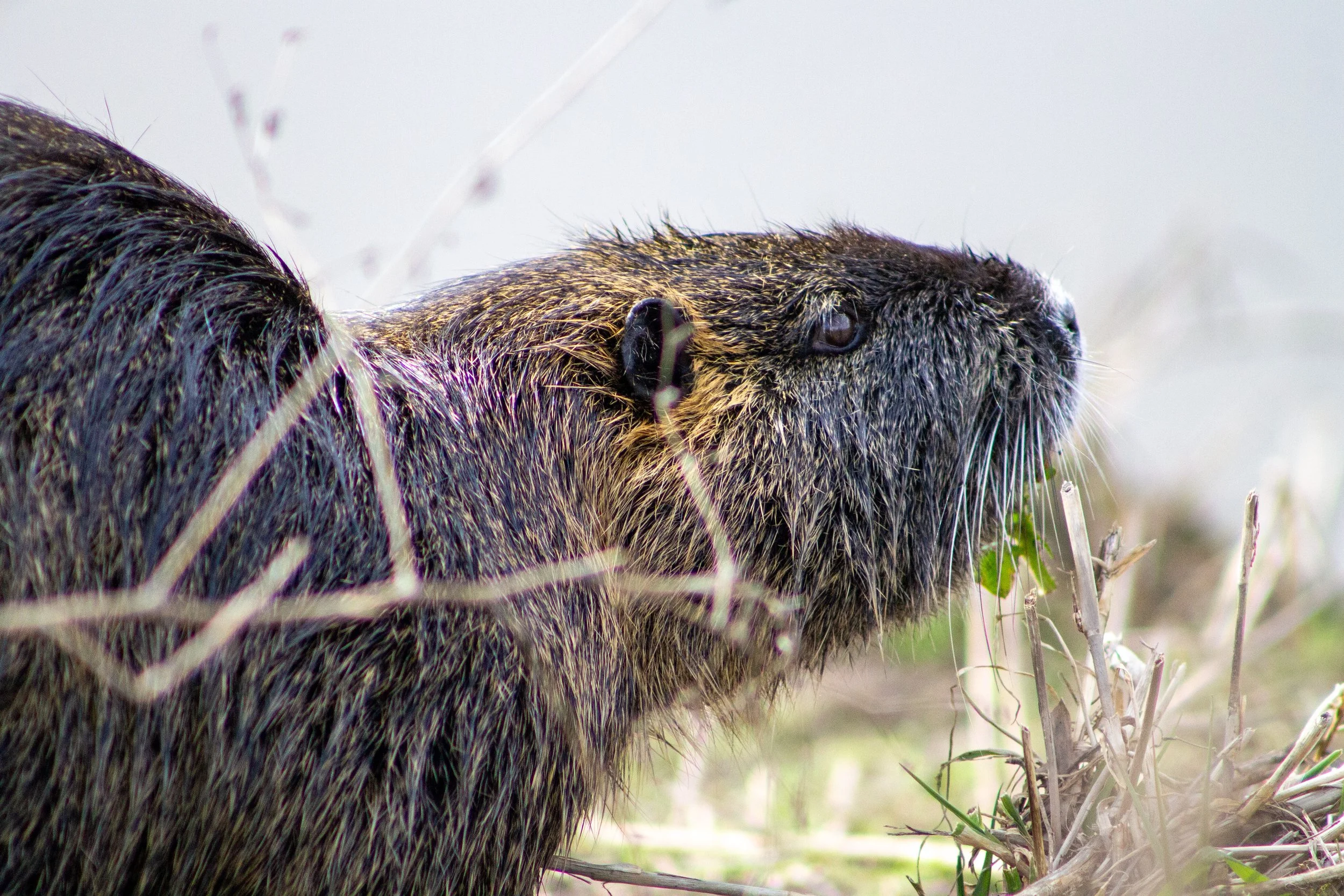
Besides ducks and geese, look for snakes, nutrias, beavers, muskrats, songbirds, and raptors around Wapato Lake. If you see a swimming rodent, odds are it’s a nutria. They’re plentiful at Wapato Lake National Wildlife Refuge, and not very shy. One didn’t stop eating when I approached on the trail, much less run away.
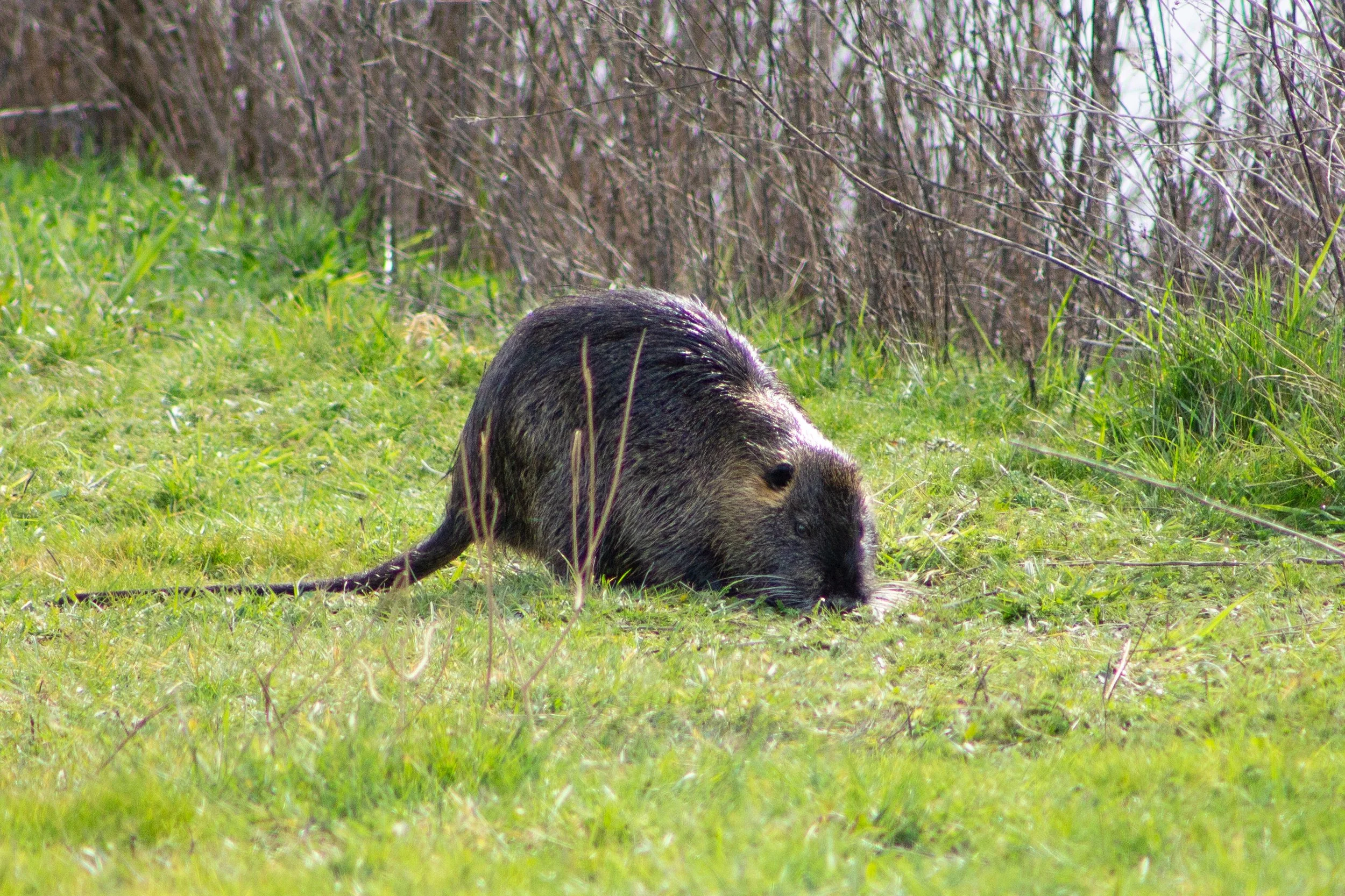
Nutria on the grass trail
The highlight of my hike was at the far south end of the Levee Trail, where I saw a juvenile bald eagle in a tree.
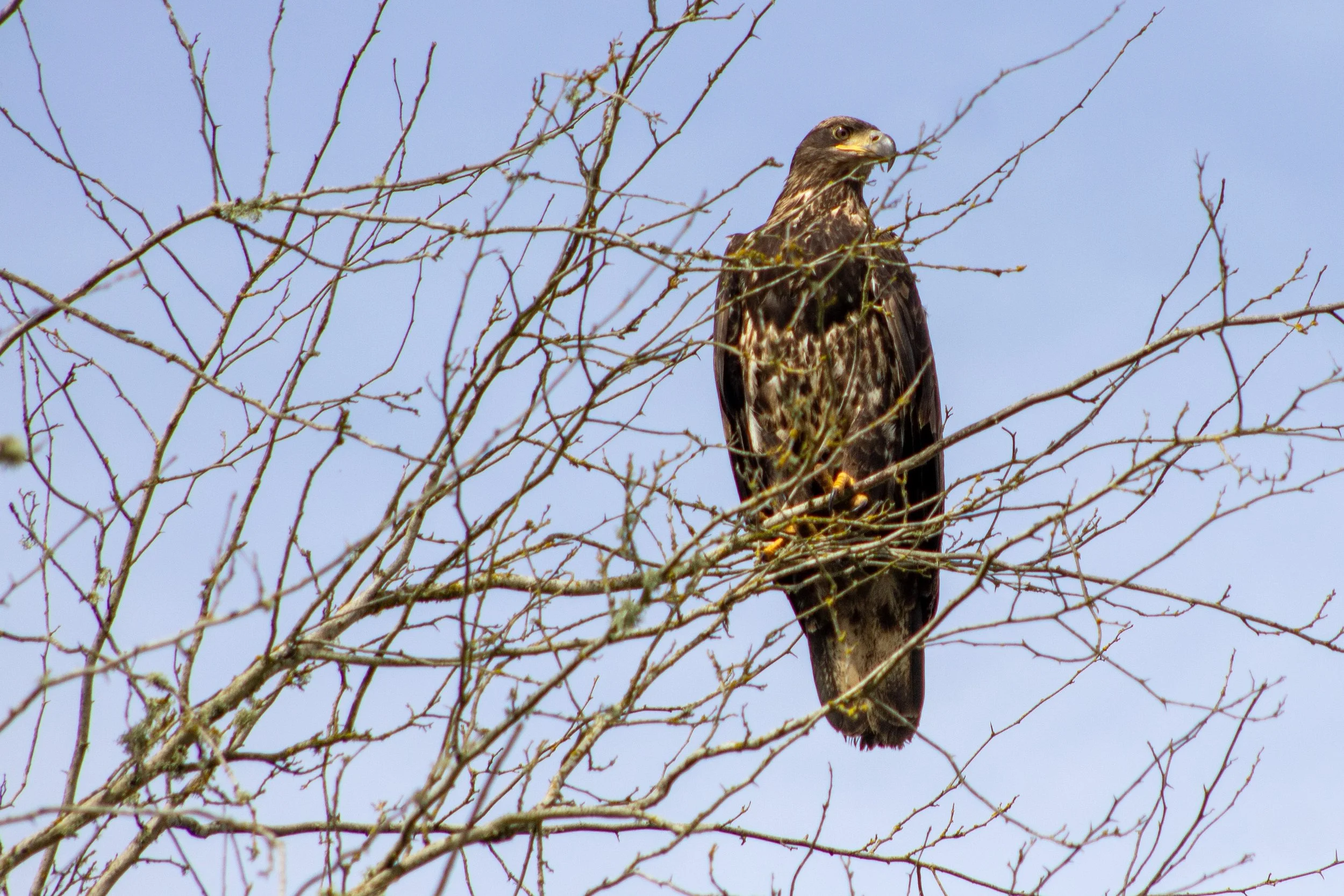
Juvenile bald eagle
Like the north side, the south side of the Levee Trail ends at a gate. When you reach it, return the way you came.
Wildlife at Wapato Lake NWR
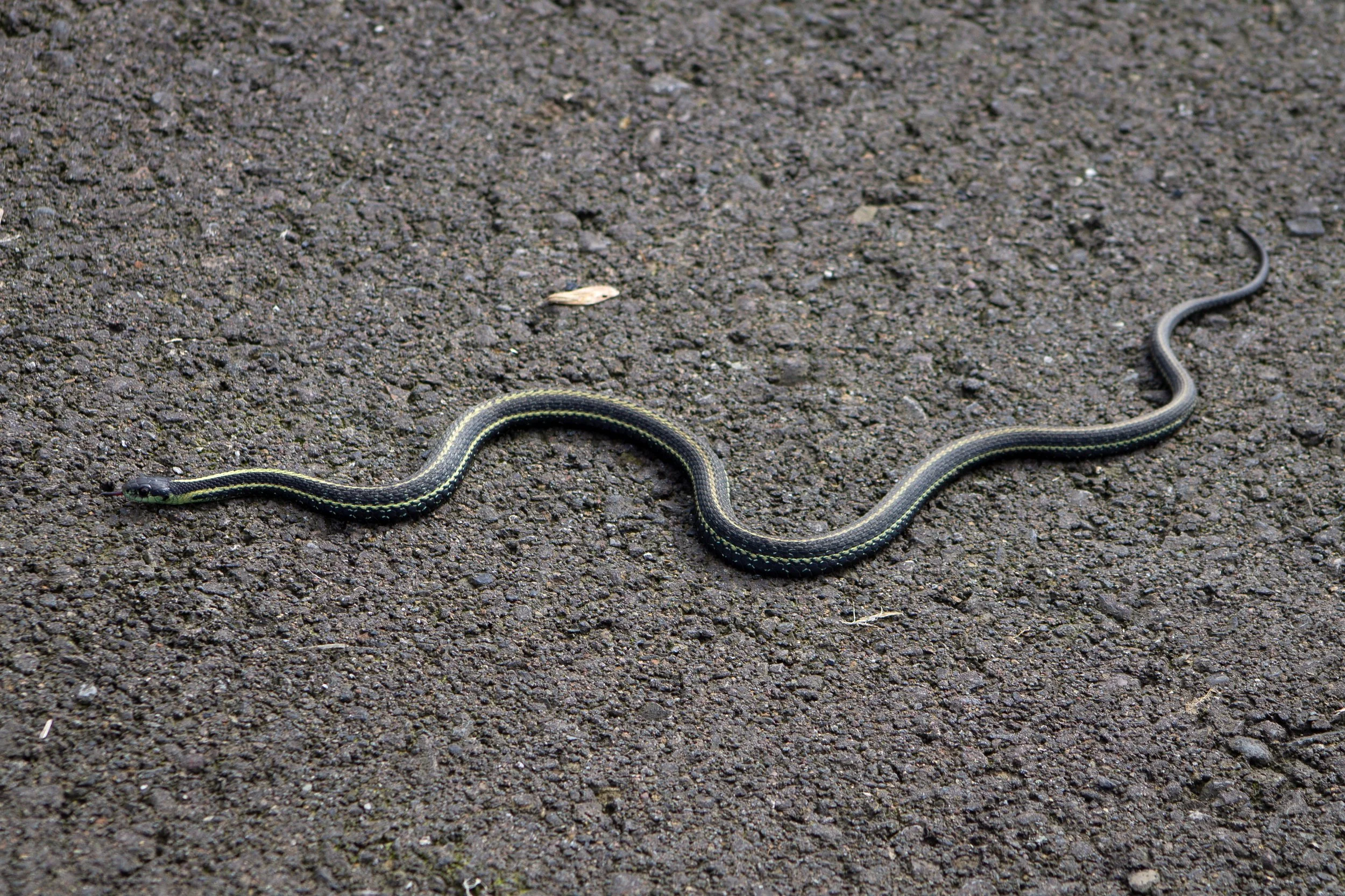
Garter snake on Levee Trail
The highlight of visiting Wapato Lake NWR is seeing the wildlife. The species vary by season. Winter is the best time to see ducks, geese, and swans. Spring and fall draw migratory bird species to the refuge. Summer is great for songbirds, hummingbirds, and osprey.
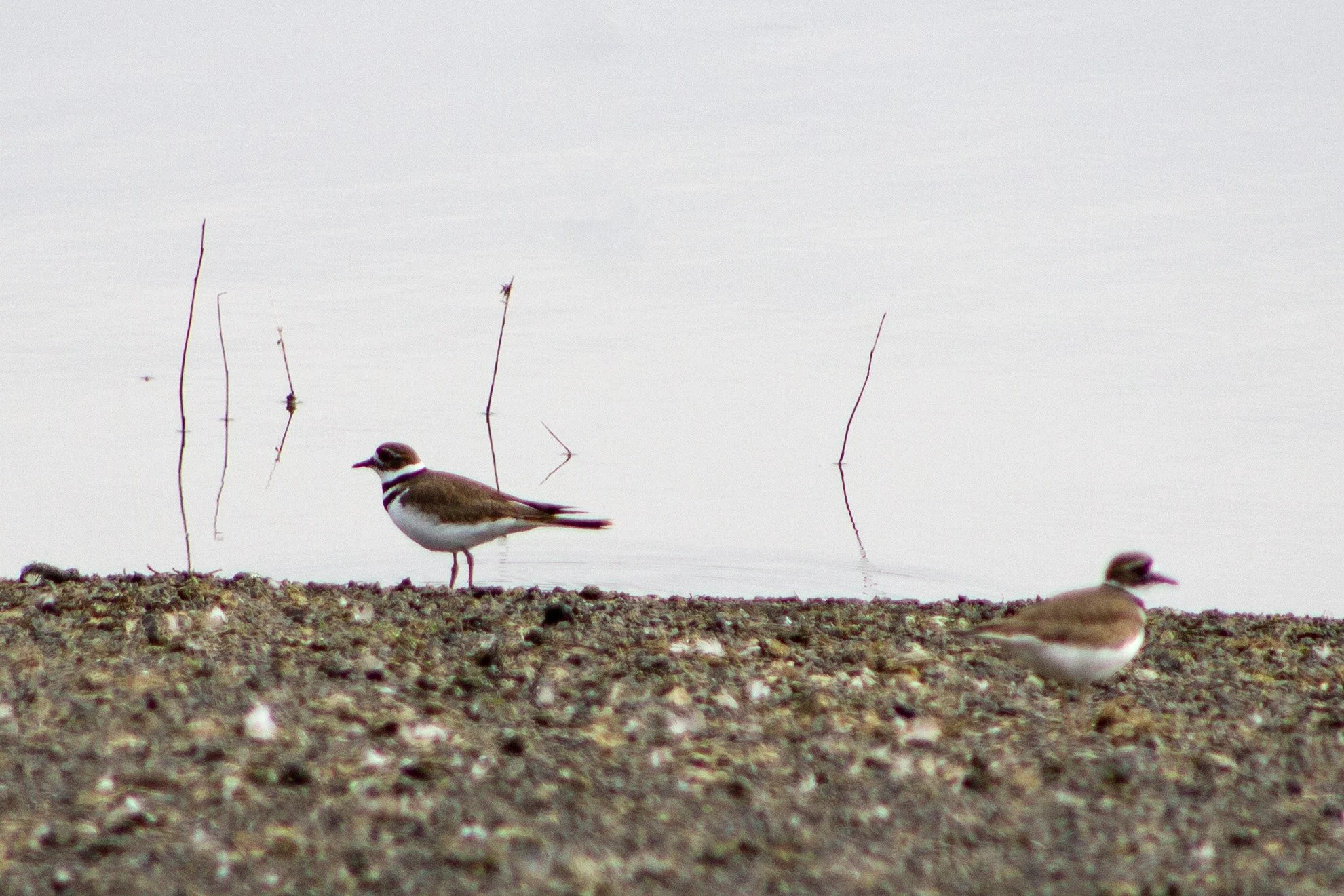
Killdeer at Wapato Lake
On my visit in the first days of March, the ducks were the stars of the show. Garter snakes were a close second. Large flocks of Canada geese and a few raptors flew overhead. I saw one shy muskrat and several bold as brass nutrias. Herons, egrets, and killdeer waded in the marshes of Wapato Lake.
Wine tasting near Wapato Lake National Wildlife Refuge
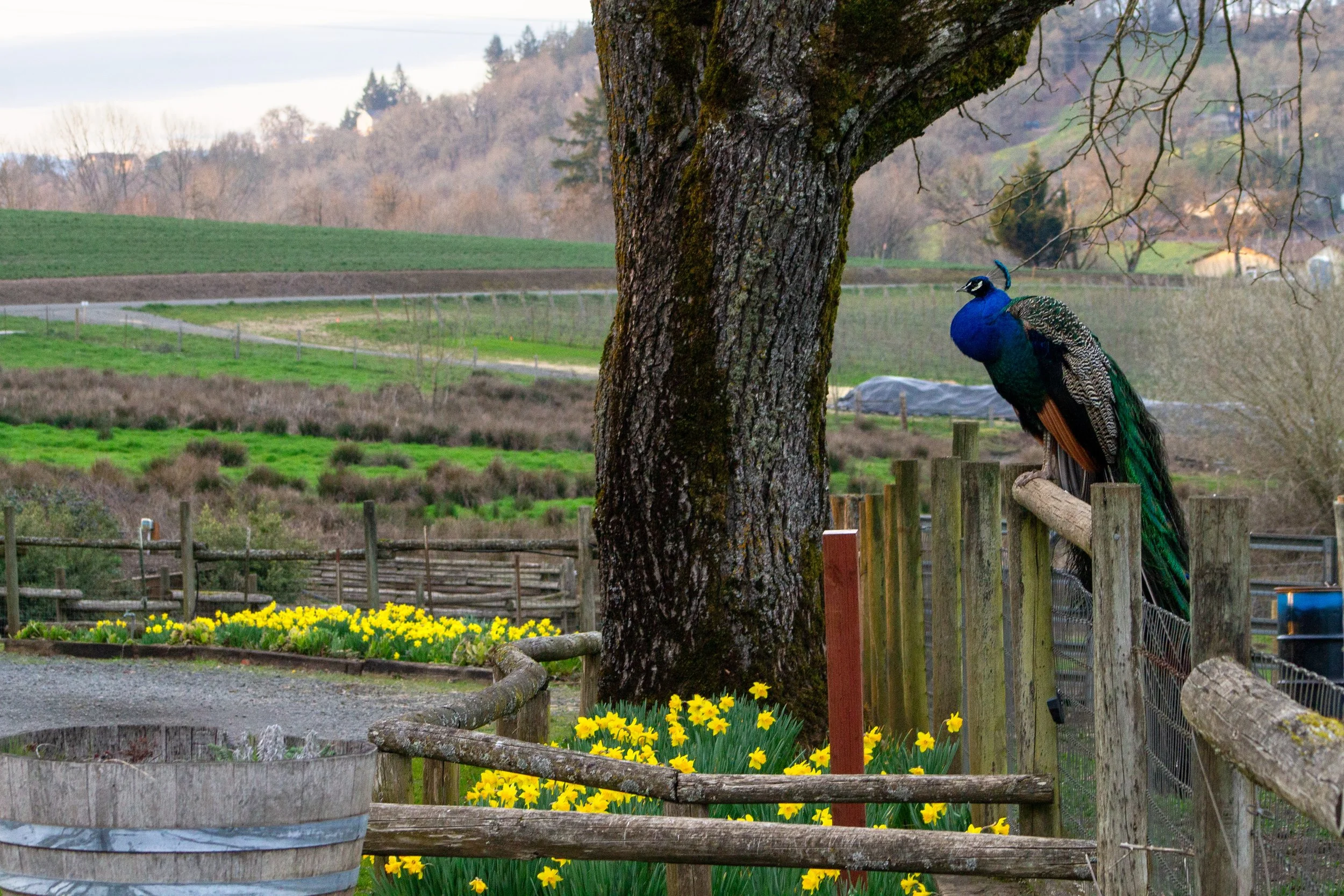
Peacock at Abbey Road Farm
One of the cool things about Wapato Lake National Wildlife Refuge is that it’s in Oregon’s wine country. A lovely Sunday starts with some birdwatching at Wapato Lake, then ends with wine tasting at one of the vineyards of the Willamette Valley.
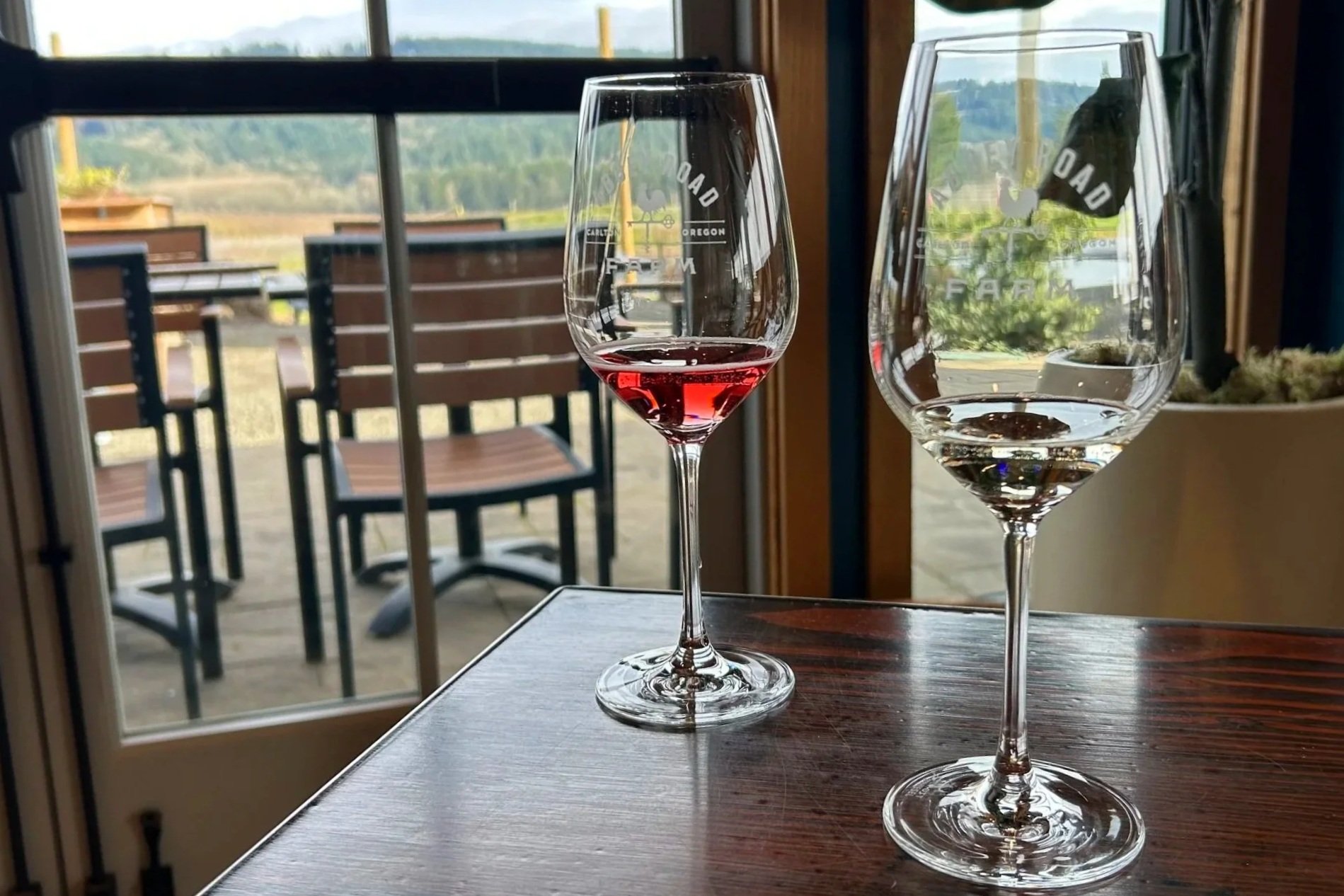
Tasting room at Abbey Road Farm
Since we’ve got an animal theme going, I’ll draw your attention to Abbey Road Farm, about 20 minutes away from Wapato Lake NWR. The winery has a beautiful tasting room and farm with goats, sheep, chickens, cats, cows, and at least one peacock. The wines are fantastic, reflecting the quality of Willamette Valley pinot noir and chardonnay, plus some unexpected varieties, like Trousseau and Aligoté.
Getting there
Address: 104 Onion Ln, Gaston, OR 97119
If you navigate to “Wapato Lake National Wildlife Refuge” in Google Maps, it will take you to the general area, not the parking lot. Instead, use the Onion Ln address above. Parking is free.
From Portland, take US-26 W to OR-47 S. Follow OR-47 S to Gaston, Oregon. Look for signs pointing to Wapato Lake National Wildlife Refuge. The parking lot is in front of the Brown Park ballfields. The drive from Portland takes a little under an hour.
Enjoy your day at Wapato Lake National Wildlife Refuge!
With love,
Emma
Explore nearby
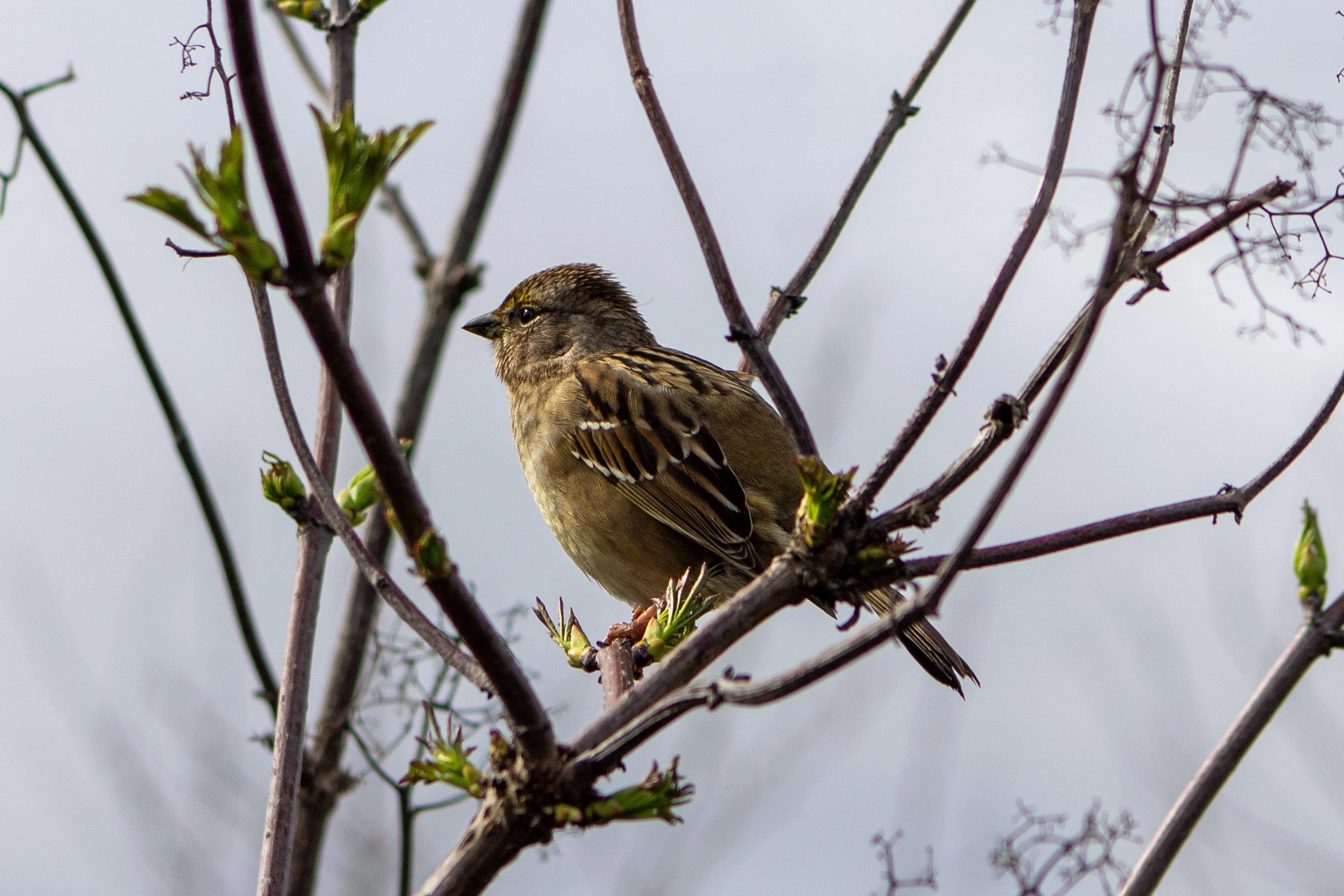
Find more great birdwatching at Fernhill Wetlands in Forest Grove, Oregon.

Head north on OR-47 to see the Buxton Trestle.