
Winter Guide to Joshua Tree National Park (Weather, Hikes, + Travel Tips)
Disclosure: I may earn a small commission on links at no cost to you.
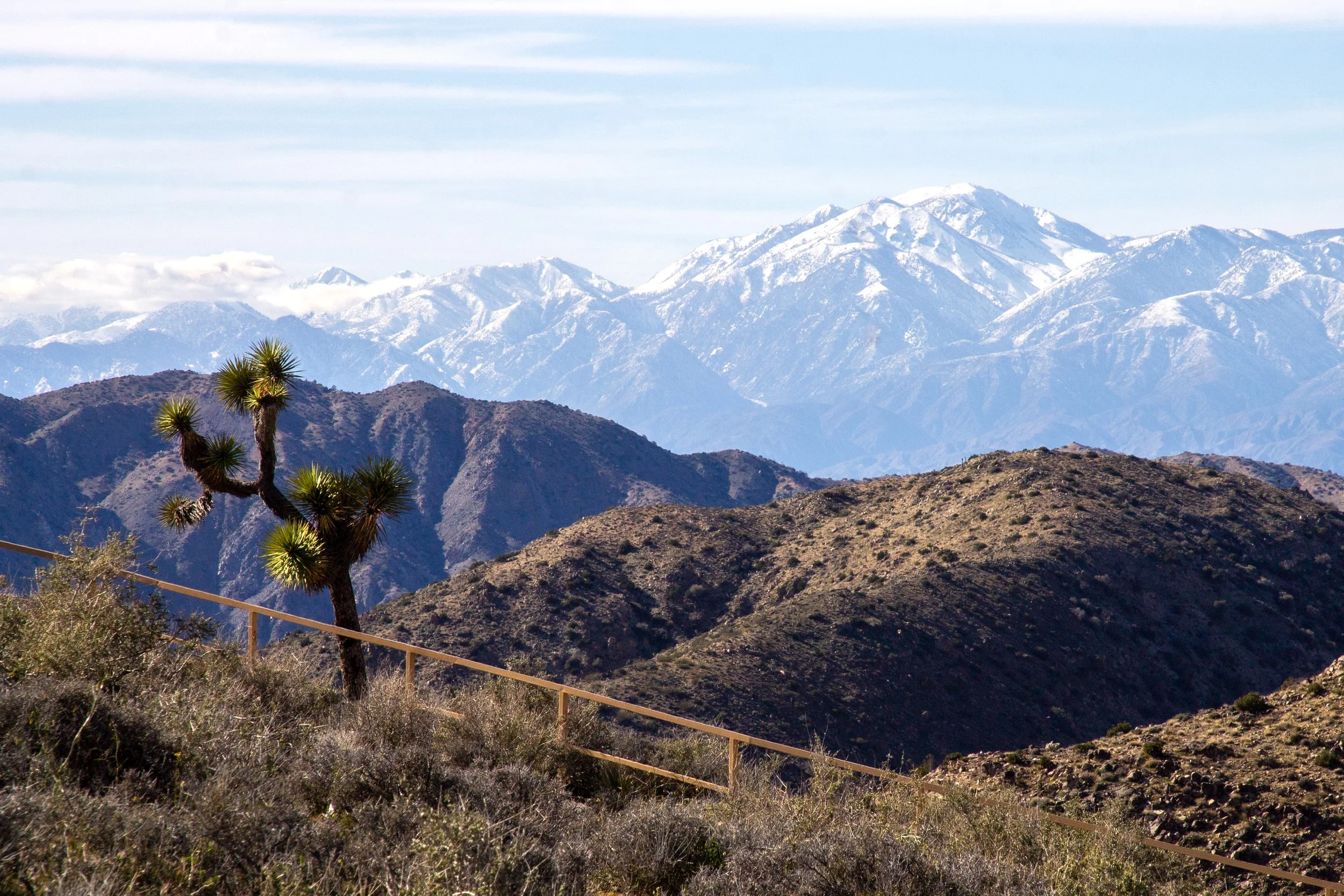
I visit Joshua Tree National Park every few years. The desert scenery and ancient granite mountains are stunning, but mostly, it’s the wackiness of the Joshua trees that keeps me coming back. In an otherwise harsh and humorless landscape, they look like succulents in grass skirts. Absurdity. Winter is Joshua Tree National Park’s busy season. Despite the crowds, it’s a great time to visit. Cooler temperatures are safer for hiking. Occasional high-elevation snow adds drama to the scenery. Here’s how to visit Joshua Tree National Park in the winter, including the best viewpoints, short hikes, and tips to avoid the crowds.
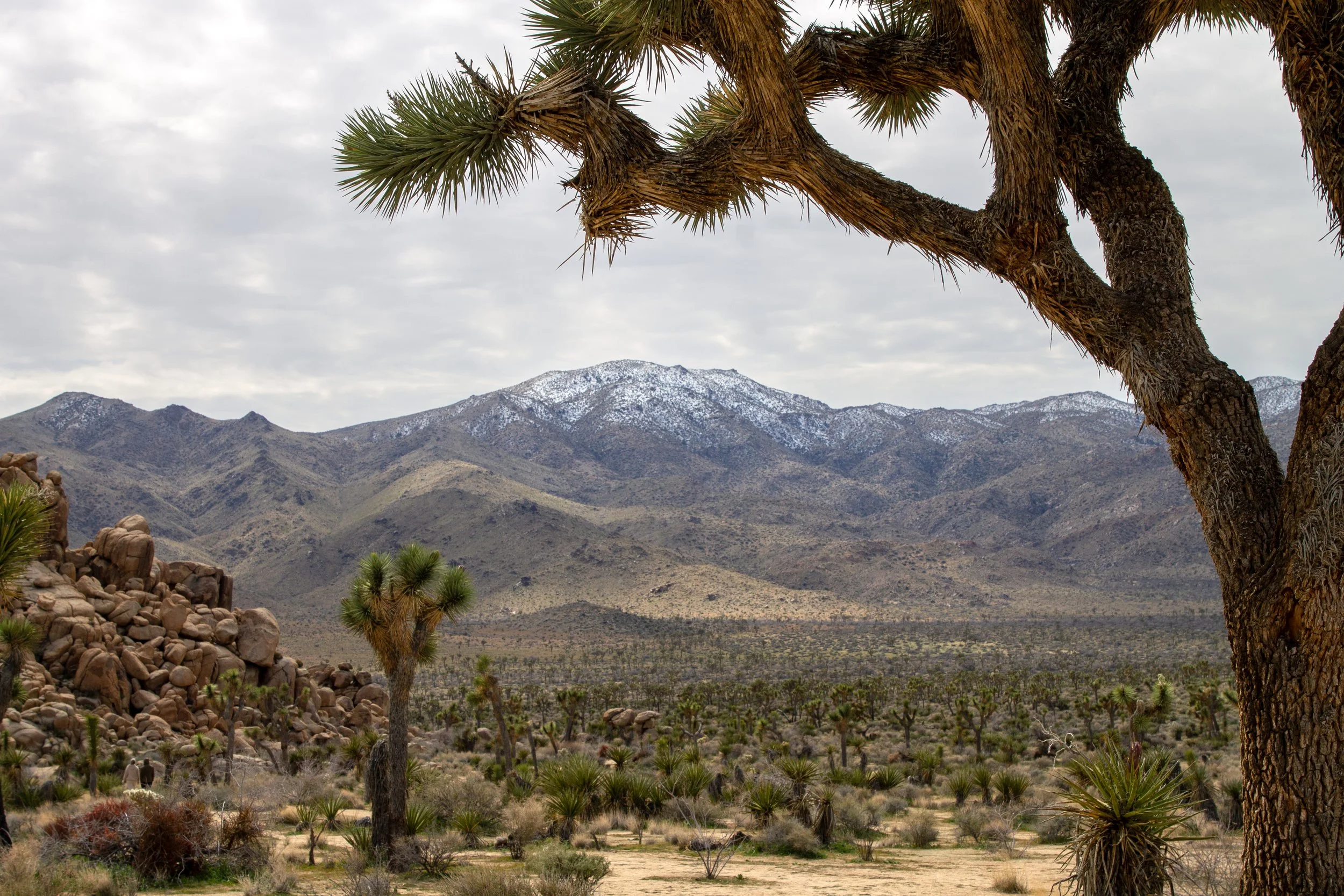
Joshua Tree National Park in February
Quick tips
Entrance fee: $30/vehicle
Biggest winter considerations: Weather and crowds
Snow: Rare, about once a year
Best short hike: Hidden Valley
Best viewpoint: Keys View
Time to visit: 1-2 days
Drinking water: At visitor centers only
Reception: None, not one measly bar
Closest towns: Yucca Valley and Twentynine Palms, CA
Winter weather in Joshua Tree National Park
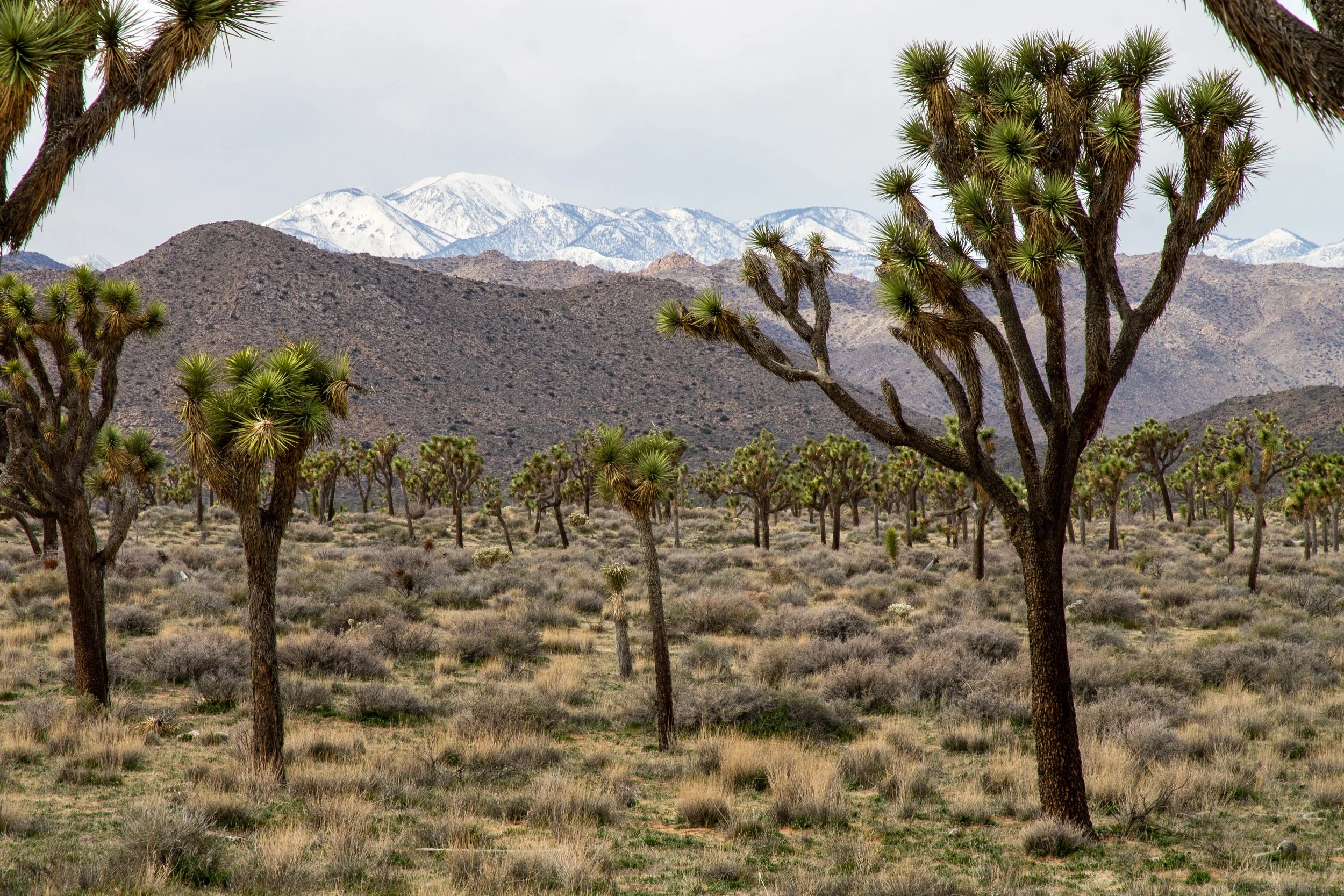
Overnight snow lingers on the mountains around Joshua Tree National Park
The biggest difference between winter and summer visits to Joshua Tree National Park is the weather. While summer days can get scorching, winter is often pleasant and mild, if variable. Average daytime temperatures are in the 60°s F (15°C). They can range from below freezing to over 80°F (25°C). It’s a place you’ll want to bring layers. On different winter visits, I’ve needed anything from shorts and a T-shirt to a winter coat and hat.
The desert environment in Joshua Tree National Park has big day-to-night temperature swings. Midday will be a lot warmer than early morning and evening. If you’re camping, watching the sunset, or stargazing, dress warm. Overnight temperatures can fall below freezing. Joshua Tree National Park gets rain once in a while. It rarely snows, about once a year. Extreme weather, such as hail, flash floods, and strong winds, is also possible.
Winter has the best weather for hiking in Joshua Tree National Park. With little shade, the trails can be punishing on hot summer days. The cooler winter days make hiking safer and more comfortable. Still, make sure to bring lots of water, cover up, and wear sunscreen. If you’re not used to hiking in the desert, pick an easier trail than you would usually tackle.
Crowds in the winter
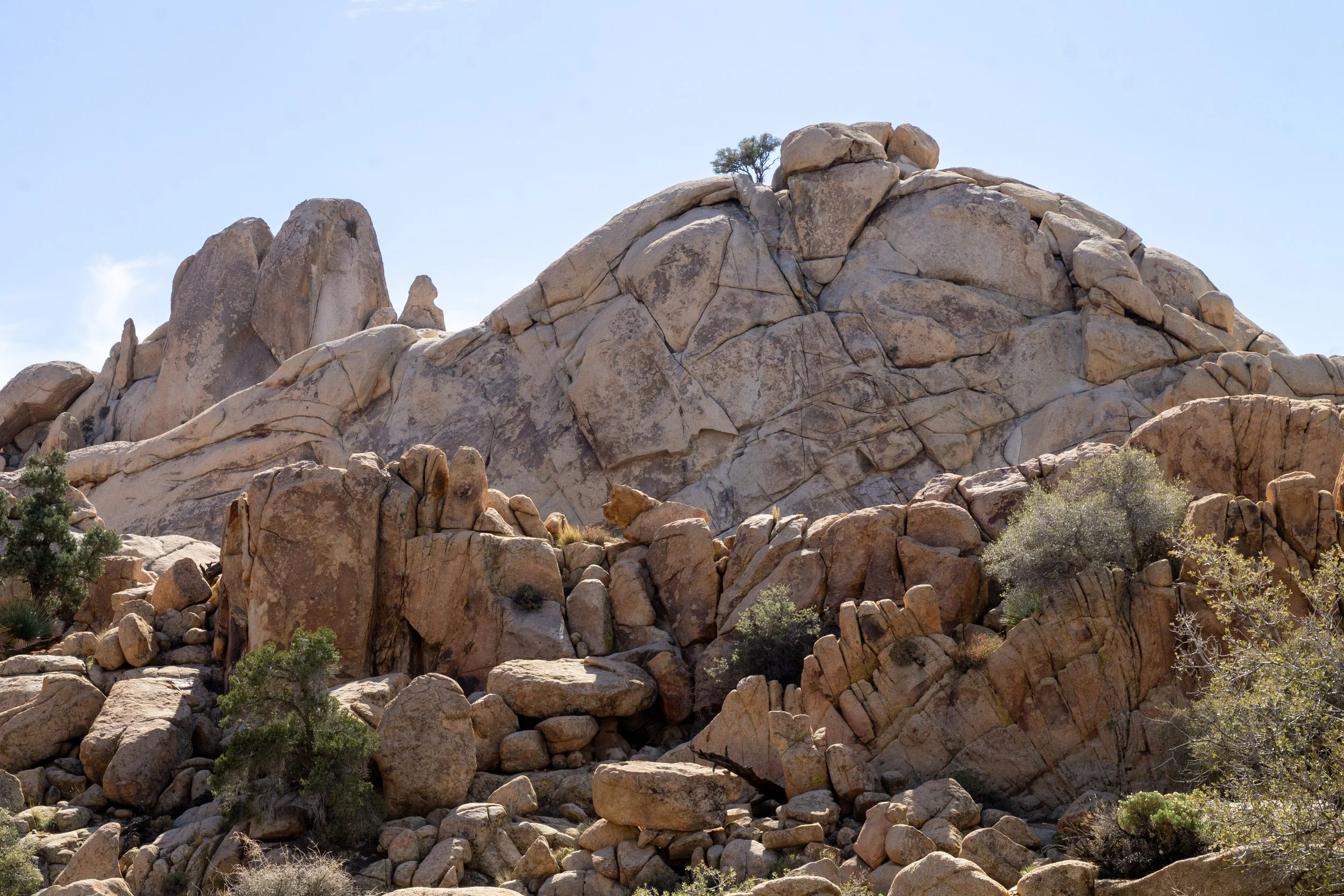
The Hidden Valley hike is one of the most crowded in Joshua Tree
Crowds are the other major difference between winter and summer visits to Joshua Tree National Park. The park’s busy season is from October through May. Weekends, holidays, and spring break bring the most visitors. It makes sense. The weather is usually better, and people are escaping cold winters in other places.
Although Joshua Tree is one of the busiest national parks in the US, I’ve never had many problems with crowds, even in the winter. Plenty of other people were around, but I haven’t come across many full parking lots or long lines. Granted, my last visit was on a Friday.
Here are some tips to manage the crowds in the winter:
Visit on a weekday.
Arrive early. The National Park Service recommends being at the entrance by 8 AM to avoid long lines.
Enter through the North or South Entrance rather than the West Entrance. You’ll see the same stuff, just in a different order.
Go to the most popular places first. Parking lots sometimes close when they reach capacity.
Park only in lots and on gravel shoulders. Besides getting a ticket, parking in other places can damage plants and create a fire risk.
Buy a pass ahead of time.
I’d say my last visit was pretty typical. I arrived at the West Entrance around 11 AM on a Friday. I waited in line for about five minutes before a ranger waved me through the bypass lane (I have an America the Beautiful Pass). Once inside, the park was busy, but it wasn’t challenging to find parking. The Hidden Valley hike was crowded. Other trails were not.
Cost
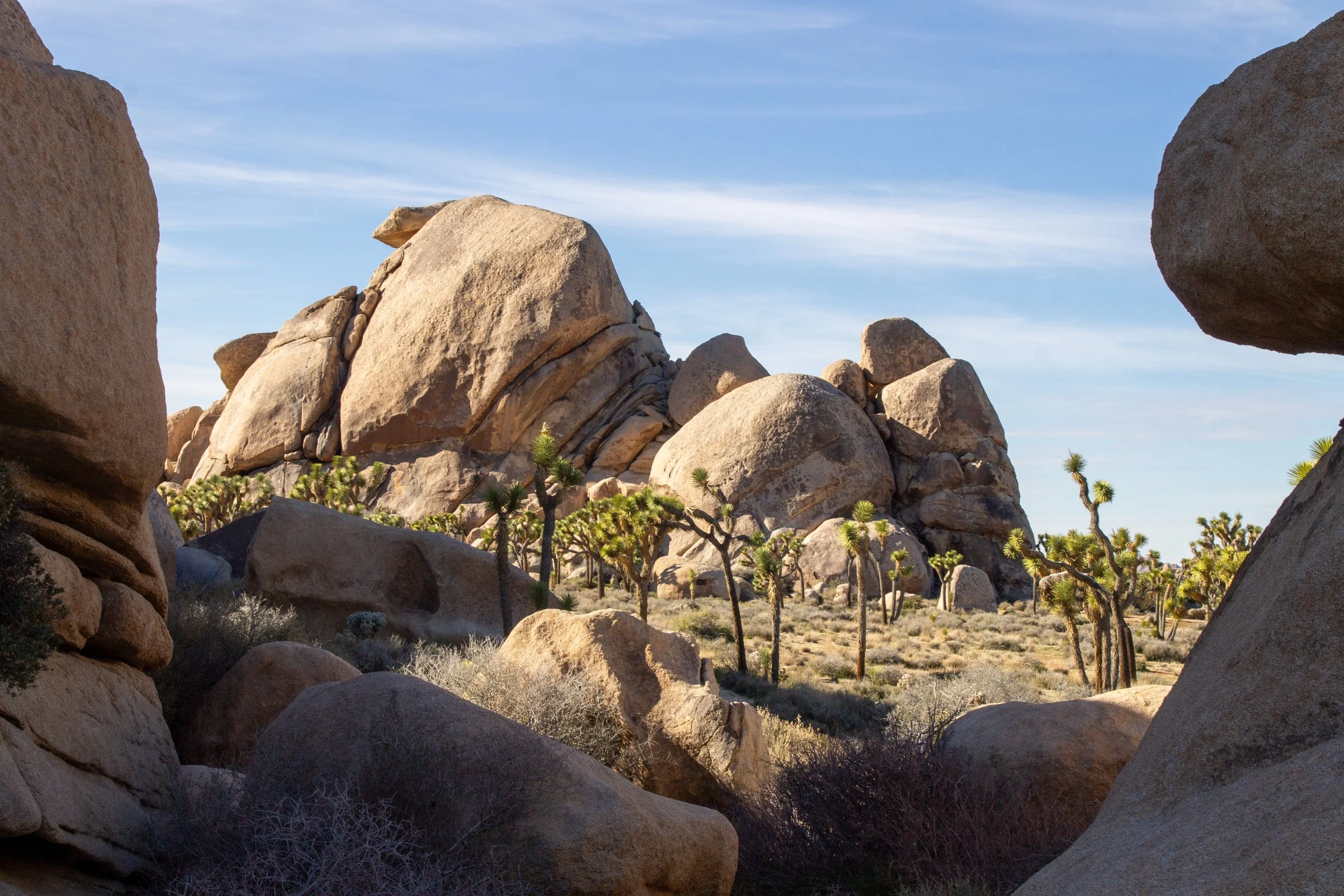
Cap Rock
Joshua Tree National Park charges admission. It’s $30/vehicle, which is good for 7 days. Motorcycles are $25. Pedestrians are $15. Kids under 16 enter for free. You can buy a pass with a credit card at park entrances. Buying a digital pass online in advance can save you time when you arrive.
If you plan on visiting Joshua Tree National Park more than once a year, but not other national parks or forests, it makes sense to buy a park-specific annual pass for $55.
You can also use an America the Beautiful Pass to enter. I have one of these since I spend a lot of time in the national forests. I was able to skip the line to pay the entrance fee, which was a nice bonus. I’d suggest buying this pass if you plan to visit multiple national parks or forests in a year, or if you qualify for a discount (seniors, military, 4th graders, etc.). Learn more here.
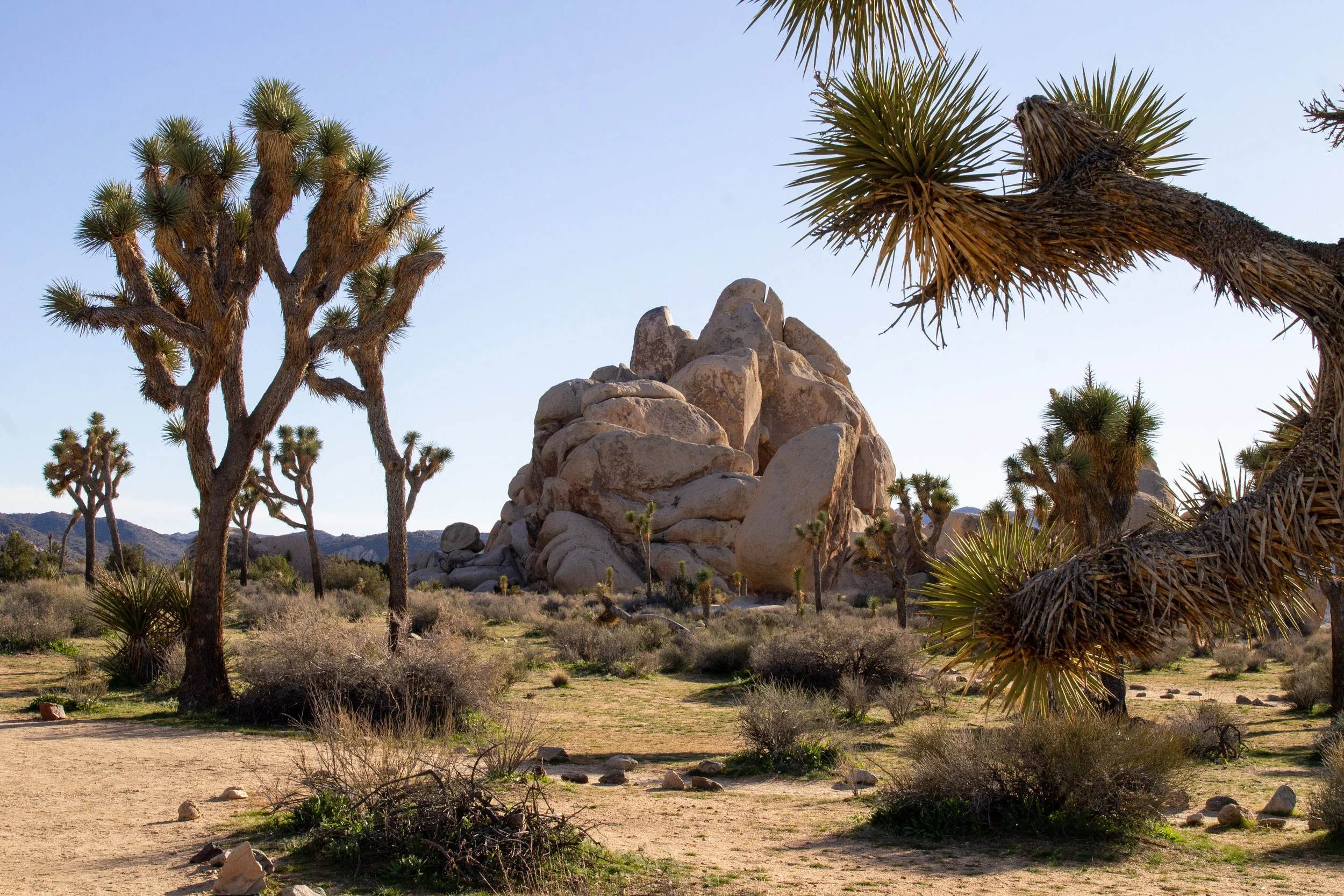
Hall of Horrors
Logistics
Joshua Tree National Park is open every day, all year. You can come and go anytime, 24/7.
Vault toilets are at most of the parking lots.
Many stops have picnic areas. The tables don’t have shade.
Dogs can enter Joshua Tree National Park, but cannot go on the hiking trails. They can be in the car, in parking lots, in campgrounds, and within 100 feet of roads. It’s not safe to leave dogs unattended in cars.
Please do not remove anything from the park.
What to bring to Joshua Tree National Park in the winter
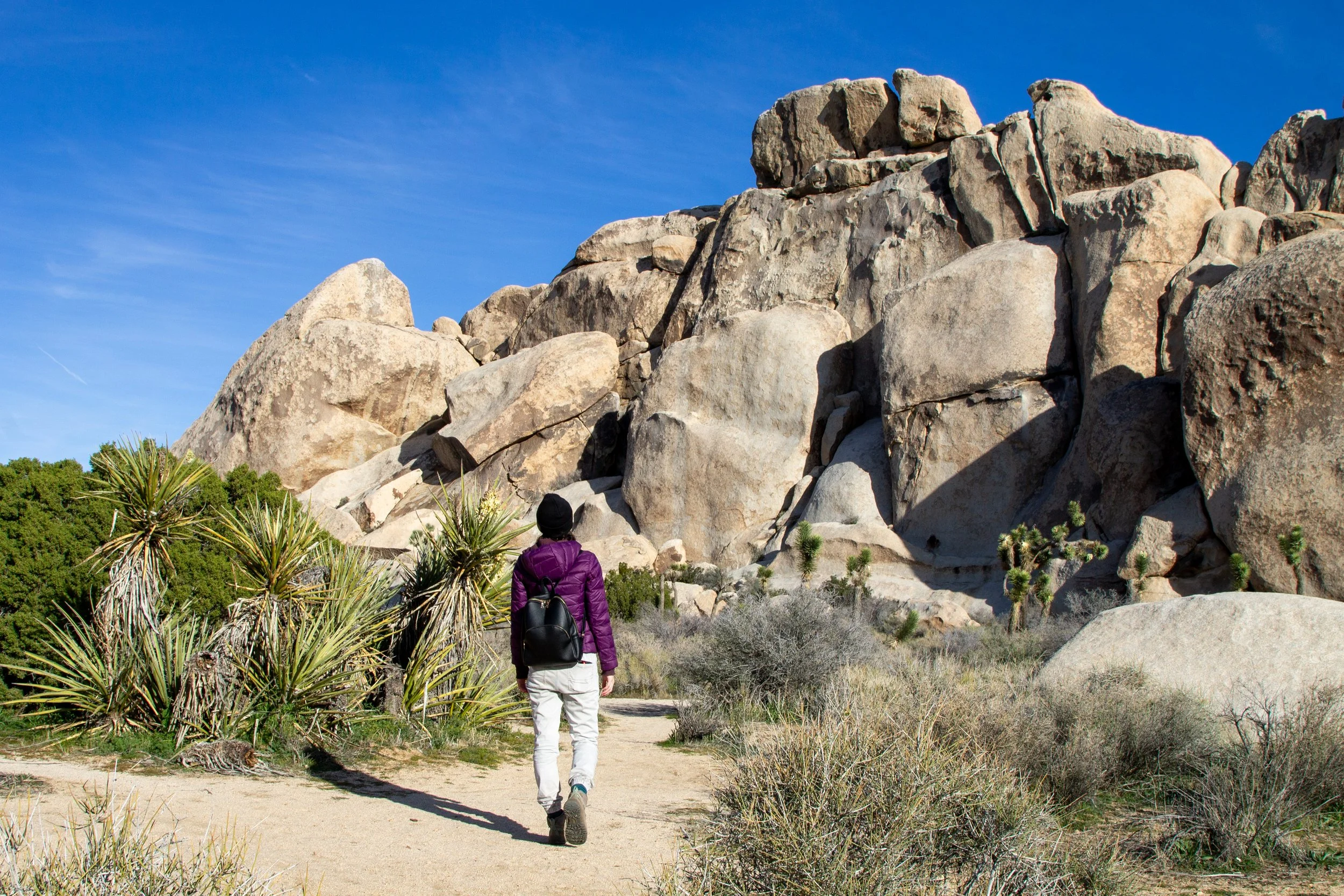
My last February visit was cold and sunny
Once you’re inside Joshua Tree National Park, services are limited. Plan on bringing everything with you that you’ll need. On a winter visit, layers are a must. It’s easy to leave a coat in the car. Here’s what to have with you:
Full tank of gas. Joshua Tree National Park doesn’t have gas stations. The towns outside the park, like Twentynine Palms, are good places to fill up.
Sunscreen. Joshua Tree National Park has little shade.
Plenty of water and snacks. Once you’re in the park, there’s no running water or concessions. If you’re hiking, carry a water bottle.
Offline map. Joshua Tree doesn’t have cell reception.
Layers, especially in winter. Temperatures vary quite a bit, and day-to-night temperature swings make a big difference.
Closed-toed shoes. The desert has a lot of spiky plants. If you’re hiking, it’s a good idea to wear hiking boots. I really like my Keen hiking boots, which are comfortable, waterproof, and stable on uneven ground. I write a hiking blog, so they’ve seen plenty of action.
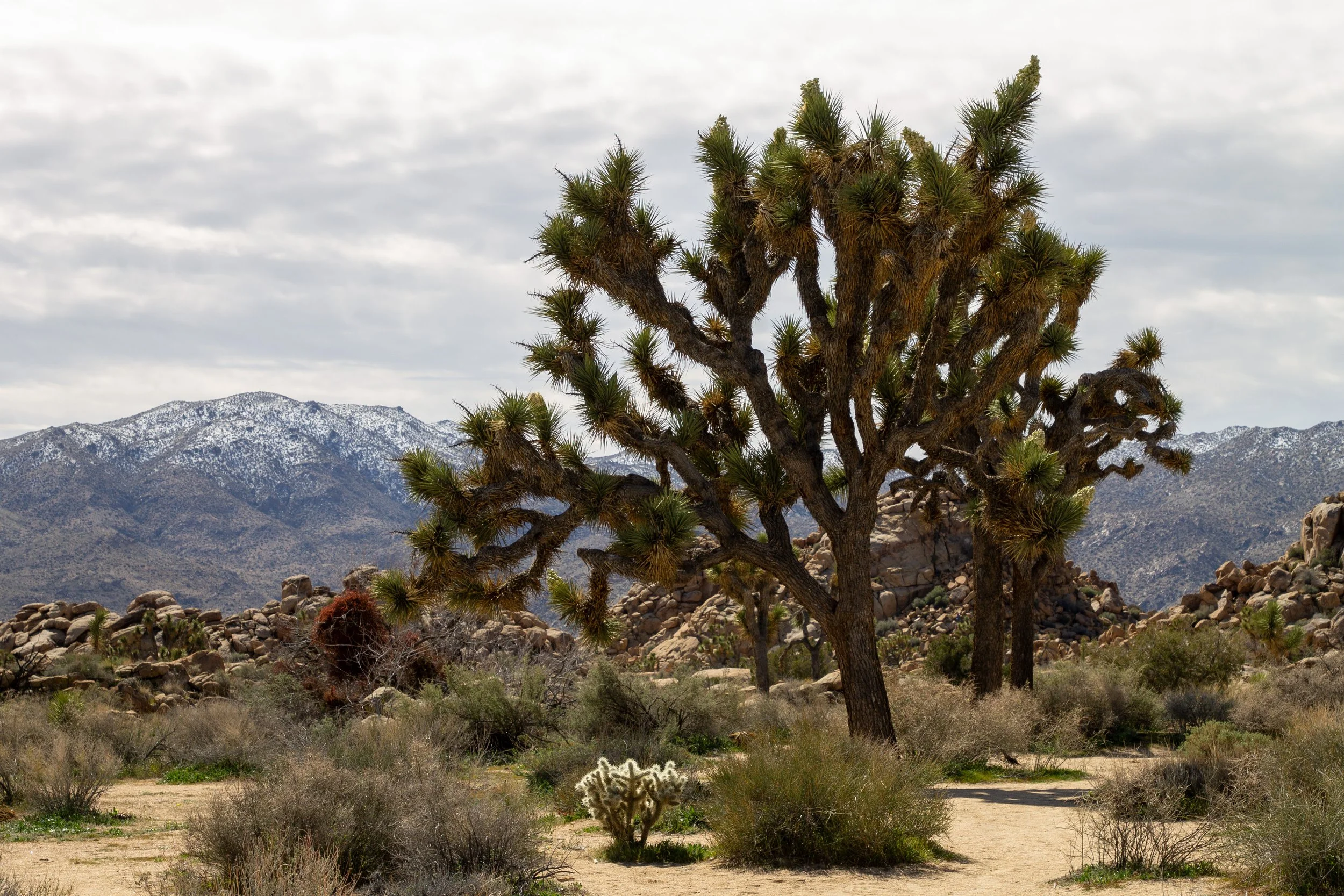
How long to stay
I think a day trip is perfect for visiting Joshua Tree National Park. It’s long enough to get a feel for the park and see the highlights. You won’t see everything in a single day, especially if you’re tackling the hiking trails. A 2 to 3-day visit would be enough to make it to some of the more obscure stops. Winter is a good time for a longer visit, since the temperatures tend to be less oven-like.
Highlights of Joshua Tree National Park
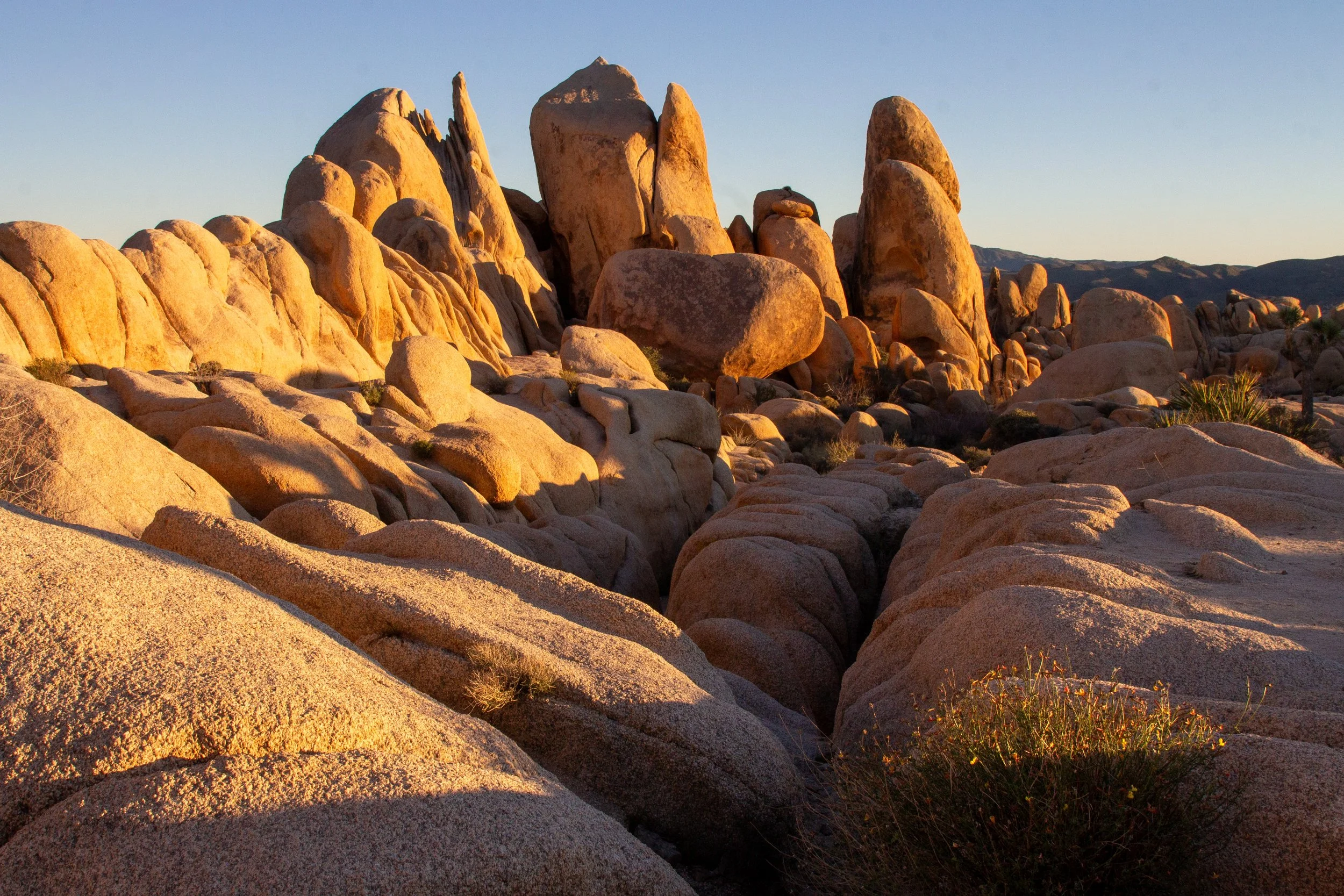
Arch Rock Trail at sunset
Since Joshua Tree National Park gets crowded in the winter, it’s a good idea to pick out the places you’re most excited about seeing ahead of time. Once you’re in the park, go to those first. I’ve found that it gets busier throughout the day and then clears out quickly after sunset. For suggestions, here are my favorite stops:
Hidden Valley hike
Cap Rock
Keys View
Skull Rock
Arch Rock hike
Staying for sunset (around 5:30-6 PM in the winter)
Viewpoints and quick stops
Quail Springs
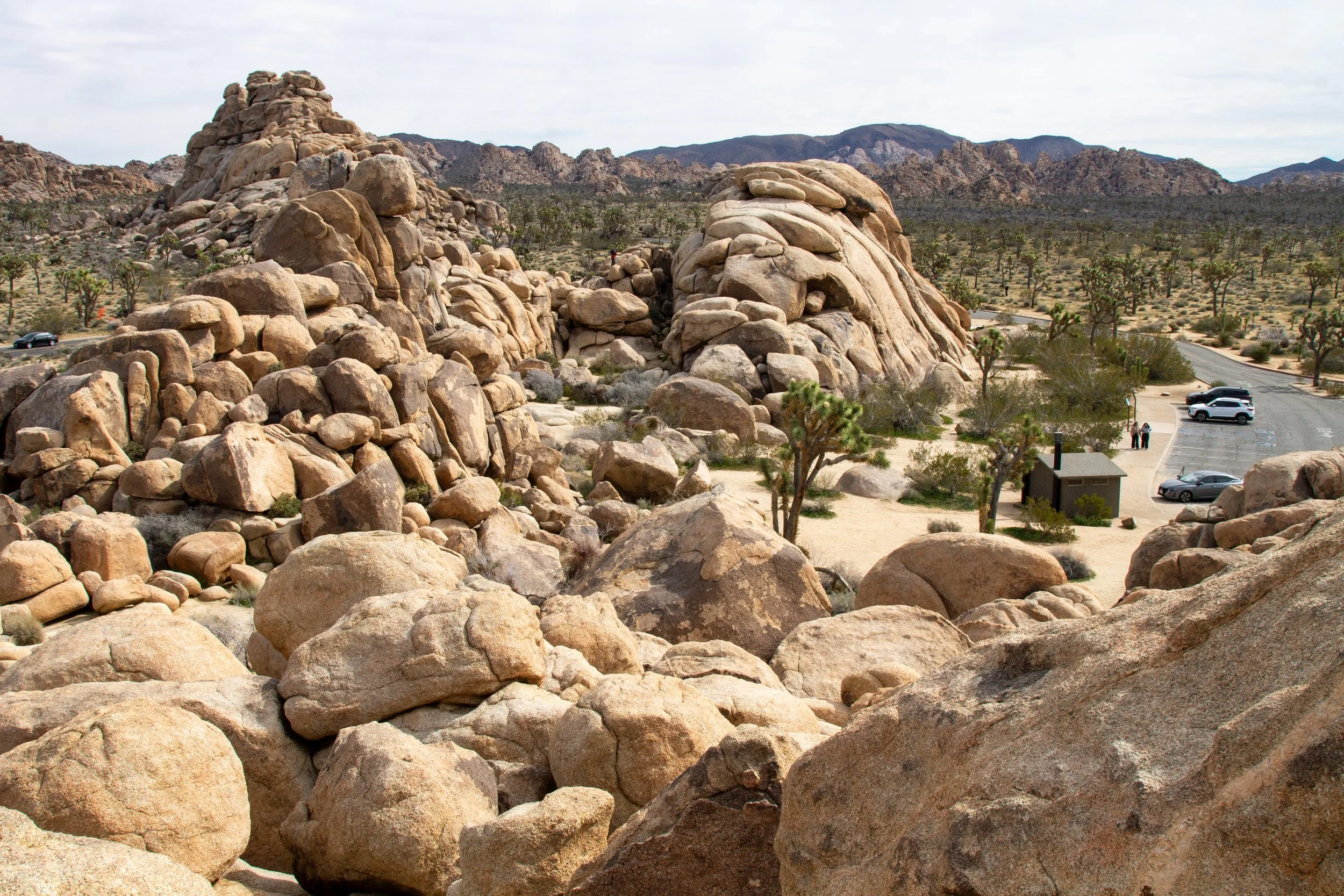
Quail Springs is an easy stop with a picnic area, vault toilets, and cool rock formations. Lumpy granite peaks are a few steps away from the parking lot. A Joshua tree forest stretches out in the distance. It’s a fun place to stretch your legs and do some rock scrambling. Since it’s the closest picnic area to the West Entrance, it can get crowded.
Hemingway
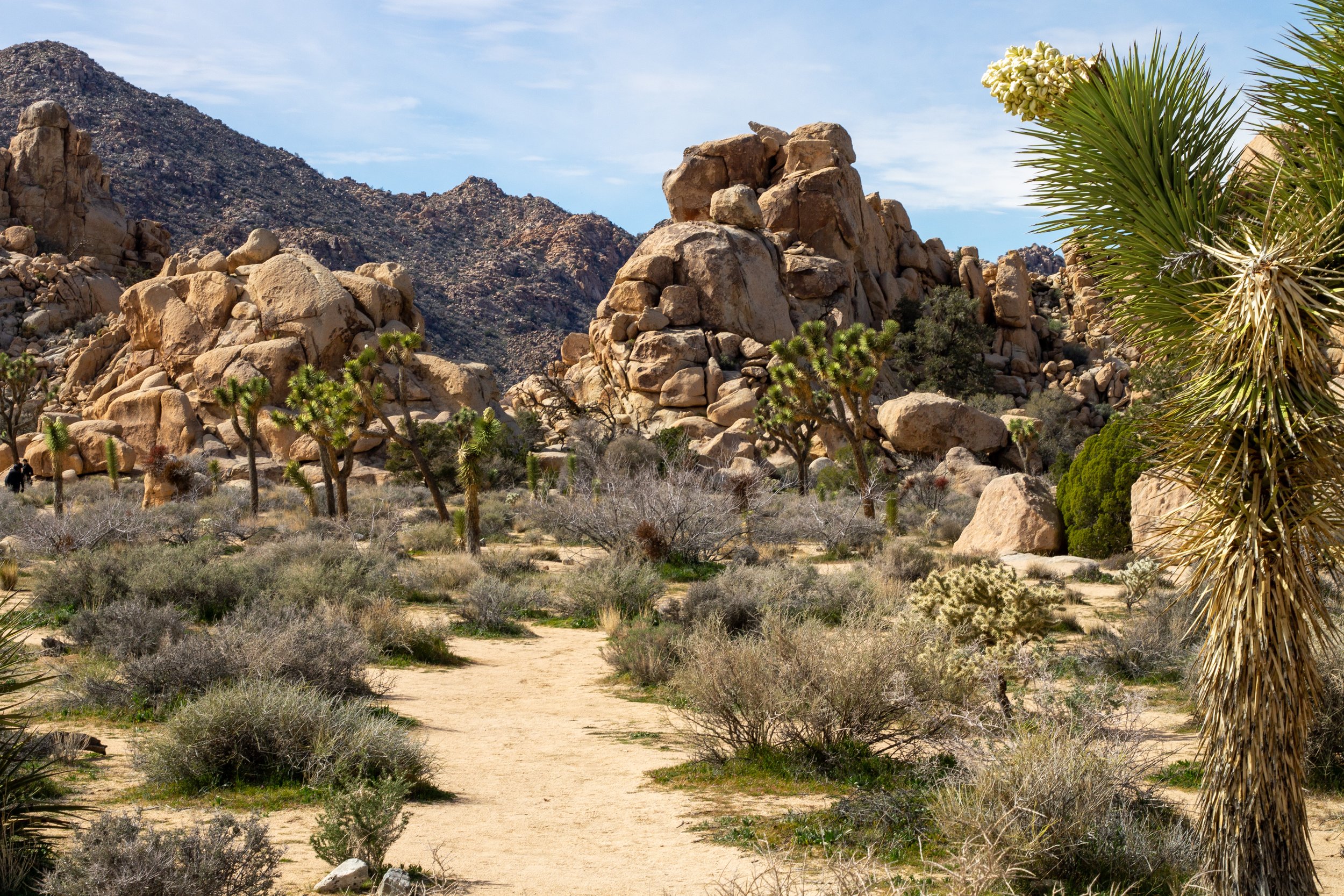
Hemingway is a popular rock-climbing destination with towering granite rock formations on the scale of 80-100 million years old. For non-climbers, it’s a lovely place to see some large Joshua trees and impressive boulders. There’s not an official hike here, but you can follow the climbing access trail to see the rocks up close. If you do the loop around the rocks, it’s a little over a mile. Just be sure to stay on the trail and yield to climbers. A vault toilet is at the parking lot.
Cap Rock
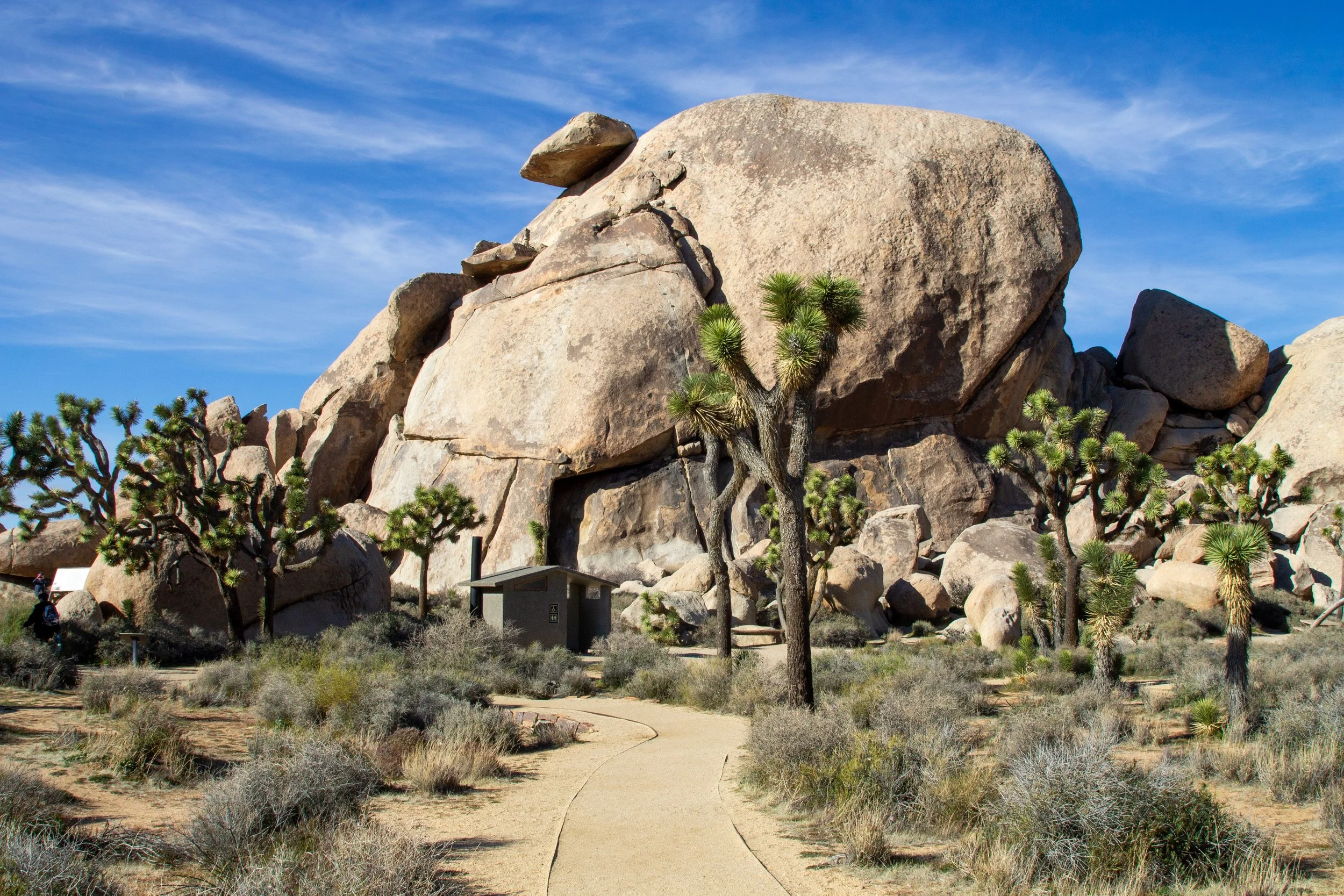
Optional: 0.4-mile loop hike
Cap Rock has one of the most memorable and unnerving rock formations in Joshua Tree National Park. A giant granite boulder rests precariously on top of a large formation, appearing to defy gravity. I know it’s been there for many years, yet I still can’t bring myself to stand directly below it. A vault toilet and picnic area are next to the parking lot. A short and easy interpretive trail starts at Cap Rock and makes a loop past some wonderful Joshua trees. It’s flat, wide, and has a crushed gravel surface.
Keys View
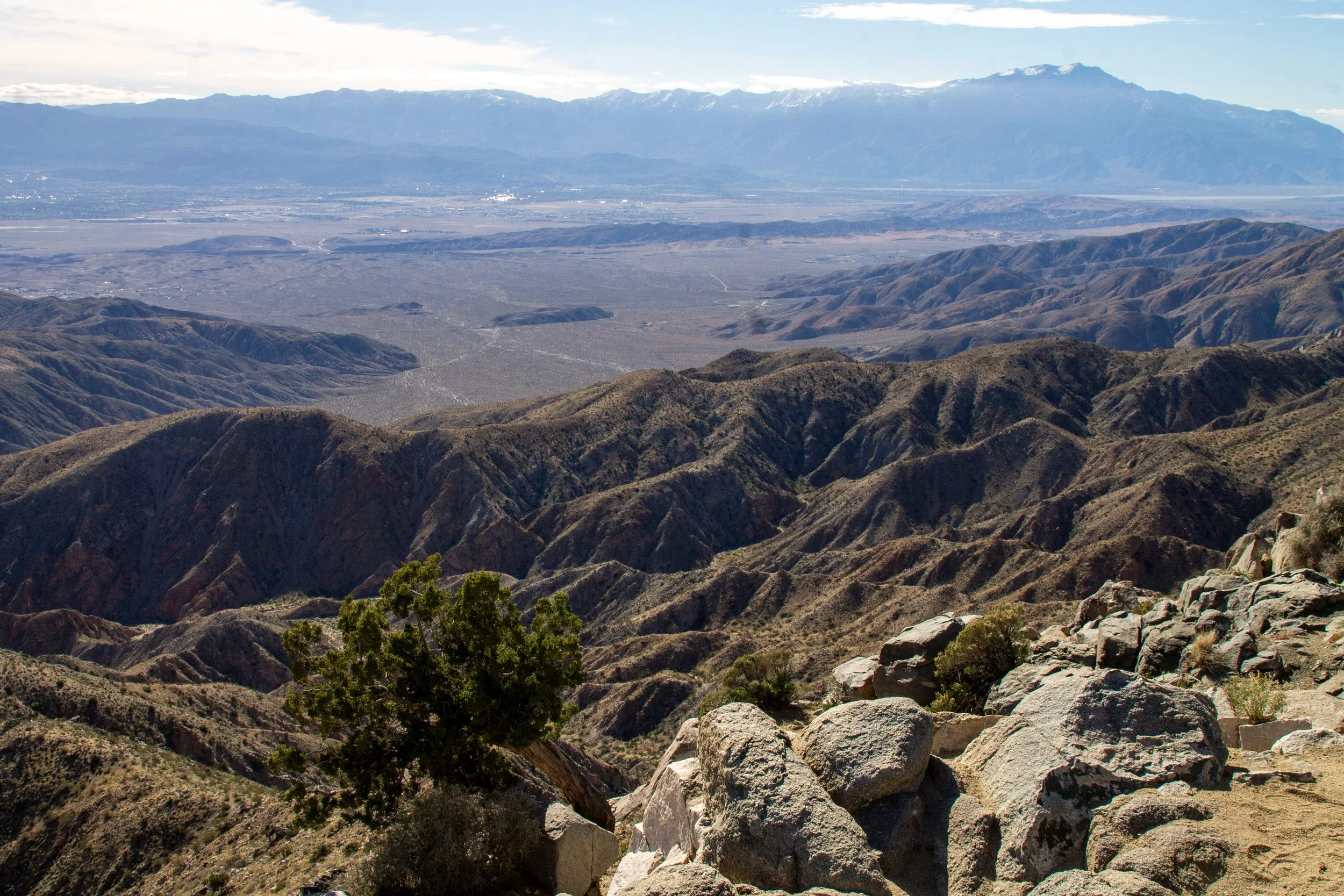
Keys View is a rare spot in Joshua Tree National Park where you can drive up and admire a sweeping mountain vista from above. From the viewpoint in the Little San Bernardino Mountains, you look down onto the Coachella Valley. The big gash in the earth is the San Andreas fault. In the winter, you might see snow on the surrounding mountain peaks. A vault toilet is by the parking lot.
Note that the parking lot and paved walkways at Keys View are steep. If you use a wheelchair or have mobility concerns, look for the Lower Keys View on the way to the Upper Viewpoint. Two ADA spaces are along the road. The views are great from here, too.
Skull Rock
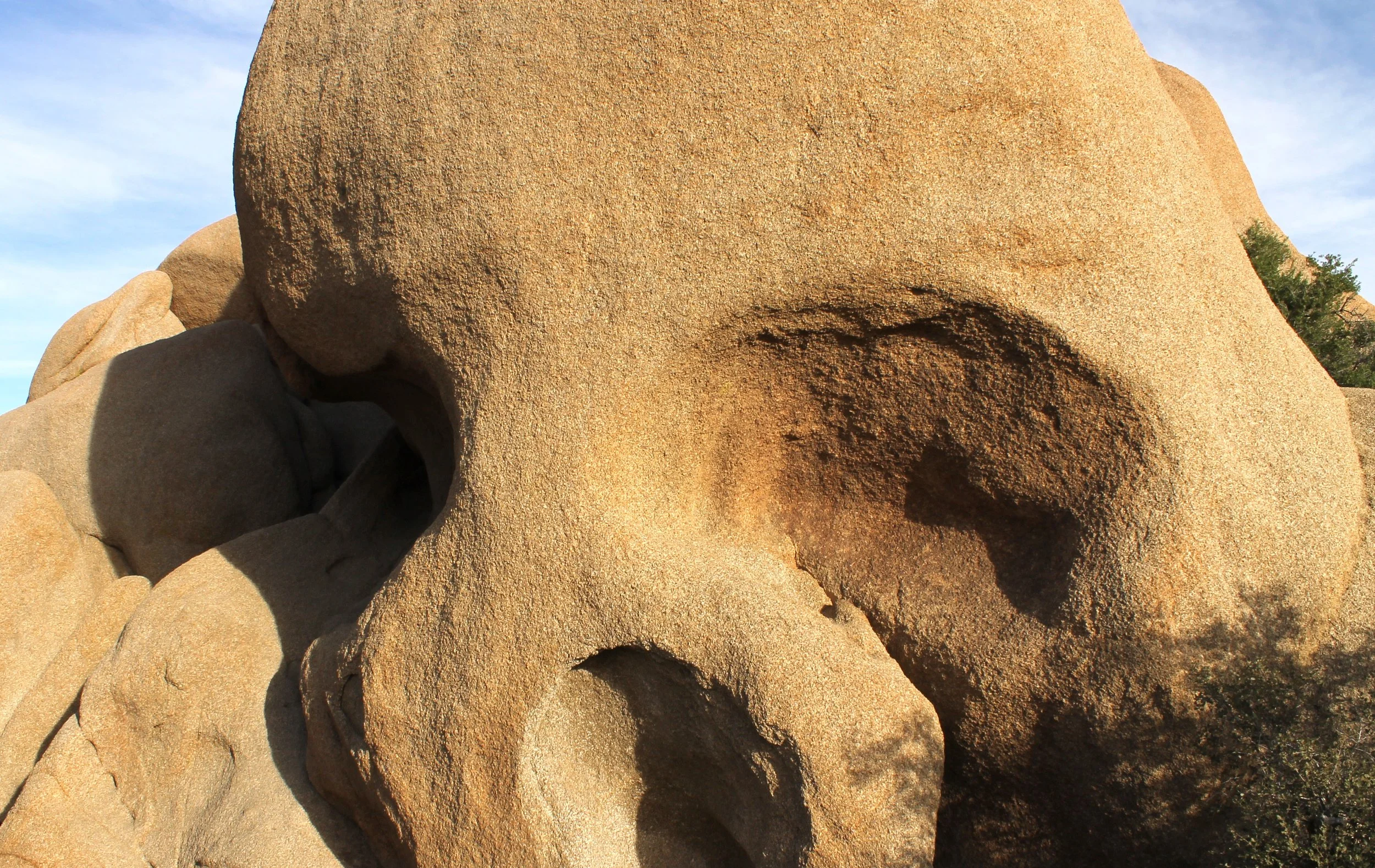
It might just be my imagination, but I feel like Skull Rock has gotten a lot more popular recently. My picture is from a few years ago, when no one else was around. On my last visit, there was a long line for selfies. I get it. It’s cool. Skull Rock is an easy stop right next to the road. It looks like a big ol’ skull. The boulders around it are fun for scrambling. You don’t need to hike to see the skull, but the 1.7-mile Skull Rock Nature Trail begins here. The Discovery Trail starts across the road.
Hall of Horrors
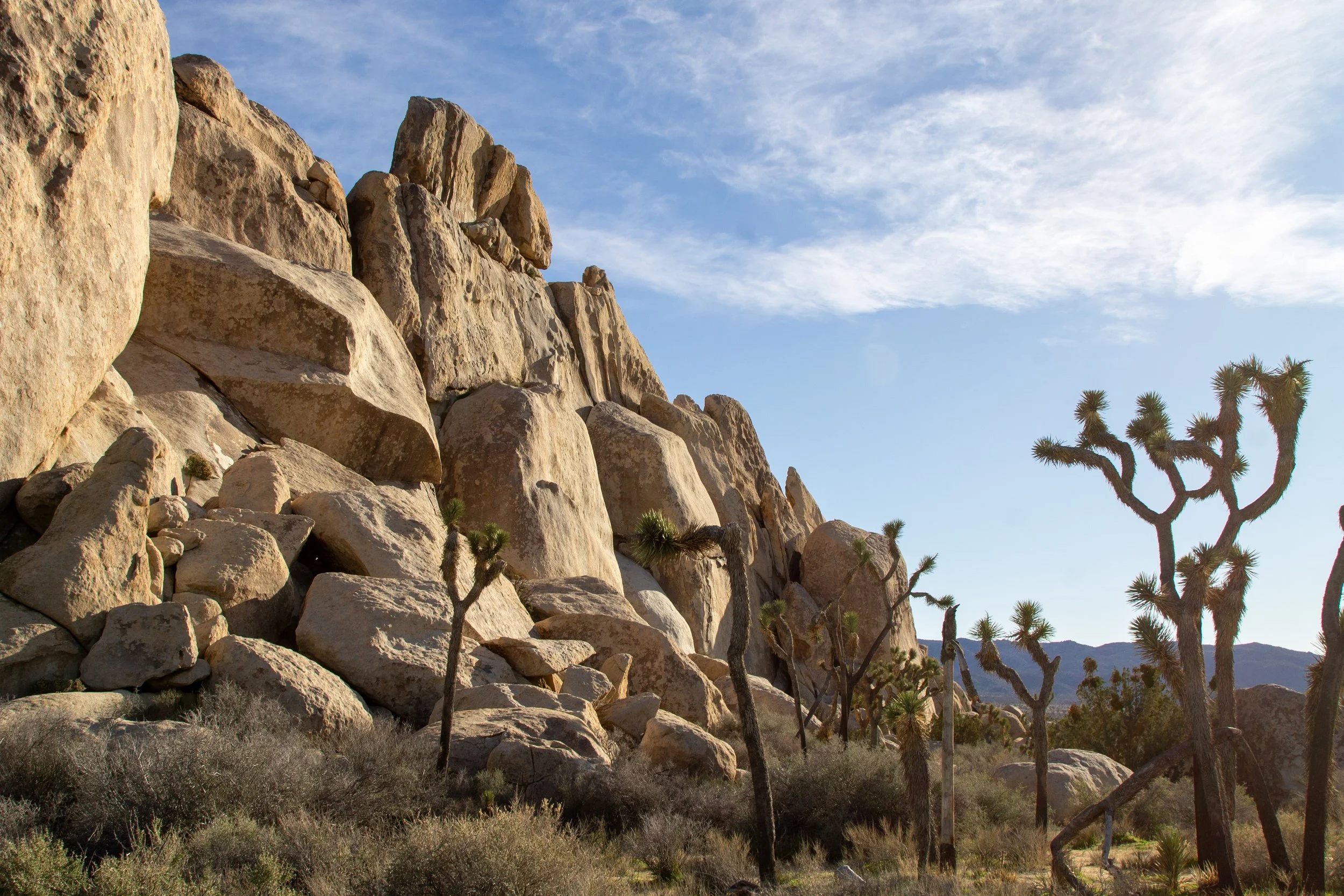
Optional: 0.6-mile loop hike
First skulls, now horrors, oh my. I was hoping to see something at least a little horrifying at the Hall of Horrors, but no. It’s beautiful granite rock formations similar to those at Quail Springs and Hemingway. The Hall of Horrors is mostly a climbing spot, but you can follow the climber’s trail around the rocks for a short hike. Look for a couple of narrow slot canyons along the way.
Short hikes
Winter is the best hiking season in Joshua Tree National Park. My favorite way to visit is doing multiple short hikes, both for variety and because it makes it easier to carry enough water. Here are a few great beginner-friendly trails.
Discovery Trail and Skull Rock Nature Trail
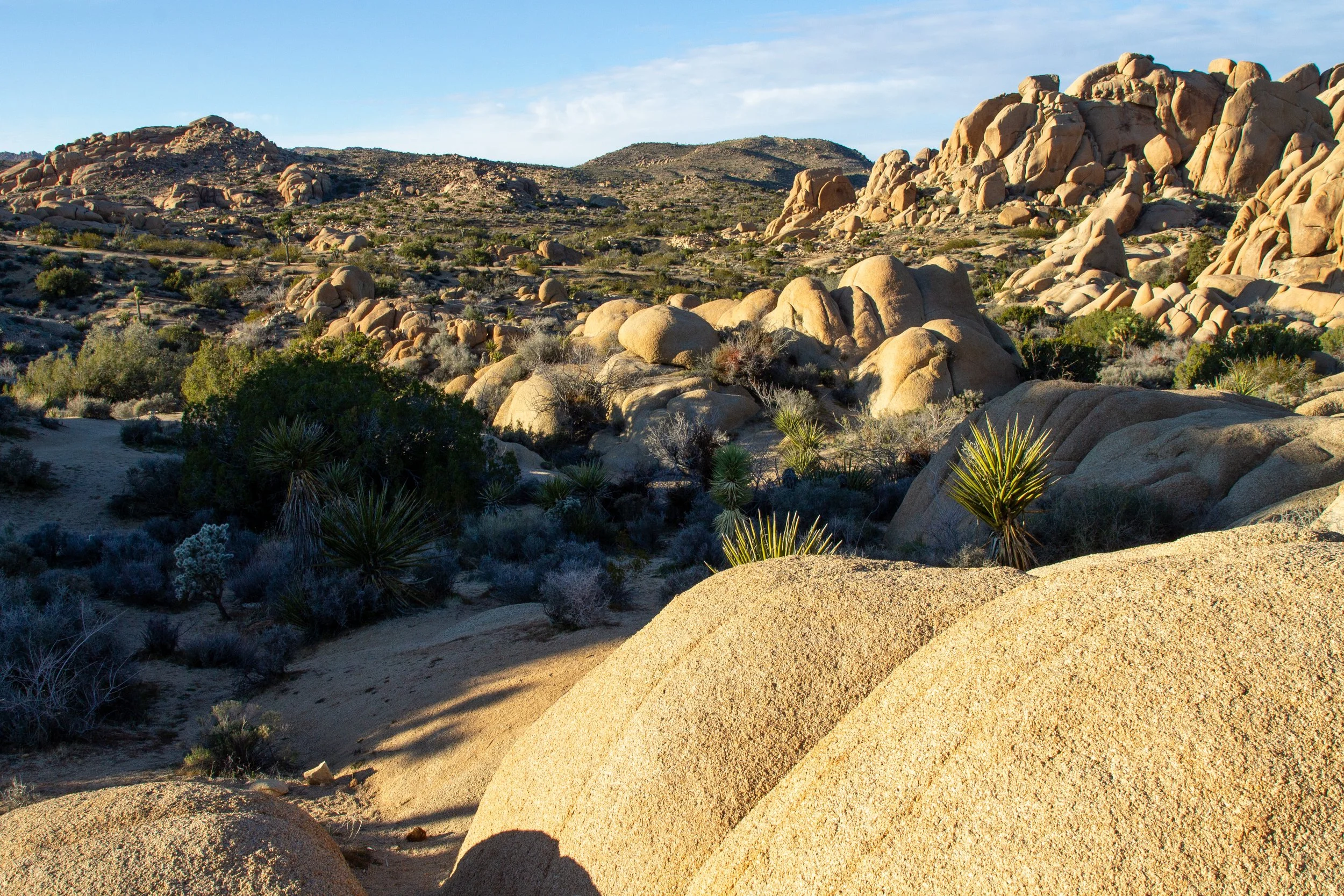
Discovery Trail: 0.7-mile loop
Skull Rock Nature Trail: 1.7-mile loop
Two hiking trails begin at Skull Rock. They are separate loops that are easy to combine, and winter is a good time to try out a longer distance. Across the road from Skull Rock is the trailhead for the 0.7-mile Discovery Trail. It makes an easy loop through rocky desert scenery, with lots of chunky boulders and a broad slot canyon.
Or, follow the trail that starts at the skull to begin the Skull Rock Nature Trail. You’ll pass Jumbo Rocks and the walk through the Jumbo Rocks Campground, then return along the other side of the road.
Have offline maps with you for both of these hikes. I found the directions in some areas unclear. They have some narrow places and uneven surfaces that make them inaccessible to wheelchairs.
Hidden Valley
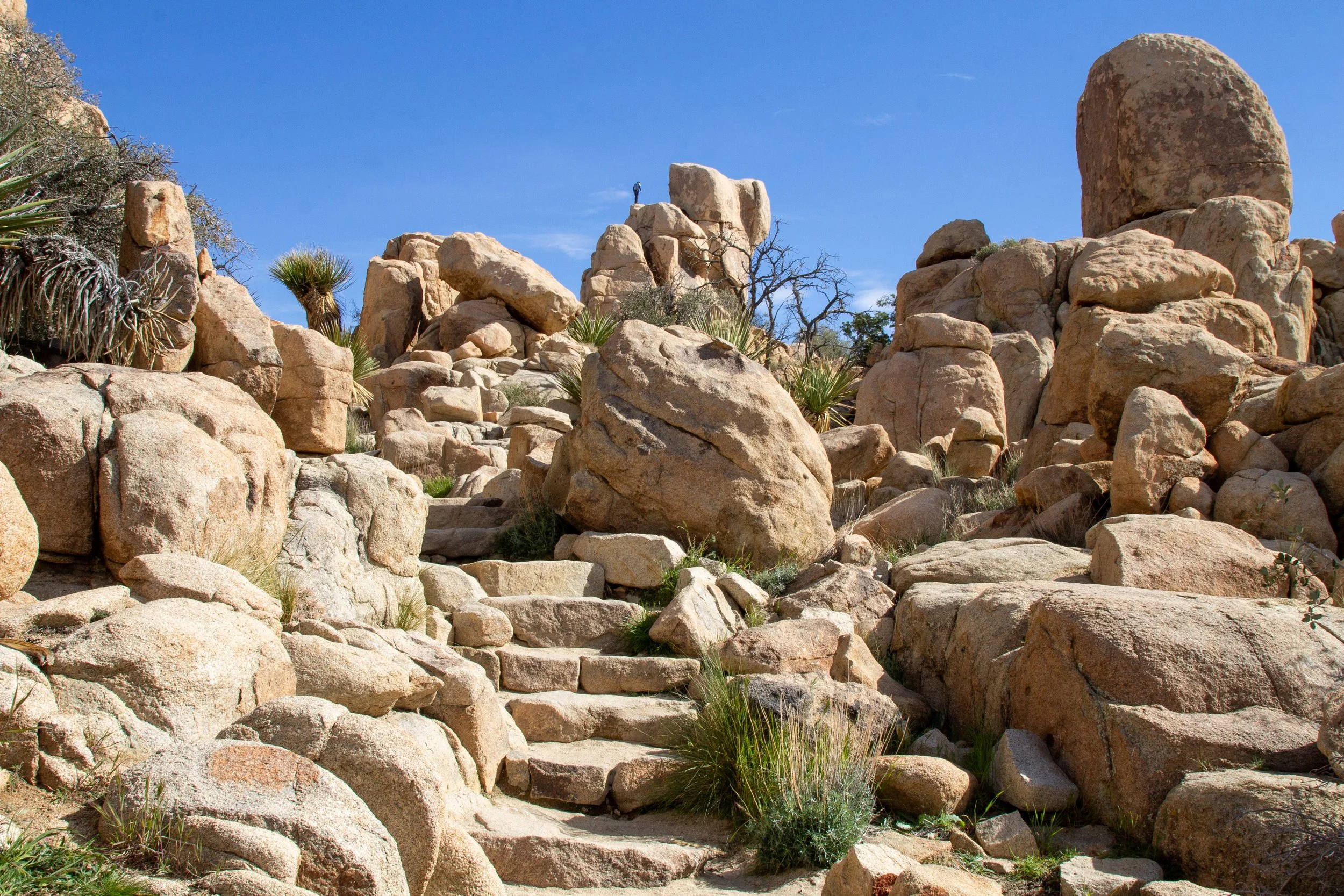
Distance: 1-mile loop
It’s hard to choose, but Hidden Valley is probably my favorite short hike in Joshua Tree National Park. It’s also one of the most popular. Winter brings people to the trails in the greatest numbers, so prepare to hike with many others. The busiest section is the beginning. After less than a quarter mile, people are able to spread out more. The varied and otherworldly rock formations are what set this trail apart. The hike is flat and easy, but does have steps and uneven terrain.
Ryan Ranch
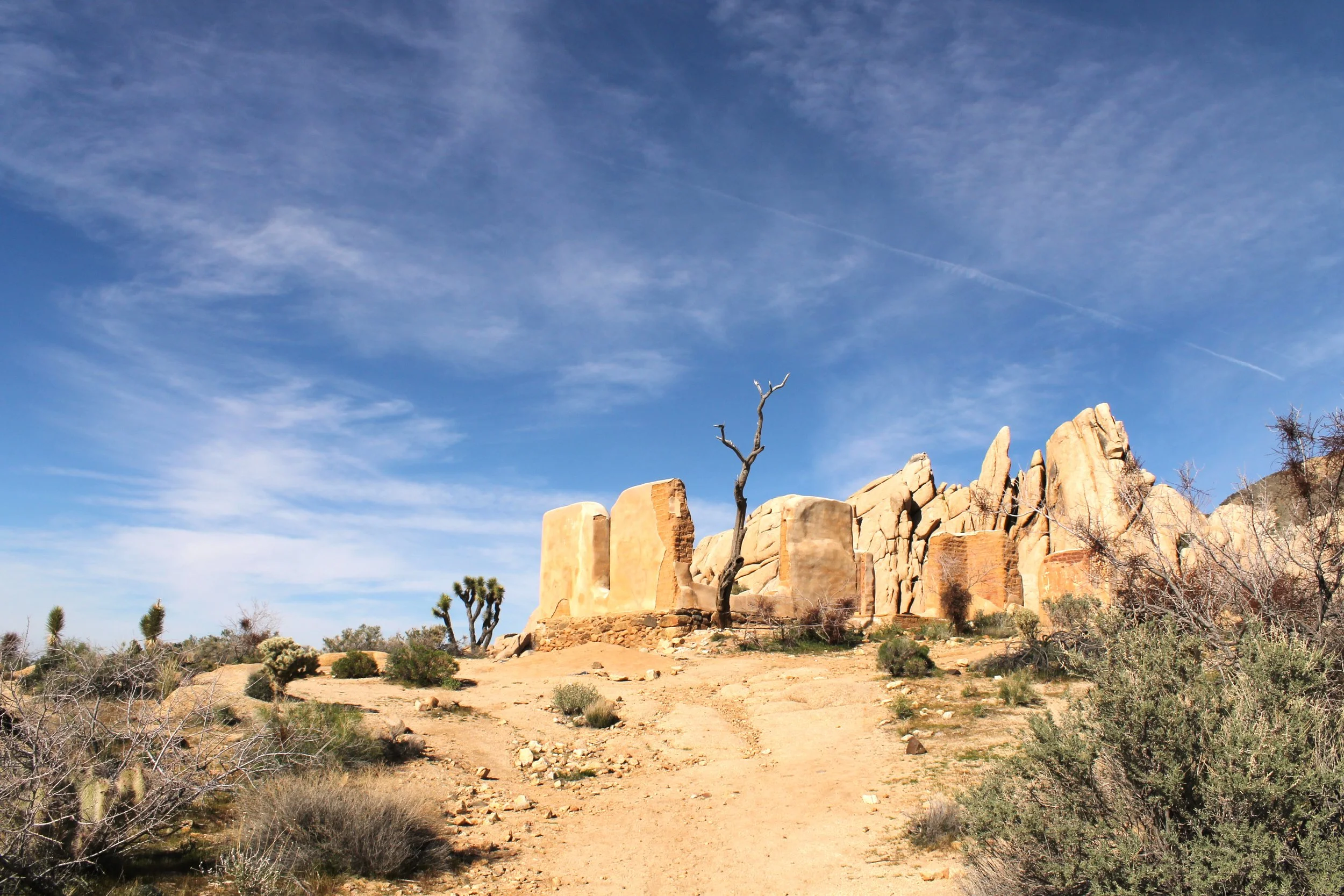
Distance: 1.1 miles out and back
Ryan Ranch is a short hike that leads past tall and impressive Joshua trees on the way to a satisfying finale, the remains of a former homestead site. The trail ends at a collection of old structures and artifacts. A windmill blade lies next to a foundation and crumbling abode walls. That sort of thing. Please don’t remove anything. Look for a vertical, gravity-defying rock on the way there. The terrain is fairly flat with gravel and sand surfaces.
Arch Rock Trail
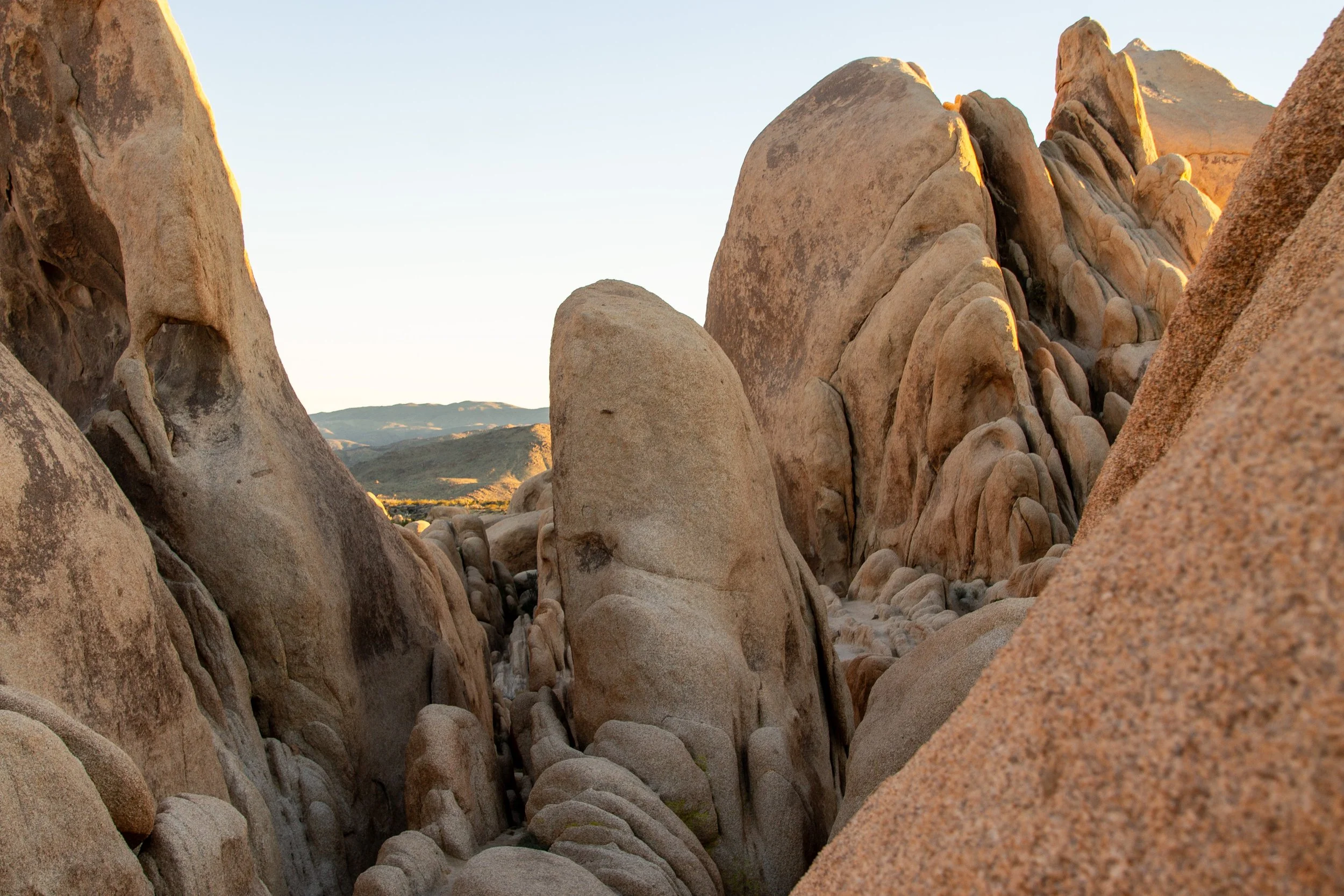
Distance: 1.2 miles out and back
The Arch Rock Trail builds anticipation as you go. You start by walking through flat scrubland and end at fascinating rock formations. The trail’s namesake is the extremely popular Arch Rock, which is just what it sounds like. On an otherwise lightly-trafficked trail, a large group of people was lined up for pictures in front of Arch Rock. While the arch is cool, the scenery around it, I thought, was at least as interesting. If you give up waiting for your turn for a picture (I did), check out the wave-shaped rocks in the slot canyon nearby. Most of the trail is flat and even. The area around Arch Rock has uneven surfaces and steps.
About Joshua trees
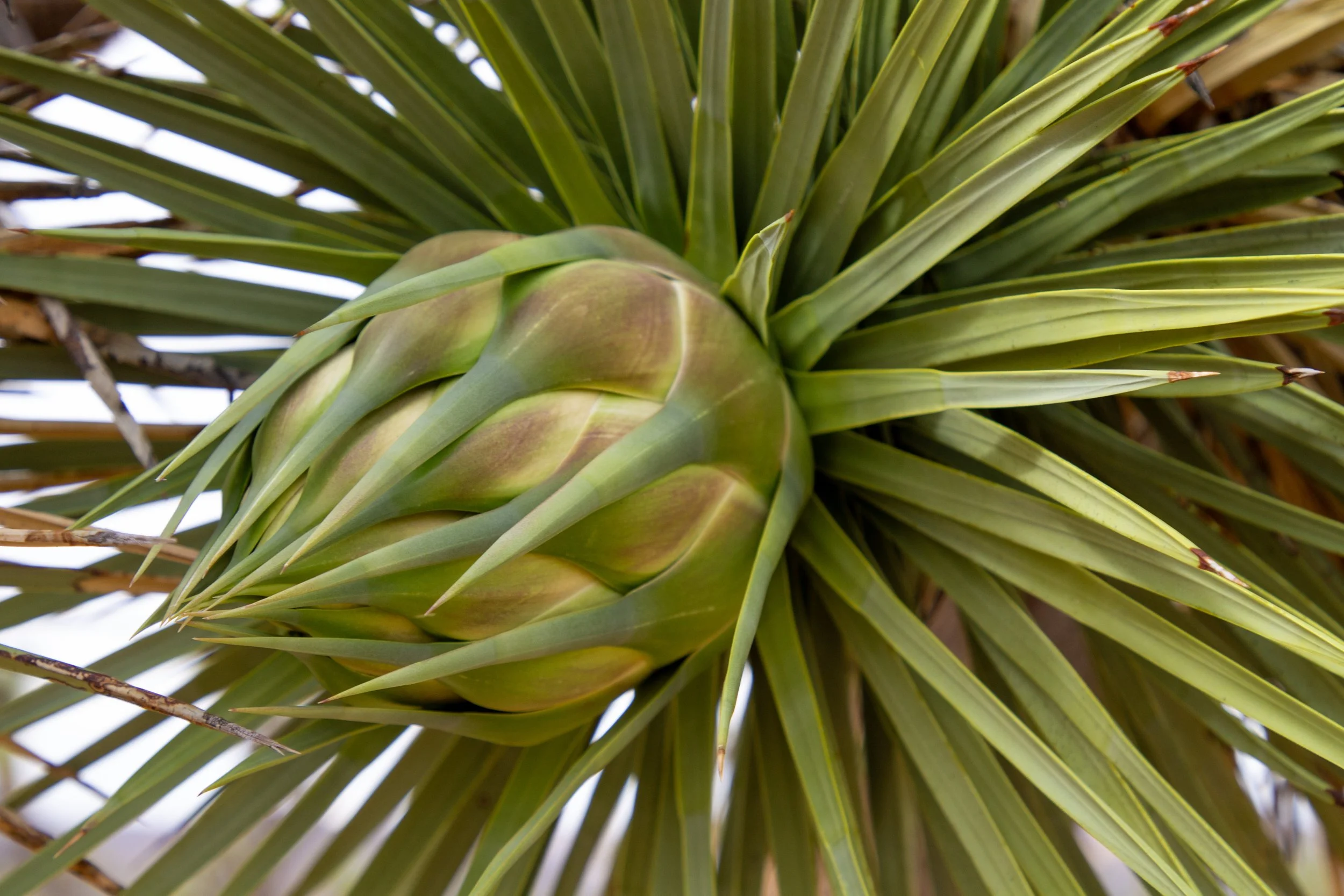
Are they trees? Cacti? Palms? Nope, none of the above. I had to do some research to learn where Joshua trees fall in the world of plants. Turns out that they’re a type of yucca. They’re called trees for their shape rather than their taxonomy. I’ve seen them in other deserts, but never so abundant as in Joshua Tree National Park. They dominate the landscape both in number and size. The park has other plants: creosote, desert almond, Mormon tea, and a few token cholla here and there. But the Joshua trees are the unquestioned stars of the show.
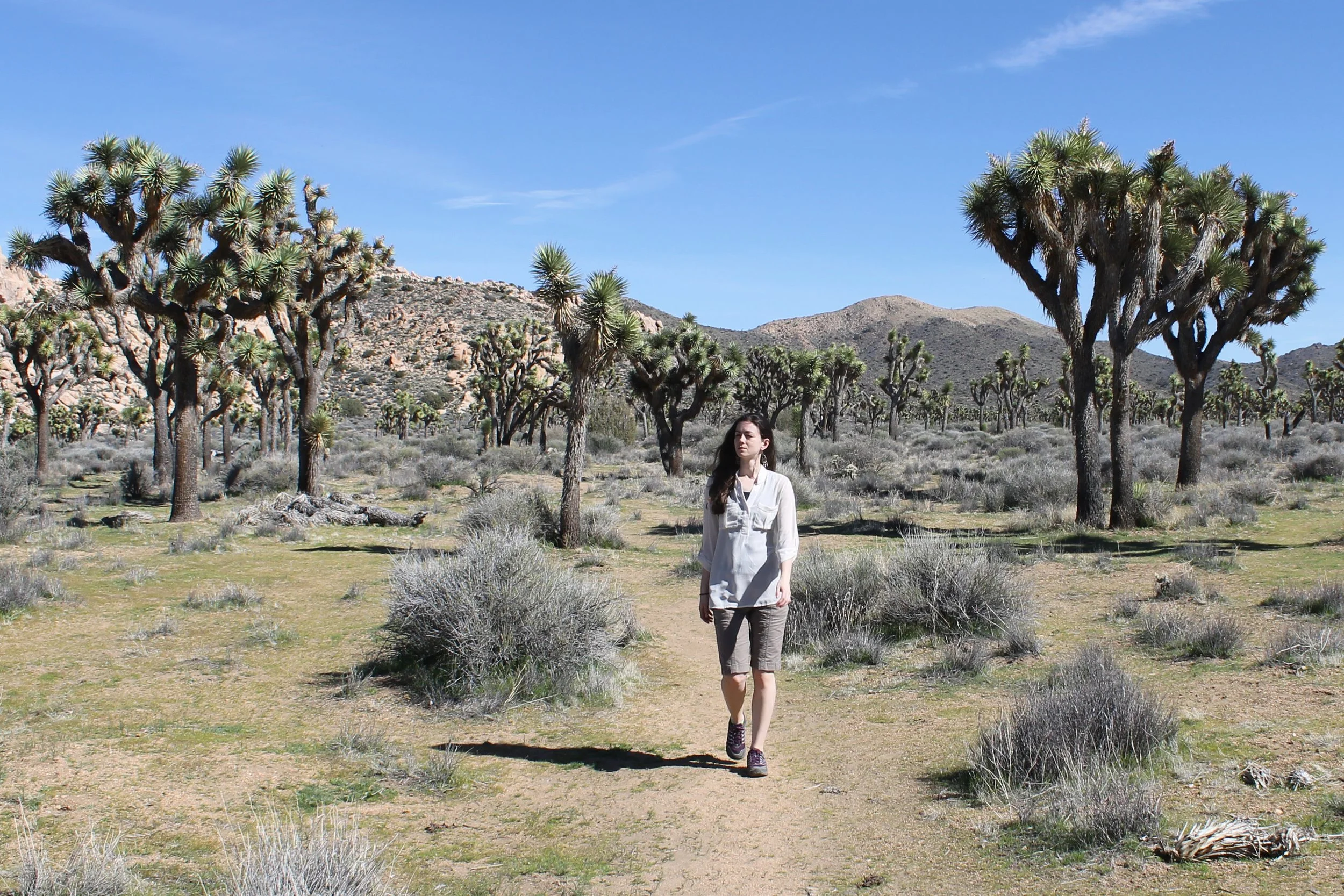
Me and the Joshua trees
Like most desert plants, Joshua trees grow slowly, around an inch or two a year. Their ages are hard to determine, and estimates tend to be based on their height. They can grow to over 40 feet tall and can live over 100 years, sometimes much longer. If you visit Joshua Tree National Park in the winter, you might see the first flowers appearing on the Joshua trees. The blooms usually start emerging in late February. I saw the first flowering stalks on my last February visit, plus a few odd early-blooming wildflowers, like gentian and paintbrush. In general, spring is the best season to see flowers in the Joshua Tree National Park.
Wildlife in Joshua Tree National Park
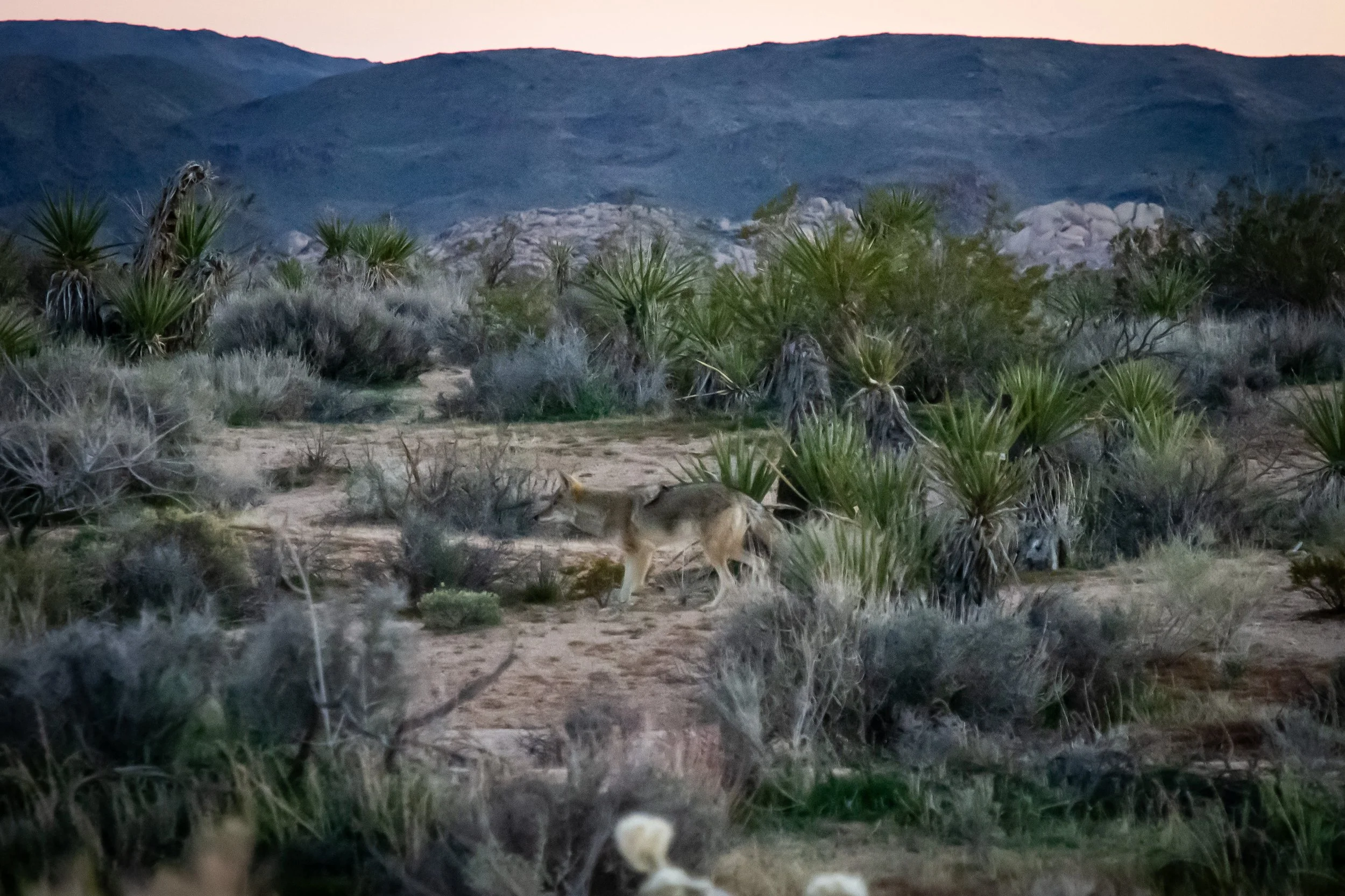
Coyote at dusk
Joshua Tree National Park is a great place to look for wildlife. Many animals live in the park, although, like most desert dwellers, they tend to be shy, well-camouflaged, and hard to spot. Early mornings and evenings are good times to look, especially in quieter corners of the park. Summer tends to be a better season to see reptiles, like lizards and snakes, although you might still spot them on warmer winter days. Over 50 mammal species, including coyotes, jackrabbits, ground squirrels, deer, and big-horn sheep, live in Joshua Tree National Park. Some are around all year. Some hibernate in the winter.
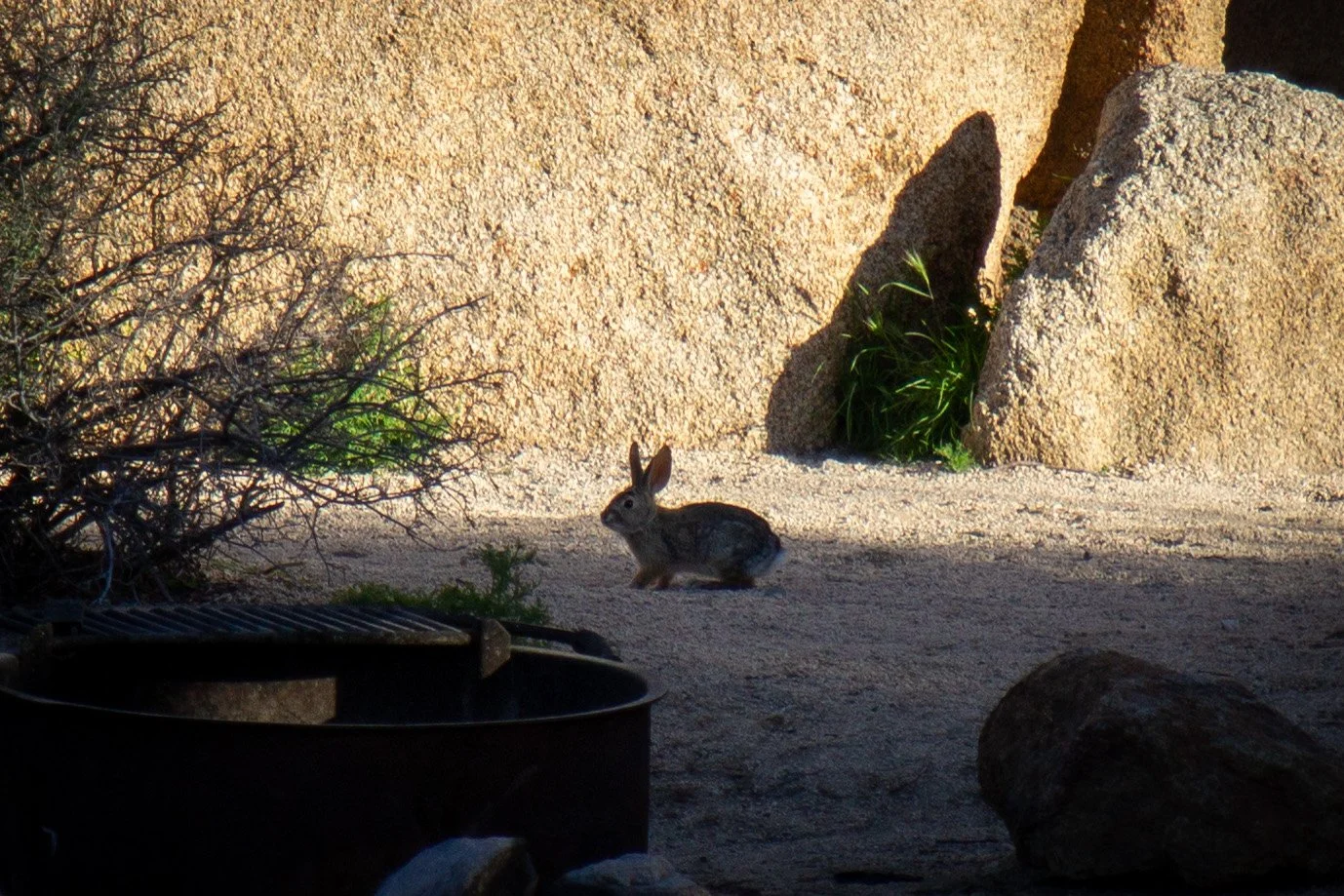
Desert cottontail in Jumbo Rocks Campground
Winter is a great time to look for birds in Joshua Tree National Park. Over 250 species have been sighted. Most are migratory, and some are only around in the winter months. Joshua trees themselves provide important habitat for several animals, including Scott’s orioles, wood rats, and lizards.
Camping and lodging
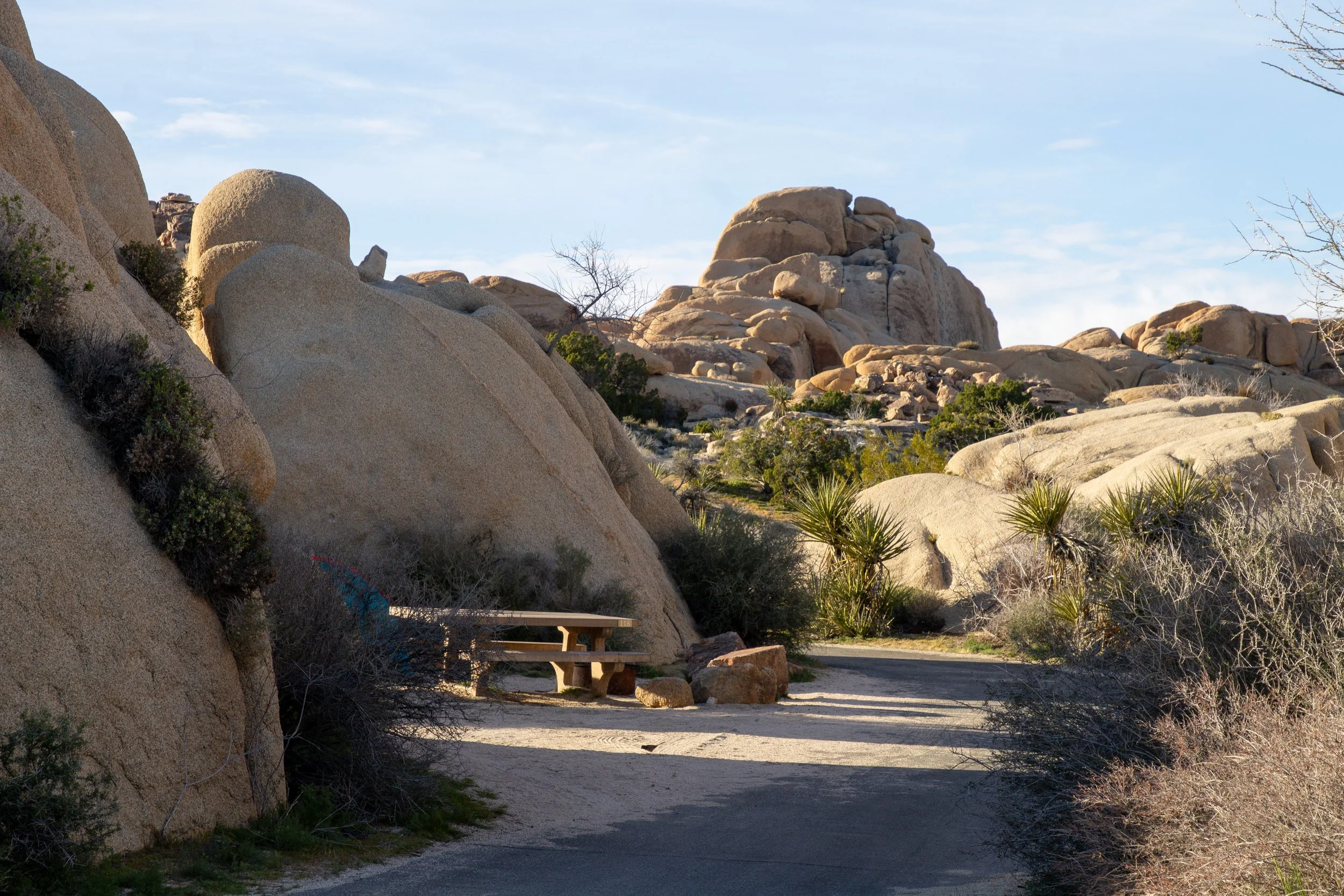
Jumbo Rocks Campground
Camping in Joshua Tree
Joshua Tree National Park has eight official campgrounds. Most require reservations in advance. I’d highly recommend making a reservation to secure a spot. Camping in national parks is popular, and winter is one of Joshua Tree’s busiest seasons. You can make a reservation at recreation.gov. Bring plenty of water with you. Most sites don’t have a water source. Prepare for cold overnight temperatures, especially in the winter. Site fees are usually $25-35/night.
Lodging near Joshua Tree National Park
Joshua Tree National Park is close to several small towns: Twentynine Palms, Yucca Valley, and Pioneertown. Palm Springs can also be a good home base. It’s about an hour away.
The Pioneertown Motel is a rustic-chic motel with an Old West look. It’s in Pioneertown, a small town about 20 minutes from the West Entrance of Joshua Tree National Park. A BBQ restaurant and bar are near the motel.
El Rancho Dolores Motel has inexpensive rooms very close to the North Entrance of Joshua Tree National Park. It’s in Twentynine Palms and near several restaurants, including Rocky’s New York Style, where I very much enjoyed getting pizza and beer after a day of exploring. The pool is a nice bonus.
The Holiday Inn in Twentynine Palms has clean and comfortable rooms that are great for family vacations. Breakfast is included, and restaurants are nearby.
The towns around Joshua Tree National Park have some charming vacation rentals, like Roadrunner’s Roost. It’s a great way to feel like you’re in a remote part of the desert without the logistics of camping.
FAQs
Is Joshua Tree National Park worth visiting?
Yes, Joshua Tree National Park is absolutely worth visiting. I have a friend who lives in Riverside, and I make him go with me whenever I visit him. It’s a unique environment that’s unlike anywhere else. Even if you’re familiar with the Mojave Desert, the size and density of the Joshua trees make it special.
How many days should I spend in Joshua Tree National Park?
One day is the perfect amount of time to get a feel for Joshua Tree National Park and tackle a few short hikes. You would need 2-3 days to see every stop reachable by car or short hike. Some areas, like Indian Cove, are separate from the main road through the park, Park Boulevard, and I would say are of lower priority.
Can I bring my dog to Joshua Tree National Park?
Yes, but there are limitations on where you can take your dog in Joshua Tree National Park. Roads, campgrounds, and parking lots are fine. Just have your dog on a leash. Dogs can’t be on hiking trails, although you can stretch your legs on unpaved roads in the park. Do not leave your dog unattended in the car. It gets too hot, even in the winter.
Where can I go stargazing in Joshua Tree National Park?
Earlier sunsets make winter a good time to go stargazing. Joshua Tree National Park has four official stargazing spots: Quail Springs, Hidden Valley, Cap Rock, and Ryan Mountain. Visit on a clear night, preferably during a new moon, to see the most stars. Keep in mind that winter nights can fall below freezing.
What are good sunset spots in Joshua Tree National Park?
Around an hour before sunset is my favorite time to be in Joshua Tree National Park. The light softens, deepening the colors of the desert. Everything starts getting more photogenic. I think Keys View, Arch Rock, and the Cholla Garden are especially good.
When can I see wildflowers in Joshua Tree National Park?
Spring is the best time to look for wildflowers in Joshua Tree National Park. They start appearing in late winter. I saw a few early blooms in February, including on the Joshua trees. Exact times vary from year to year, but in general, Joshua trees tend to bloom from around late February through April.
Getting there
Joshua Tree National Park has three main entrances. Two of them, the West and North Entrances, are along CA-26, about 30 minutes apart. If you’re coming from the LA area, the West Entrance is closest. On busy days, you might want to pass it and head to the North Entrance to spend less time waiting in line.
The South Entrance is off I-10. It’s the most convenient entrance if you’re coming from the south and is less busy than the West Entrance.
Unless you’re doing an intense hiking or biking trip, you’ll need a car to explore Joshua Tree National Park.
The closest airports are Palm Springs (PSP) and Ontario (ONT). Most people who visit Joshua Tree National Park fly into one of these, or LAX.
Drive times:
Palm Springs: 1 hour
Ontario Airport: 1.5 hours
Los Angeles: 2+ hours, depending on traffic
San Diego: 2.5 hours
Las Vegas: 3 hours
Enjoy your trip to Joshua Tree National Park!
With love,
Emma
More National Parks
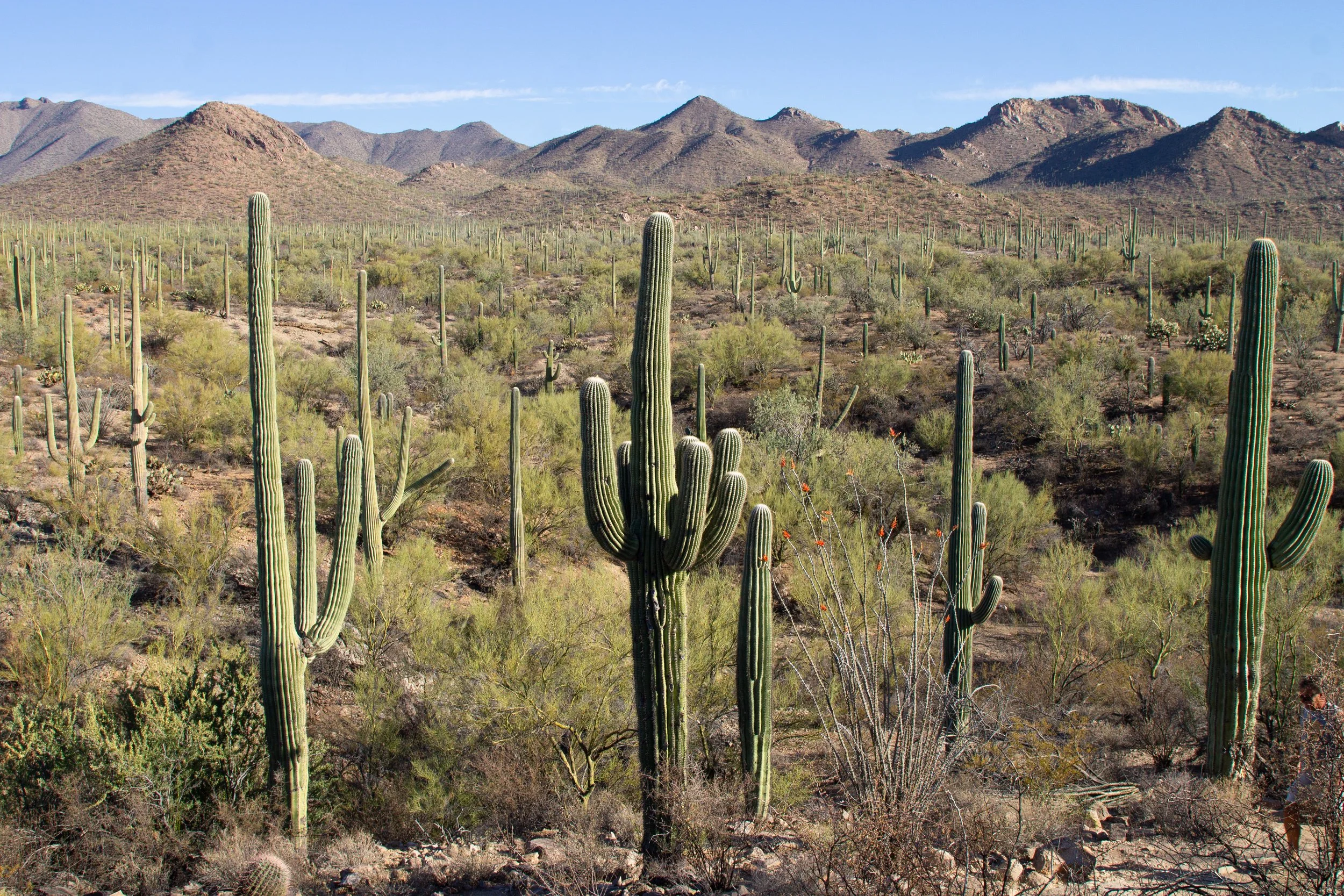
Visit the beautiful and surprisingly uncrowded Saguaro National Park.

See a lake filling a volcanic crater in Crater Lake National Park.
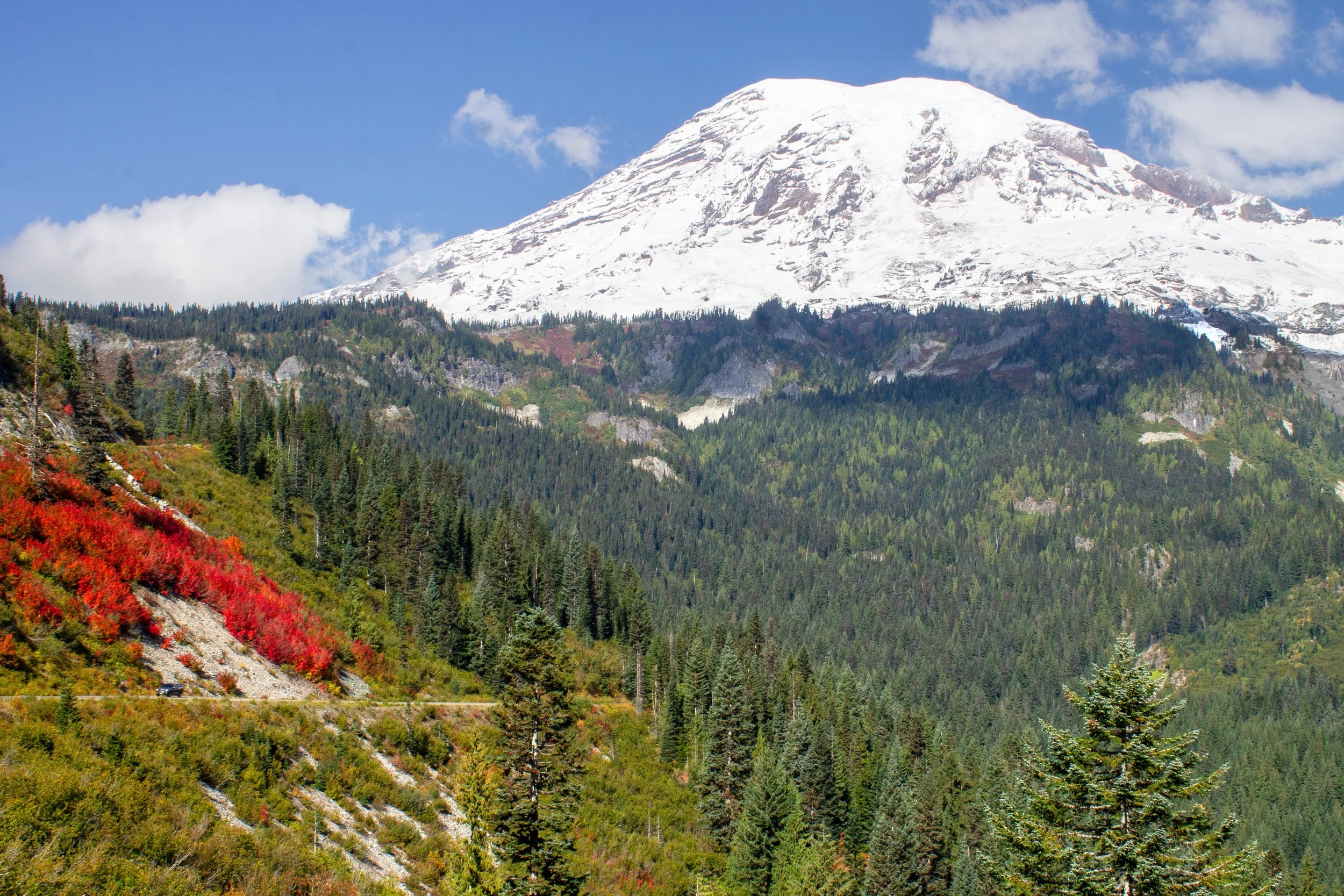
Find fun and easy things to do in Mount Rainier National Park.