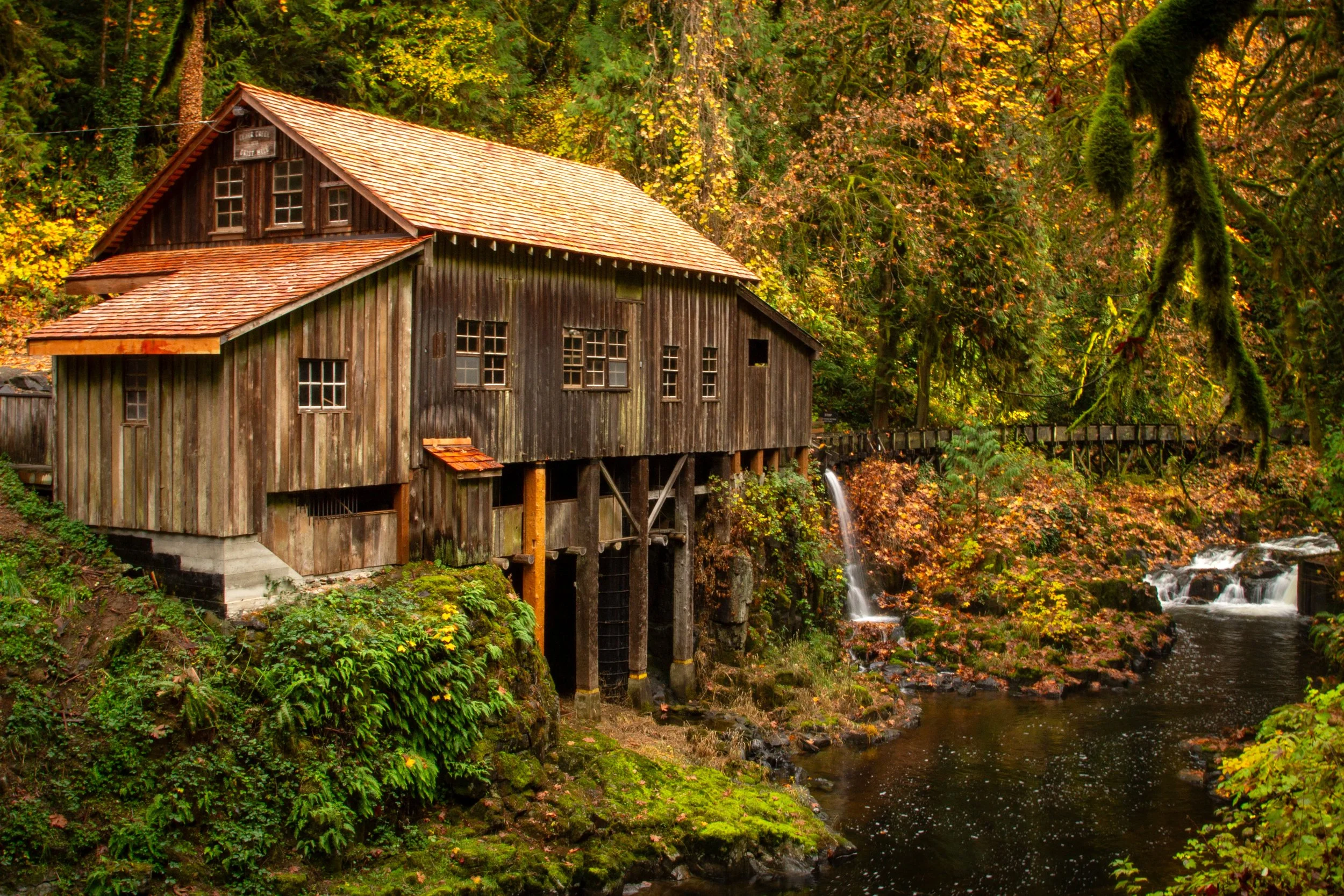
Cedar Creek Grist Mill looks like a picture hanging in the dentist’s waiting room. It’s the one you see and think, “Oh my, I wish I were there instead of this cleaning.” The rustic, still-working mill and mossy forest draw photographers and history lovers from around the world. As beautiful as the pictures are, nothing quite matches seeing it in person. Whether you go as a standalone trip or a stop on the Northern Clark County Scenic Drive, here’s how to visit Cedar Creek Grist Mill.
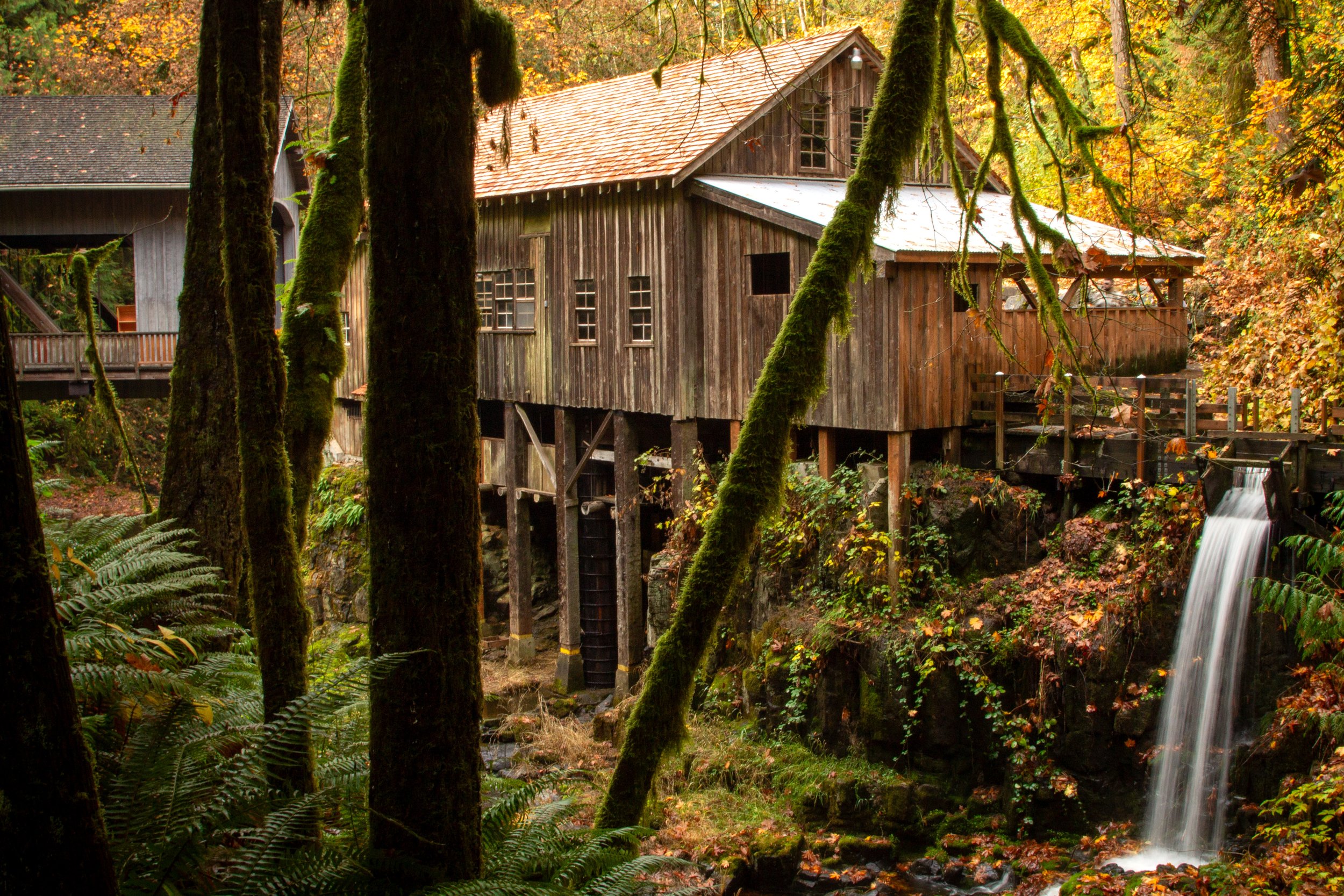
Cedar Creek Grist Mill
Know before you go
Cost: It’s free to visit Cedar Creek Grist Mill. Donations are welcome and help keep the mill running.
Parking: A parking area is across the road from the mill. When I arrived before the mill opened on a Saturday, it was about half full. After opening, it filled up, and people started parking on the side of the road.
Amenities: A small picnic area is across the covered bridge. Restrooms are available, but not where you’d think. Look for the concrete stairs near the picnic area. They’re in the little green building at the top.
Dogs: Leashed dogs can be outside the mill. I wouldn’t bring a dog inside since it’s still used to produce flour.
Accessibility: Surfaces outside the mill are flat gravel and pavement. You can cross the covered bridge on a boardwalk surface without steps. To enter the mill, you need to walk up a step. The restrooms are accessible if you park next to them instead of at the mill.
Reception: I lost phone reception before reaching Cedar Creek Grist Mill. It’s not a bad idea to bring offline directions, especially if you’re doing the Northern Clark County Scenic Drive.
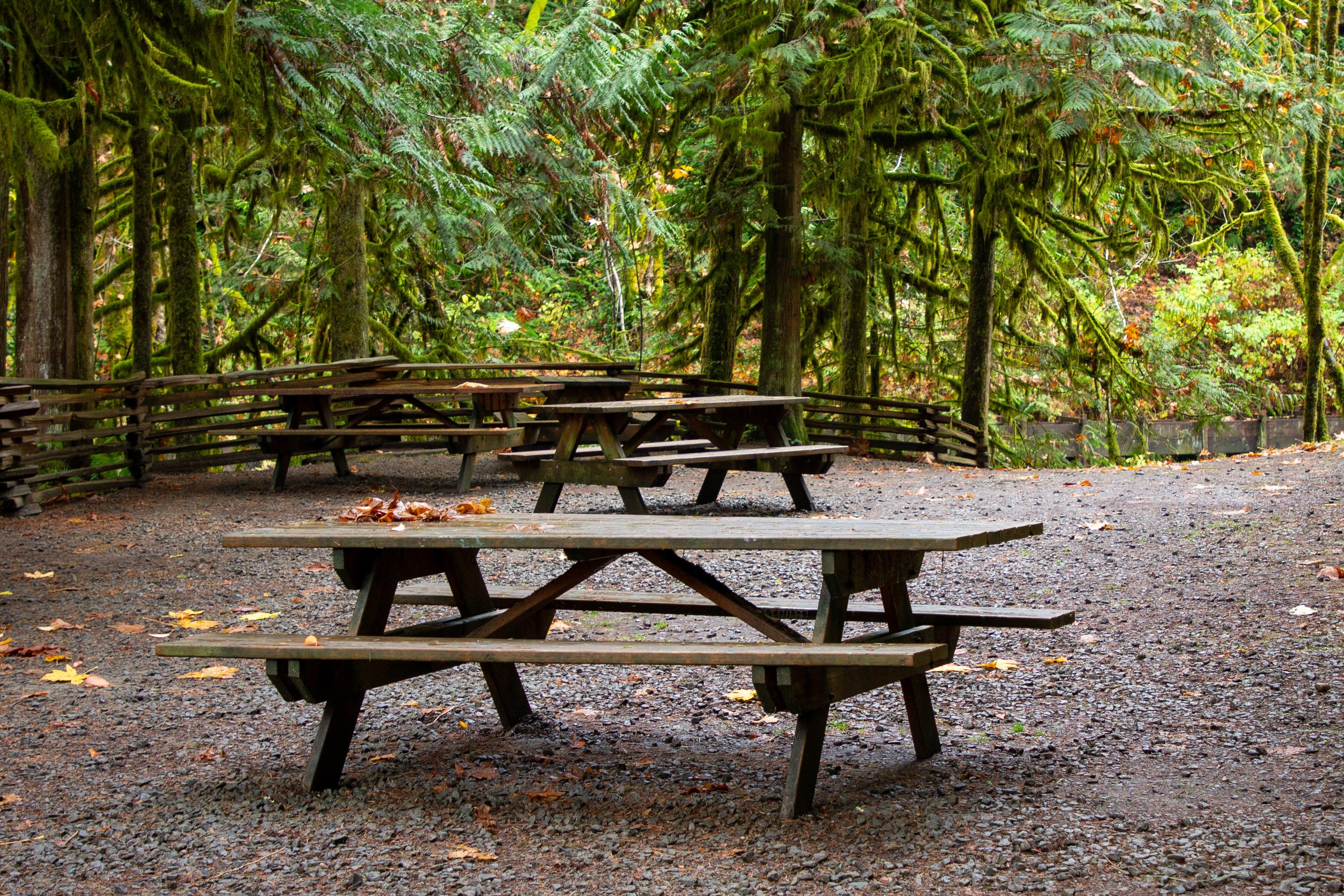
Picnic area
When to visit
Hours
Cedar Creek Grist Mill is open:
Saturdays: 1 PM–4 PM
Sundays: 2 PM–4 PM
It closes for holidays (Christmas, Easter, New Year’s).
The mill sometimes hosts special events on the last Saturday of the month from May through October.
You can park and see the outside of the mill when it’s closed.
Season
Cedar Creek Grist Mill is beautiful in every season. A great time to visit is when fall color peaks, around late October. The maple leaves were still looking good on my early November visit. The mill would also be a good dead-of-winter excursion. Conifers, ferns, and moss keep the forest pretty green, and Cedar Creek looks most impressive during the rainy months.
What to see
Cedar Creek Grist Mill
Outside the mill
Cedar Creek Grist Mill’s photogenic exterior draws people from far and wide. Between the mill, covered bridge, mossy forest, and cascading creek, it’s an irresistible place to bring a camera. From the parking area, head across the covered bridge. It’s the best place to watch for salmon jumping up the mini waterfall in Cedar Creek. I saw a couple on my early November visit. Past the bridge, a very short trail (about 0.1 miles) follows Cedar Creek past a small picnic area. By the end of the trail, you lose sight of the mill, but you’ll see more of the 650-foot flume that brings water to it.
Inside the mill
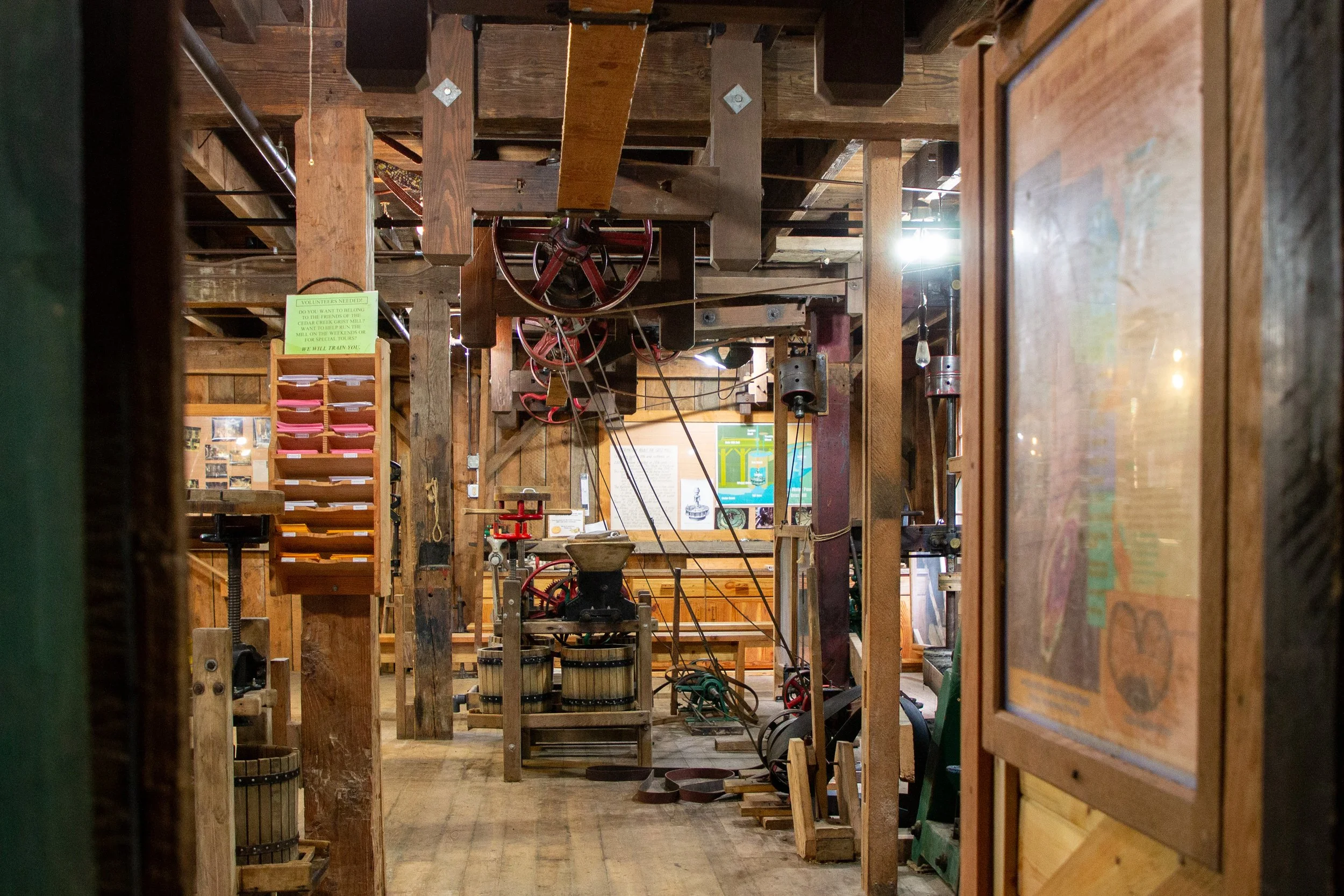
A highlight of visiting Cedar Creek Grist Mill is seeing how the flour gets made. The main level is full of wheels, belts, pulleys, and levers. Volunteers and printed diagrams help explain the process. Briefly, water from Cedar Creek flows down a flume, then spins a turbine that powers the mill. If you head downstairs, you’ll see the cylindrical wooden structure that houses the turbine. The equipment works and is used to make flour and cornmeal. The mill’s website mentions samples and products for sale. They must have been out when I visited, but I was able to see the milling process in action.
History
Originally built in 1876, Cedar Creek Grist Mill underwent a major restoration in the 1980s. Today, it’s a museum on the National Register of Historic Places. Volunteers continue to show great commitment in preserving the mill’s character. Downstairs, you can see one of the most recent repairs, a new hand-hewn support beam. The original mill had a dam. Today, a more salmon-friendly system uses a longer flume instead. Unlike the mill, the covered bridge is fairly recent. It was built in 1994 to replace a truss bridge that couldn’t support large vehicles.
Photography at Cedar Creek Grist Mill
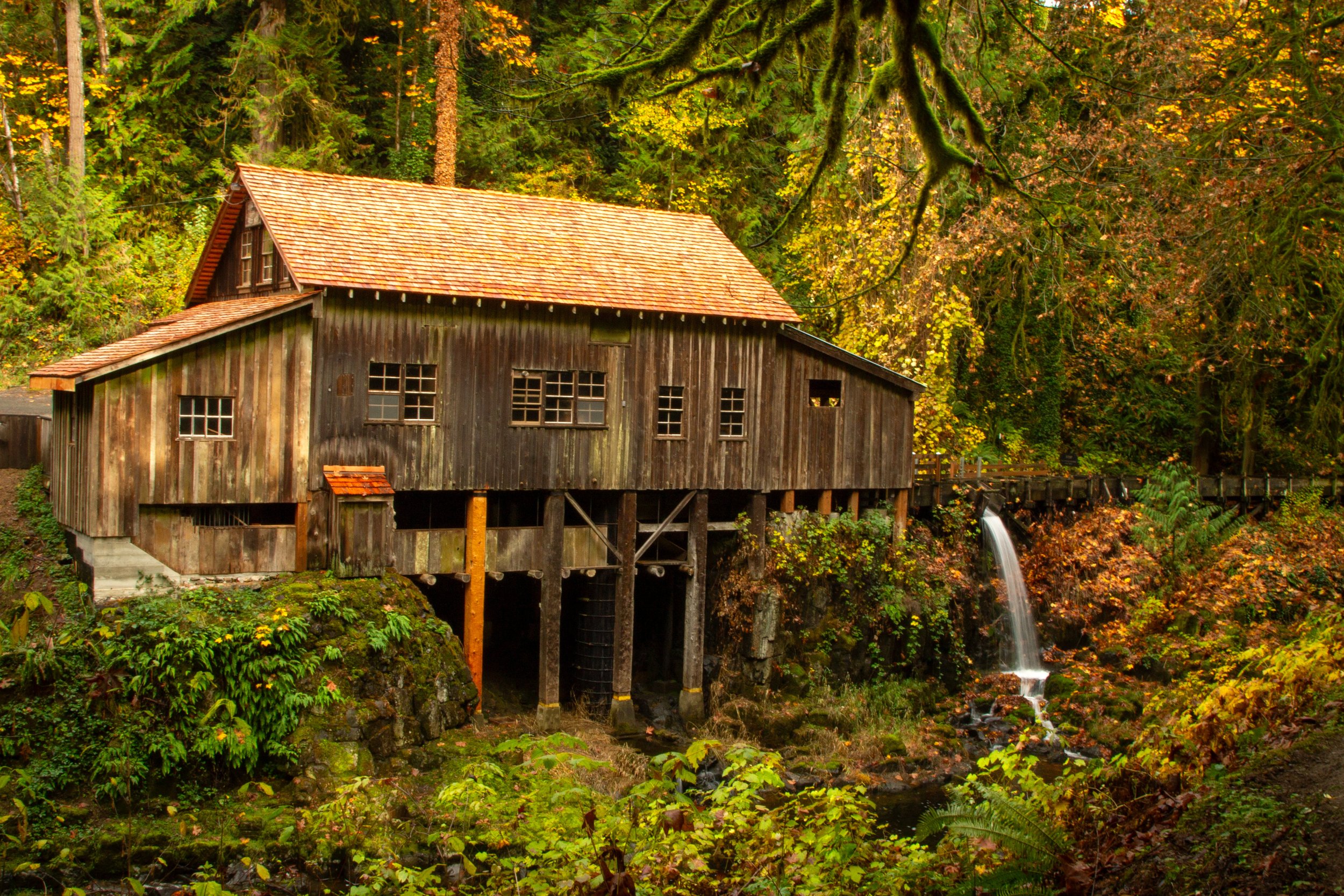
November at Cedar Creek Grist Mill
For most people, the best time to visit Cedar Creek Grist Mill is when it’s open, and you can see inside. If your trip is specifically for photography, I’d suggest going when the mill is closed to avoid the crowds. During busy times, cars park right next to the mill, people stick their heads out of windows, other photographers set up tripods every few steps, and so on. One of the best angles is from the walkway on the covered bridge. If you’re doing long exposures, people walking create vibrations on the bridge. It’s easier when things are quiet.
For the best of both worlds, go on the weekend before the mill opens. Spend some time taking pictures, then take a look inside once it opens up. If you brought a tripod, you can stash it in the car no problem. I’d suggest a wide-angle lens to capture the mill and Cedar Creek together.
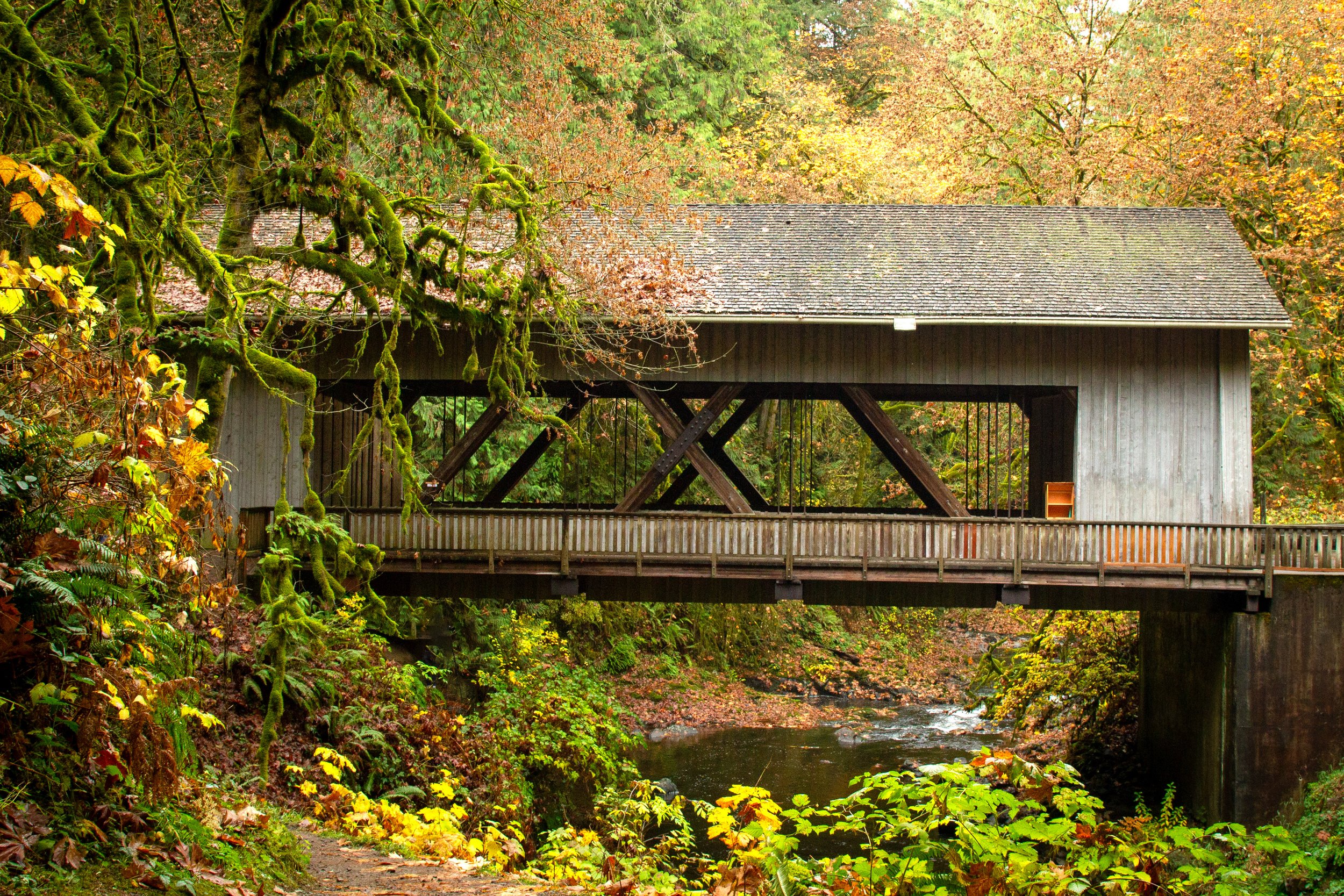
Cedar Creek Covered Bridge
Northern Clark County Scenic Drive
Cedar Creek Grist Mill is one of the most popular stops on the Northern Clark County Scenic Drive, a lovely 70-mile loop on country roads in southwest Washington. Here’s the map. If you’re coming from Portland, you can drive part of the loop to Cedar Creek Grist Mill instead of I-5. Driving the full loop is a good way to make the excursion into a day trip.
Highlights on the way to/from Portland:
Ridgefield National Wildlife Refuge
Whipple Creek Park
Highlights on the full loop:
Mouton Falls
Lucia Falls
Lewisville Park
Ridgefield National Wildlife Refuge
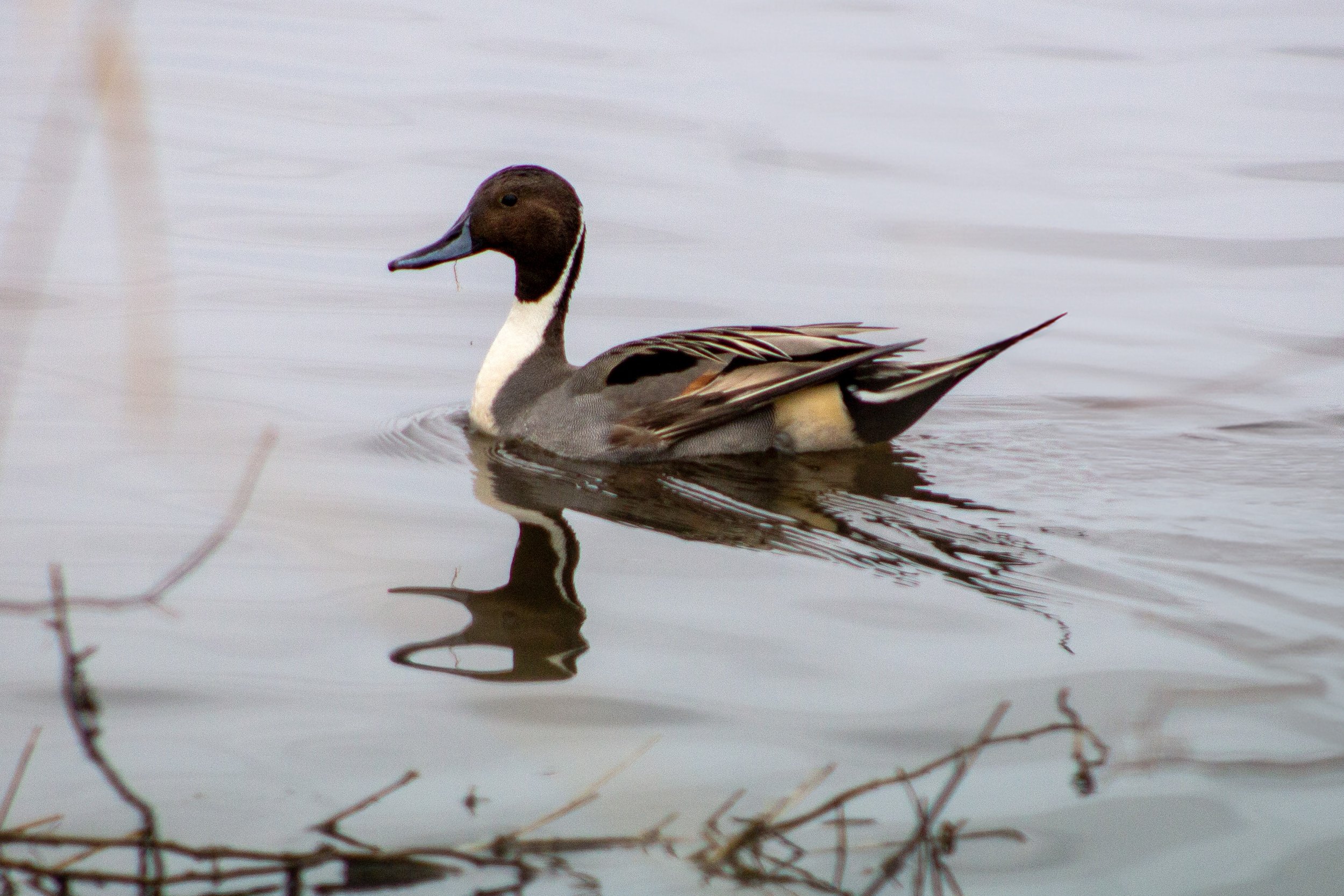
Northern pintail at Ridgefield NWR
Cost: $3 or America the Beautiful Pass
Ridgefield National Wildlife Refuge is one of the best birdwatching spots in the Pacific Northwest. If you take a scenic detour, it’s on the way back to Portland from Cedar Creek Grist Mill. The refuge has two separate areas, called units. They partially close from October through April, but are worth visiting any time of year. The Carty Unit has an easy paved trail that leads to the Cathlapotle Plankhouse, a reproduction of the Chinook village plank houses that were here in times past. The River S Unit has a 4-mile auto tour route that takes you around the most duck-filled wetlands you’ll find anywhere. In fall, look for sandhill cranes. Winter is a good time to watch for tundra swans, trumpeter swans, Canada geese, and bald eagles.
Whipple Creek Regional Park
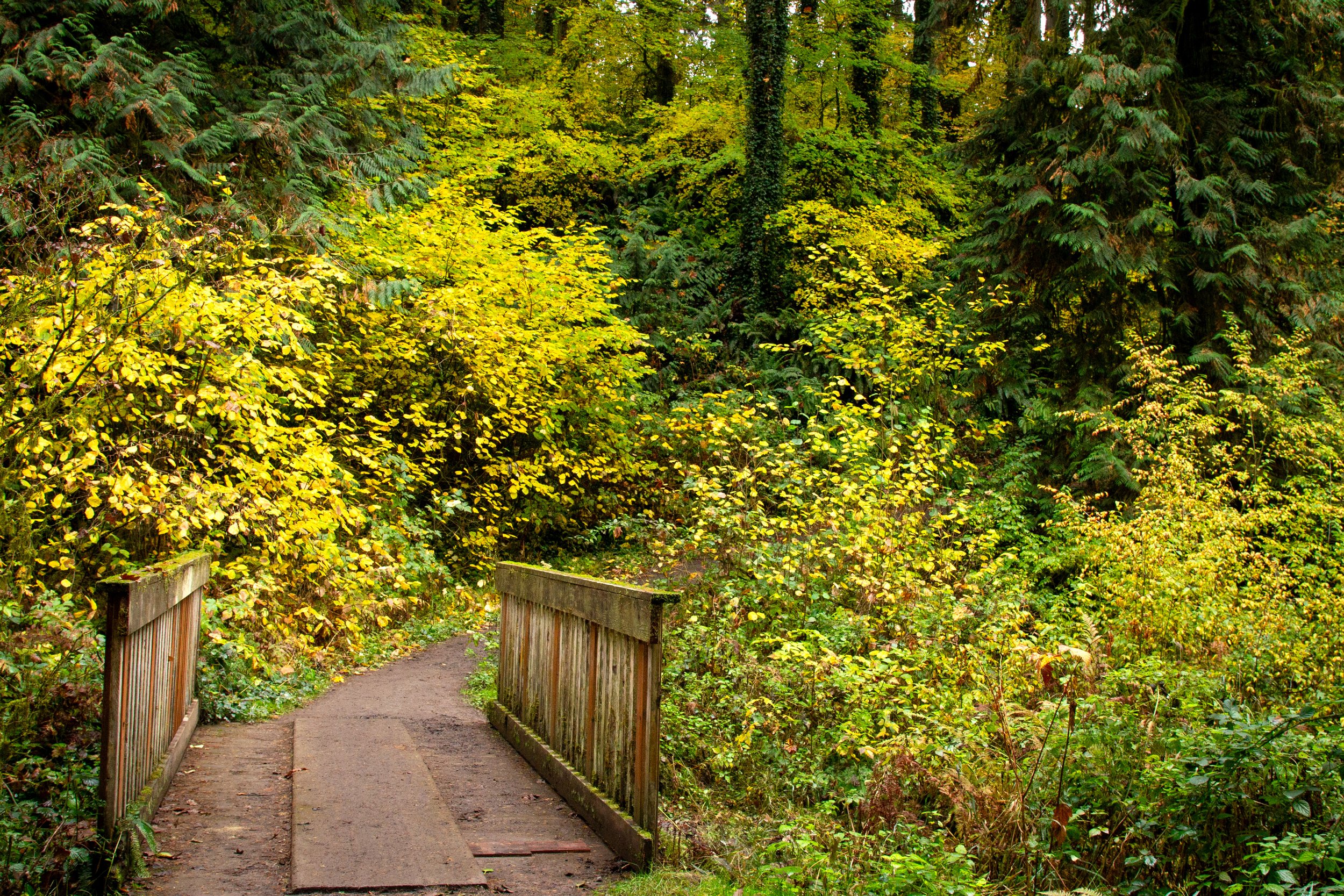
Fall color at Whipple Creek Park
Cost: Free
After visiting Cedar Creek Grist Mill, I stopped at Whipple Creek Park to break up the drive back to Portland. The network of hiking trails has loop options around 2-3 miles long. It’s an easy stop on the way home, and I went without expectations beyond stretching my legs. Once I got there, the park’s beauty surprised me. The trails explore a dense forest of giant Doug fir, cedar, and big-leaf maples. In early November, changing vine maples fill the understory with bright yellow and orange. You’ll hear birds in the trees and frogs in the creek. The park is more about spending time in nature than dramatic highlights, but it has a few curiosities. One is an old mill. Unlike the Cedar Creek Grist Mill, this one is very much out of commission. Heads up, the trails are shared with horses. Watch your step.
Moulton Falls
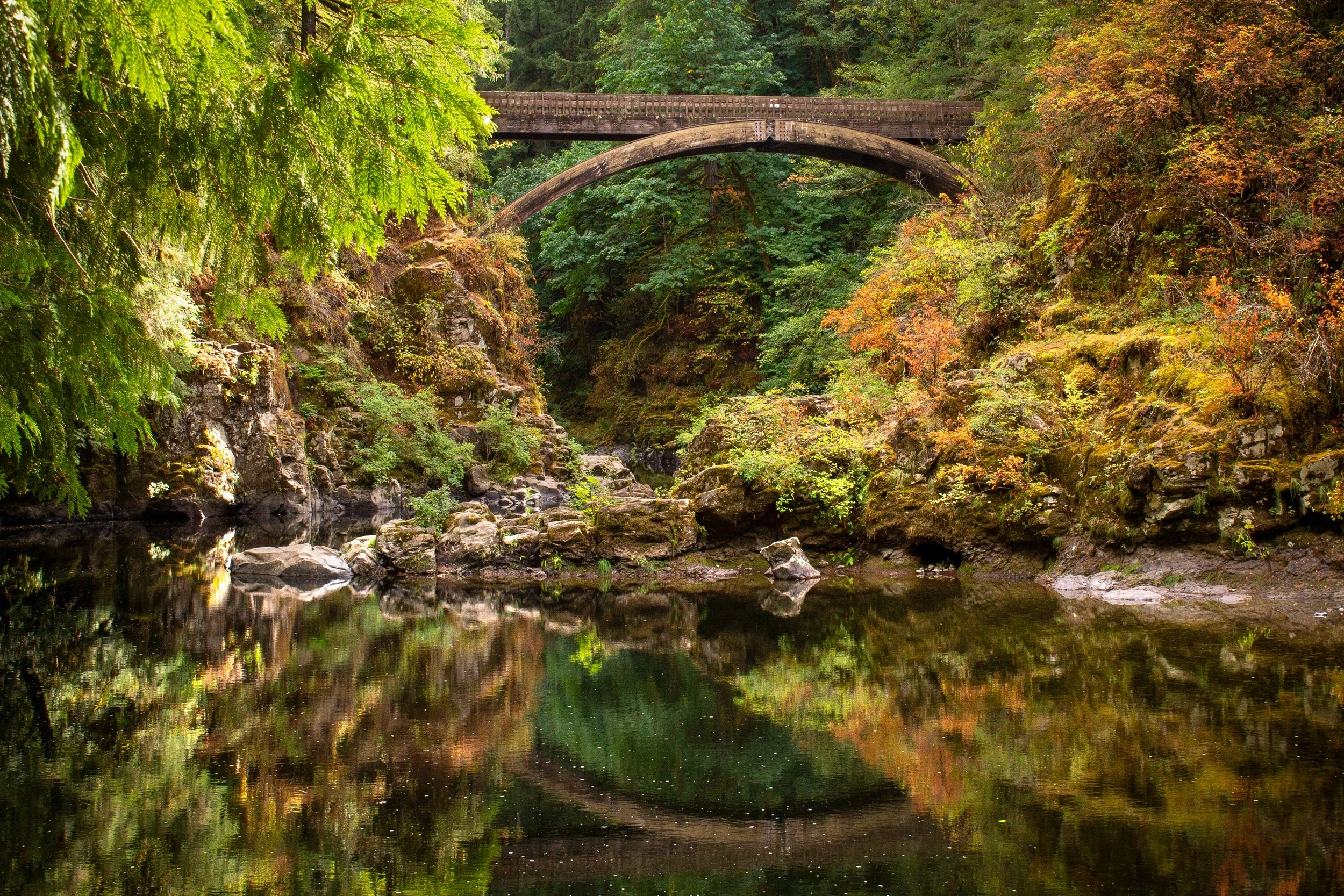
Moulton Falls Bridge
Cost: Free
On hot summer days, Moulton Falls Regional Park is an extremely popular swimming hole. The sunny banks of the East Fork Lewis River are wonderful places to spread a towel and spend the day by the water. The main draw here is the beauty of the surroundings rather than the drama of the waterfall. Moulton Falls is about 10 feet tall, more of a rapid than a plunge. A highlight of the park is seeing the arched bridge over the river. Please, please, please don’t jump from it. People have died and been seriously injured jumping from the bridge. I’m the weirdo who prefers Moulton Falls on chilly days, when parking is ample, and the trails are quiet. Check out lesser-known Yacolt Falls on an easy, 1-mile loop hike.
Lucia Falls
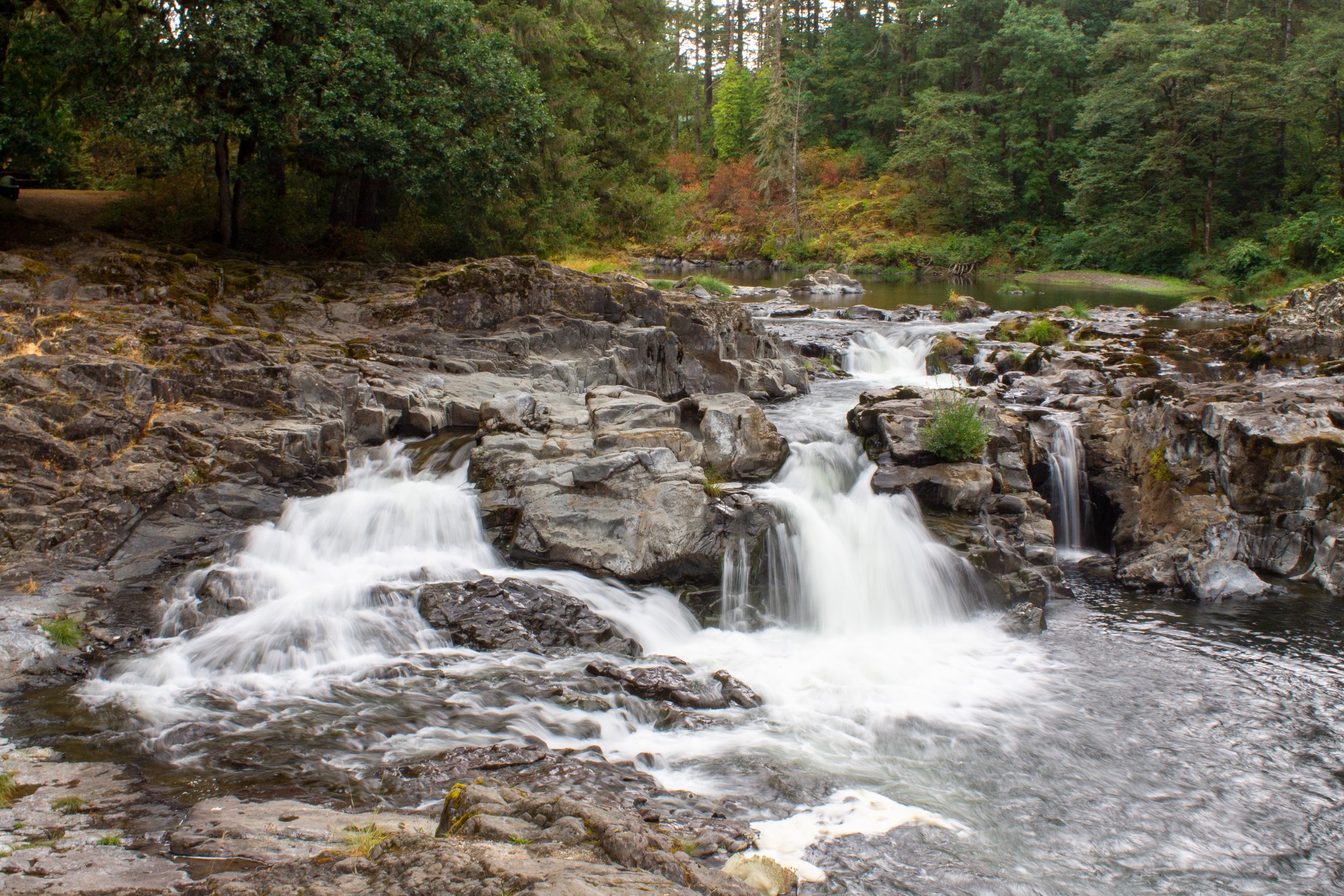
Lucia Falls
Cost: Free
Lucia Falls Regional Park has a 1-mile loop hike, but you don’t need to walk that far to see the main event. About a quarter mile leads to a viewpoint overlooking cascading, 15-foot Lucia Falls. I think it’s the prettiest waterfall on the Northern Clark County Scenic Drive. Unlike Mouton Falls, it’s not a swimming hole. Humans and dogs aren’t allowed in the water to protect migrating salmon. It also means parking is much easier here. I’ve never had trouble finding a spot, even on the weekend. Nearby is Pomeroy Farm. Like Cedar Creek Grist Mill, this living history museum provides a glimpse into life in the past.
Lewisville Regional Park
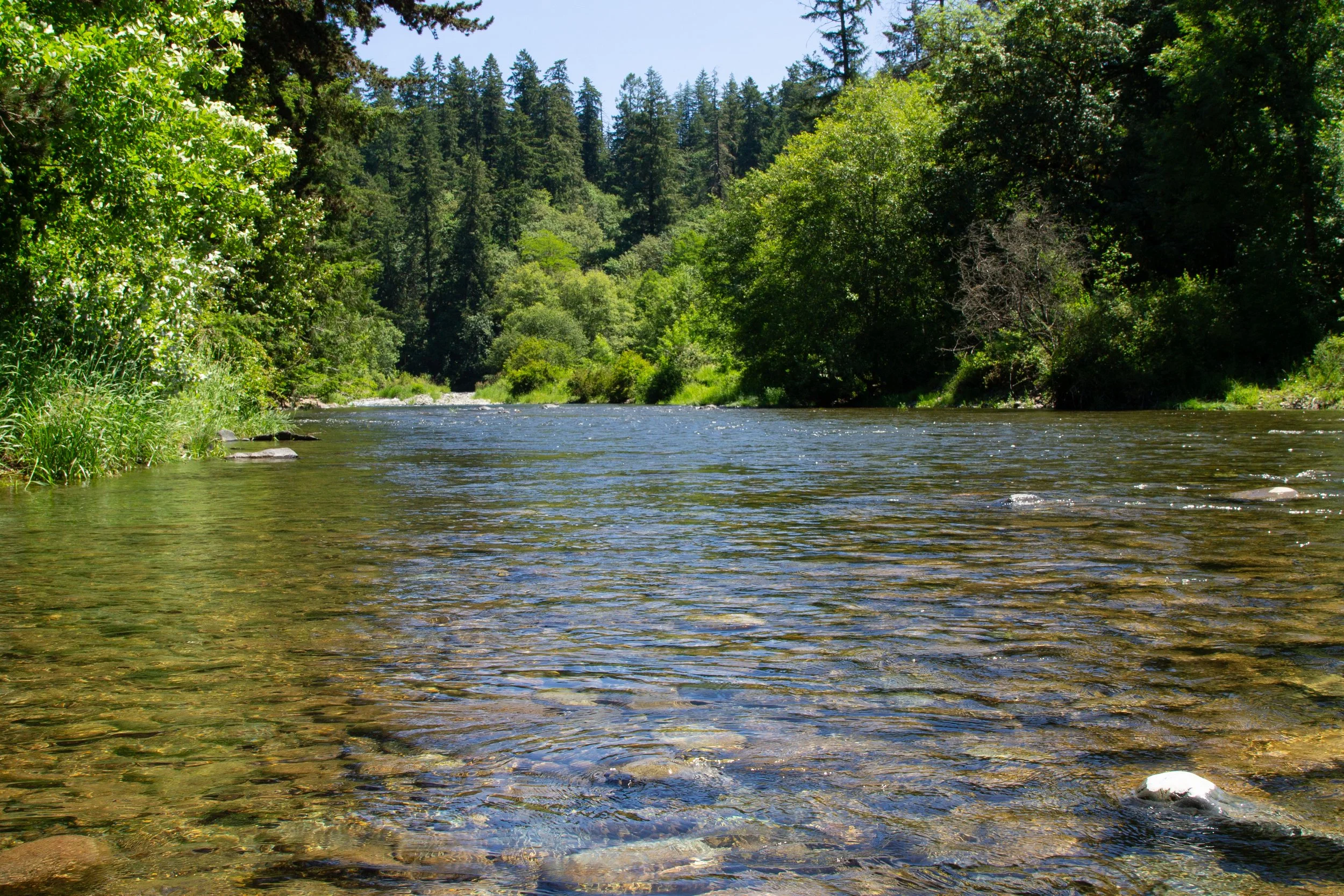
East Fork Lewis River
Cost: $5
Lewisville Regional Park is an excellent place to spend a beautiful day. Large and developed, it has many parking areas to help people spread out during busy times. Park amenities include playgrounds, horseshoe pits, baseball fields, and a basketball court. A trail along the East Fork Lewis River brings you to picnic areas and scenic wading spots. Note that river currents vary depending on the time of year and where you are, and no lifeguards are on duty.
Getting there
Address: 43907 NE Grist Mill Rd, Woodland, WA 98674
If you’re not driving the Northern Clark County Scenic Drive, here’s how to reach the Cedar Creek Grist Mill from Portland and Vancouver:
Take I-5 N to Exit 21 for WA-503 E toward Woodland/Cougar.
At the end of the ramp, turn right onto WA-503 S/Lewis River Rd, then take an immediate right onto E CC St.
Cross the bridge, then keep left onto NW Hayes Rd. After 5.3 miles, NW Hayes Rd becomes NE Cedar Creek Rd.
Take NE Cedar Creek Rd for 3.3 miles, then turn left onto NE Grist Mill Rd.
Follow NE Grist Mill Rd for 0.6 miles. You’ll see the Cedar Creek Grist Mill on the right. Park on the left.
The drive from Portland takes about 45-50 minutes. From Seattle, it’s 3 hours.
Explore nearby
Learn more about visiting Ridgefield National Wildlife Refuge.

From April until mid-May, check out Lilac Days at the Hulda Klager Lilac Gardens.