
Visiting Ridgefield National Wildlife Refuge
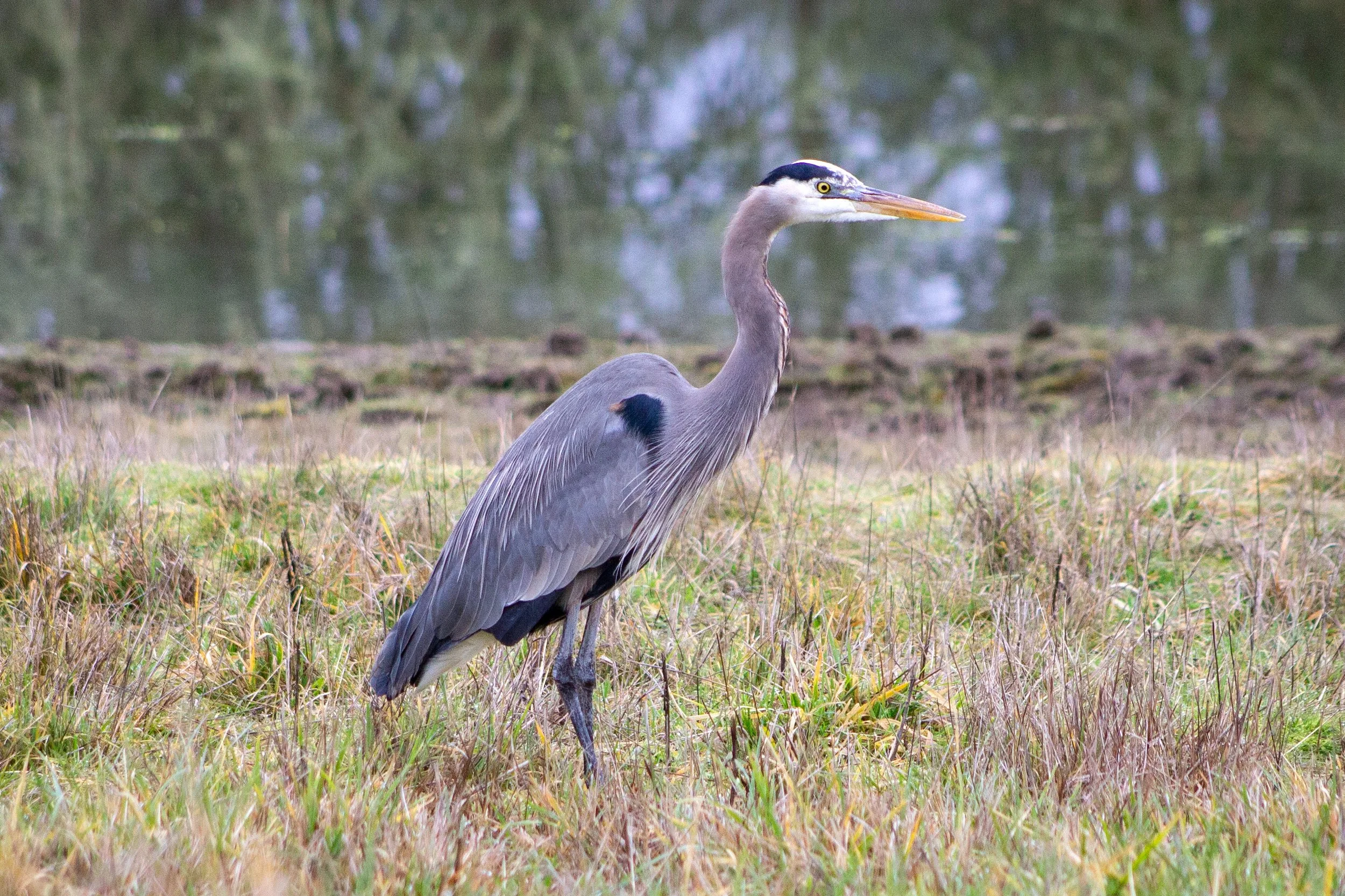
It was bound to happen. Birdwatching is my latest strategy for combating the Pacific Northwest winter gloom. Ridgefield National Wildlife Refuge is a wonderful park that blew me away with the amount and variety of wildlife. Birds are everywhere, and they’re pretty unfazed by human visitors. Before going, I found the information about the refuge online a little confusing. It has multiple areas, and the things you can do vary seasonally. Now that I understand the layout, here’s how to plan a visit to Ridgefield National Wildlife Refuge.
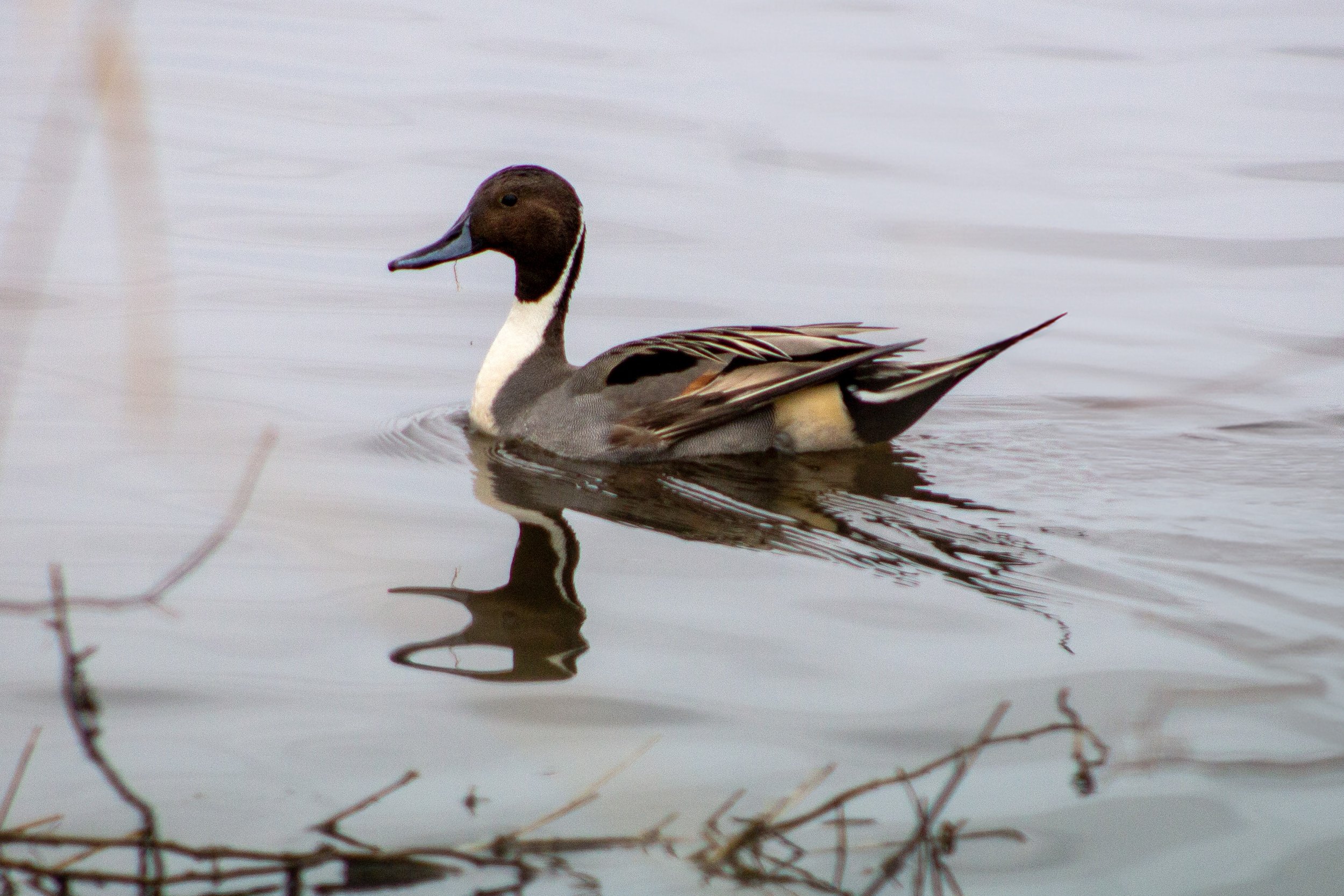
Northern pintail in Ridgefield National Wildlife Refuge
Know before you go
It costs $3 to visit Ridgefield National Wildlife Refuge. You can also use an annual pass ($15) or America the Beautiful Pass.
When I went, the visitor center was under construction, and no staff were present. The payment options were placing exact change/check in a deposit envelope or registering an annual pass (writing your pass info on a slip of paper they provide).
Ridgefield National Wildlife Refuge is open from sunrise to sunset. Gates close at sunset.
Dogs, biking, and jogging are not allowed.
The park has vault toilets but no running water.
Parts of the refuge close seasonally to protect the birds. I’d say it’s worth visiting anytime, but you’ll be able to do more from May through September.
Hunting is allowed in parts of Ridgefield NWR from October through January. Details are on the US Fish & Wildlife Service website.
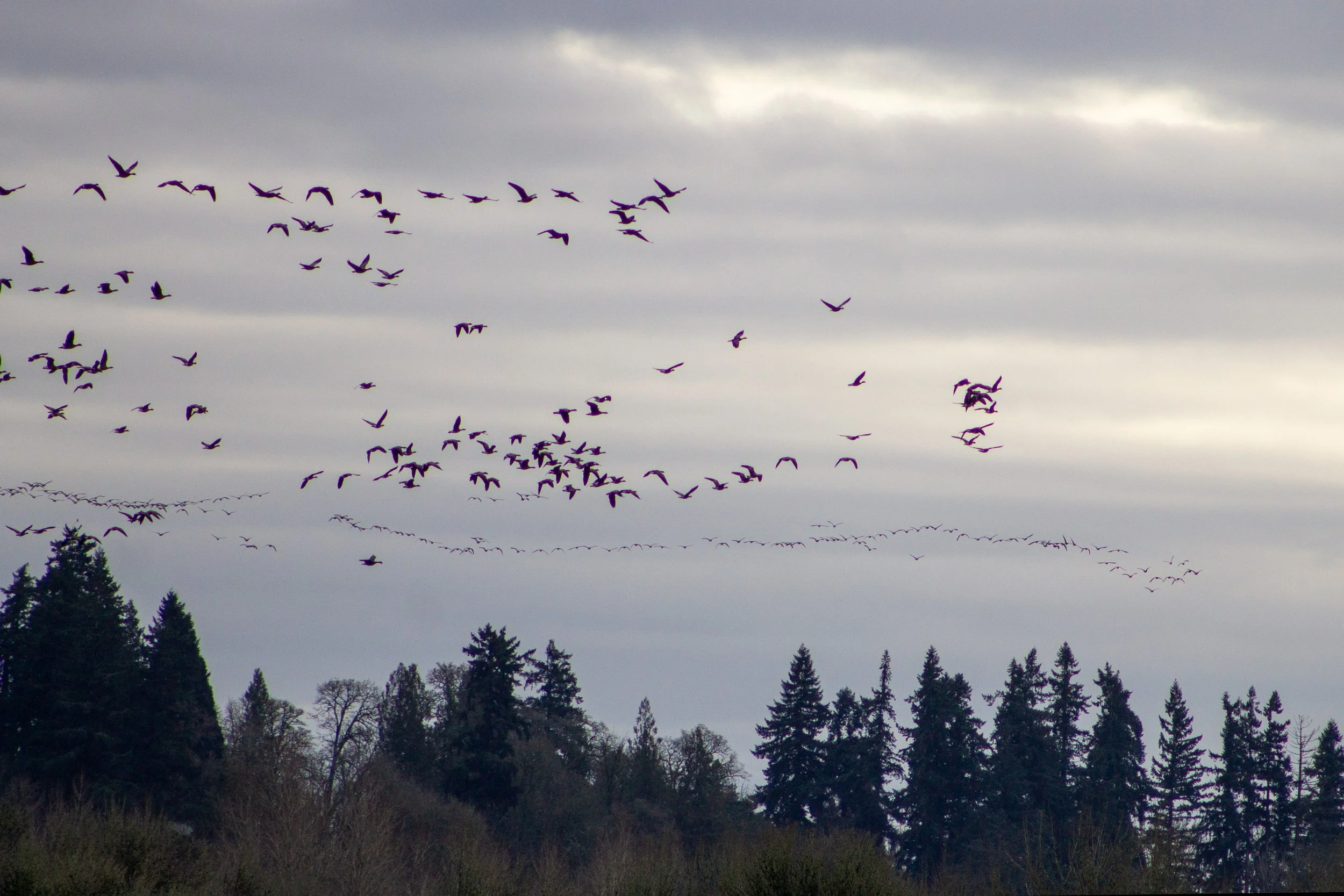
Geese fly over Ridgefield National Wildlife Refuge
Where to go
Ridgefield National Wildlife Refuge has two distinct areas, or units, that are open to the public. They have separate addresses and parking areas. It takes about 5-10 minutes to drive between them. Both are partially open from October 1st to April 30th and fully open from May 1st to September 30th. I found this map helpful in visualizing the layout.
Carty Unit: Visitor Center, Cathlapotle Plankhouse, and hiking trails
River S Unit: Auto tour and one seasonal hiking trail
I visited both units in a day, which is very doable. I’d say it’s not important where you start. If you’re trying to decide between them, I’d steer you towards the auto tour. I saw many more birds there.
Carty Unit
28908 NW Main Avenue, Ridgefield, WA 98642
All year: Oaks to Wetlands Trail
May through September: Carty Lake Trail
Oaks to Wetlands Trail
Distance: 1.5 miles
Elevation gain: 100 feet
Difficulty: Easy
Accessibility: The first 0.5 miles of the trail are paved, wide, and in good condition. The bridge at the beginning has an uphill grade, but it’s not very steep. Past the Oak Viewpoint, it narrows and changes to a natural surface. The trail has frequent benches.
Season: Any
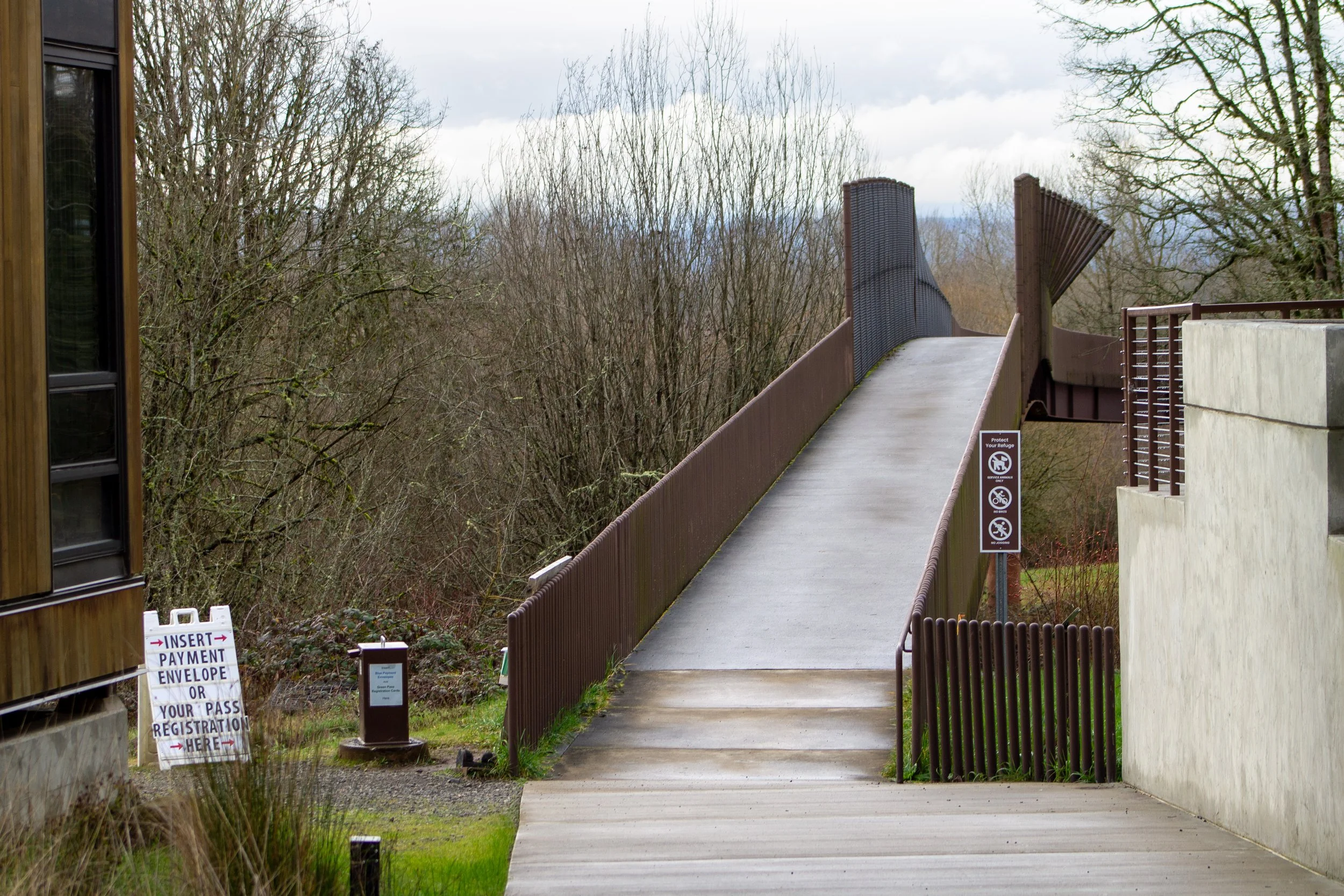
This bridge leads to the Carty Unit hiking trails
The Oaks to Wetlands Trail is the only hike in Ridgefield National Wildlife Refuge that’s open all year. After sitting in the car for so long on the auto tour, it felt great to stretch my legs on this relaxing walk. To begin, cross the bridge behind the visitor center.
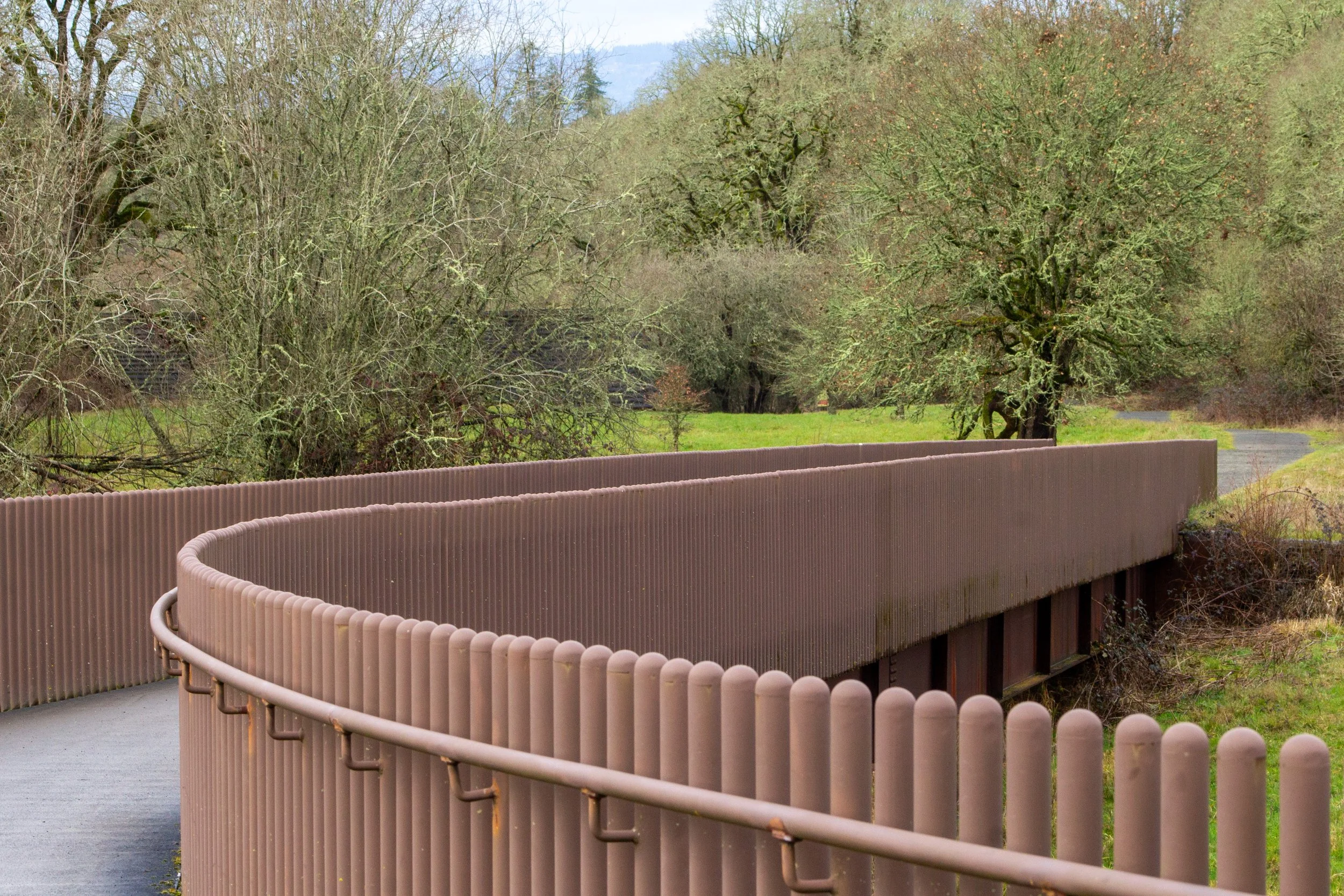
Oaks to Wetlands Trail
In about 0.3 miles, you’ll reach one of the highlights of Ridgefield NWR, the Cathlapotle Plankhouse. Volunteers completed this large and impressive structure in 2005 after two years of construction. The design recreates the dwellings of the Chinook village that was here, based on information gleaned from archaeological finds, tribal oral histories, and historical journals. The plankhouse is open to the public most weekends from April to October when volunteers are present. Other times, you can see it from the outside.
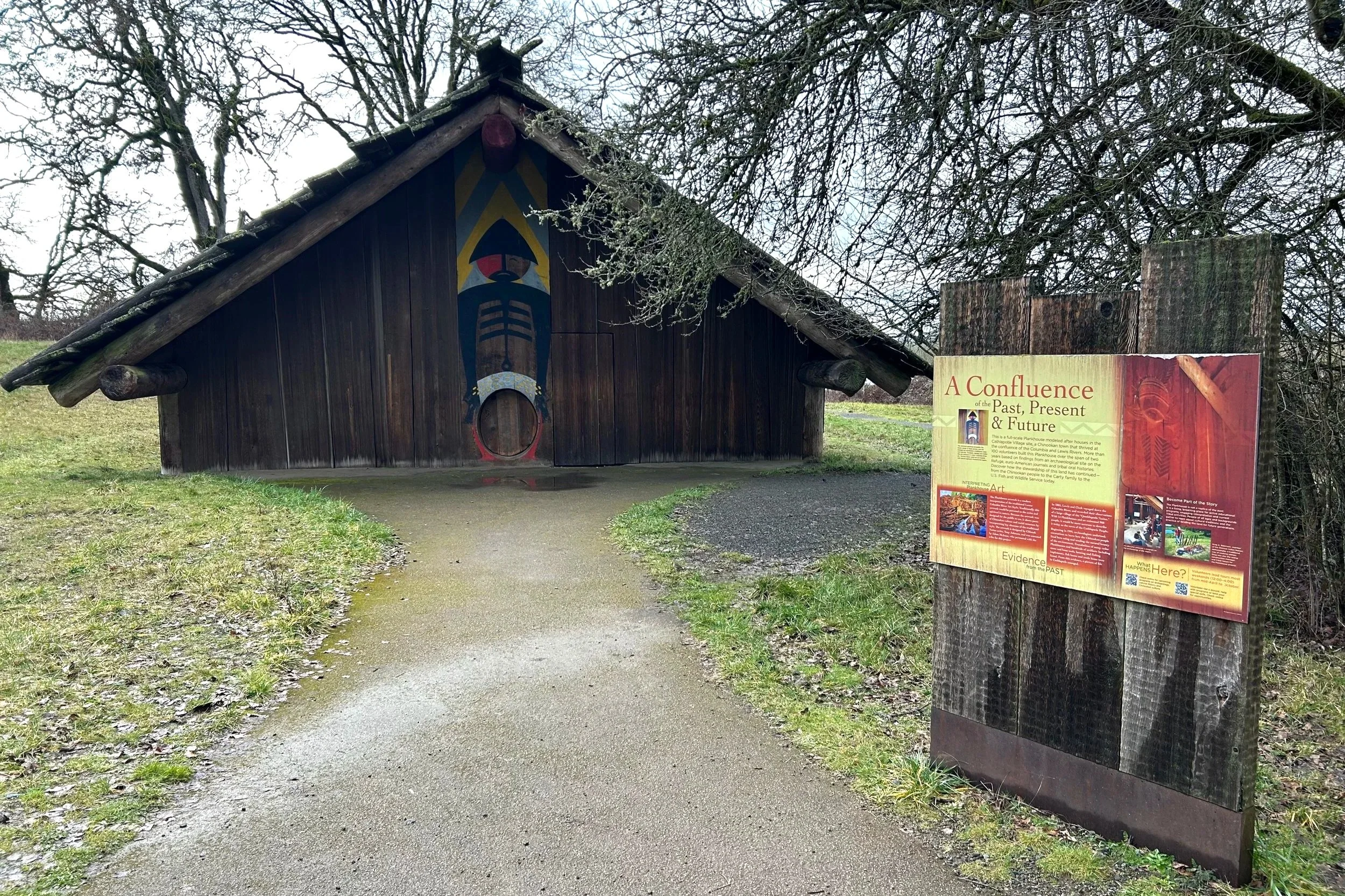
Cathlapotle Plankhouse
Continuing past the plankhouse, you’ll walk through an Oregon white oak forest. The paved portion of the trail ends at a viewpoint overlooking Duck Lake, a promising place to spot waterfowl. Next to the viewpoint is a gorgeous oak with a spiral-shaped trunk and fern-covered limbs.
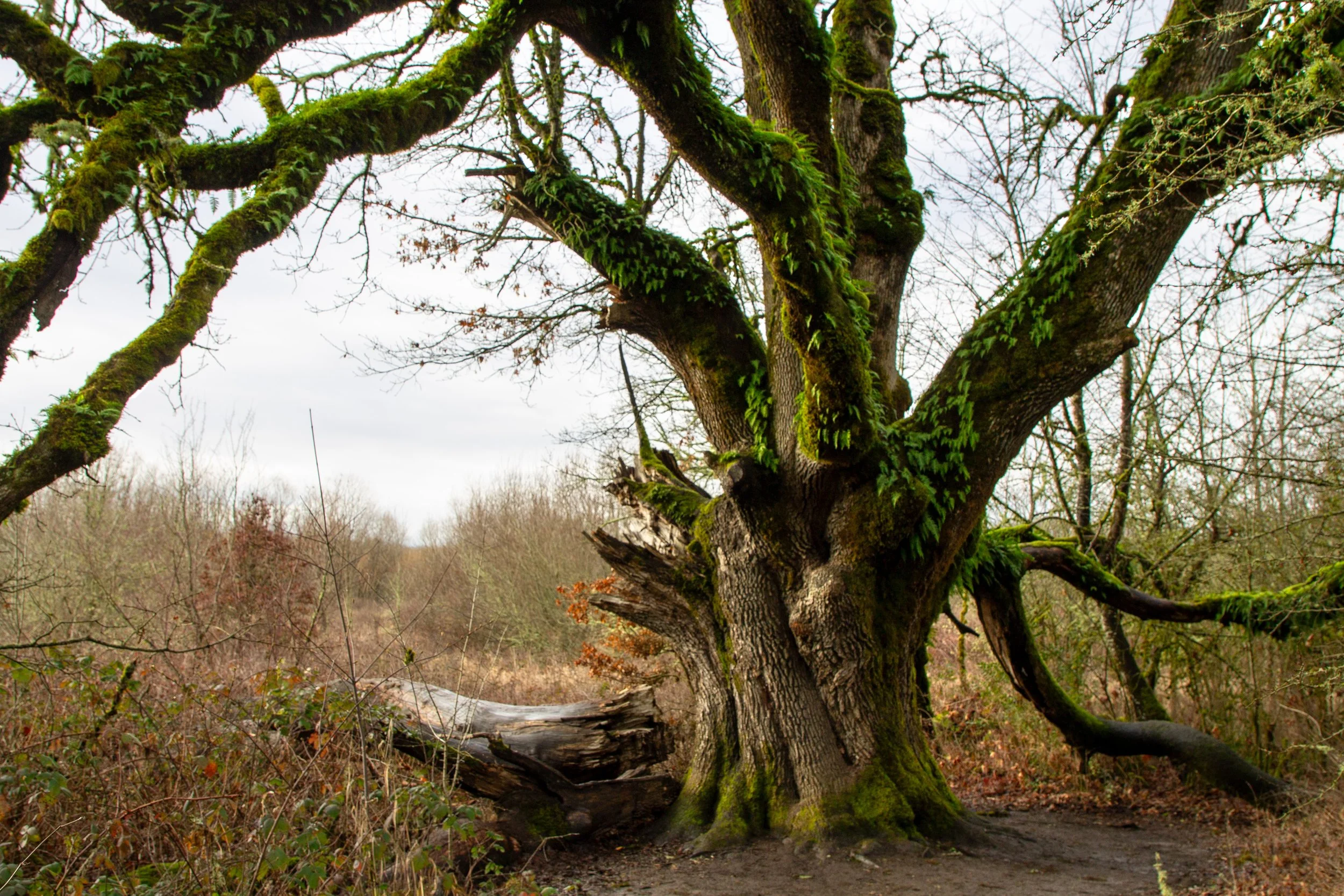
Oak Viewpoint
After the Oak Viewpoint, the trail divides. Take either fork. They’re the beginning and ending of a little loop. Like the rest of the hike, the final loop is more about quiet beauty than dramatic scenery. It’s a great place to look for birds, like spotted towhees, juncos, scrub jays, and Steller’s jays. I also saw many squirrels and a well-camouflaged deer in the brush.
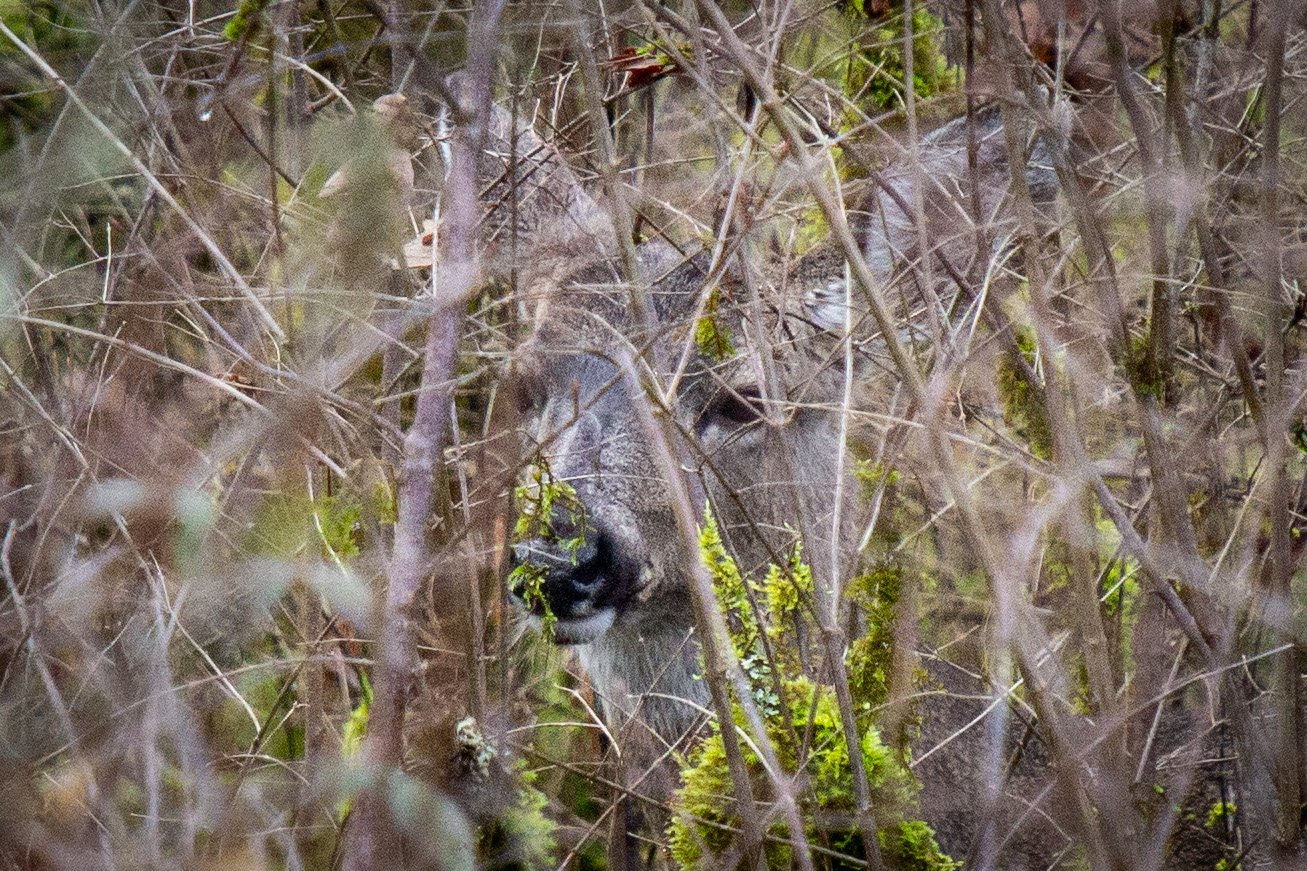
Well done, good hiding
Carty Lake Trail
Distance: Up to 3.5 miles, including the Oaks to Wetlands Trail
Elevation gain: 100 feet
Difficulty: Easy
Season: May - September
The Carty Lake Trail connects to the Oaks to Wetlands Trail near the Cathlapotle Plankhouse. By itself, it’s about 2 miles out and back. Combined with the Oaks to Wetlands Trail, it’s about 3.5 miles total. If you do the whole thing, I’d say the best place to start is the trailhead at the Port of Ridgefield. As with the other trailheads in Ridgefield National Wildlife Refuge, you’d pay the $3 fee or use an annual pass. There’s an overlook that’s open all year. From May through September, you can take the Carty Lake Trail to the Oaks to Wetlands Trail, then return on the Carty Lake Trail. It was closed when I visited, but it’s on my wish list for summer now.
Oregon Hikers has a good map and directions.
River S Unit
1071 S Hillhurst Rd, Ridgefield, WA 98675
All year: Drive the auto tour
May through September: Walk/drive the auto tour and hike the Kiwa Trail
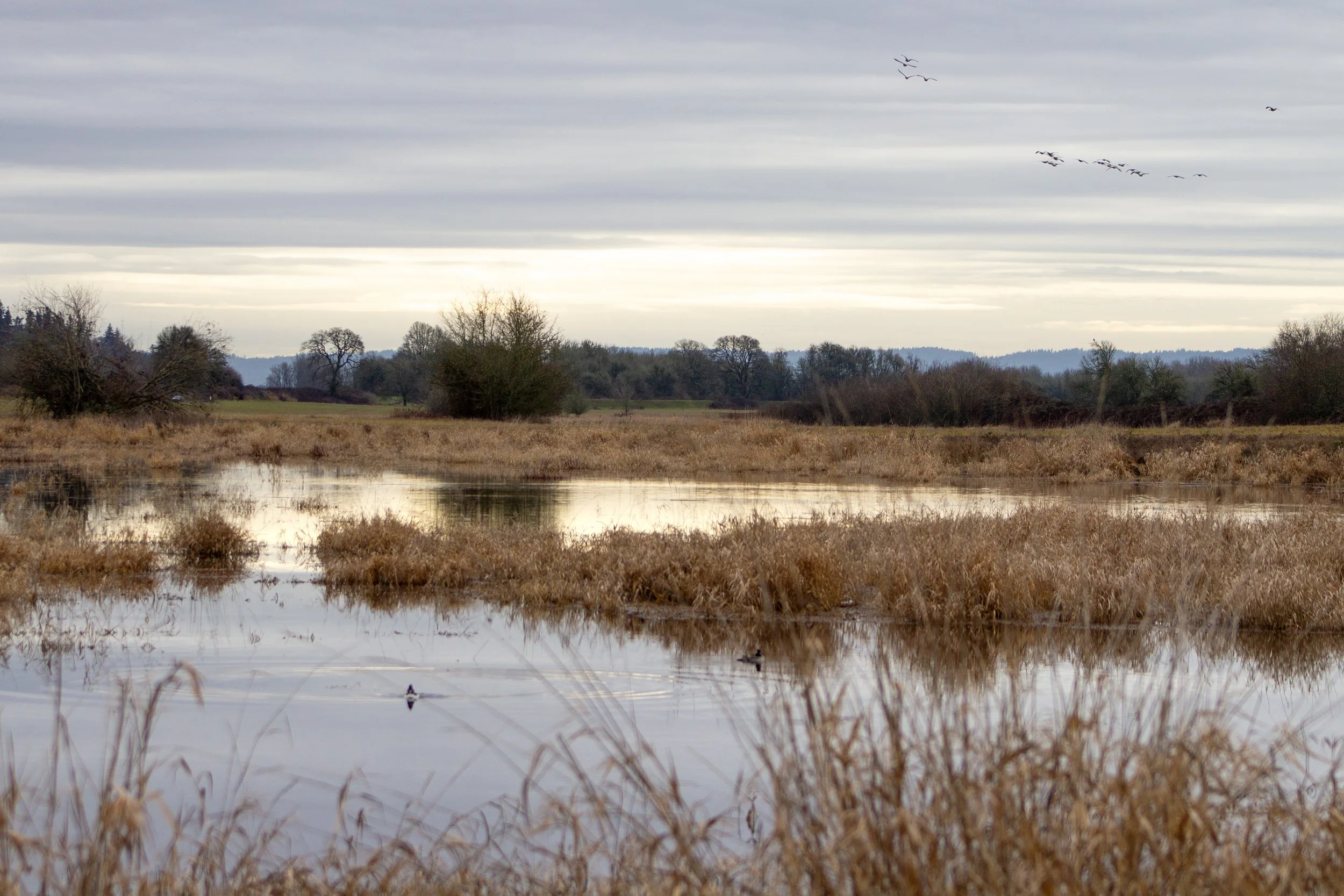
River S Unit
Auto tour
The auto tour was the highlight of my visit to Ridgefield National Wildlife Refuge. This 4-mile gravel road makes a rectangular route around wetlands, fields, and forests, all of them filled with birds. In summer and early fall, you can walk or drive. From October through April, it’s driving only. The road is bumpy at times, but I had no trouble in a low-clearance vehicle. The entrance has a pay station and vault toilets. It’s worth taking a look at the whiteboard for recent animal sightings to build anticipation before you start.
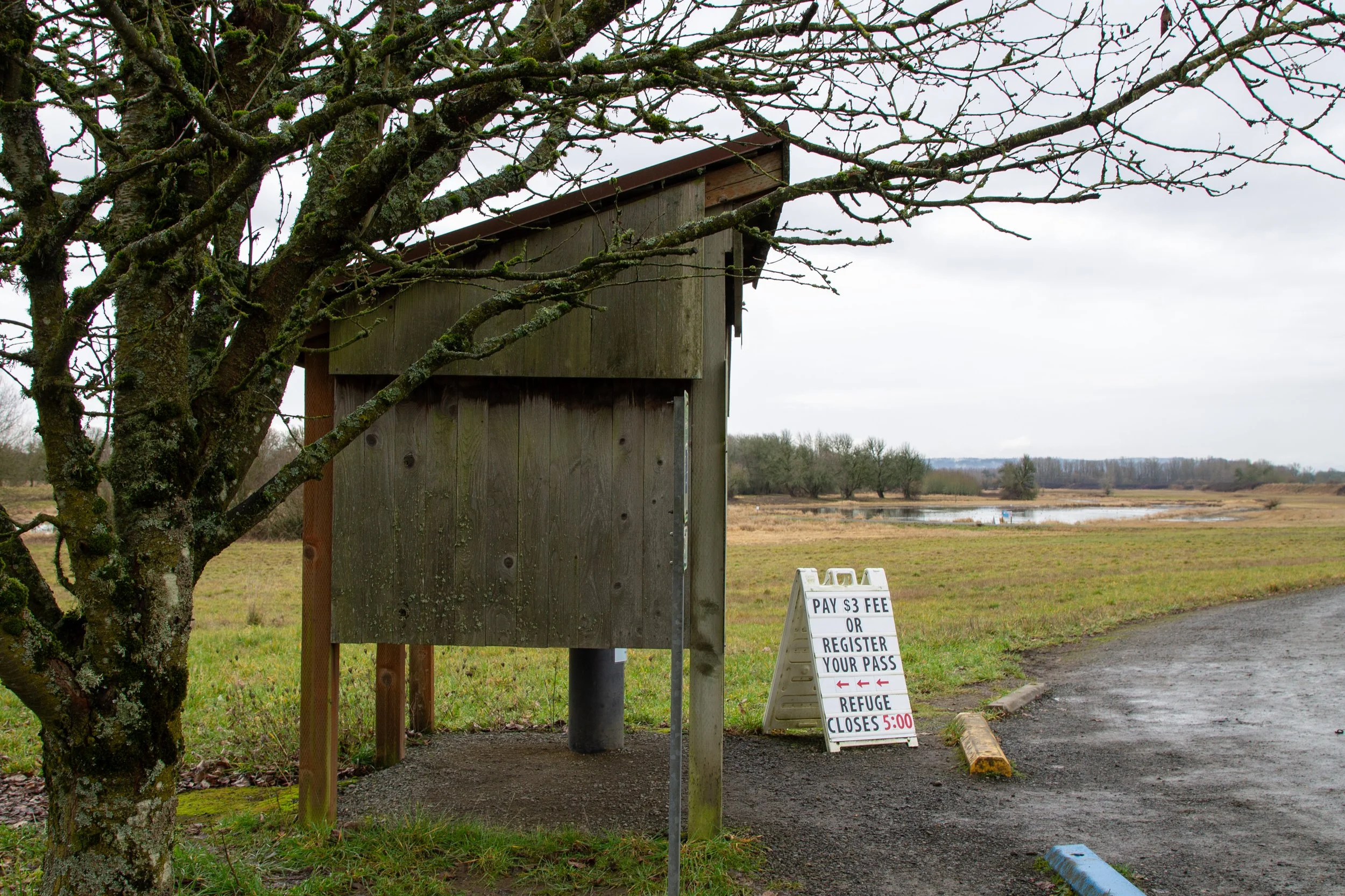
Check in here for the auto tour
I expected staying in the car to be disappointing, but it turned out quite the opposite. The animals go about their business as if the cars aren’t there. I stopped more than once to wait for unhurried birds crossing the road, taking baths in the water-filled potholes, that sort of thing.
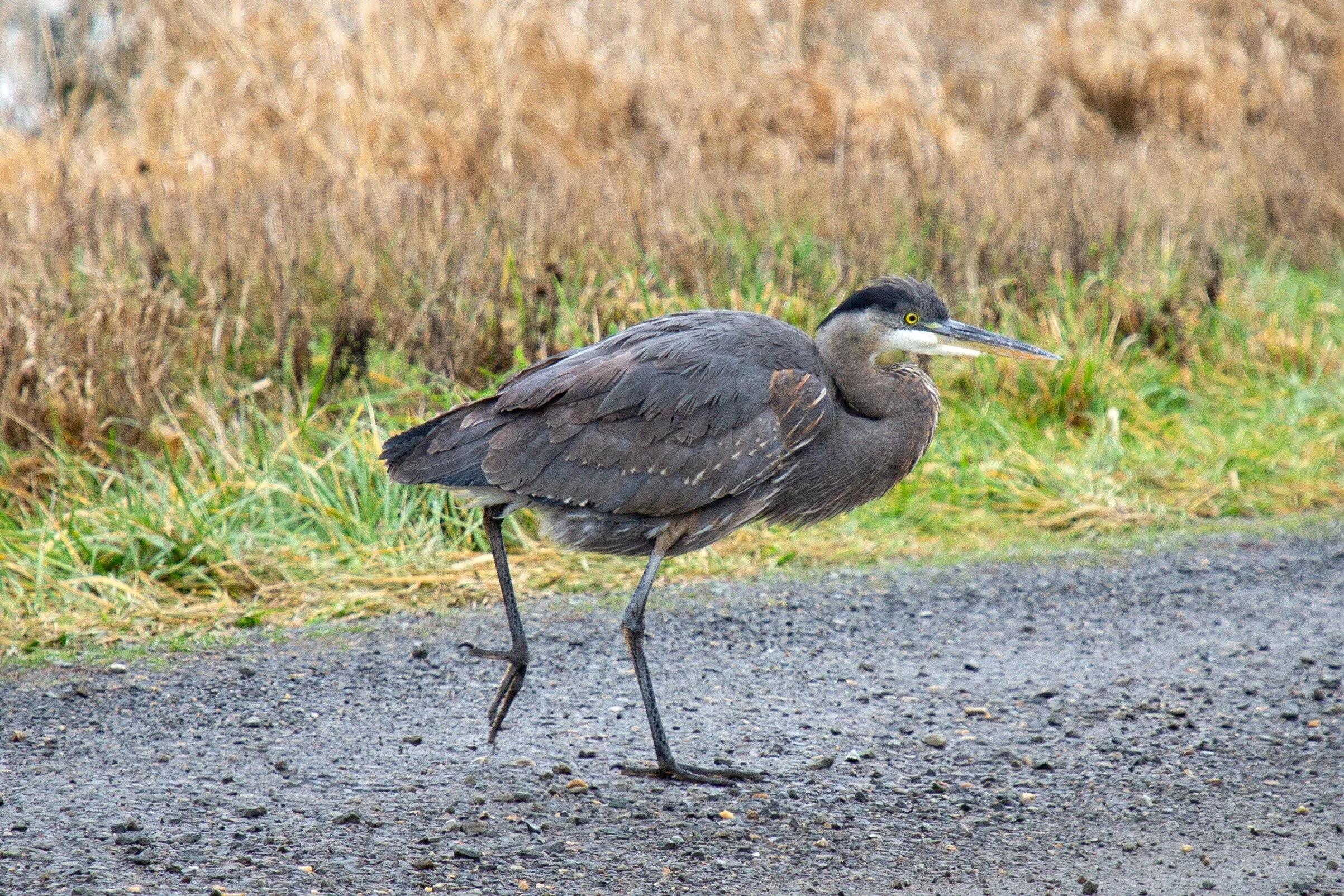
Heron crosses the auto tour road
The auto tour makes a one-way route around Ridgefield NWR’s S Unit. It’s non-stop bird sightings from start to finish. The first great place to see them is the marshy area just past the entrance. I’m only so-so at bird identification, but I saw at least six different duck species there, plus a great blue heron. Farther along the auto tour, swans, geese, and bald eagles entered the mix.
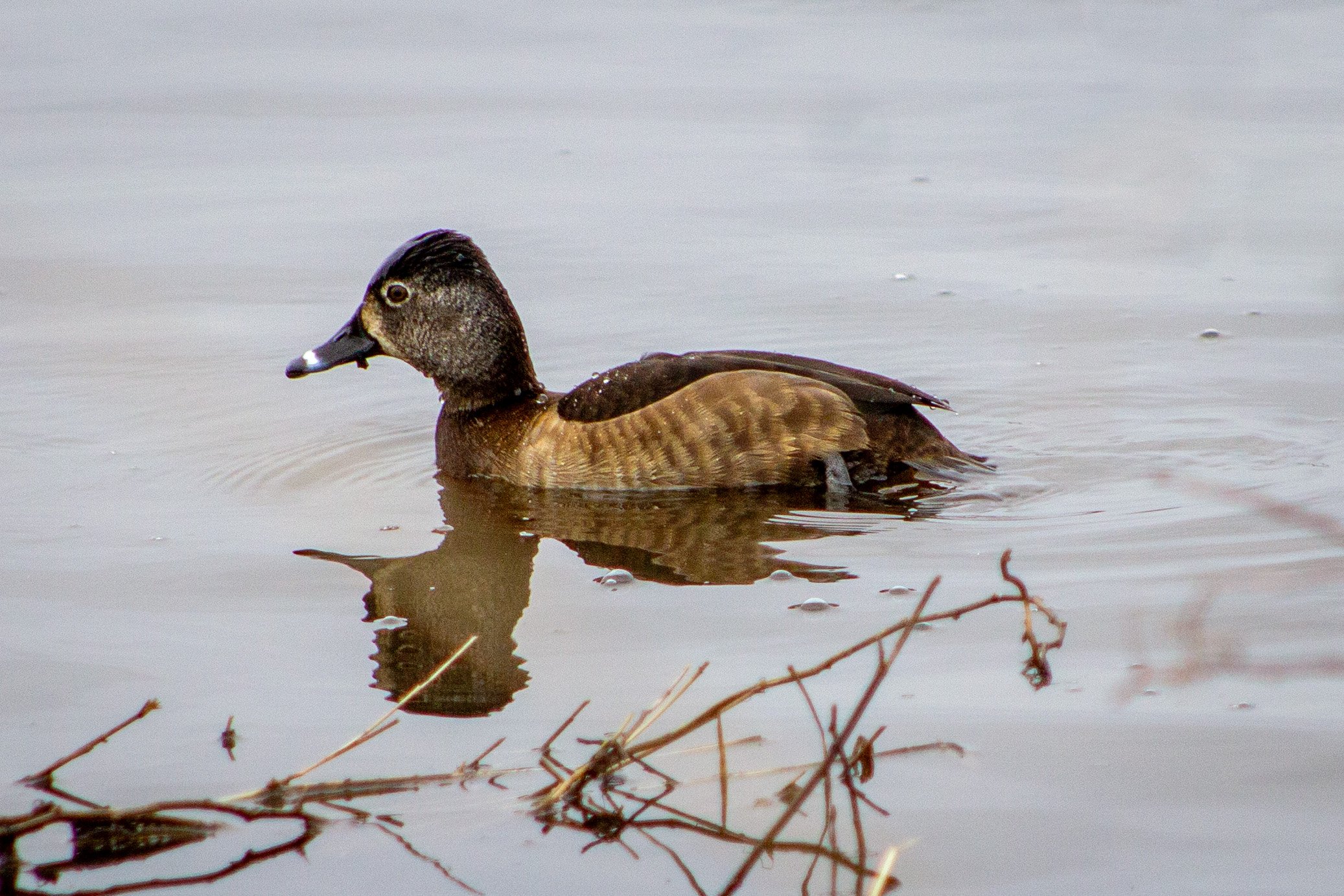
Ring-necked duck
If you visit the auto route from October through April, you’ll have one opportunity to leave the car. The observation bird blind around the halfway point is open all year. It has a small parking area and a vault toilet. From here, a paved trail leads several hundred feet to a ramp up to the bird blind. Once you’re out of the car, it’s easier to hear the bird songs and croaking frogs.
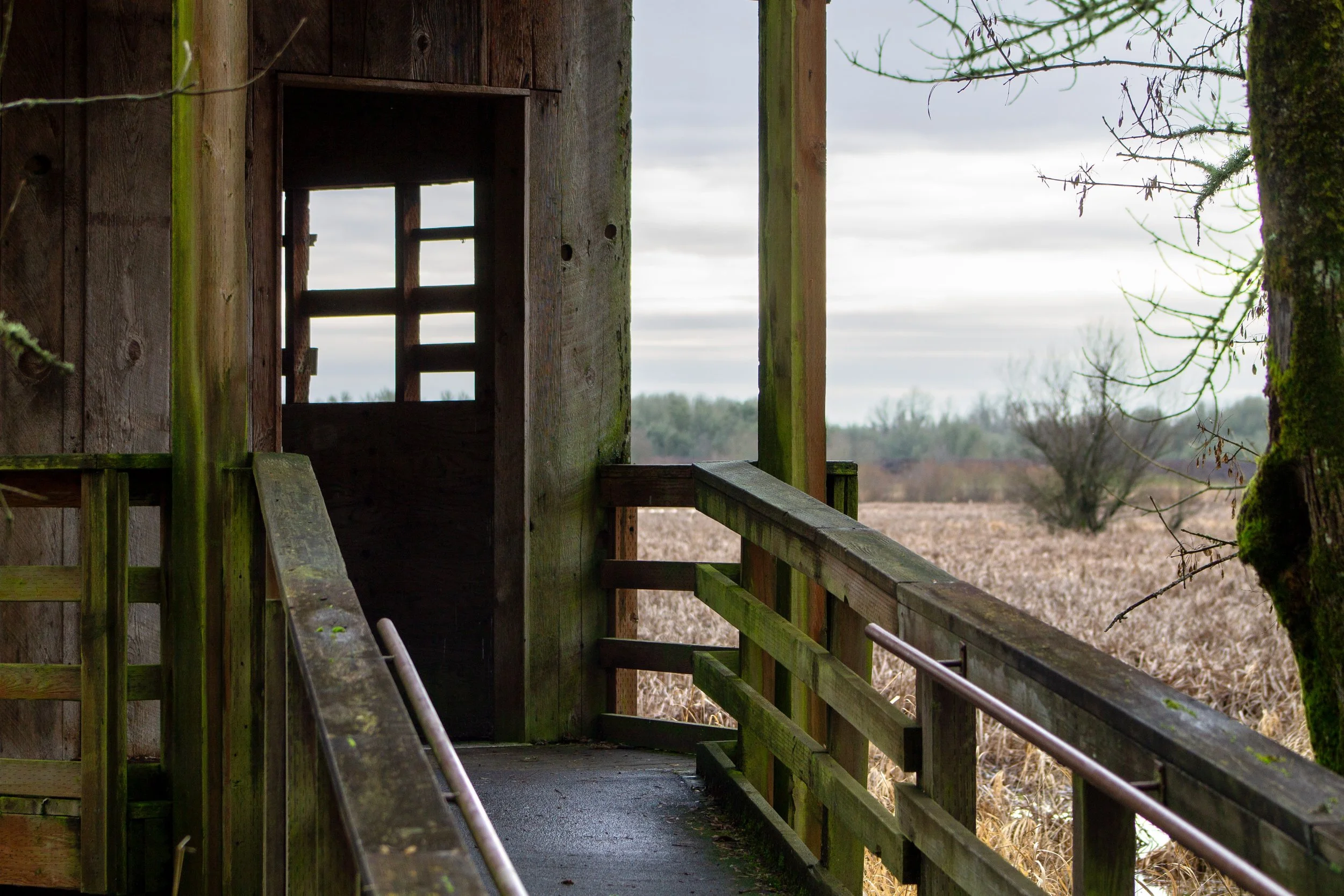
Observation bird blind
After the blind, you drive the rest of the route. The road has regular opportunities to pull over and look for birds. Allow yourself more time to complete the drive than you’d expect from the 4-mile distance. The speed limit is 15 mph, but I don’t think I ever got above 10 mph between the potholes, and not wanting to miss anything.
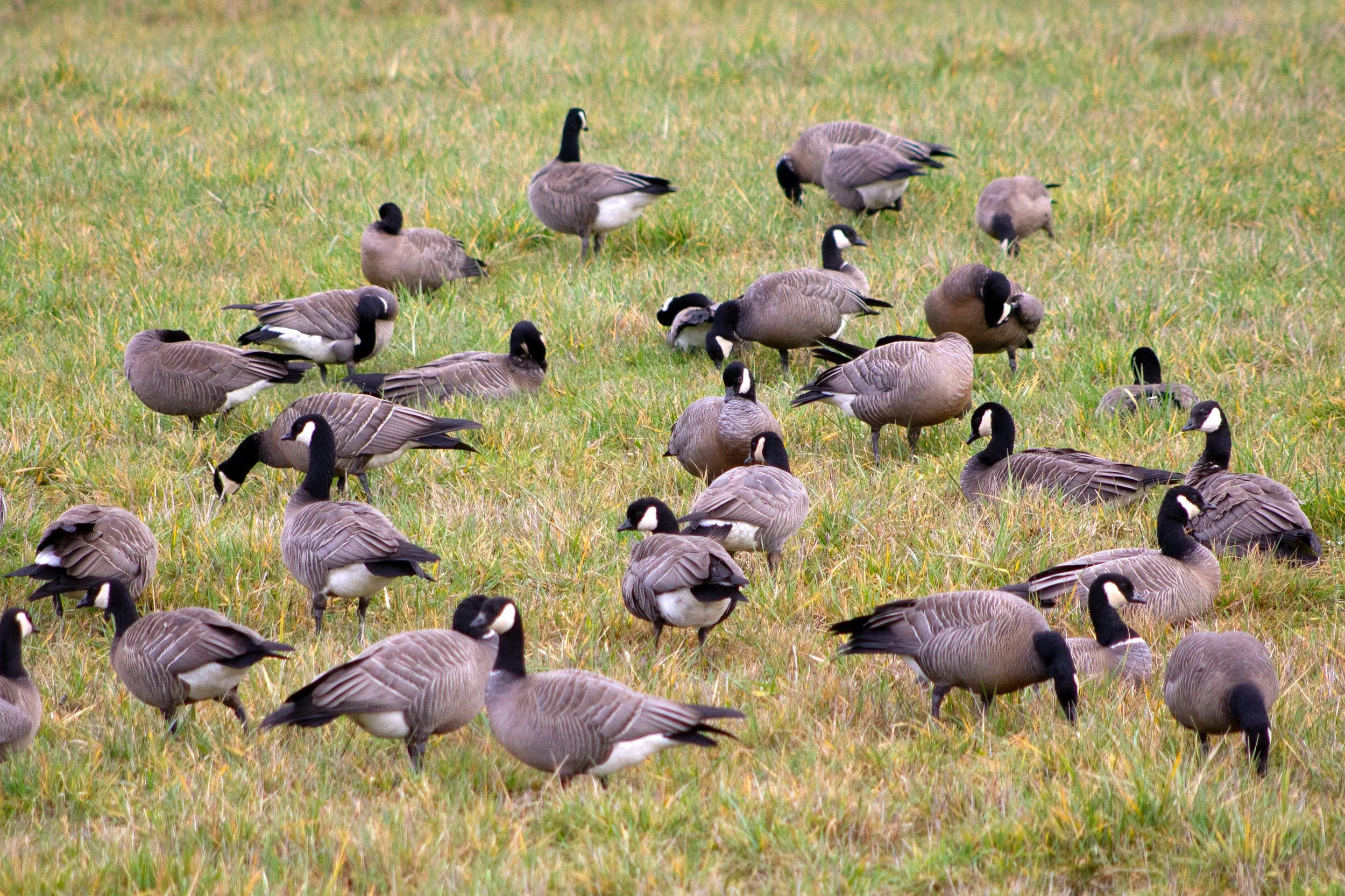
Canada geese along Ridgefield NWR’s auto tour
Kiwa Trail
Distance: 1.5-mile loop
Elevation gain: Minimal
Difficulty: Easy
Accessibility: The trail is flat, with crushed-gravel and boardwalk surfaces.
Season: May - September
The Kiwa Trail is a short hike along the auto tour route. The trailhead is a little past the observation bird blind. It has a few parking spots and a porta-potty. The trail was closed during my winter visit, but I’d love to return when it’s open. From what I read, the crushed gravel surface would accommodate a stroller or wheelchair. As with the rest of Ridgefield National Wildlife Refuge, I’d expect to see plenty of birds.
Wildlife
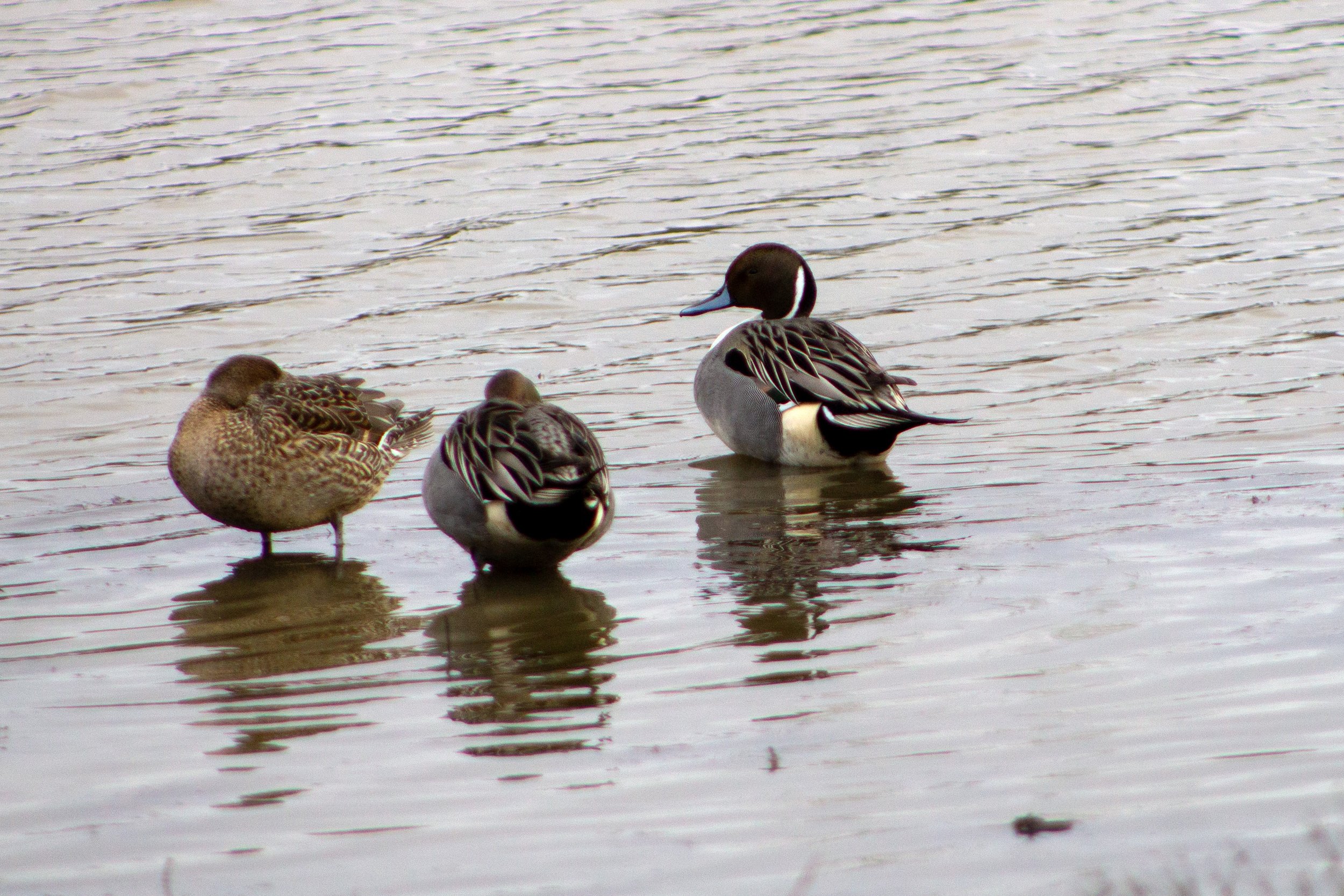
Northern pintails
The highlight of visiting Ridgefield National Wildlife Refuge is seeing the animals, especially the birds. The species vary based on the time of year. The spring and fall migrations bring seasonal visitors. Fall is the best time to look for sandhill cranes. Winter is a great time to look for waterfowl that come to enjoy the relatively mild winters and unfrozen lakes. At the beginning of February, I saw mallards, northern pintails, northern shovelers, ring-necked ducks, American coots, buffleheads, herons, egrets, trumpeter swans, a tundra swan, a kestrel, and a gazillion Canada geese. Winter is also a good time to see raptors, especially bald eagles.
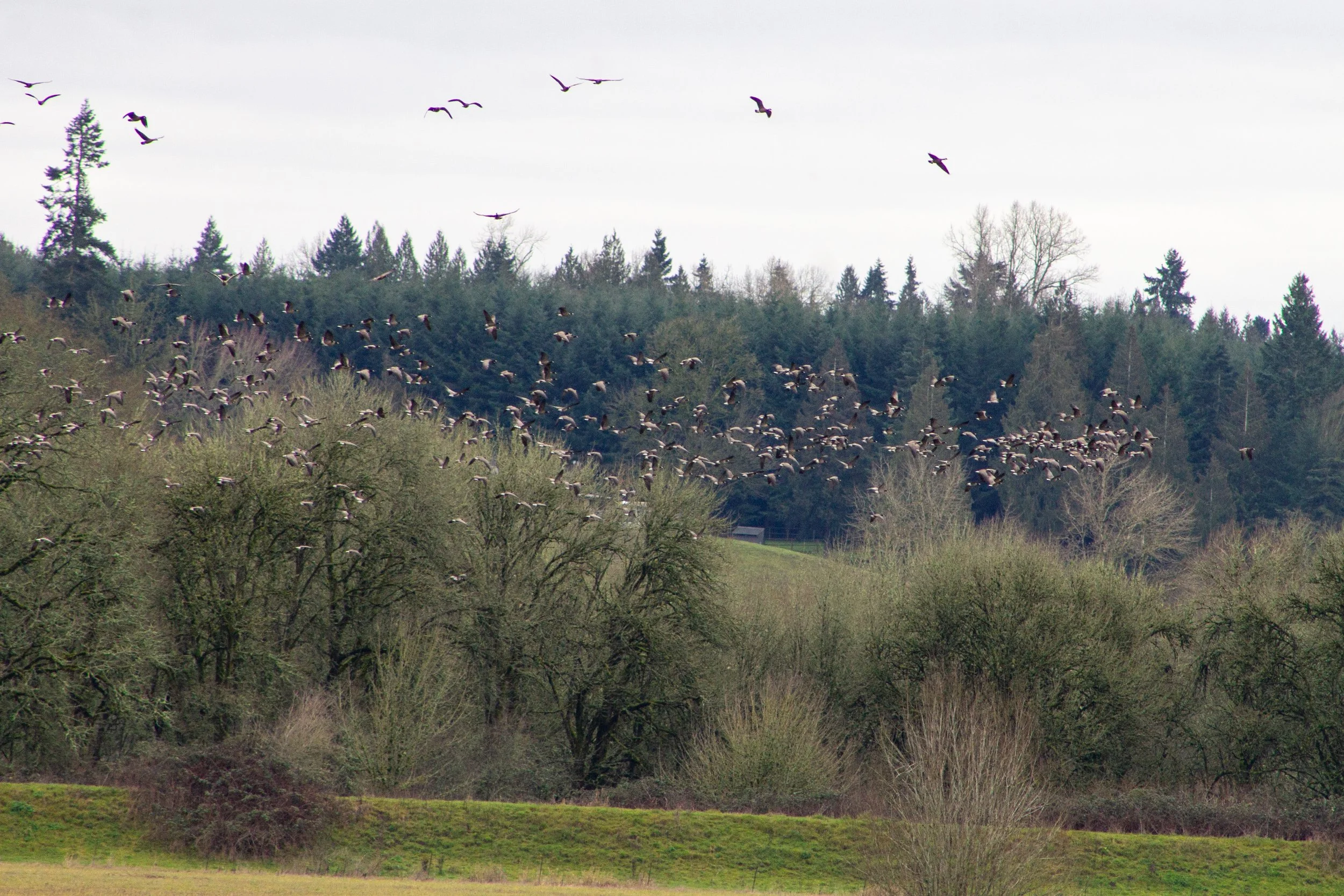
Canada geese in Ridgefield National Wildlife Refuge
I found songbirds harder to spot from the car than on foot. The exceptions were the redwing blackbirds that perch on dry stalks in the marshes. I also saw a few sparrows from the observation blind and finches in the tree near the auto tour pay station. Songbirds were easier to see and hear on the Oaks to Wetlands Trail, where you can take your time on foot. Overall, I was feeling smug about my sightings until I saw the bird list from the Friends of Ridgefield NWR, which is extensive, to say the least. I only scratched the surface.
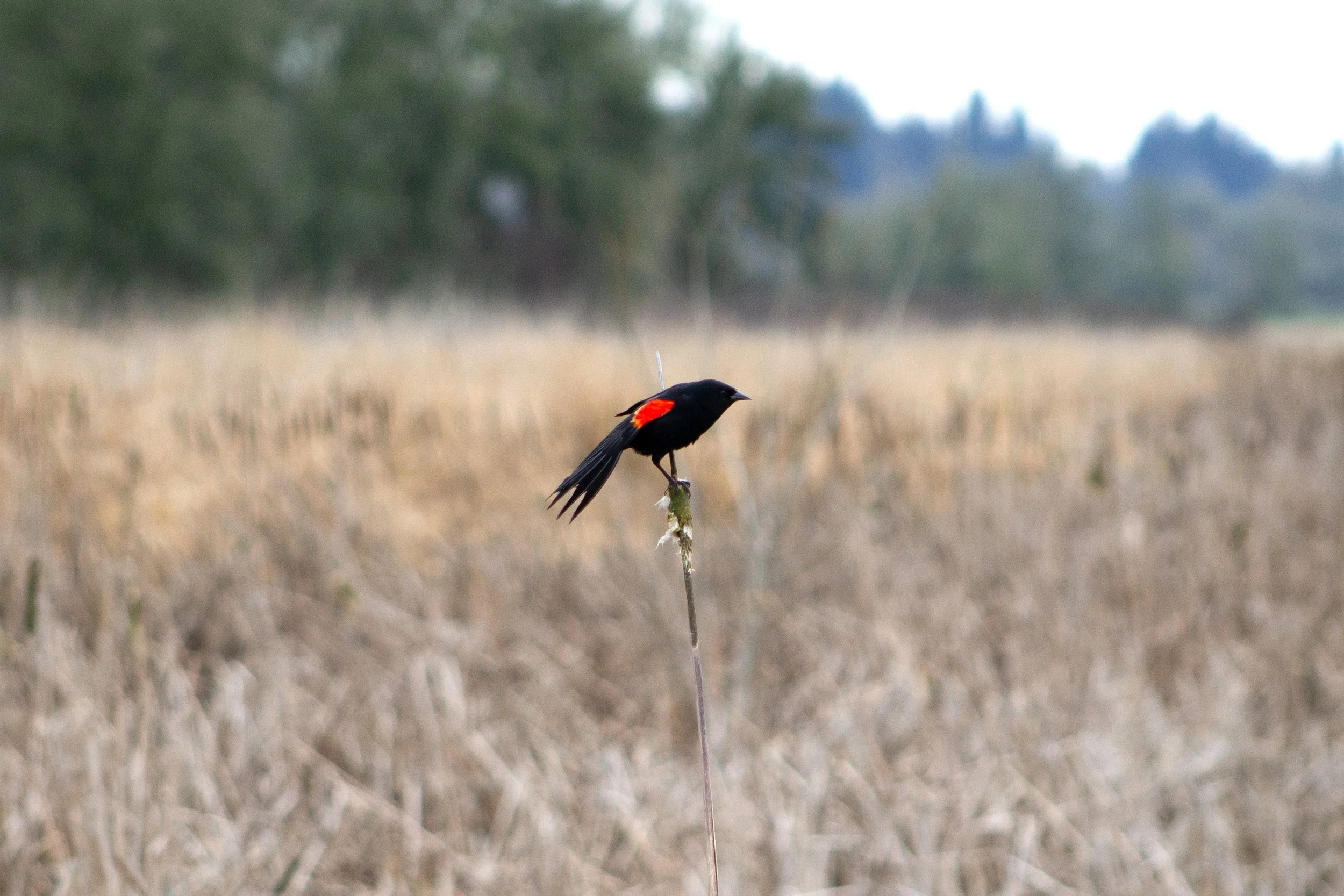
Redwing blackbird
Ridgefield NWR also has many animals besides birds. I saw about half a dozen nutria along the auto tour. Beavers and muskrats are also present, though not as plentiful nor, I suspect, as bold. One memorable nutria left the lake to walk up to my parked car and start grooming itself. Other possible sightings are deer, rabbits, squirrels, coyotes, frogs, turtles, and garter snakes. Summer is the best time to look for reptiles.
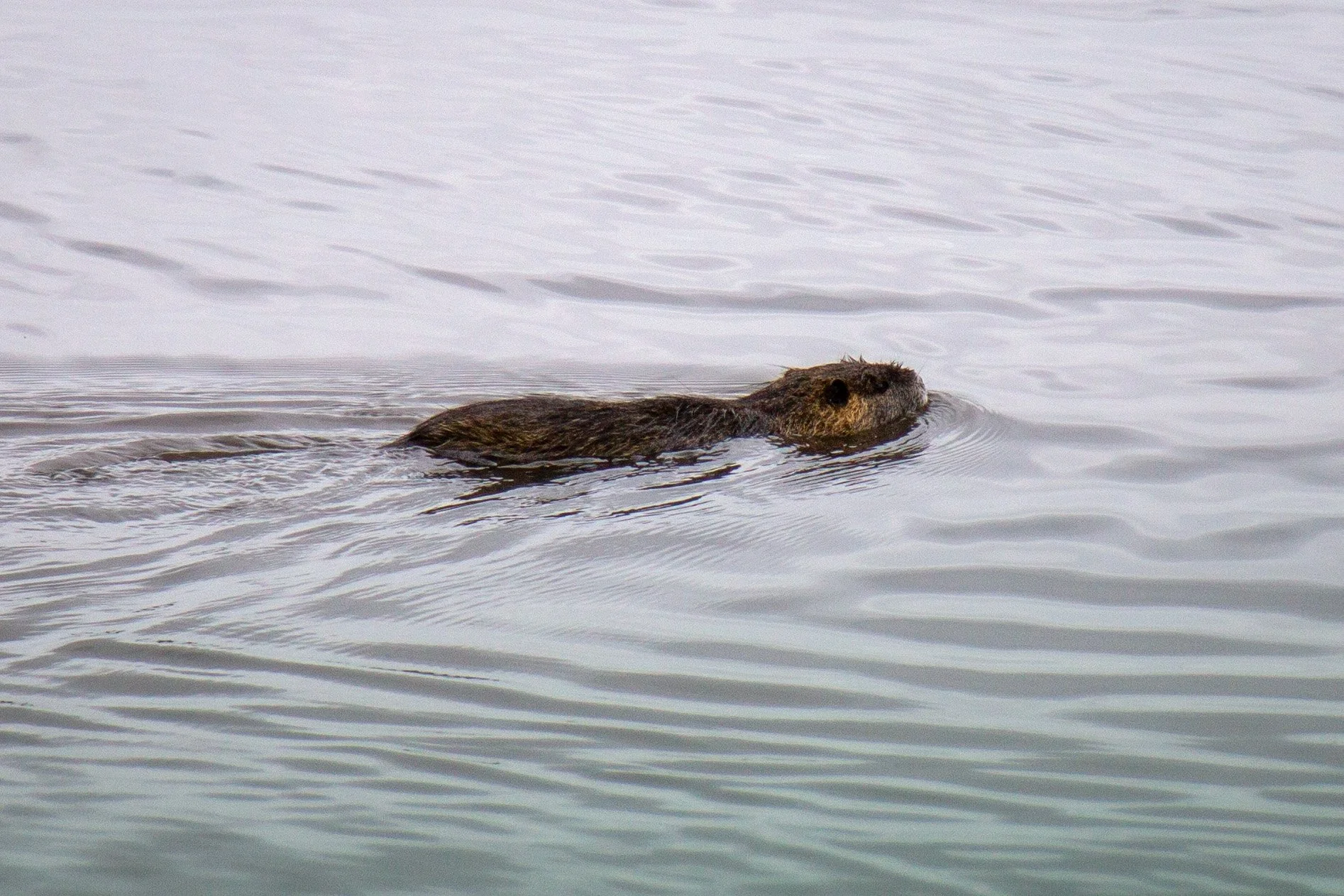
Nutria in Ridgefield National Wildlife Refuge
Getting there
To reach Ridgefield National Wildlife Refuge from Portland, OR, or Vancouver, WA, take I-5 N to exit 14 onto Pioneer Street.
For the Carty Unit, take Pioneer Street until N Royale Rd, then take a right. In 1 mile, turn left onto NW 289th St. Continue 1.5 miles, then take a right onto NW 61st Ave. Then, keep left onto NW 291st St. Look for the Ridgefield National Wildlife Refuge visitor center in about 0.6 miles on your right.
For the River S Unit (auto tour), take a left from Pioneer Street onto 9th Ave. In half a mile, turn right onto SW Refuge Rd and follow it until the pay station. Signs will direct you around the auto tour.
The drive from Portland takes about 45 minutes. From Seattle, it’s about 2.5 hours.
Enjoy your visit to Ridgefield National Wildlife Refuge!
With love,
Emma
Explore nearby
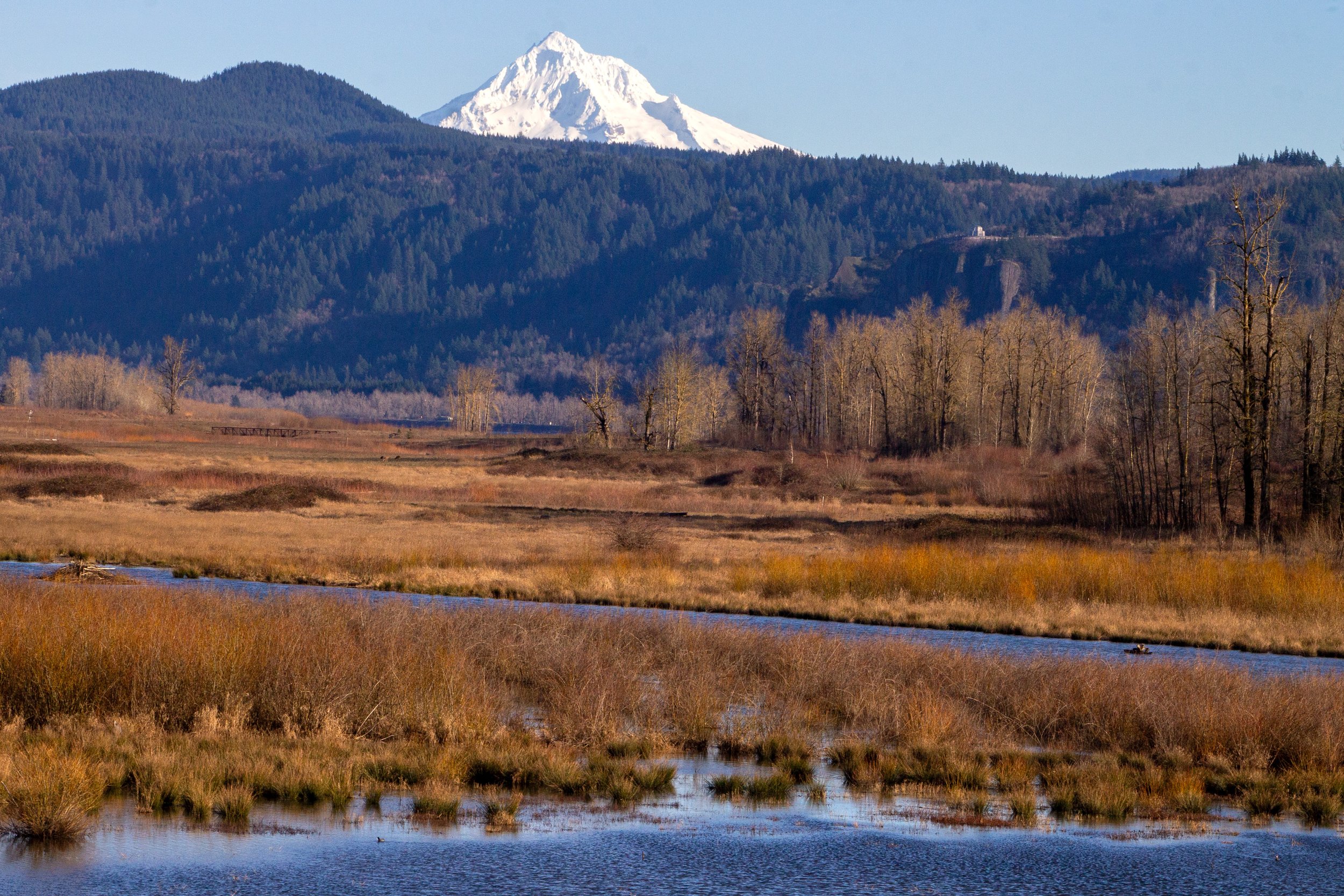
Visit Steigerwald Lake National Wildlife Refuge, another excellent birdwatching spot in southwest Washington.
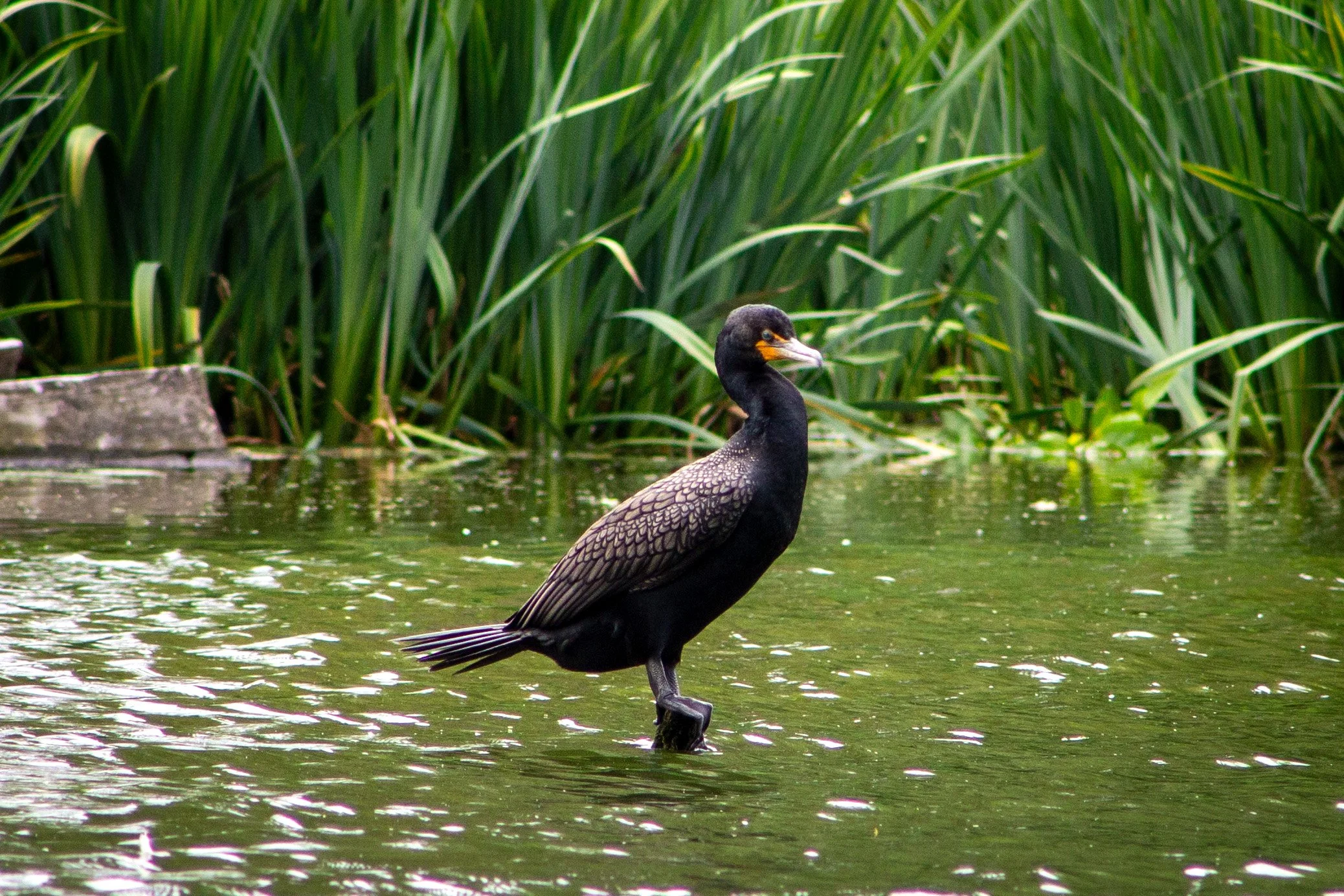
Find more wildlife hotspots near Portland.

Find the best things to do on Sauvie Island.