
Hoyt Arboretum [Local Tree-Hugger’s Guide]
A visit to the Hoyt Arboretum feels like receiving a gift from the past. A few minutes outside downtown Portland, the museum of living trees has 2,300 tree and shrub species growing on 190 acres. Some are the usual suspects in Pacific Northwest forests. Others come from around the world. The variety is staggering, but the legacy is what makes the park so special. People began planting the Hoyt Arboretum around 100 years ago. Go back a few generations, and it would have been mostly saplings. Today, it’s full of mature trees, including some rare and endangered species. In a few more generations, it will be even more impressive. I live in Portland and visit the Hoyt Arboretum every few months or so. All the trees are lovely. Some I consider personal friends. Here’s how to make the most of your visit.
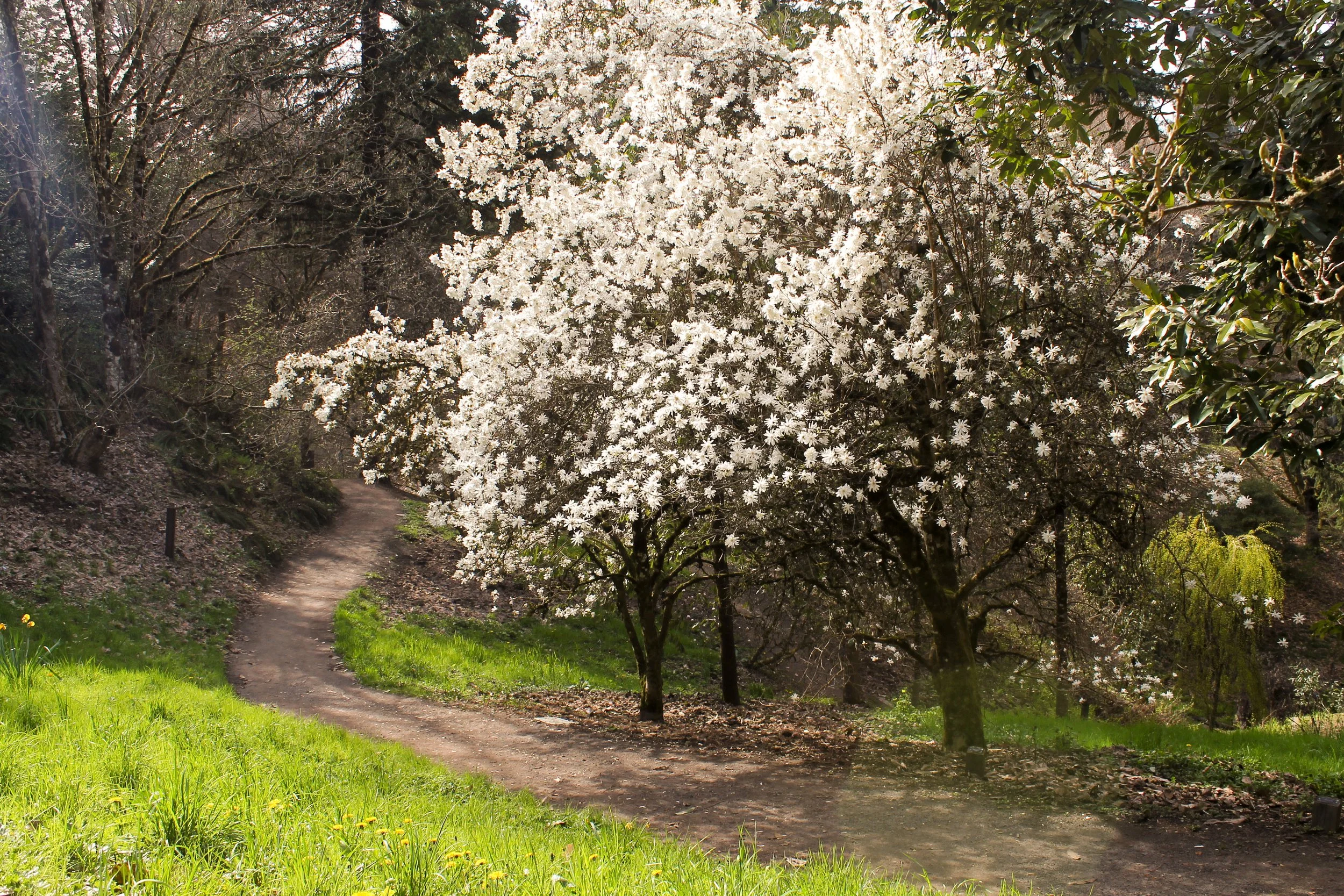
Magnolia Trail
Logistics
Cost
The Hoyt Arboretum is free to visit, other than parking. You don’t need a ticket or a reservation.
Parking
The main parking lot is at the Hoyt Arboretum Visitor Center.
Address: 4000 SW Fairview Blvd, Portland, OR 97221
Parking is metered at $2.40/hour or $9.60/day from 9:30 AM to 8 PM daily. The parking fee only covers the Hoyt Arboretum, not other areas of Washington Park.
Pay for parking with a credit card or the Parking Kitty app. I’d suggest downloading the app and adding your car information before you arrive. The reception at Hoyt Arboretum is spotty, and the app is fussy. Having things ready to go will save you a headache when you get there.
Don’t leave anything in the car. Sadly, break-ins happen here.
Transit
The easiest way to reach the Hoyt Arboretum from downtown Portland is to take the MAX light rail red or blue lines to Washington Park. Head to the Vietnam Veterans Memorial and follow the signs for the Hoyt Arboretum trails. The Maple Trail and Overlook Trails are closest to the MAX stop.
Trimet bus #63 connects downtown Portland, the Hoyt Arboretum Visitor Center, and other Washington Park destinations.
Shuttle
The free Washington Park shuttle makes a loop through Washington Park, stopping at its attractions, including the Hoyt Arboretum Visitor Center. Shuttles run daily. The schedule depends on the season:
9:30 AM – 7 PM from April through September, every 15 minutes
10 AM – 4 PM from October through March, every 30 minutes
Shuttles are wheelchair accessible.
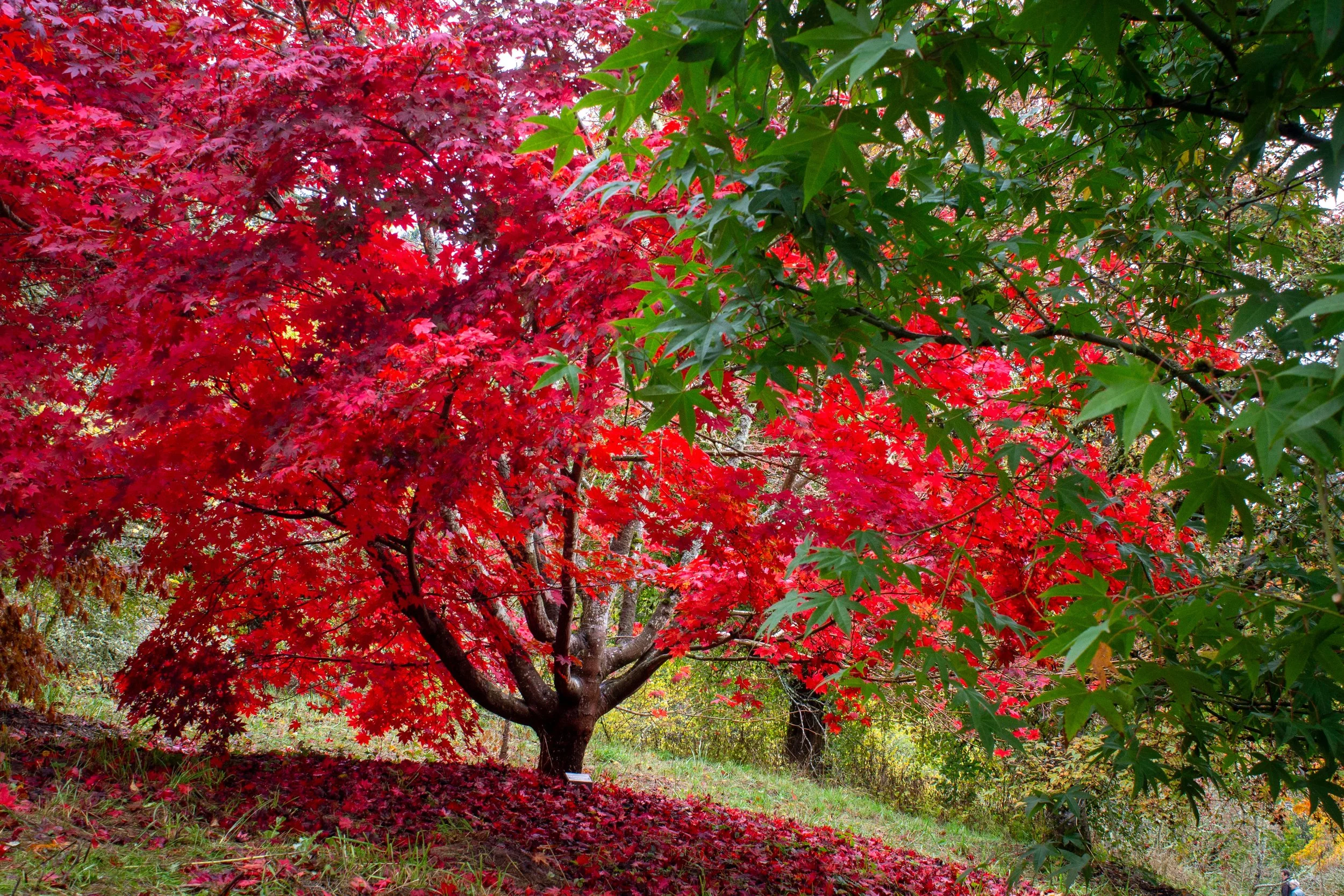
Maple Trail
When to visit
The Hoyt Arboretum is open all year.
The Visitor Center is open from 10 AM to 4 PM daily, with occasional closures for holidays, bad weather, and such. You can still visit the arboretum when it’s closed.
The park hours are 5 AM to 10 PM daily, all year. The trails aren’t lit after dark. Plan your visit around daylight hours.
Tips for visiting the Hoyt Arboretum
Leashed dogs are welcome on the trails.
Phone reception is terrible. Download an offline trail map before arriving. The Visitor Center has paper maps, but it seems nicer to save the paper in a tree museum.
Restrooms are in the Visitor Center.
Picnic tables are across the road from the Visitor Center. They may not be available if the space is rented for an event. The Bristlecone Pine Trail also has a picnic area near the ginkgo grove.
Please do not remove anything from the park.
The Visitor Center has a nice little gift shop, but it isn’t a place you’ll spend much time. The main attraction in Hoyt Arboretum is walking around and spending time with the trees.
The Hoyt Arboretum is a great destination with kids. It doesn’t have hazards like drop-offs. Some trails might have too much uphill walking for younger children. The paved trails (Overlook Trail and Bristlecone Pine Trail) are stroller-friendly.
Benches are spread out throughout the park.
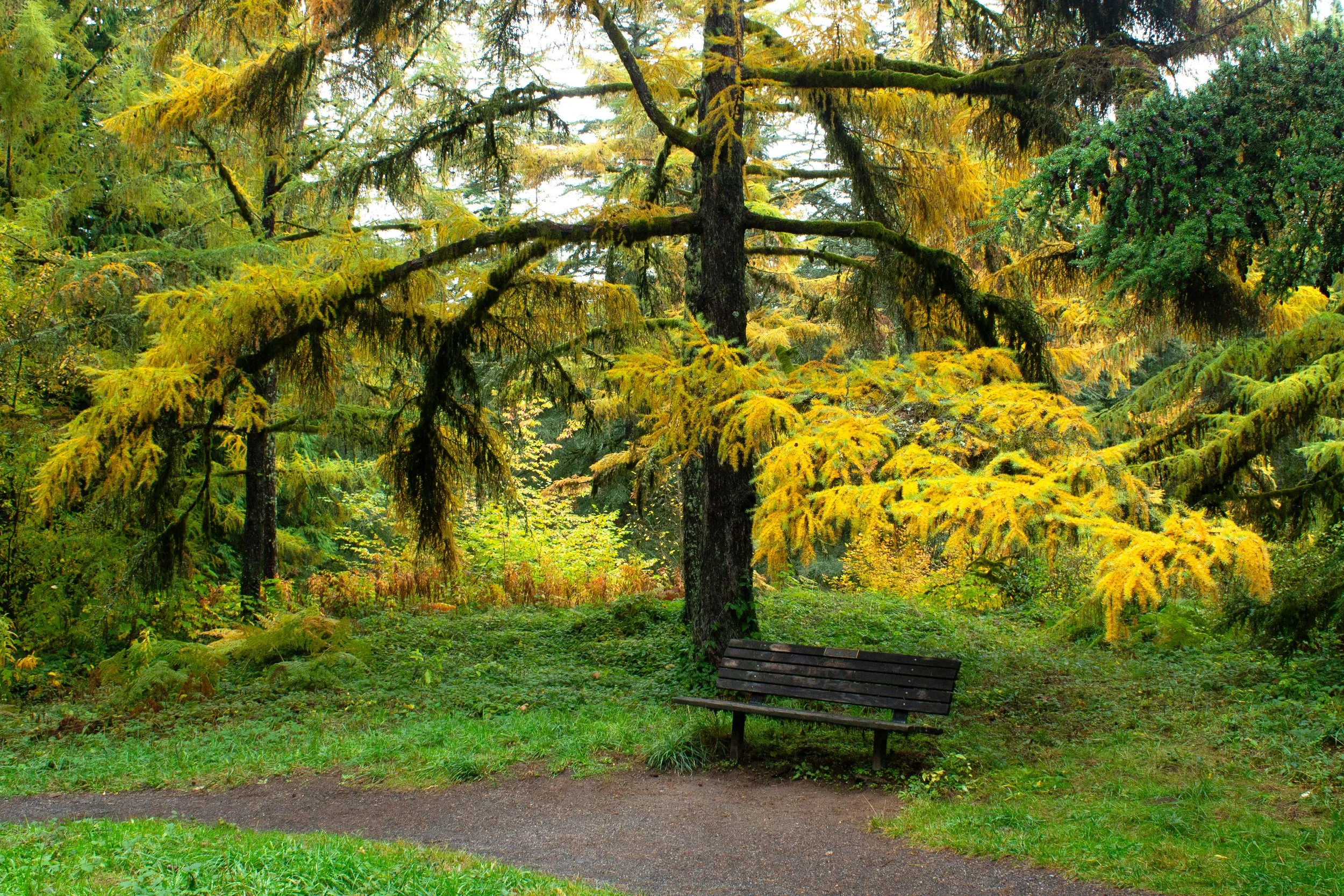
Bench in the larch grove
Highlights
Redwood Deck
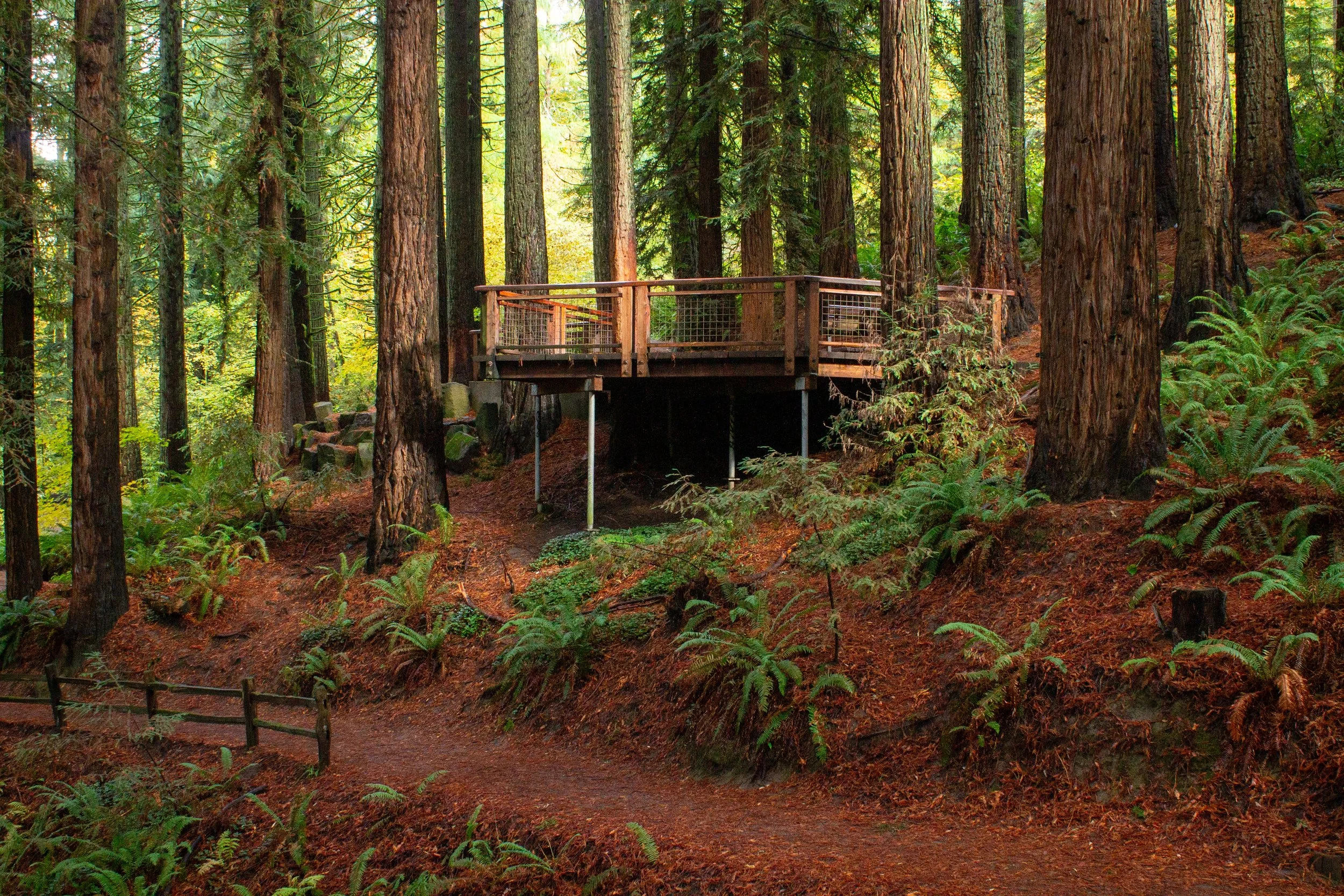
Visiting the Hoyt Arboretum is more about wandering around and enjoying the trees than finding a specific destination. I hesitate to describe anything as a must-see attraction, but if I did, it would be the Redwood Deck. Less than half a mile from the Visitor Center, a large sequoia sticks up through the fenced viewing platform in a mature redwood forest. Benches on the deck are perfect for having a rest and admiring the arboretum’s three types of redwoods. Down the hill, Johnson Creek gurgles over mossy rocks.
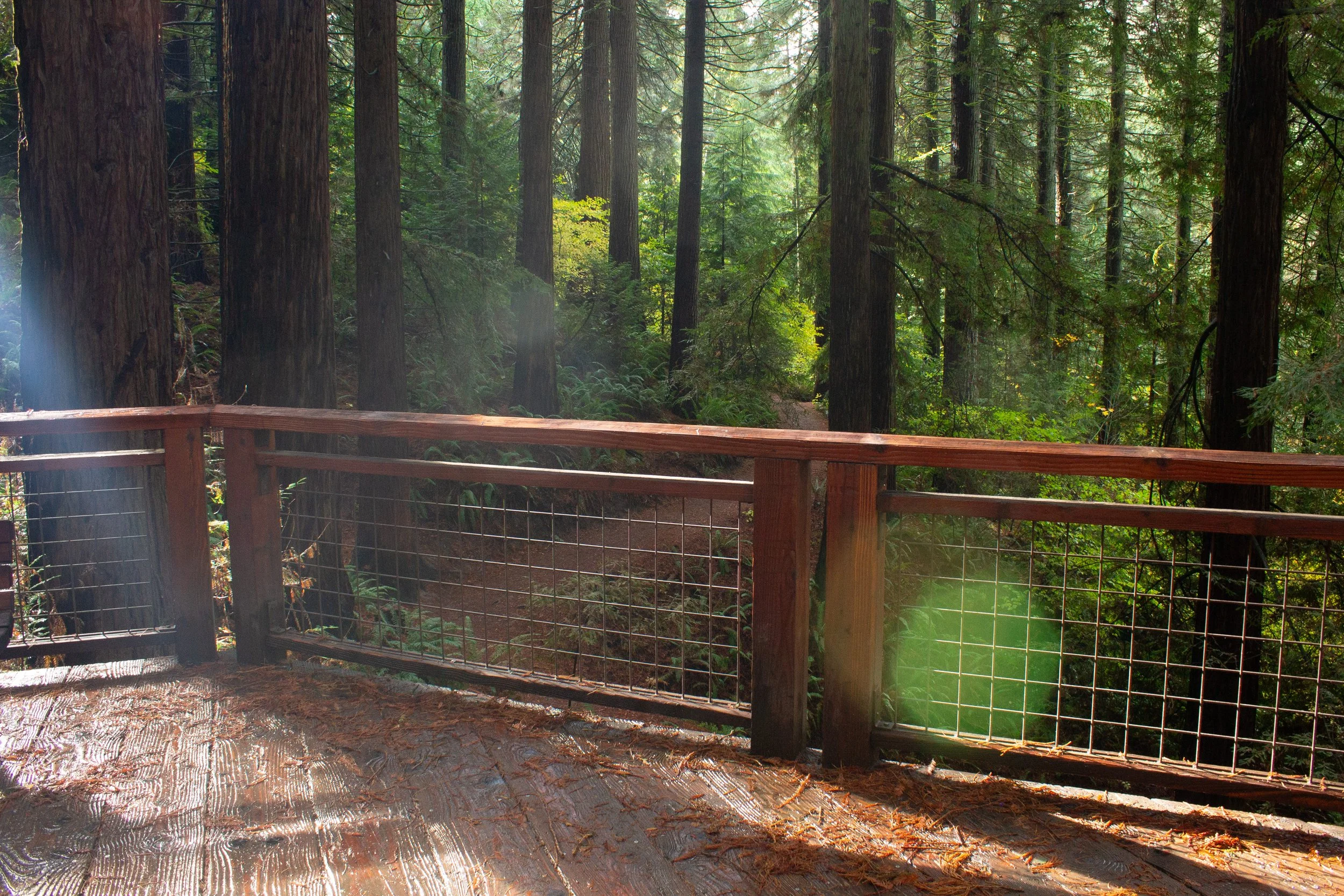
Redwood Deck
Dawn Redwood
The Hoyt Arboretum’s most famous tree is a living fossil, the dawn redwood. The needles of this deciduous conifer turn yellow and drop in fall. They re-emerge bright green in the spring. Walking by, it’s tall and striking, but the tree’s history is what makes it mind-boggling. Based on the fossil record, dawn redwoods were common in North America millions of years ago, but disappeared before humans came on the scene. Scientists considered them extinct until a grove in China was discovered in the 1940s. The Hoyt Arboretum received 50 seeds from this grove. One thrived, becoming the first dawn redwood in the Western Hemisphere to produce cones in millions of years. Look for it at the end of SW Bray Ln, just off the Spruce Trail, near the Redwood Deck.
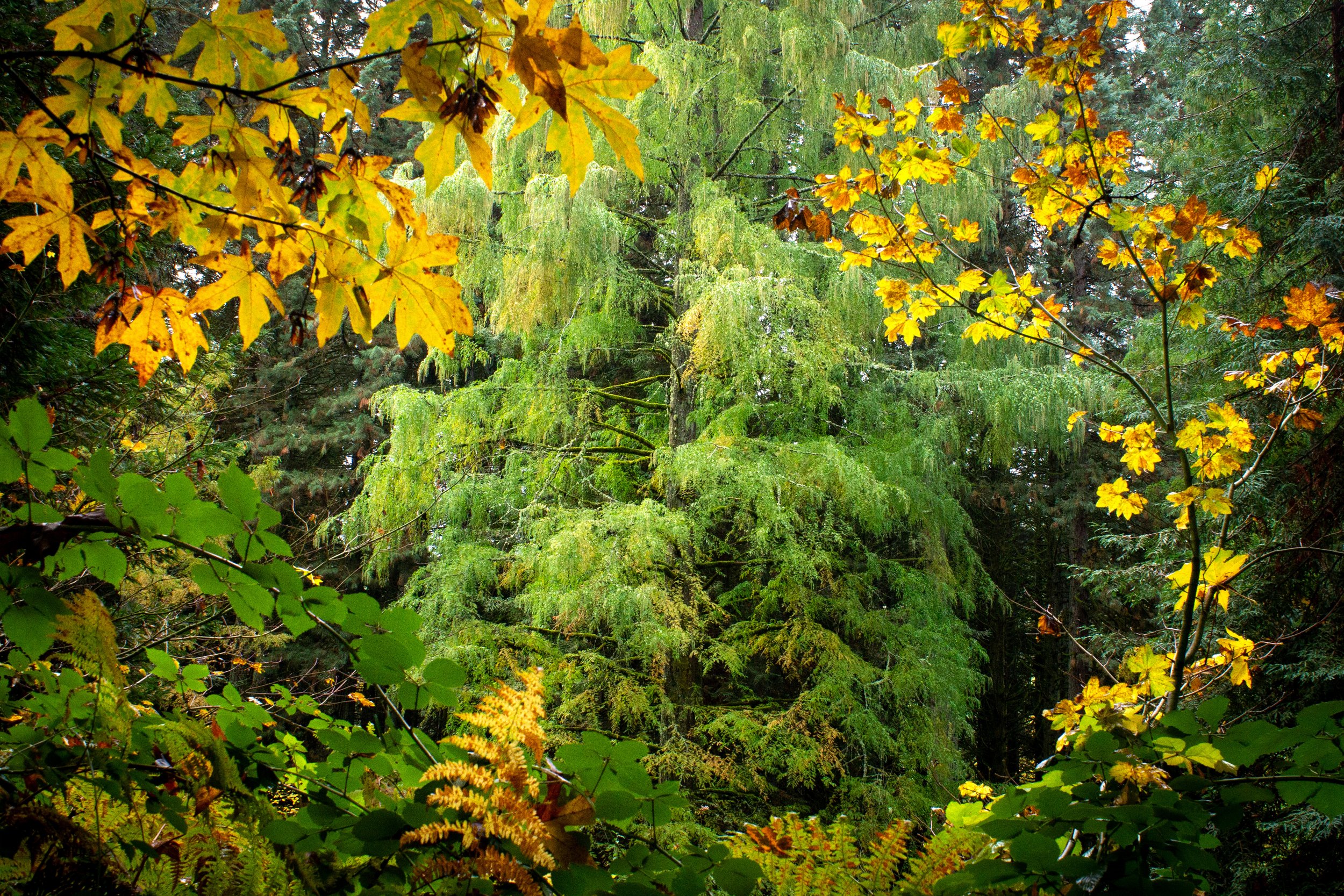
Dawn redwood sighting from the Spruce Trail
Hoyt Arboretum trails
The Hoyt Arboretum has about 12 miles of hiking trails. They’re named for the trees that grow along them, like the Maple Trail, Beech Trail, White Pine Trail, etc. It’s a place you can hike as much or as little as you want. In the unlikely event you make it to all the trails in the Hoyt Arboretum, they connect to other destinations in Washington Park and Forest Park.
Paved trails and accessibility
Most of Hoyt Arboretum's trails are unpaved. Two trails, besides the little 0.1-mile loop next to the Visitor Center, are paved. The Overlook Trail is a 0.5-mile (one-way) trail from the Visitor Center. The Bristlecone Pine Trail is a 0.5-mile (one-way) trail that starts from the small parking area on SW Fischer Lane. The paved trails are considered wheelchair-accessible, but aren’t completely flat.
Other trails
The unpaved trails in the Hoyt Arboretum are well-maintained, but they do have some natural obstacles, such as tree roots and rocks. They aren’t stroller-friendly. Difficulty level ranges from easy to moderate. The trail network makes it easy to choose your hiking distance. I usually connect a few trails to make a loop of around 1-3 miles when I visit.
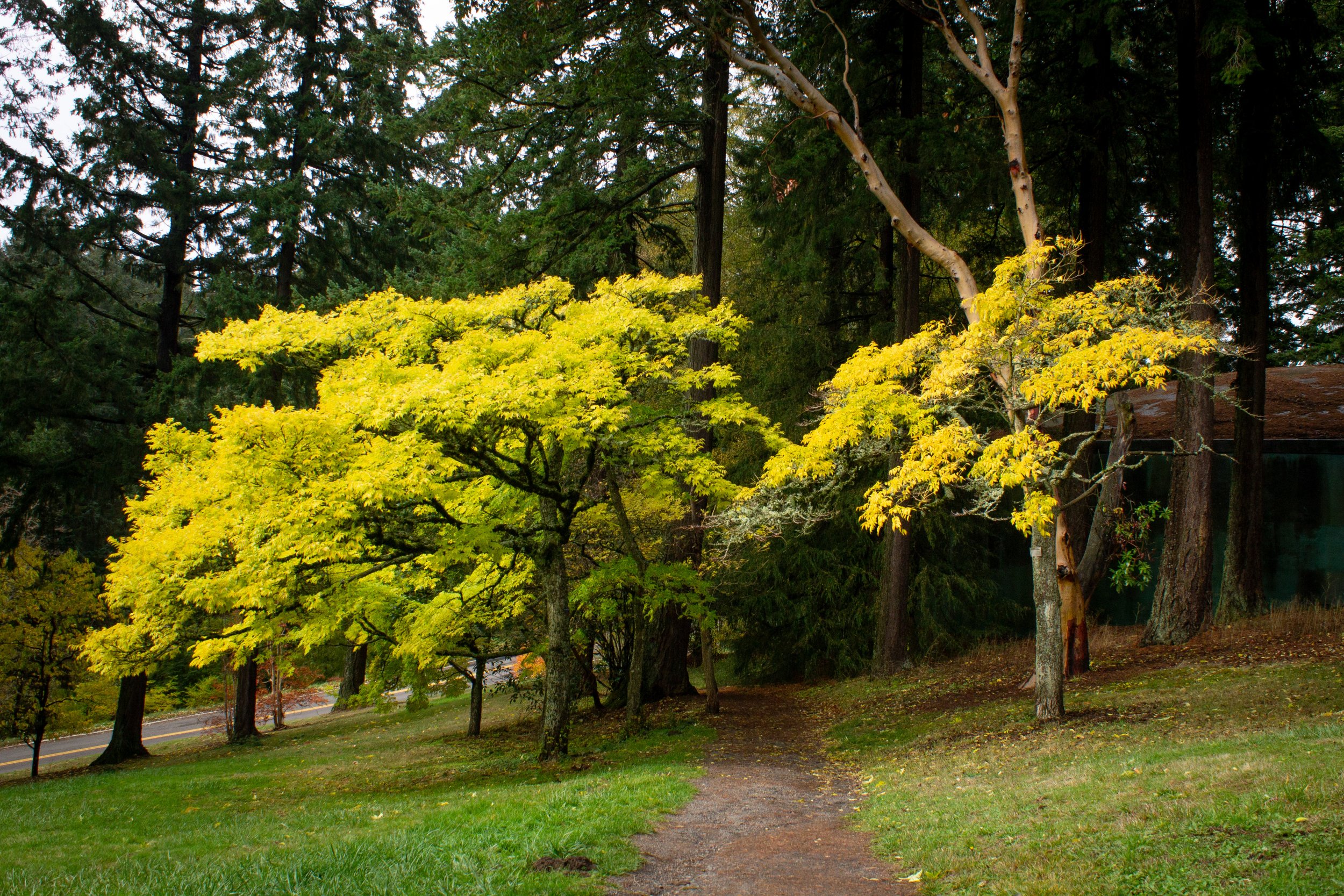
Most trails are unpaved but well maintained
Hikes by the season
During my first visits to the Hoyt Arboretum, I would just pick trails at random and wander until I got tired. This method is completely valid and a good way to get to know the park. Now that I’ve been there more times, I have favorites that vary with the season.
Spring
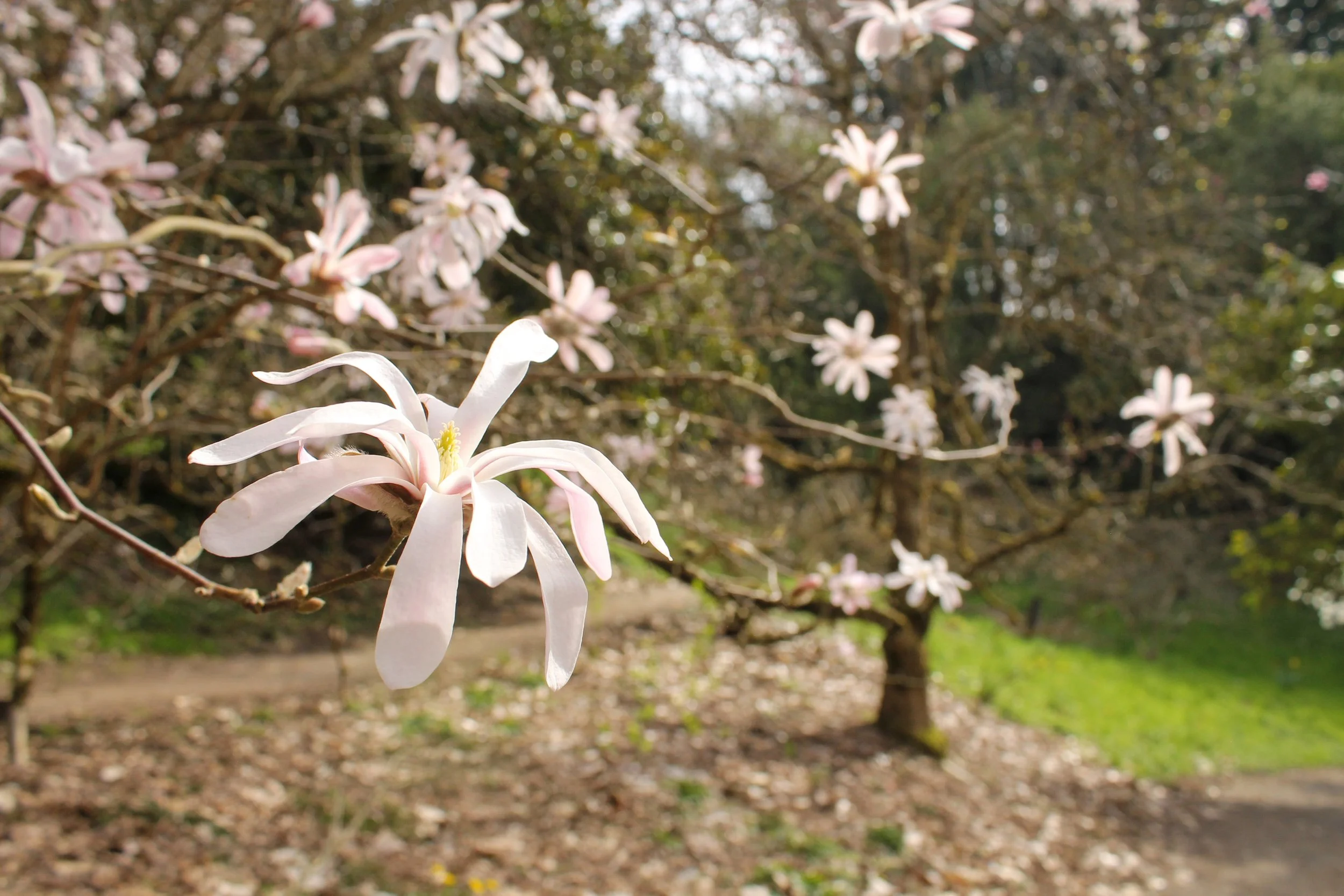
Magnolia Trail
My hands-down favorite spring hike in Portland is the Hoyt Arboretum’s Magnolia Trail. The blooms tend to peak in April, just after the cherry blossoms along the downtown waterfront have faded. Pale pink and white flowers emerge before the new leaves, making them stand out against the drab gray of the still-dormant forest. Different magnolia species help lengthen the season, so you don’t have to be perfect with your timing. To find the Magnolia Trail, start at the Visitor Center. Take the Beech Trail, which will bring you right to it. You can return on the Overlook Trail to make it a loop. You’ll pass a few cherry trees and some early-blooming wildflowers in the undergrowth, like violets and trillium.
If you miss the magnolias, the dogwoods around the Vietnam Veterans Memorial look great in May. It’s also when to look for new, bright green needles on the dawn redwood.
Summer
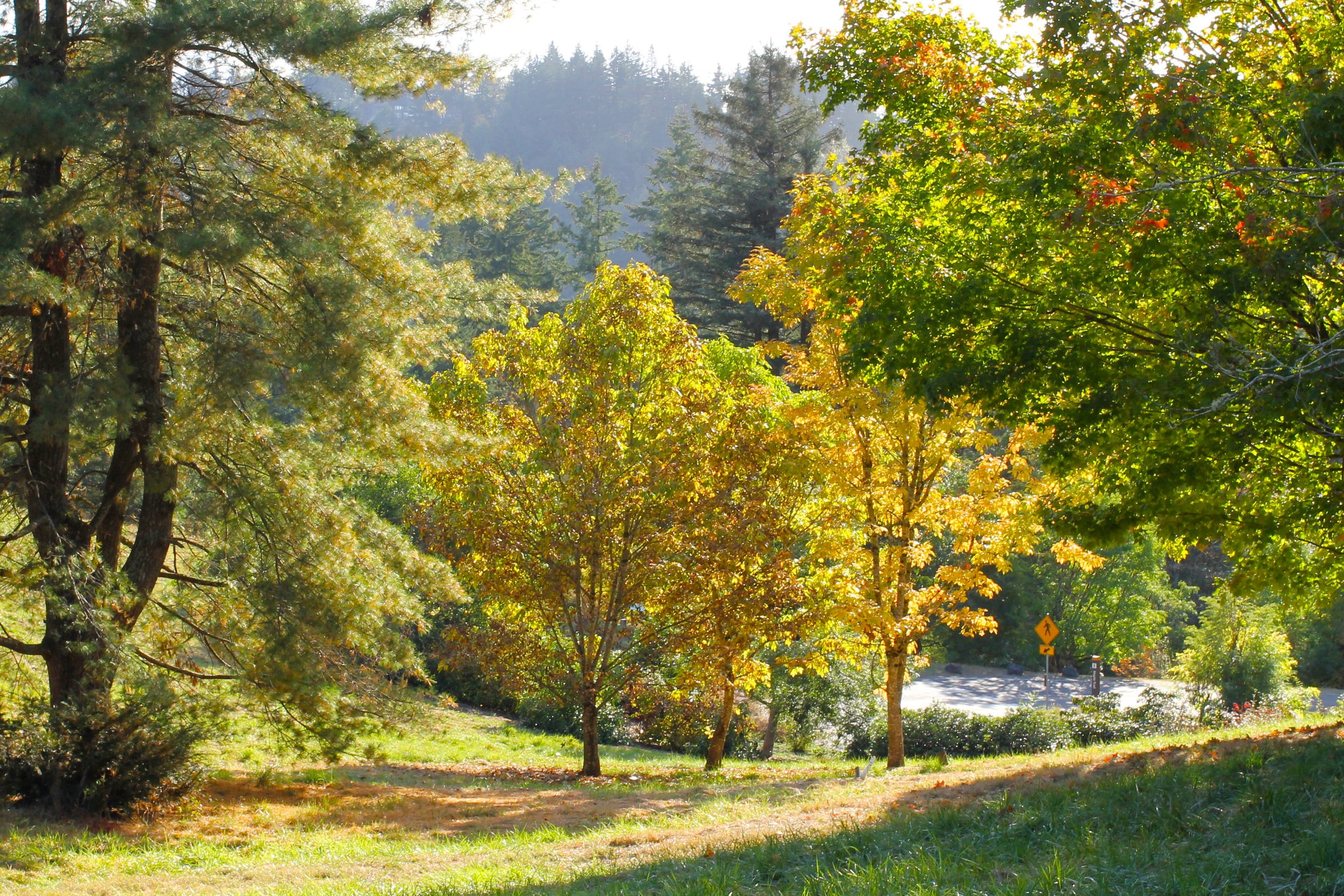
Overlook Trail
Everything in the Hoyt Arboretum looks amazing in the summer. Go ahead and pick any trail. It will be a great choice.
Fall
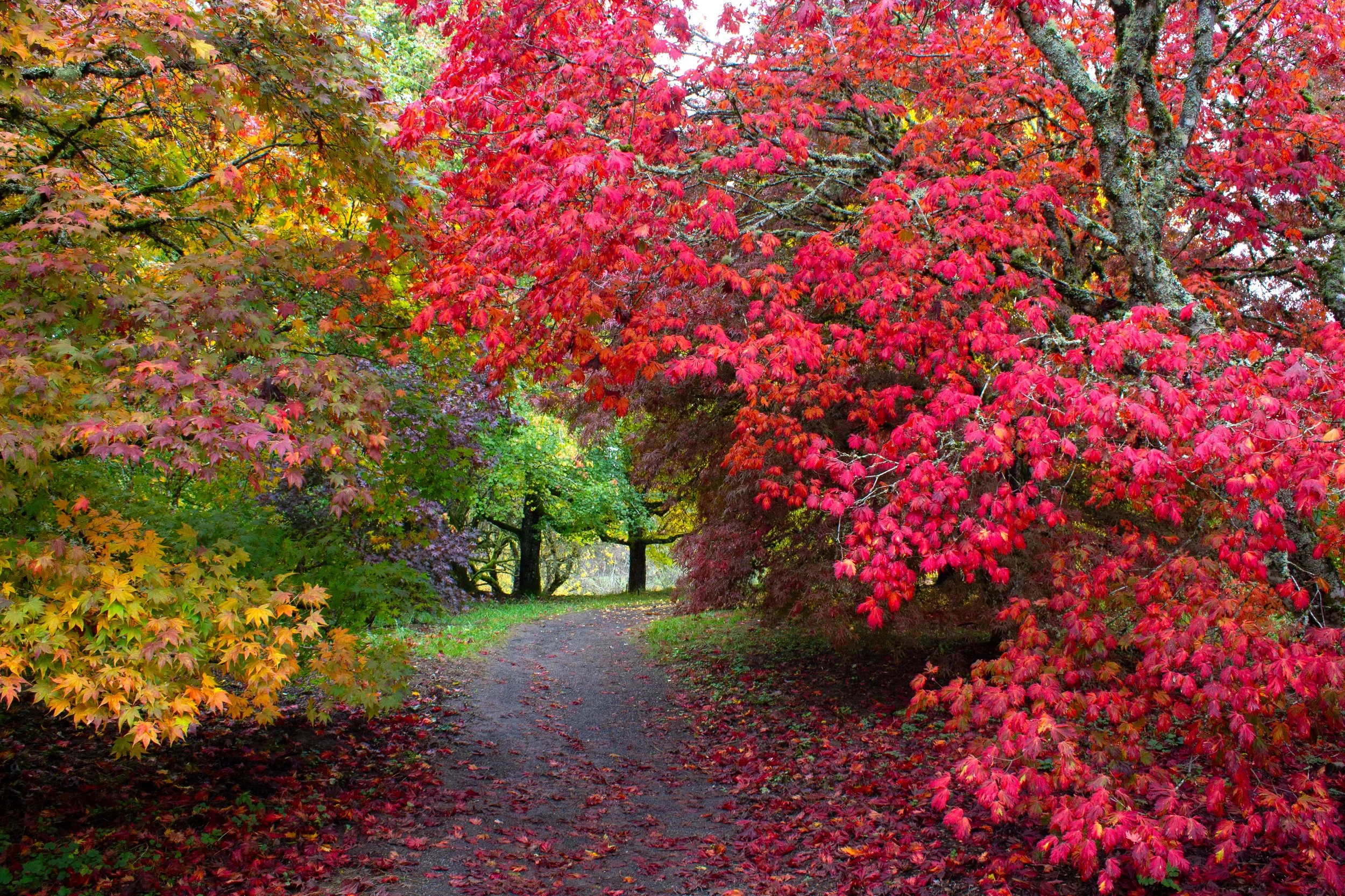
Maple Trail
Fall is probably my favorite season at the Hoyt Arboretum. As much as I love Oregon’s native trees, their fall colors are underwhelming compared to the riot of reds and oranges where I grew up in the Midwest. Since the Hoyt Arboretum has so many non-native species, you get showier colors in the fall. They peak around the end of October and early November.
The Maple Trail is the biggest showstopper, especially when you reach the Japanese maples.
Another great destination is the larch grove on the Redwood Trail. These deciduous conifers turn yellow at the same time the maples are looking great. The dawn redwood also loses its needles in the fall, but the brown-yellow color isn’t quite as impressive as the larches.
The ginkgos on the Bristlecone Pine Trail are worth seeking out in the fall for the bright yellow leaves.
Winter
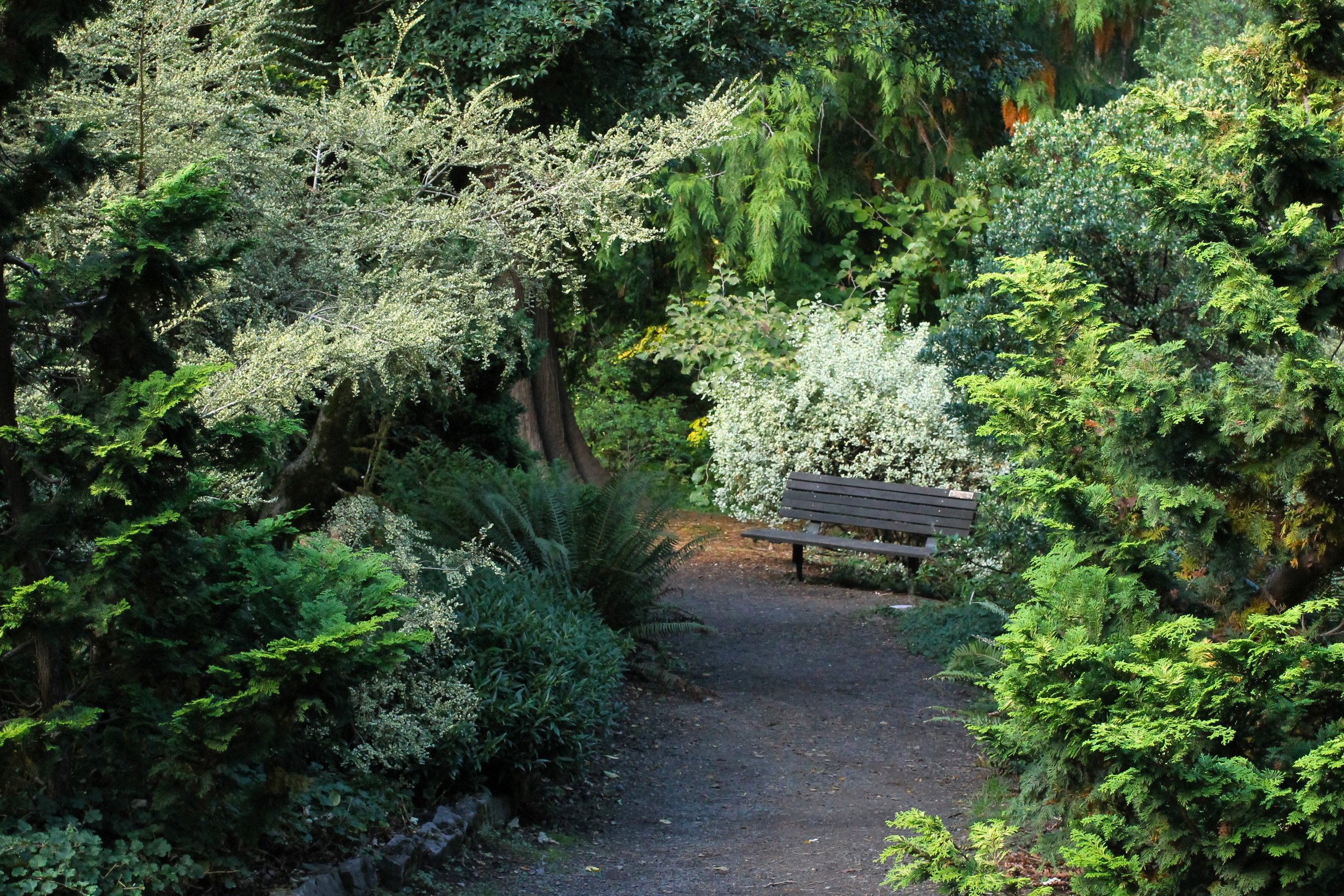
Winter Garden
In the winter, I like visiting any of the conifer trails: Redwood Trail, White Pine Trail, Spruce Trail, Fir Trail, or Bristlecone Pine Trail. Between the trees and the ferns, the forest stays green all year.
It’s worth making a detour on the Wildwood Trail to visit the Winter Garden. This beautiful corner of the Hoyt Arboretum is filled with plants that look lush and green in the wintertime. Cyclamen blooms in the undergrowth.
The Holly Trail is a short and sweet loop next to the Hoyt Arboretum Visitor Center. Winter is the best time to hike to see the bright red berries.
Hoyt Arboretum history
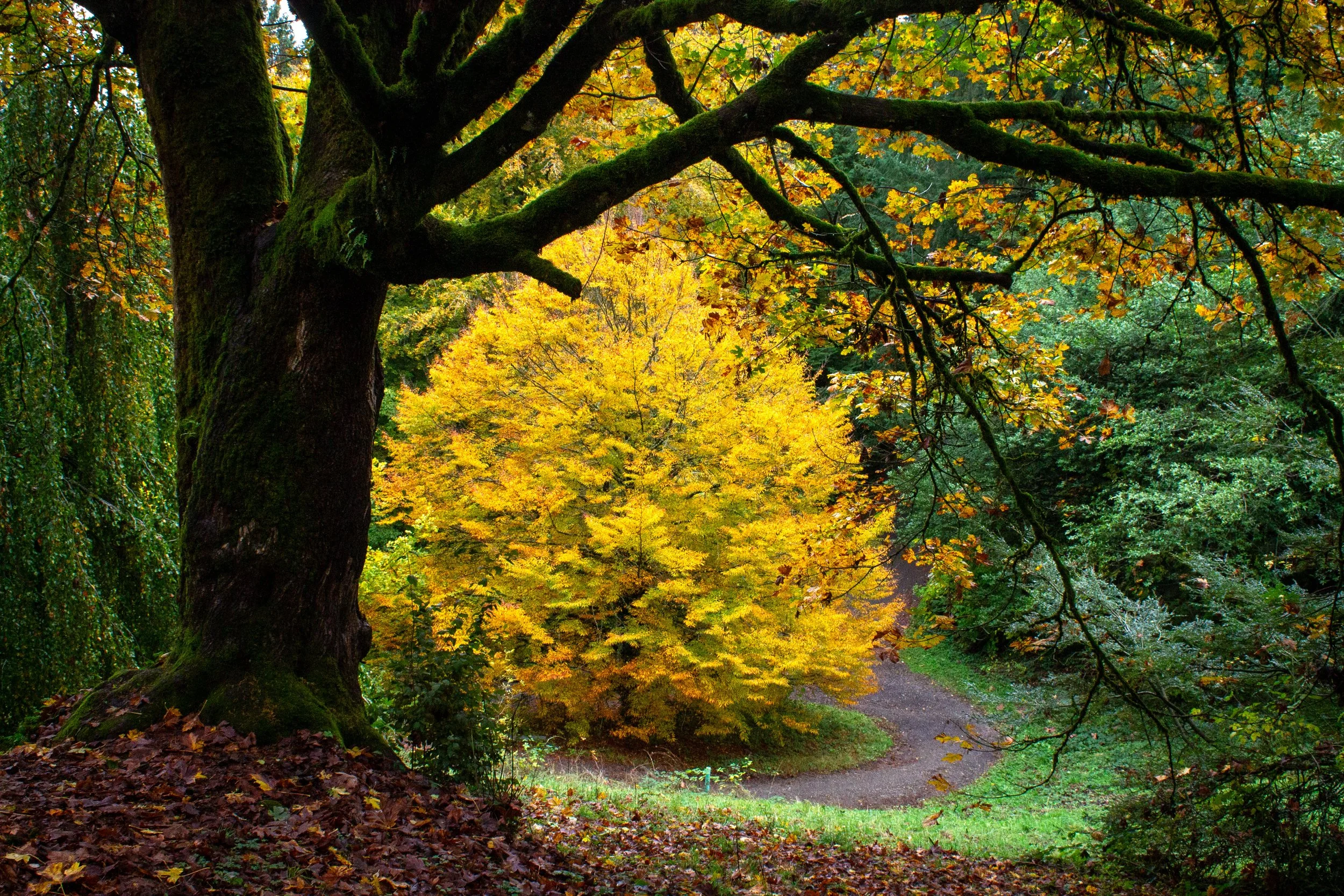
Overlook Trail
Confession. My eyes start glazing over whenever I read accounts of who sold land to whom. Instead, here’s a brief history of the Hoyt Arboretum’s plants. A good starting point is 1889, when a large wildfire wiped out the original forest. It would have been mostly Doug fir, western red cedar, western hemlock, big-leaf maple, and alders, similar to what you see out in the National Forests near Portland. The forest had been regrowing for a few decades when people began clearing the land to develop the arboretum. The trees they left undisturbed are the oldest in the park, around 150 years old.
Planting the arboretum began during the Depression, using WPA labor. Some of the earliest arrivals were the redwoods. Although much younger than the redwood forests in southern Oregon and northern California, they’re old enough to be 150 feet tall.
The Hoyt Arboretum was more or less set up by the end of the 1930s, although planting has continued since. The next major event was a storm in 1962 that took out large numbers of trees. If the southern hillside where the Maple Trail runs seems open and grassy compared to other corners of the park, it’s not your imagination. It’s the area that had the most storm damage. The Vietnam Veterans Memorial at the bottom of the hill was added in the 1980s on land that the storm impacted.
Tours and classes
From April through October, the Hoyt Arboretum offers free public tours on Sundays at 11 AM. On the first Sunday of the month, the tours stick to the park’s paved trails for better accessibility. Sign up at the Visitor Center, same day. Check out the tour options on the Hoyt Arboretum website.
The Hoyt Arboretum also has adult and youth classes on everything from botany to park wildlife to tai chi. Fees vary.
Rentals
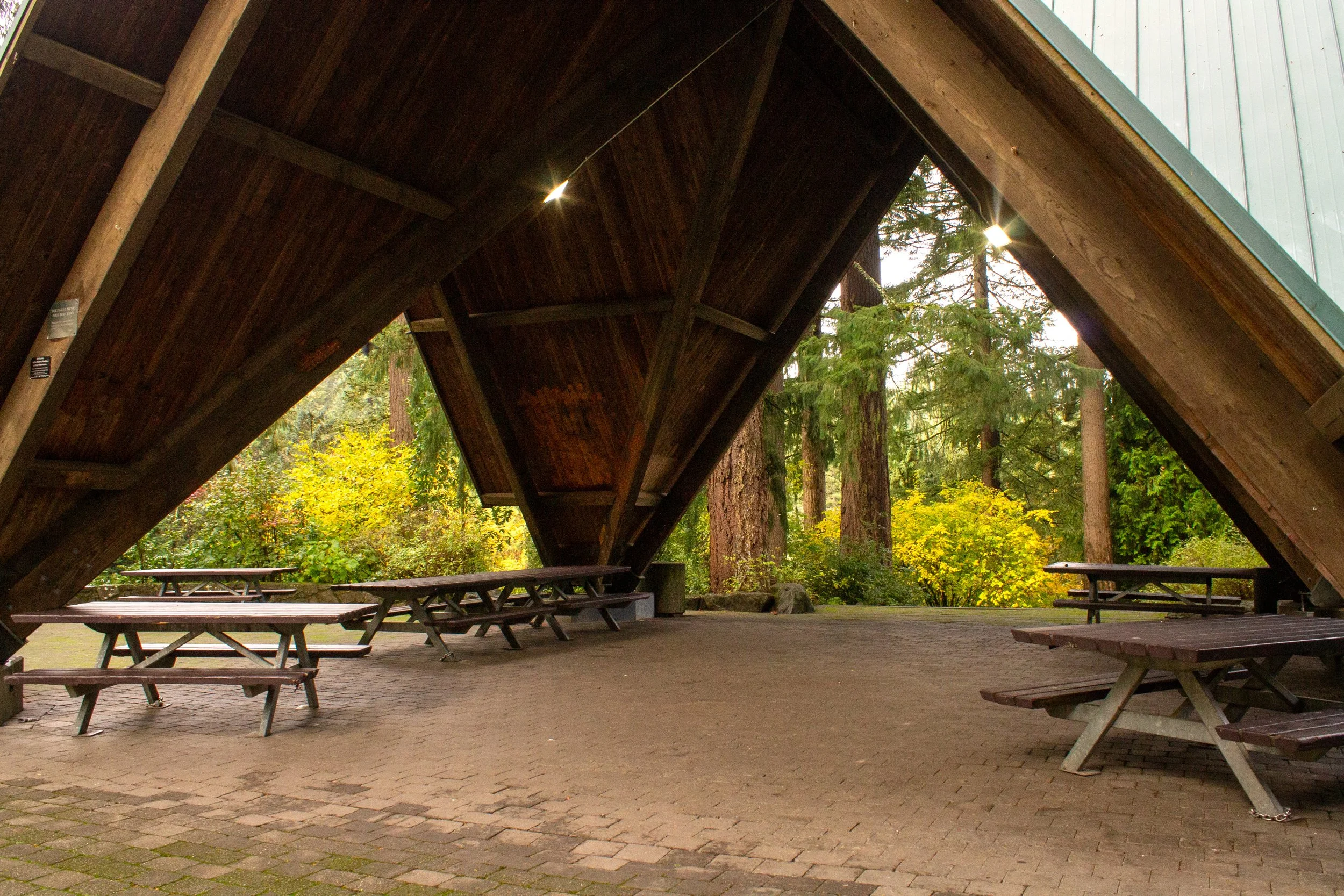
Stevens Pavilion
The Hoyt Arboretum rents out several spaces for events and weddings:
Redwood Deck
Stevens Pavilion Picnic Shelter (covered)
Wedding Meadow
Stone Circle
In terms of wedding venues, the rates are very reasonable, on the scale of hundreds rather than thousands of dollars. Reservations open in early January for that calendar year. They’re competitive. Your best bet is to go to the park office in person the day that reservations open:
1120 SW 5th Avenue, First Floor
Portland, OR 97204
When I say they’re competitive, I mean that people camp outside the office the night before to have a good place in line when it opens at 8 AM. Weekend days in spring, summer, and fall are the most popular.
Location
The Hoyt Arboretum is in Portland’s Washington Park. The Visitor Center is three miles from Pioneer Courthouse Square downtown, about a 10-minute drive.
4000 SW Fairview Blvd, Portland, OR 97221
More in Washington Park
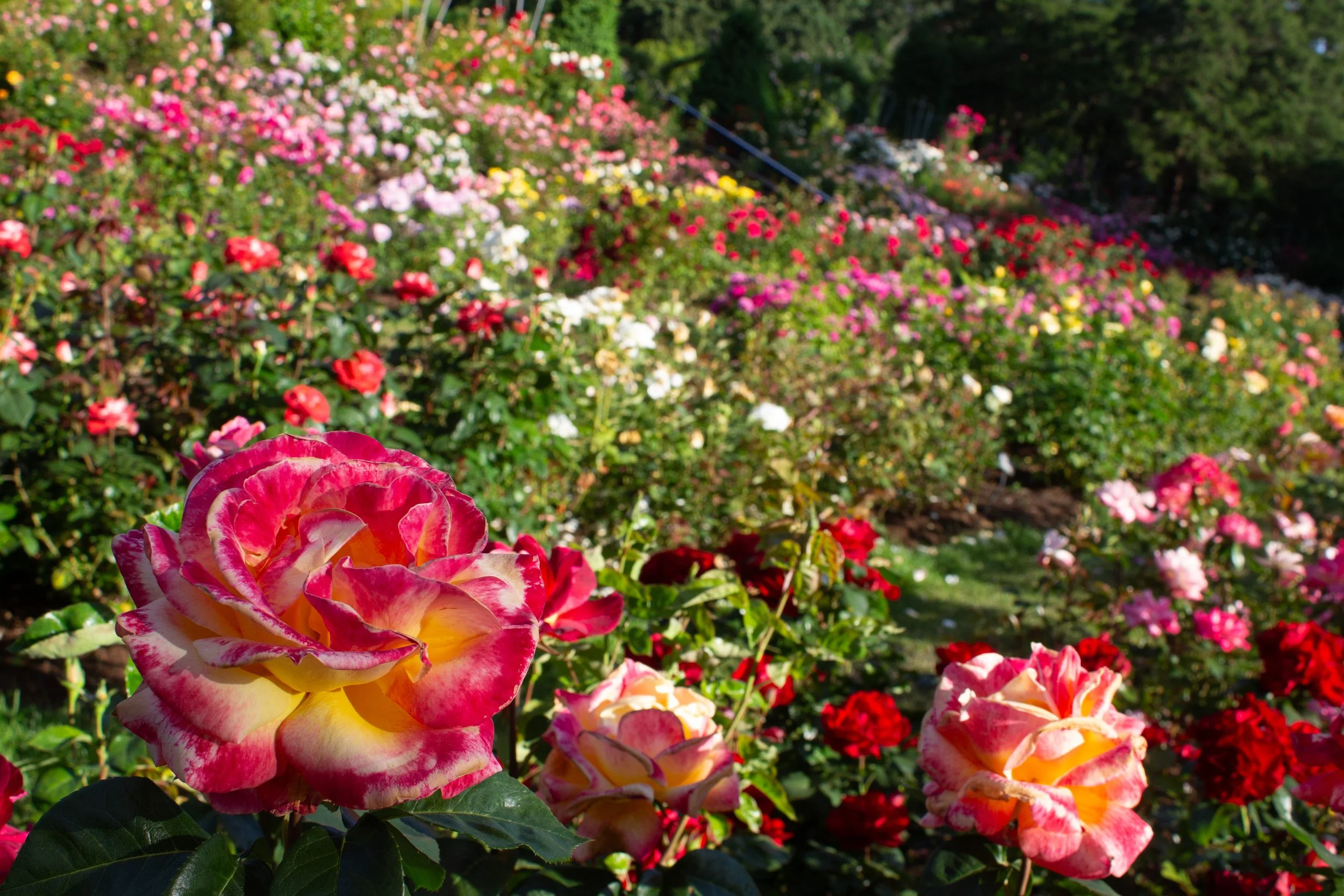
International Rose Test Garden
Washington Park has more to do than would fit in a single day. When I go to the Hoyt Arboretum, it’s usually as a dedicated visit. It has so many trails and, since I live in Portland, it’s easy to stop by when I have a free afternoon.
Some of Washington Park’s other attractions are an easy hike from the Hoyt Arboretum Visitor Center:
Vietnam Veterans Memorial
Archery range
These would be a longer hike, short drive, or shuttle ride:
Park entrance, playgrounds, reservoirs, Sacajawea statue, and the Oregon Holocaust Memorial
Find details in my guide to Washington Park.
Hoyt Arboretum to Pittock Mansion hike

View from the Pittock Mansion grounds
One of the best hikes within Portland city limits is from the Hoyt Arboretum to Pittock Mansion. Starting from the Visitor Center, take one of the conifer trails, like the Redwood Trail, to the Wildwood Trail. The Wildwood Trail will take you to Pittock Mansion, about 4 miles round-trip. Behind the historic home, now a museum, is a stunning viewpoint overlooking downtown Portland. On clear days, you can see Mount Hood behind the city. The grounds are free to visit. Touring the inside of Pittock Mansion has an admission fee.
More hiking in Portland

Tackle Portland’s most unusual hike, the 4T Trail.
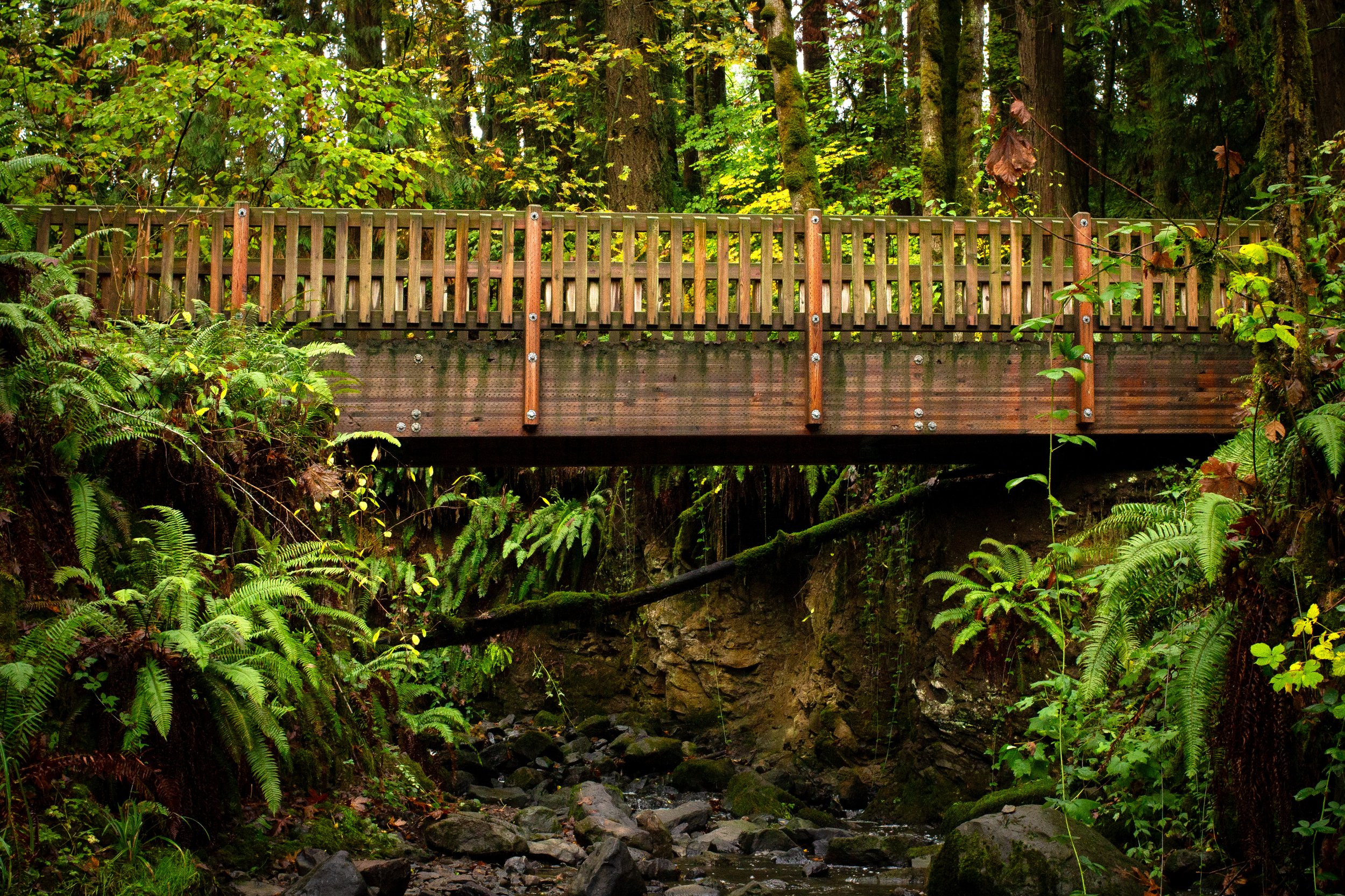
Find the best parks in Portland for hiking.

Find the best wildflower hikes in Portland.