
Winter Guide to the Oregon Coast
Disclosure: I may earn a small commission on links at no cost to you.
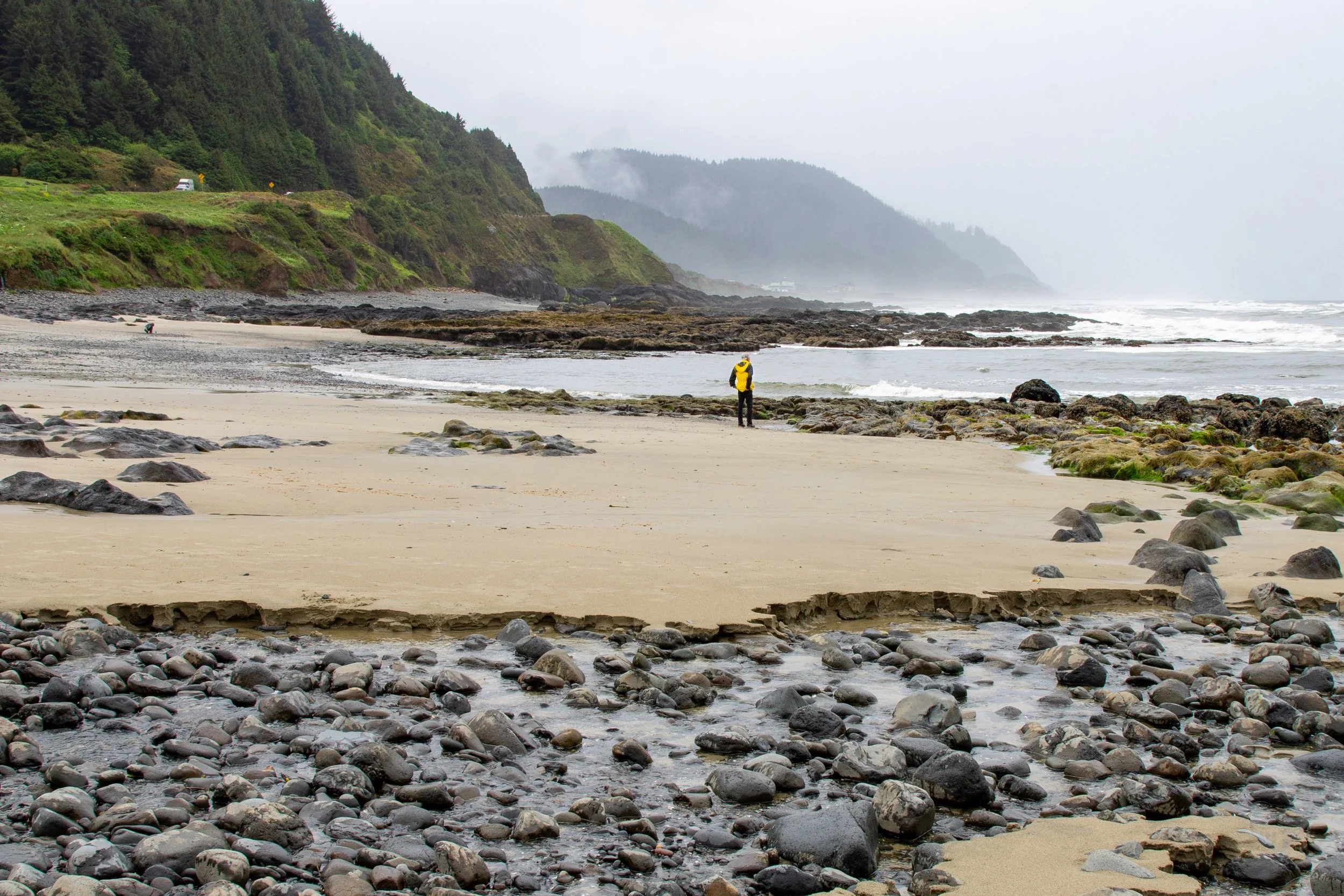
The Oregon Coast in winter conjures a thousand romantic images. A lone figure stands on a windswept shore, gazing at headlands shrouded in mist, tormented perhaps by lost love, a personal crossroads, or the start of a daunting journey. It’s a place that tempts even the driest of travel guides into the realm of poetry. I will resist, with difficulty, and instead discuss practicalities like rain gear. The romance can begin when you get there. Hopefully, my advice will keep your socks dry as you marvel at the power and vastness of the ocean. I live in Portland and visit the Oregon Coast year-round. I love it in the off-season at least as much as in the height of summer. Here’s how to plan a winter visit to the Oregon Coast.
Advantages of a winter trip to the Oregon Coast
Fewer crowds
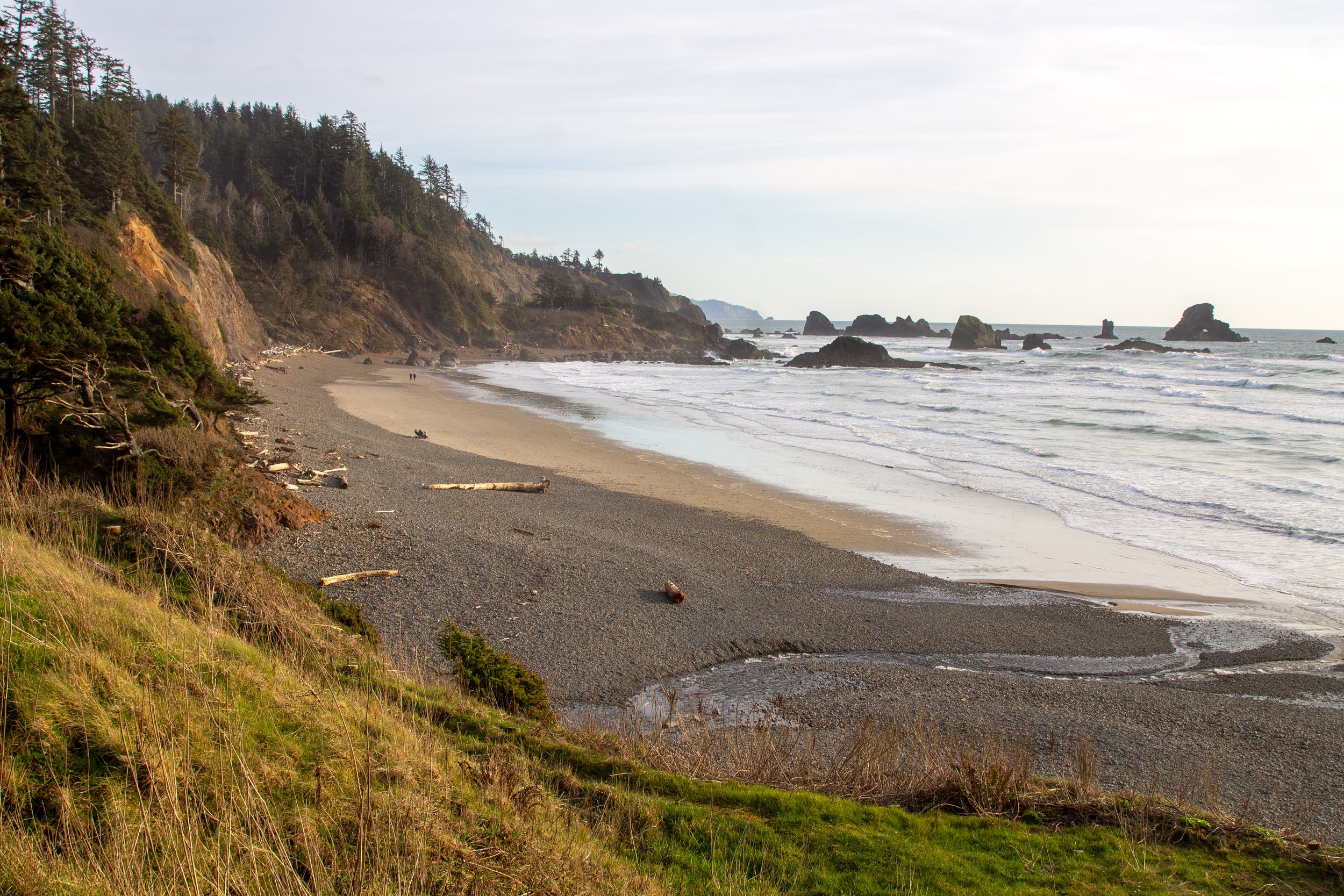
Indian Beach in February
My favorite thing about visiting the Oregon Coast in winter is how easy it is to find solitude. As a non-scientific estimate, I think I see about 90% fewer visitors in January than in July. Sharing the beaches isn’t a deal killer. The summer is festive and cheerful. Still, I have to admit that there’s something special about exploring a deserted coastline. Starting around November, the beaches closest to Portland begin to look almost empty. Restaurant wait times dwindle to nothing. Negotiating a 4-way stop in Cannon Beach no longer feels like waiting for an endless parade to pass. Finding a parking spot becomes trivial, even on beautiful days in the most popular destinations. In a word, it’s all more relaxing.
Cheaper lodging
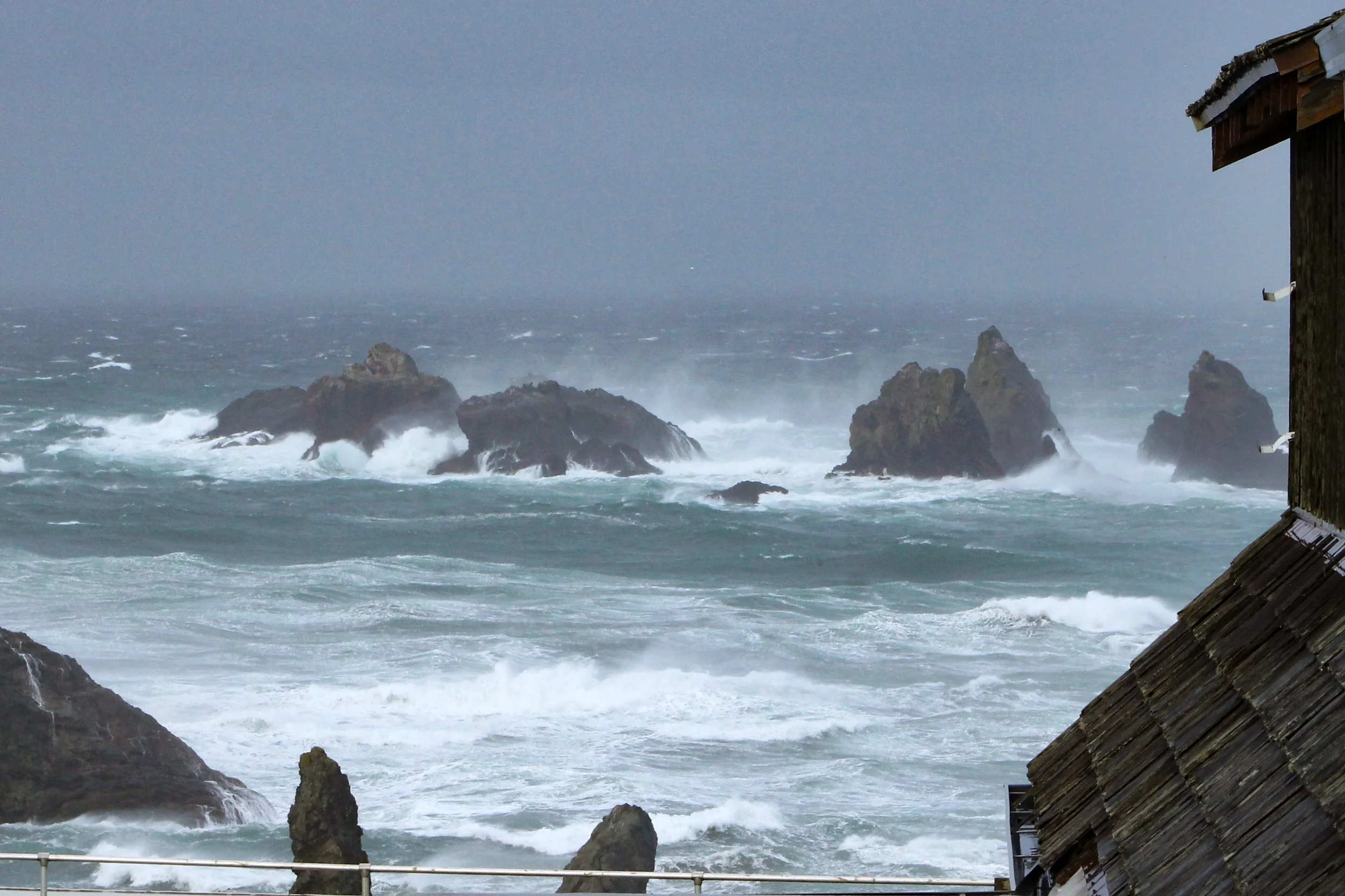
Winter storm from my hotel room in Bandon (February)
I’m a budget traveler. I don’t spend much time in the hotel, so for most trips, it makes sense for me to book cheaper stays. I tend to splurge a little when I visit the Oregon Coast in the winter. An ocean view makes a big difference in how fun it is to wait out storms. Plus, winter is the best time to find great deals on lodging.
Whether you’re looking at hotels or vacation rentals, you’ll notice a big difference between the winter and summer prices. I’ve had the biggest sticker shock when searching for rooms in Cannon Beach in the summer. Mid-range hotel stays that are under $150 a night in winter jump to over $400 during peak season. Finding a room at the last minute can also be challenging in the summer, especially in smaller towns with more limited options, like Manzanita or Pacific City. Winter is easier for flexible travel plans and last-minute bookings.
Wildlife

Elk in Ecola State Park (December)
The Oregon Coast has great wildlife-watching all year. Seals, sea lions, and tidepool critters are good bets in any season. Winter has a few highlights. One is the winter gray whale migration from the end of December to mid-January, when around 20,000 whales swim past the coast on their way to Mexico.
Learn more about whale watching on the Oregon Coast.
Winter is also the time of year when I see the most elk on the coast. I made about three or four trips to Cannon Beach last winter. Elk were there every time, sometimes in multiple places around town. The best place near Portland to look for them is Jewell Meadows Wildlife Area in the Coastal Mountains. Cooler temperatures and a supplemental feeding program mean the best chance of seeing them out in the open, away from the tree cover.
King tides and winter storms
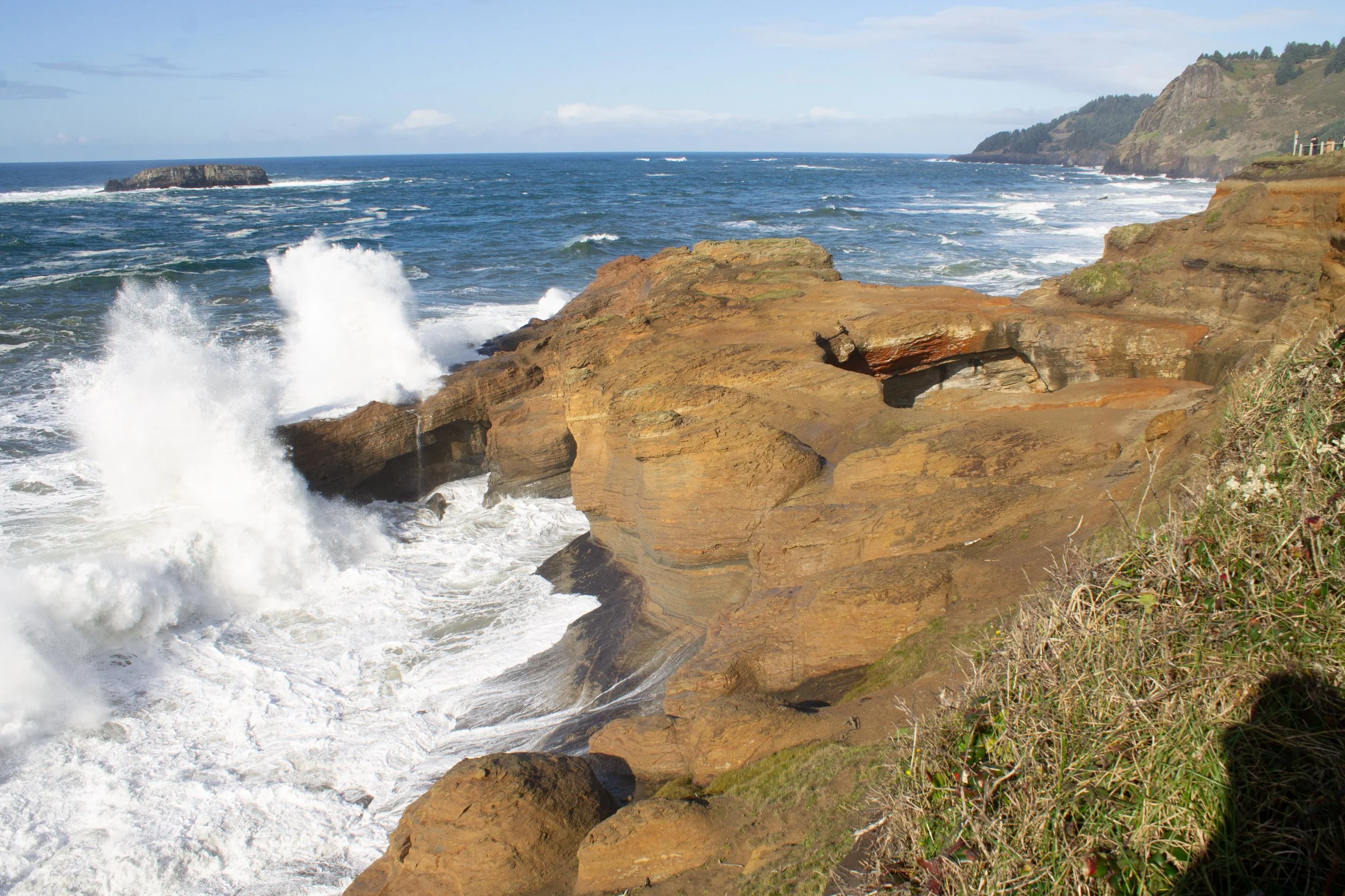
King tides at the Devils Punchbowl (November)
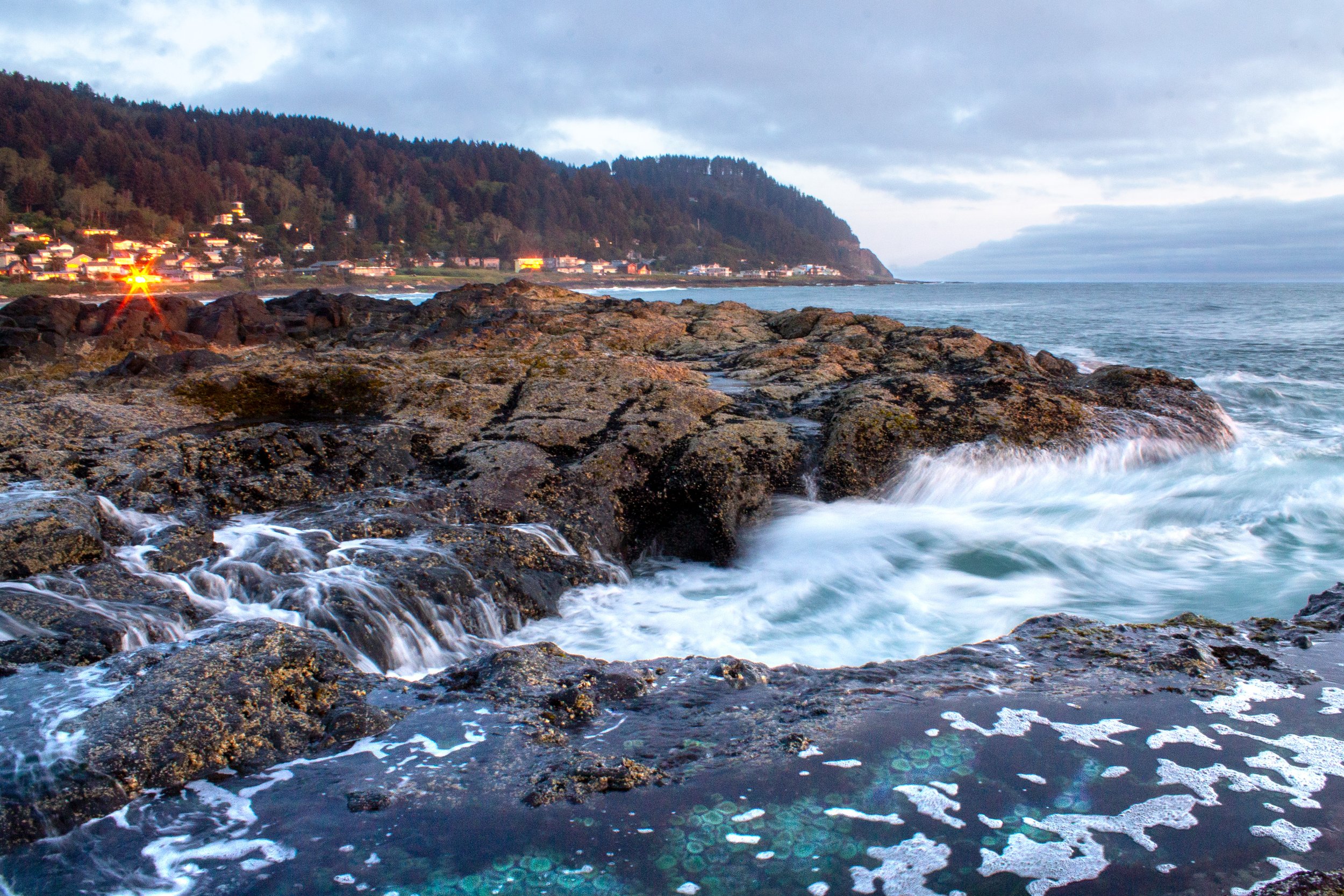
Normally, low tide is my favorite time to visit the Oregon Coast. I love finding tidepools, and the beaches are easier to explore when the ocean recedes. High tide events are an exception. I’ve planned whole trips around watching them. The king tides are an unofficial term for the three highest tides of the year. They happen in the winter from around November to February. The most dramatic waves are on stormy days with high winds. To watch them safely, stick to viewpoints above the ocean, and stay off the beaches. The waves will look the most impressive on rocky stretches of the coast, like the Depoe Bay sea wall, Shore Acres State Park, and Cape Disappointment (in southern Washington). Unlike most of the winter, parts of the Oregon Coast get very crowded during the king tides, especially Depoe Bay.
Learn more about watching Oregon’s king tides.
Rockhounding and beach-combing
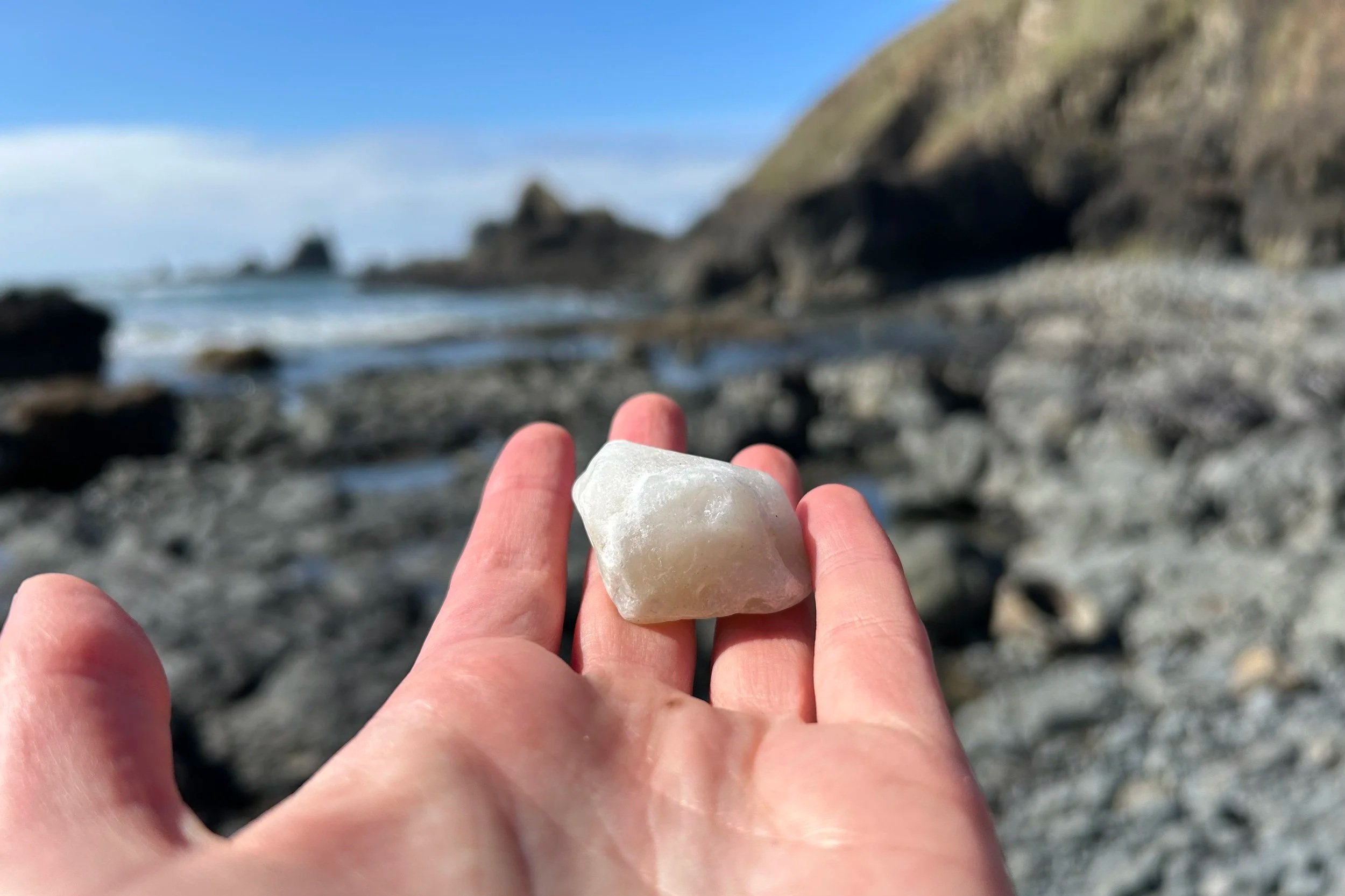
I find an agate on Crescent Beach (March)
Winter is the best season for rockhounding on the Oregon Coast. Storms and high tides churn up the beaches, exposing things that were hidden. For the best chance of finding something interesting, head to the beach when the tide is receding. As always, keep an eye on the ocean and don’t enter areas that are closed for safety. Have another person with you to watch for sneaker waves while you search. If you’re alone, stay farther back from the water and be aware of your surroundings. Avoid digging in cliffs, which harms the environment by increasing erosion. Common finds on the Oregon Coast are agates, jaspers, sea glass, and petrified wood. A few of the best spots are the beaches of Neptune State Scenic Viewpoint.
Winter considerations
Weather
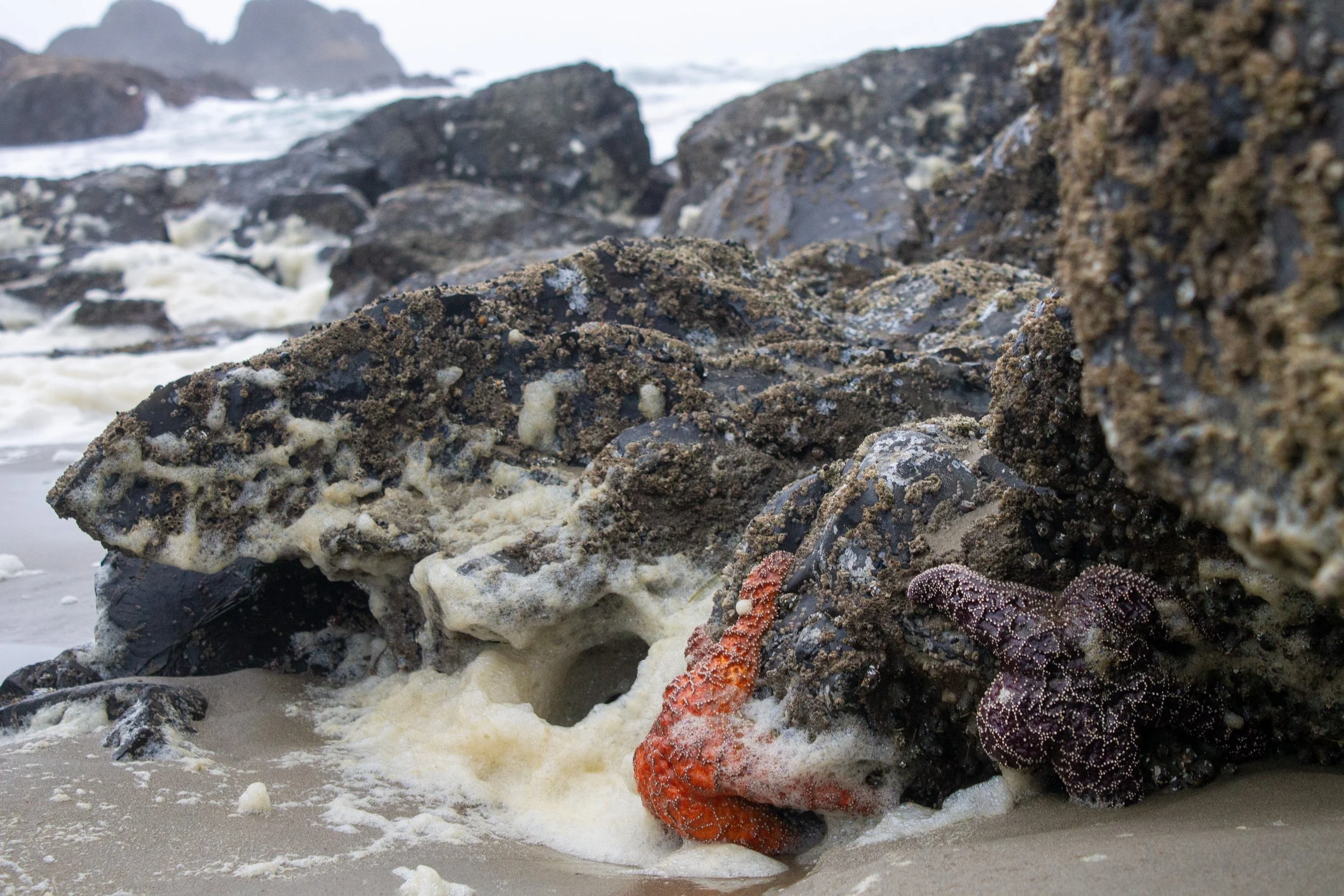
Gale force winds at Seal Rock (March)
The rumors are true. It rains a lot on the Oregon Coast, especially in the winter. Once, while waiting for a good day to drive out for a hike, I checked the forecast every day for six weeks before seeing anything but solid rain icons. Since I live in Portland, I usually plan day trips to the coast at the last minute based on the weather. Drizzle and intermittent showers don’t ruin a trip for me, but a beach walk gets old fast in driving rain and high winds.
If you’re visiting from out of town, you’re going to have to take a chance when you make your reservations. The temperature will probably be 40-60°F. Otherwise, it’s hard to say. I’ve found the forecasts for the Oregon Coast to be pretty inaccurate, even on the same day. Conditions often change quickly. A storm can roll in or break with little warning. It’s a place to visit with waterproof, well, everything, and a sense of flexibility. Bring a book. Have some indoor activities in mind. You might not need them. Some of the most beautiful days I’ve spent on the Oregon Coast have been in winter.
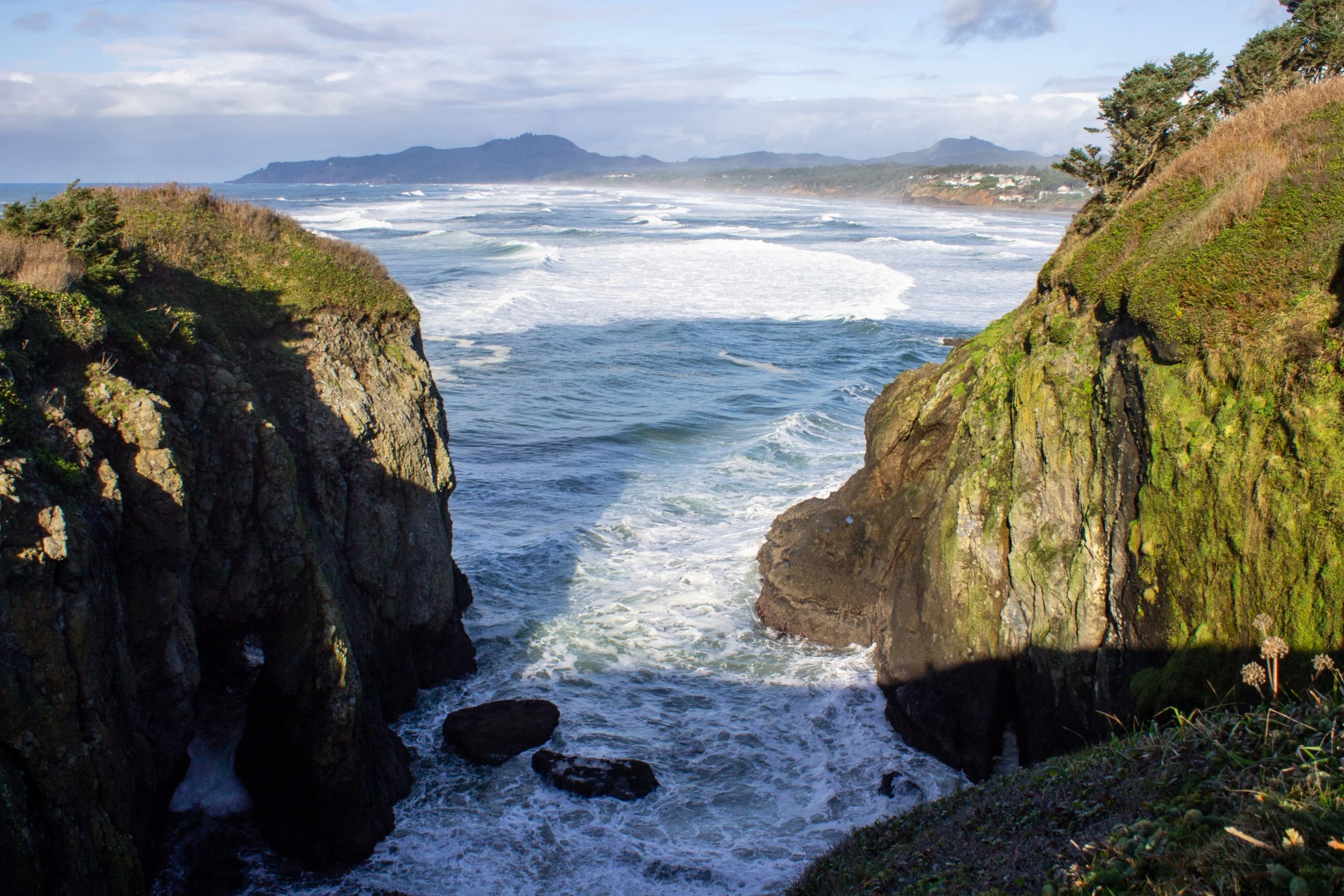
Yaquina Head in November
What to bring to the Oregon Coast in winter
Waterproof rain pants
Layers. I’m a big baby about the cold, so I like having a merino wool base layer.
I wear my waterproof hiking boots for both hiking trails and beach walks. They’re great for wading through streams and don’t get sand inside.
Camera
Winter driving conditions
The Oregon Coast rarely gets snow. If even the lightest dusting sticks for a few minutes, it makes the news. The Coastal Mountains are a different story. While they get a lot less snow than the Cascades, icy roads and snowfall are definitely possible during winter. If you’re driving from the Willamette Valley (Portland, Salem, Eugene), make sure to check road conditions before heading out. It’s unusual that I’ve had to change my travel plans to the coast for a snowstorm, but it’s happened. Winter driving conditions would be most likely from December through February.
Safety on the beaches
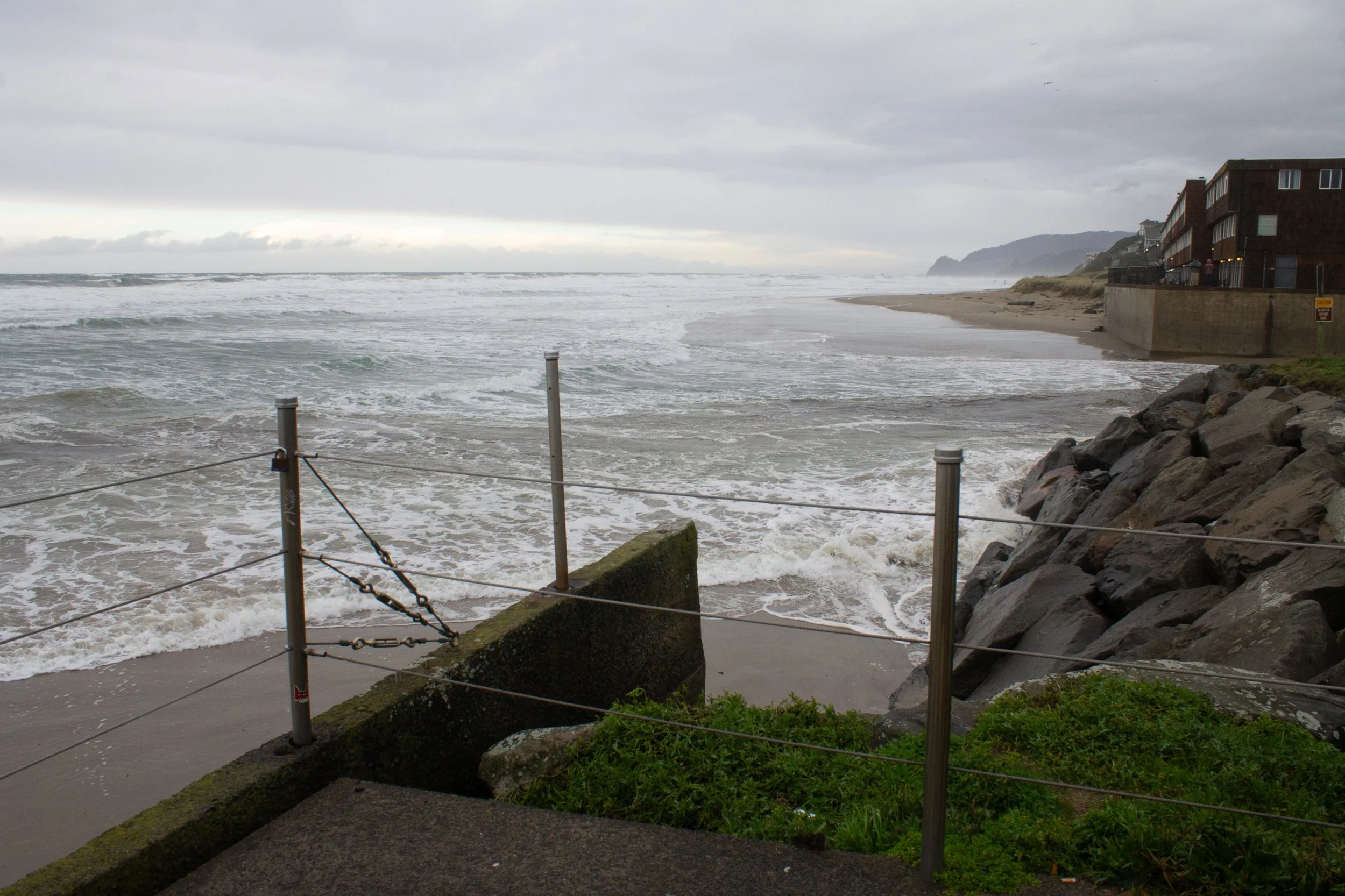
King tides cover the beach in Lincoln City (November)
The highest tides of the year happen on the Oregon Coast during winter. It’s also the season with the most storms, which can mean gale-force winds and big waves. Sometimes, the beaches become too dangerous to approach. While you always want to keep an eye on the ocean and watch for sneaker waves, these precautions go double in the winter. Avoid any beaches that are closed for safety reasons. Stay above sea level at elevated viewpoints and bluffs during storms and high tide events.
Indoor activities
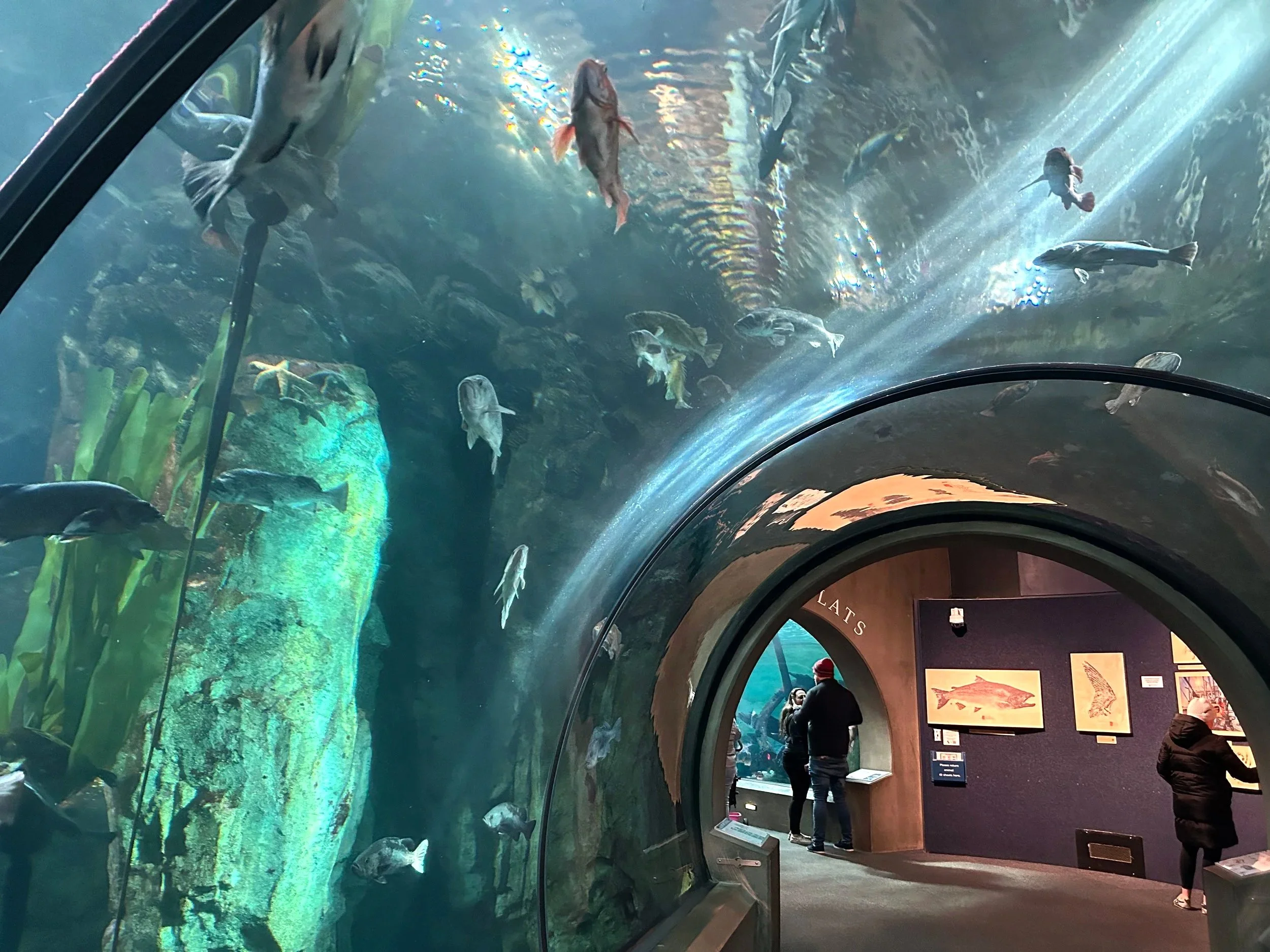
Oregon Coast Aquarium
More so than in the summer, I’d suggest staying in or near one of the larger towns on the Oregon Coast in the winter. If you get skunked with the weather, it’ll give you more options for indoor activities.
I visited Newport over a rainy long weekend and never ran out of things to do. Check out the shops, restaurants, and art galleries in the Historic Bayfront and the Nye Beach neighborhood. The Oregon Coast Aquarium and Hatfield Science Center have touch tanks and exhibits on coastal wildlife.
Cannon Beach has a charming town center on Hemlock Street with many art galleries, cozy cafes, and boutique shops. Wayfarer Restaurant has big windows overlooking the ocean. I also like the little history museum in town.
Lincoln City has excellent art galleries, the best of which I’d say is the Freed Gallery. Lincoln City Glass Center has glass-blowing demonstrations. Pelican Brewing and Kyllo’s are restaurants with water views.
Yachats is a small town with more indoor activities than you’d expect. I love browsing the rocks and fossils at Styx, Stones, and Bones. There’s also a vintage shop, a used book store, several galleries, and gift shops.
Astoria has several good museums, a movie theater, and lots of shopping.
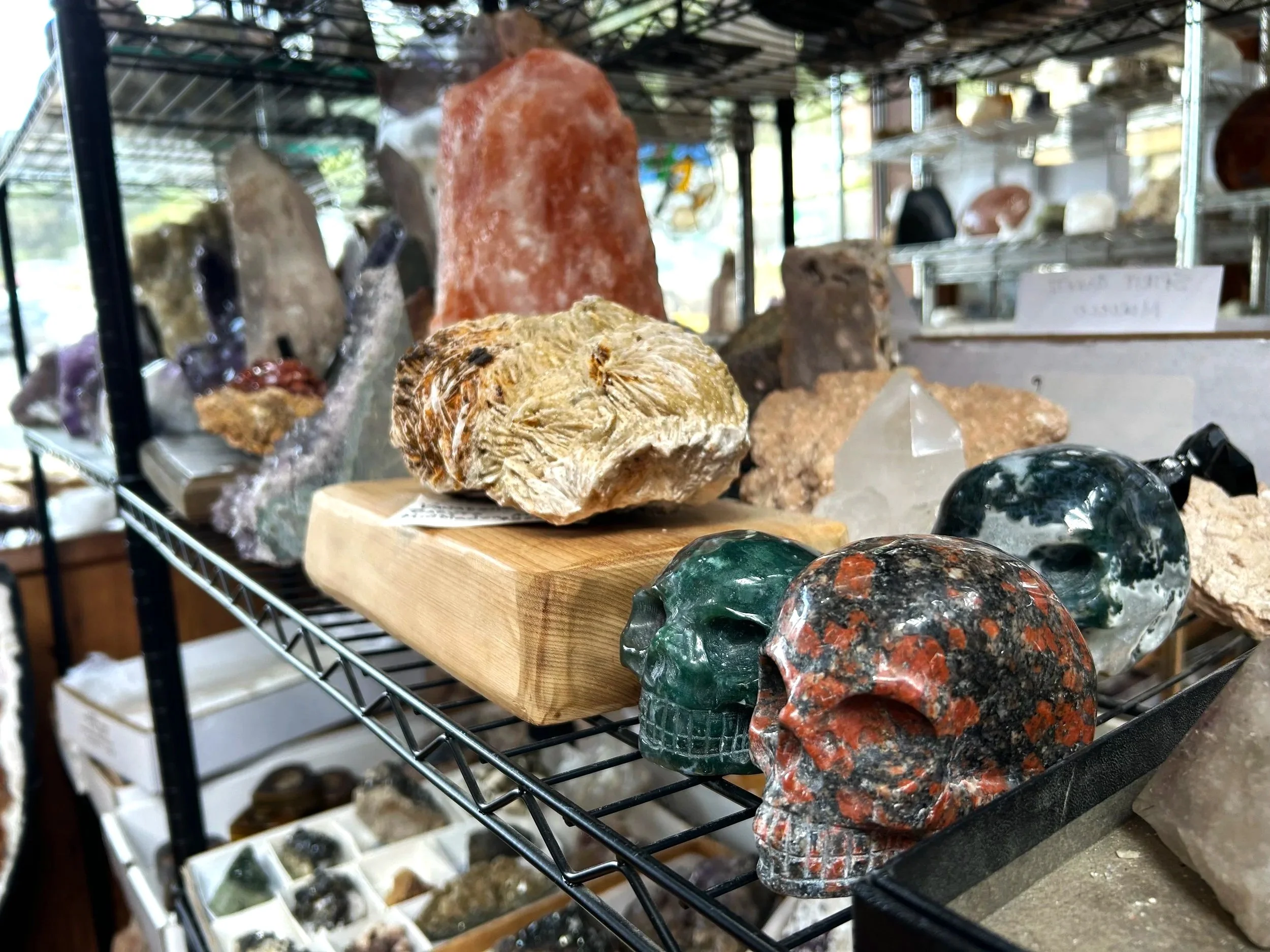
Styx, Stones, and Bones
Transportation
The easiest and most convenient way to explore the Oregon Coast is by car at any time of year. It gives you the most flexibility for your itinerary and lets you visit beaches outside of town centers. I’ve also had luck sometimes waiting out rain showers in the car.
Reduced hours
The Oregon Coast has many small businesses that reduce their hours in the winter. These changes are not always reflected in their online hours. It’s come up the most often when I’ve been looking for a place to eat in smaller towns, especially on weekdays or later at night (late night being 8 PM on the Oregon Coast). You can find something open any day of the week. You just might not get as many choices, and it helps to be flexible. If you have specific dietary needs like food allergies, it’s a good idea to bring food with you just in case.
Enjoy your winter trip to the Oregon Coast!
With love,
Emma
More on the Oregon Coast
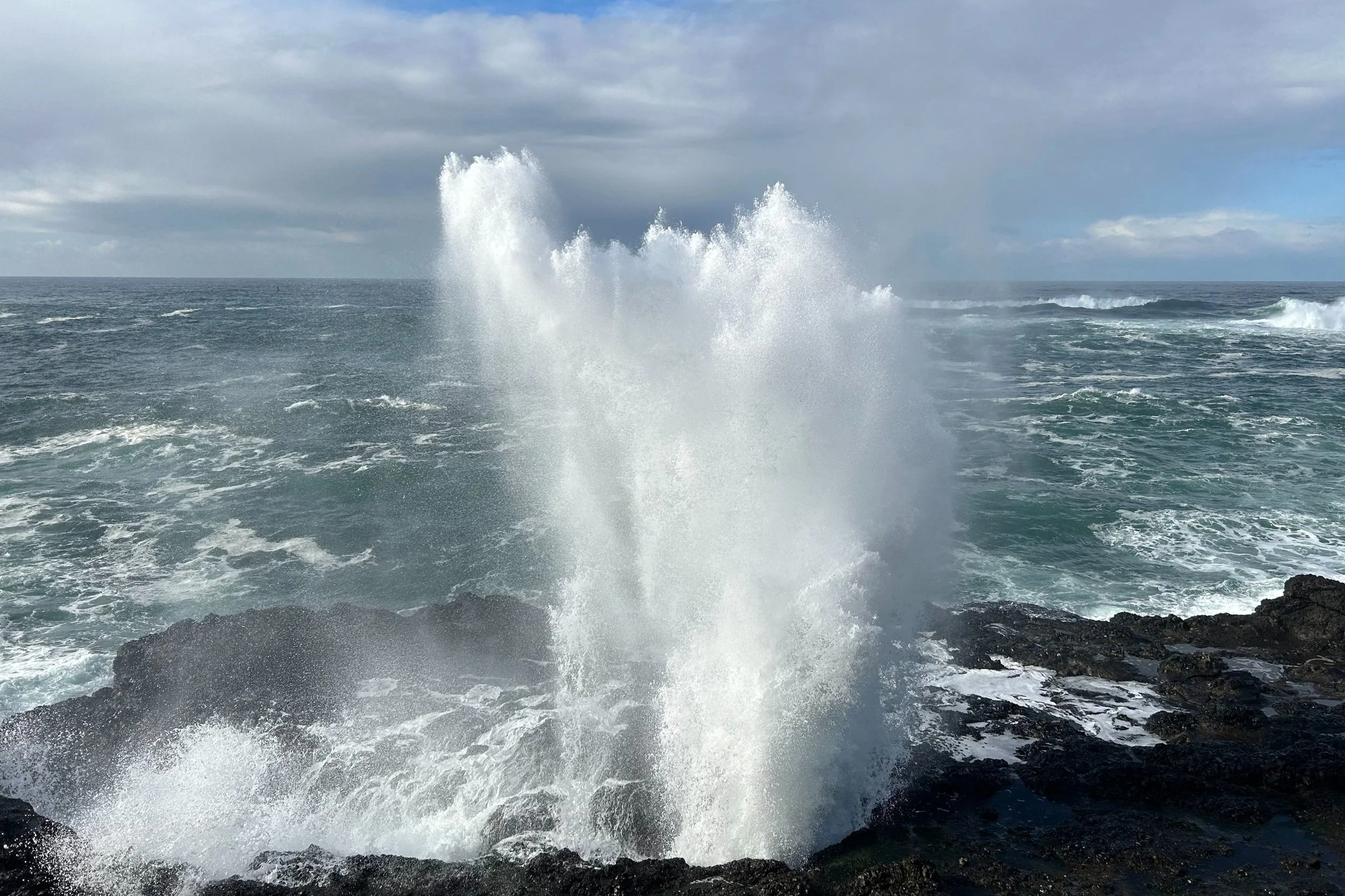
How to watch the king tides on the Oregon Coast.

Find the best tidepools on the Oregon Coast.

How to go whale watching on the Oregon Coast.
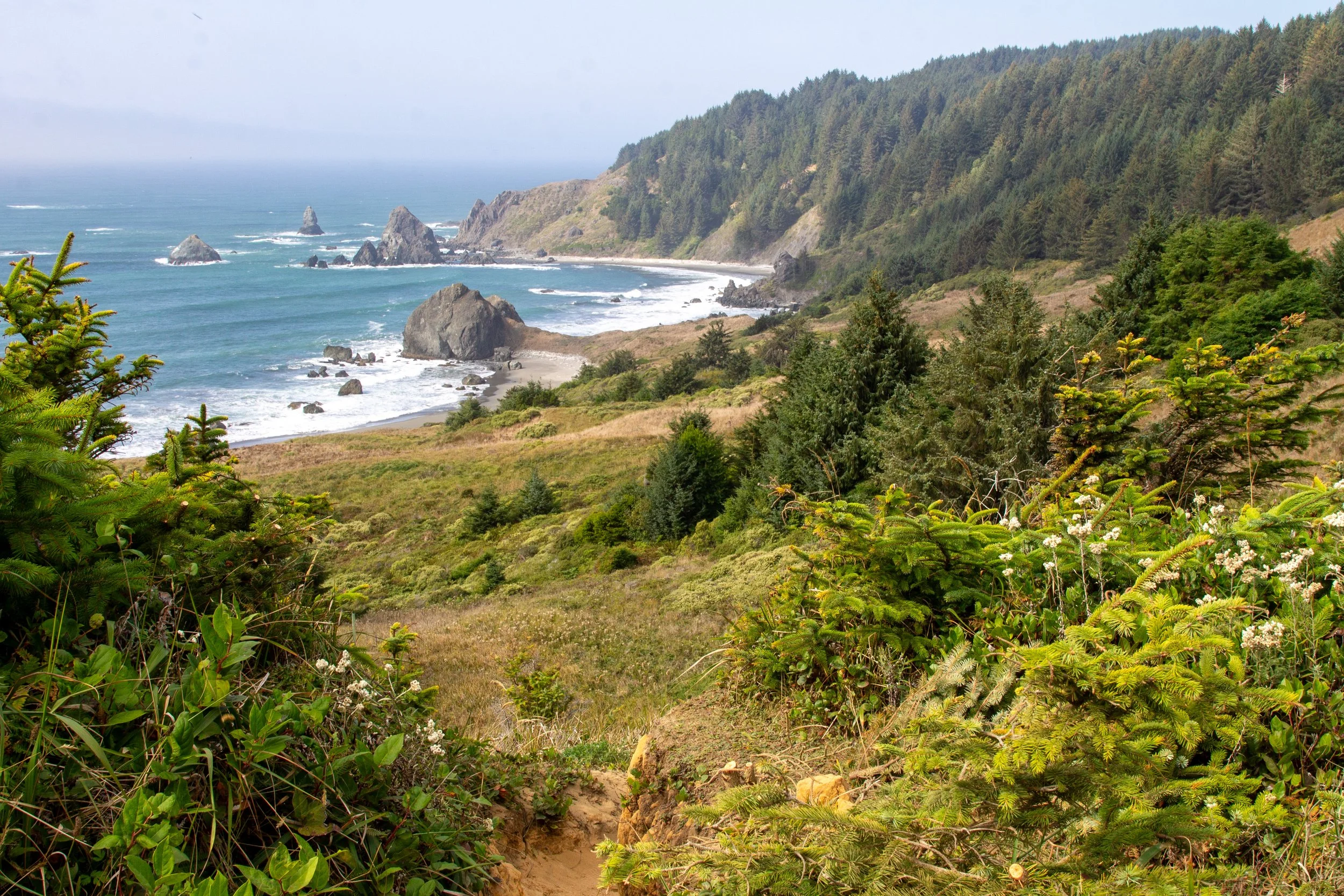
Find the best hikes on the Oregon Coast.
Visit the most picturesque towns on the Oregon Coast.