
Little Crater Lake: Quick Visitor’s Guide
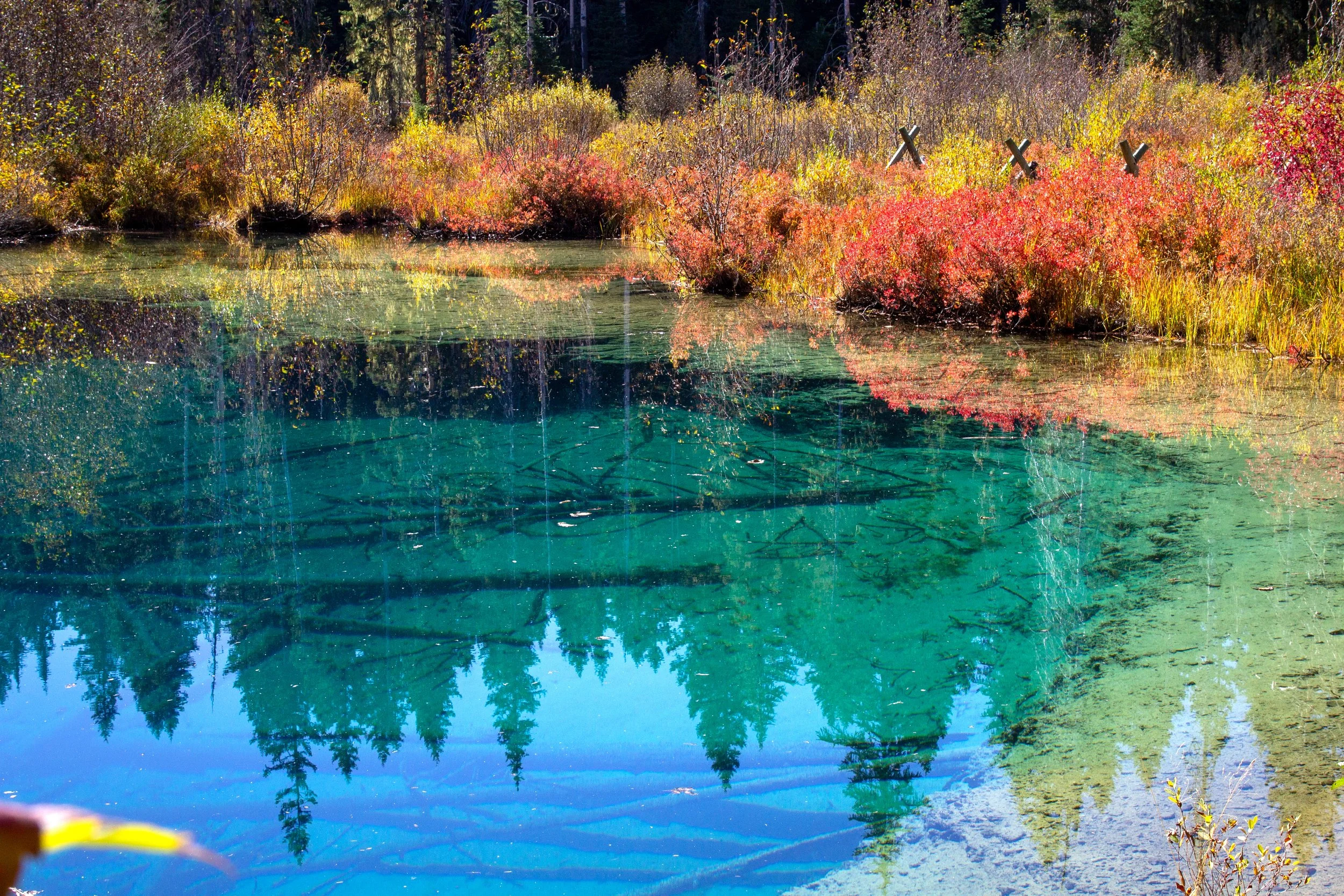
Little Crater Lake is a geological oddity you need to see to believe. More a viewpoint than a hike, a short universal-access trail leads to a strange pit filled with transparent water. An underground spring feeds the tiny lake in the Mount Hood National Forest. Near-freezing temperatures keep it crystal clear. Sunlight reflects an otherworldly spectrum of blues. Beneath the surface is an aquatic graveyard of fallen trees. You can turn around here, or continue on the trail to Timothy Lake. Here’s how to visit.

Little Crater Lake
Quick stats
Distance: 0.3+ miles out and back
Elevation gain: Minimal
Difficulty: Easy
Pass required: NW Forest Pass
ADA access: The gravel trail to Little Crater Lake is wide, flat, and even. It doesn’t have barriers like steps. The viewpoint has a bench. A short distance past Little Crater Lake, the terrain becomes more irregular.
Know before you go
Cost: It costs $10/day to visit Little Crater Lake. You can use the annual NW Forest Pass to park, but NOT the America the Beautiful pass. If you don’t have a pass, pick one up on the way or bring cash for the payment envelopes.
Roads: The roads to the Little Crater Lake Trailhead are paved and in good condition. Low-clearance vehicles are no problem. Vehicles must be less than 22 feet long.
Amenities: Vault toilets and a campground are next to the day-use parking area.
Reception: Service is spotty at Little Crater Lake and Timothy Lake.
Dog-friendly: Leashed dogs are welcome at Little Crater Lake. They’re not allowed in the water.
Leave no trace: Swimming isn’t allowed in Little Crater Lake to protect the clarity of the water. Also, hypothermia.
Season: Late spring through fall.
Camping season: The campground at Little Crater Lake is open from late May to mid-October. It has about a dozen tent and RV sites without hookups. You can learn more about camping here.
Hike options
Little Crater Lake - super short (0.3 miles), easy
Little Crater Lake to Timothy Lake - pretty short (2-ish miles but flexible), easy
Little Crater Lake and Timothy Lake loop - long (13 miles), moderate
To make the most of the views on a short hike, I’d suggest visiting Little Crater Lake, then driving about 15 minutes to the Cove day-use area at Timothy Lake. You’ll have easy access to the lake right away, and hiking east will bring you to excellent views of Mount Hood in less than a mile. Expect crowds in the summer. For a quieter experience, stay on the trail past Little Crater Lake.
Little Crater Lake
Start here
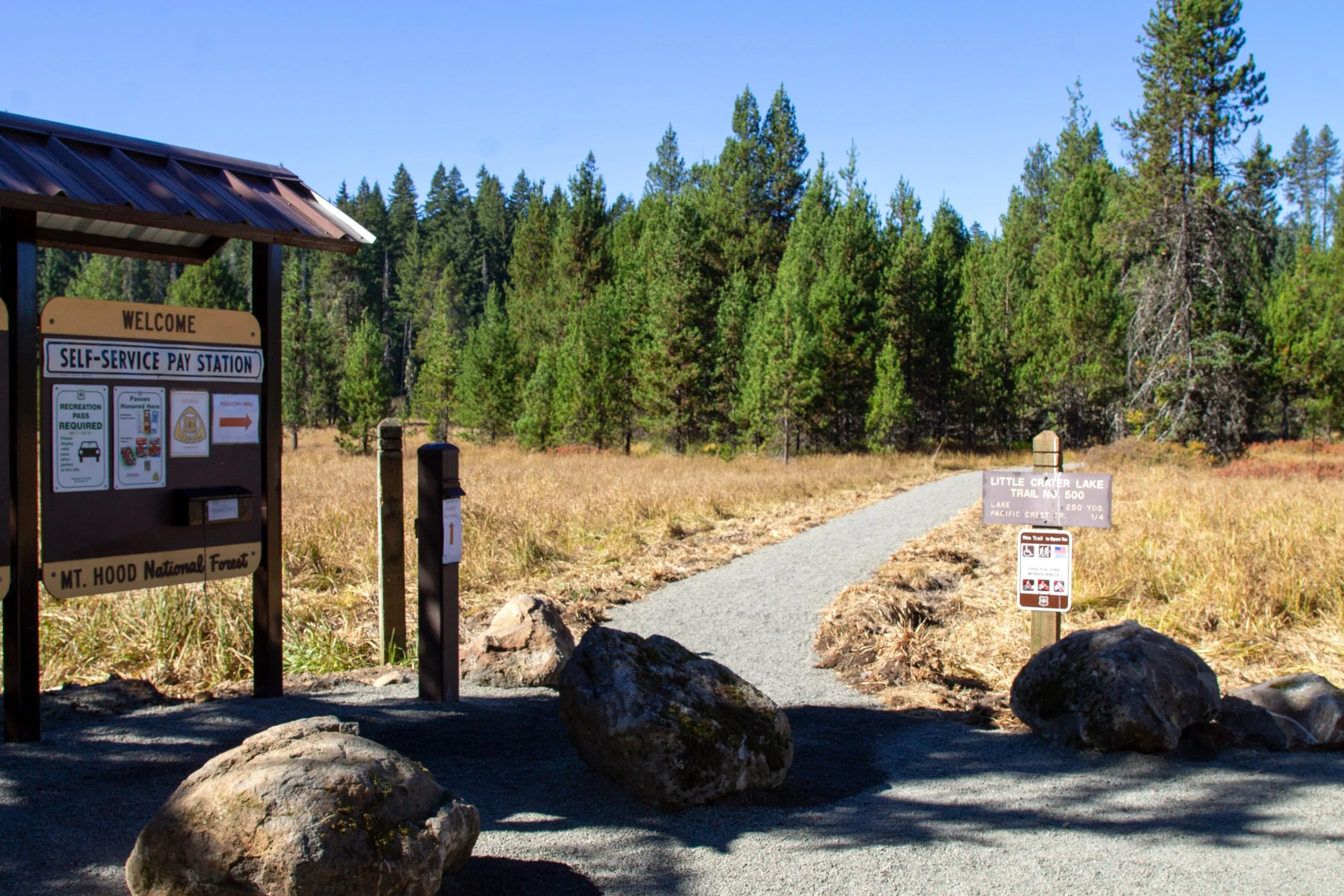
The hike to Little Crater Lake is over before you know it. A flat gravel trail leads about 800 feet from the trailhead to the lake, passing through a meadow and a grove of lodgepole pines. Up ahead are huckleberry bushes. The trail was in great shape when I went, and it looked like it had been redone recently.
Little Crater Lake Viewpoint
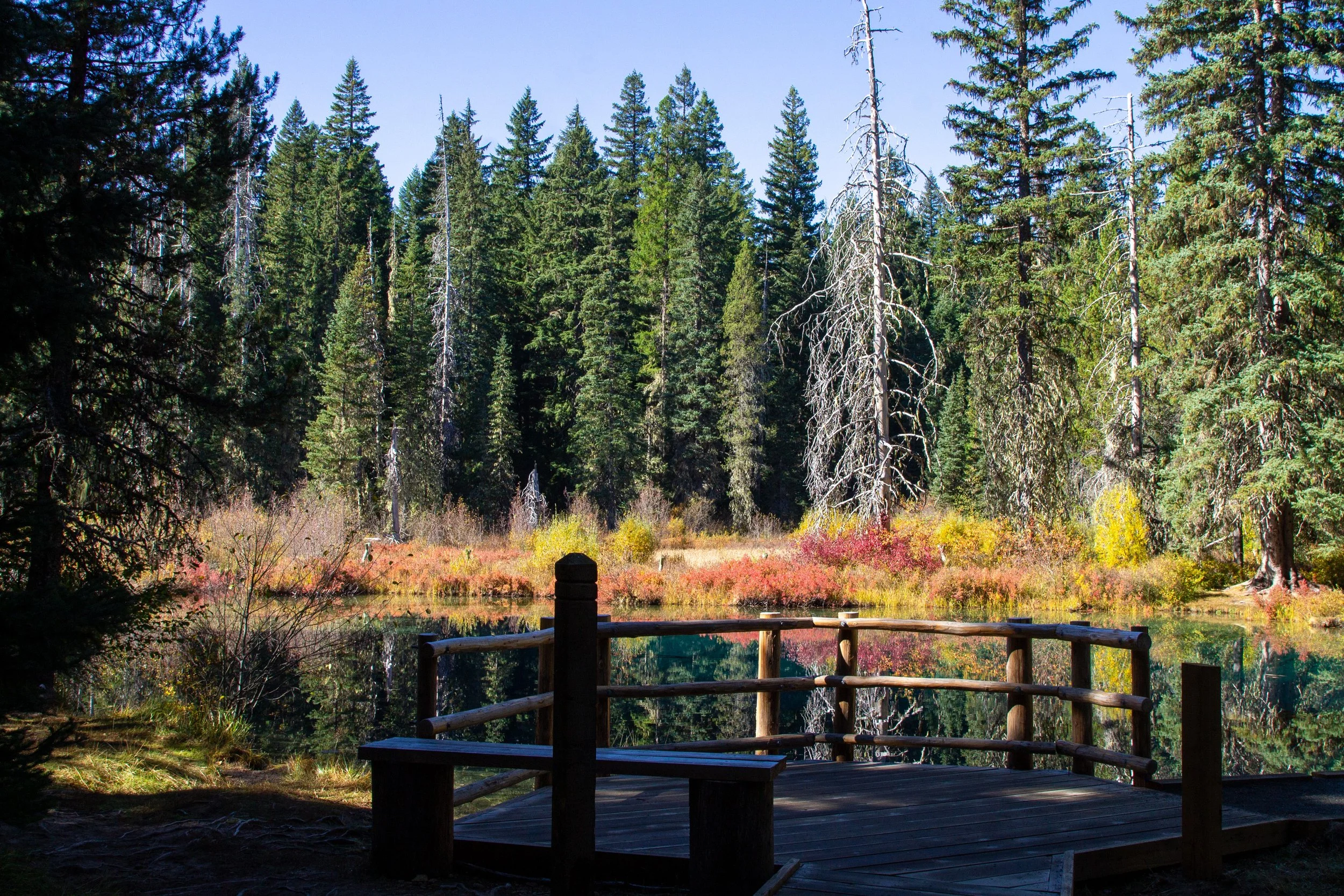
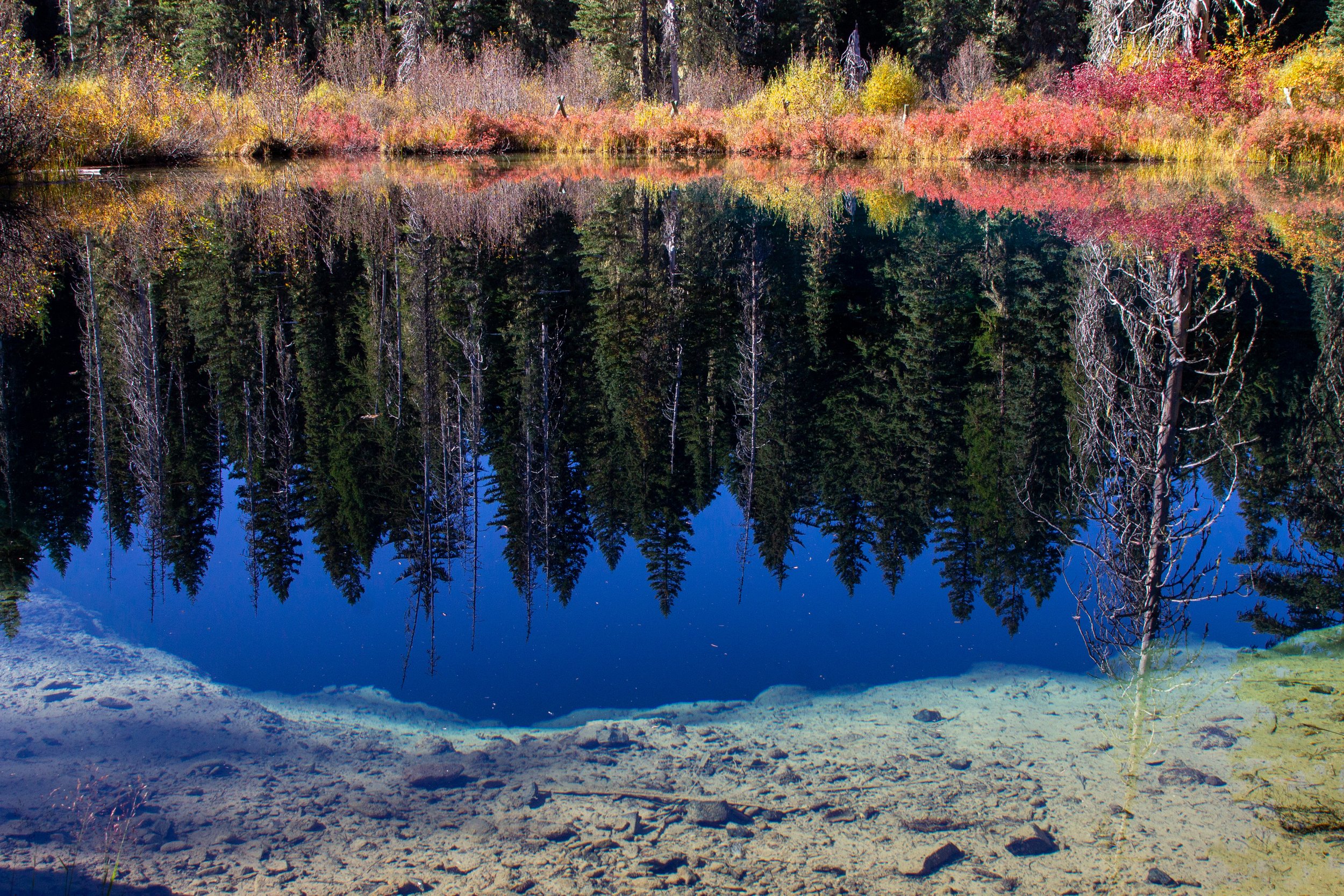
The first thing you notice at Little Crater Lake is the mirror-image reflection of the forest. Beauty rather than size makes this pond-sized lake memorable. The water comes from an artesian spring. The temperature is only just above freezing, which helps keep it clear. Depending on the angle of the light, the color is sapphire to turquoise. In October, I love seeing the ring of yellow and orange around the blue water.
Little Crater Lake
Looking closer, Little Crater Lake is deeper than it first appears, a 45-foot pit in a siltstone well. Fallen trees in the depths seem frozen in time. I’d say the best time to visit is around midday on a sunny day. Direct sunlight on the water makes it easier to see the bottom.
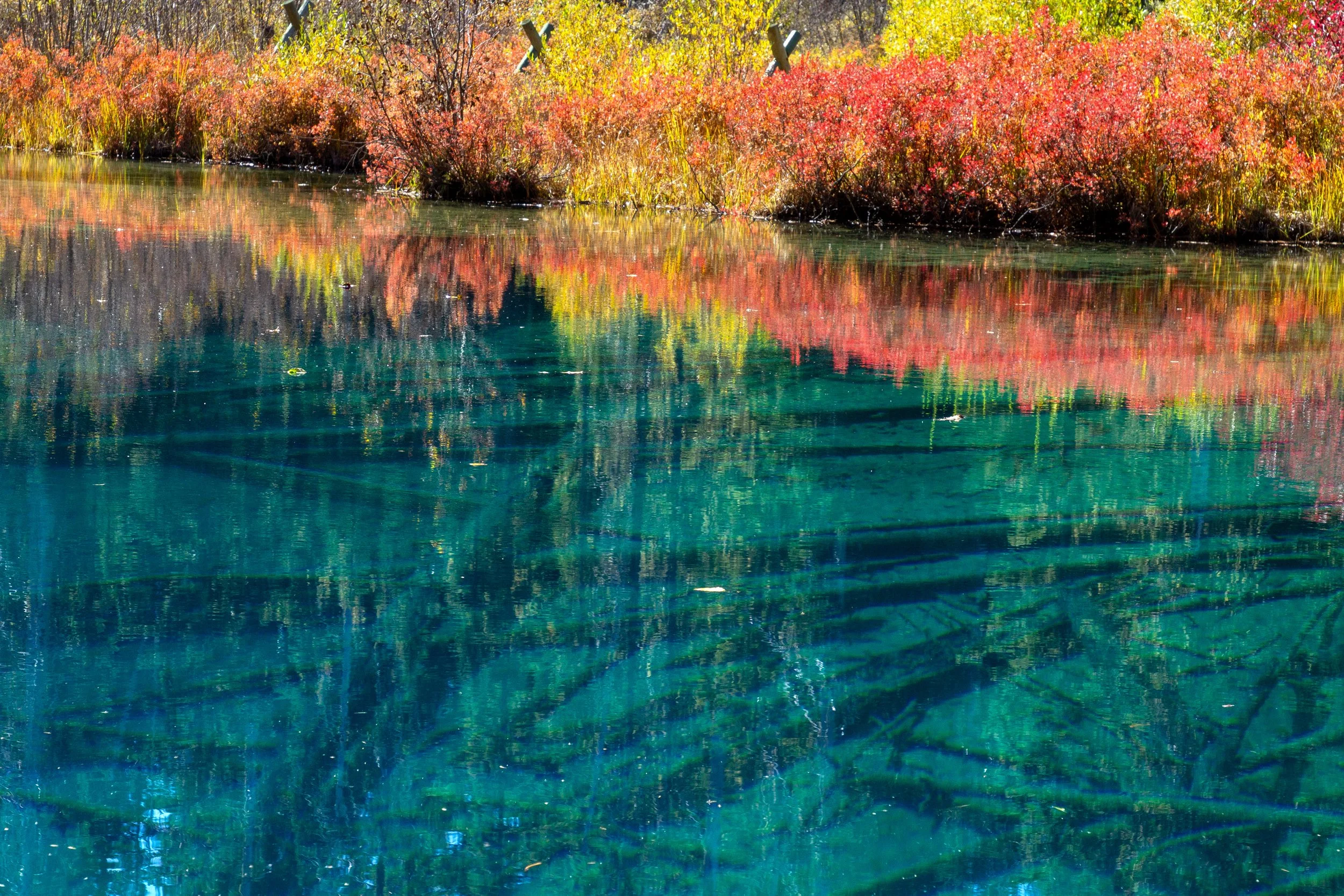
Little Crater Lake
Since the hike is so short, it’s tempting to continue beyond Little Crater Lake. You’ve already seen the coolest sight, but I think it’s worth it to walk through the forest for a while, even if you’re not planning on doing the long loop around Timothy Lake.
Little Crater Lake to Timothy Lake
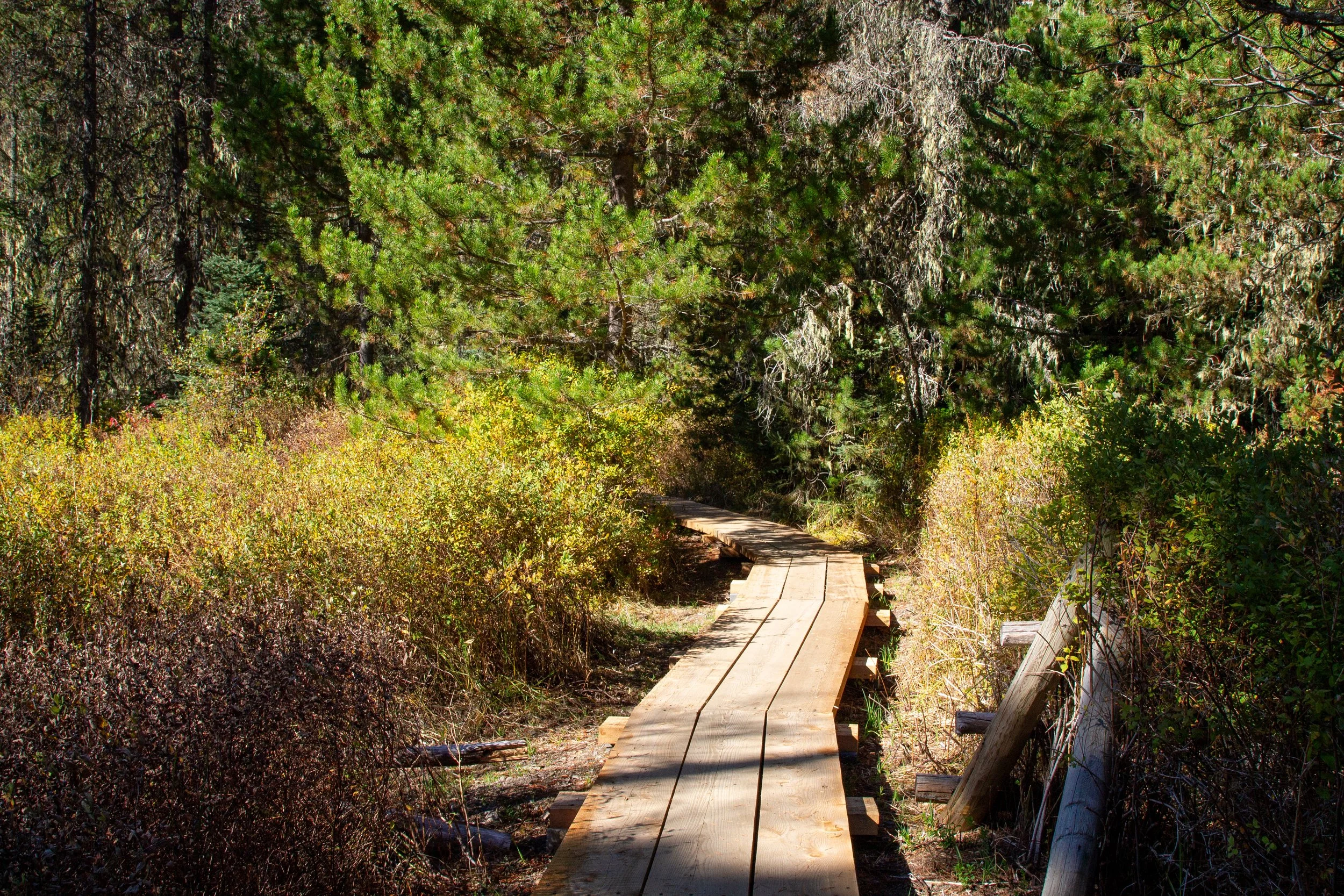
Boardwalk trail past Little Crater Lake
Past Little Crater Lake, the hike leaves the meadow and enters a lovely old-growth forest with some giant trees. Look for beargrass and wild rhododendrons blooming in early summer. A quarter mile past Little Crater Lake is the Pacific Crest Trail (PCT). Take a left to head to Timothy Lake.
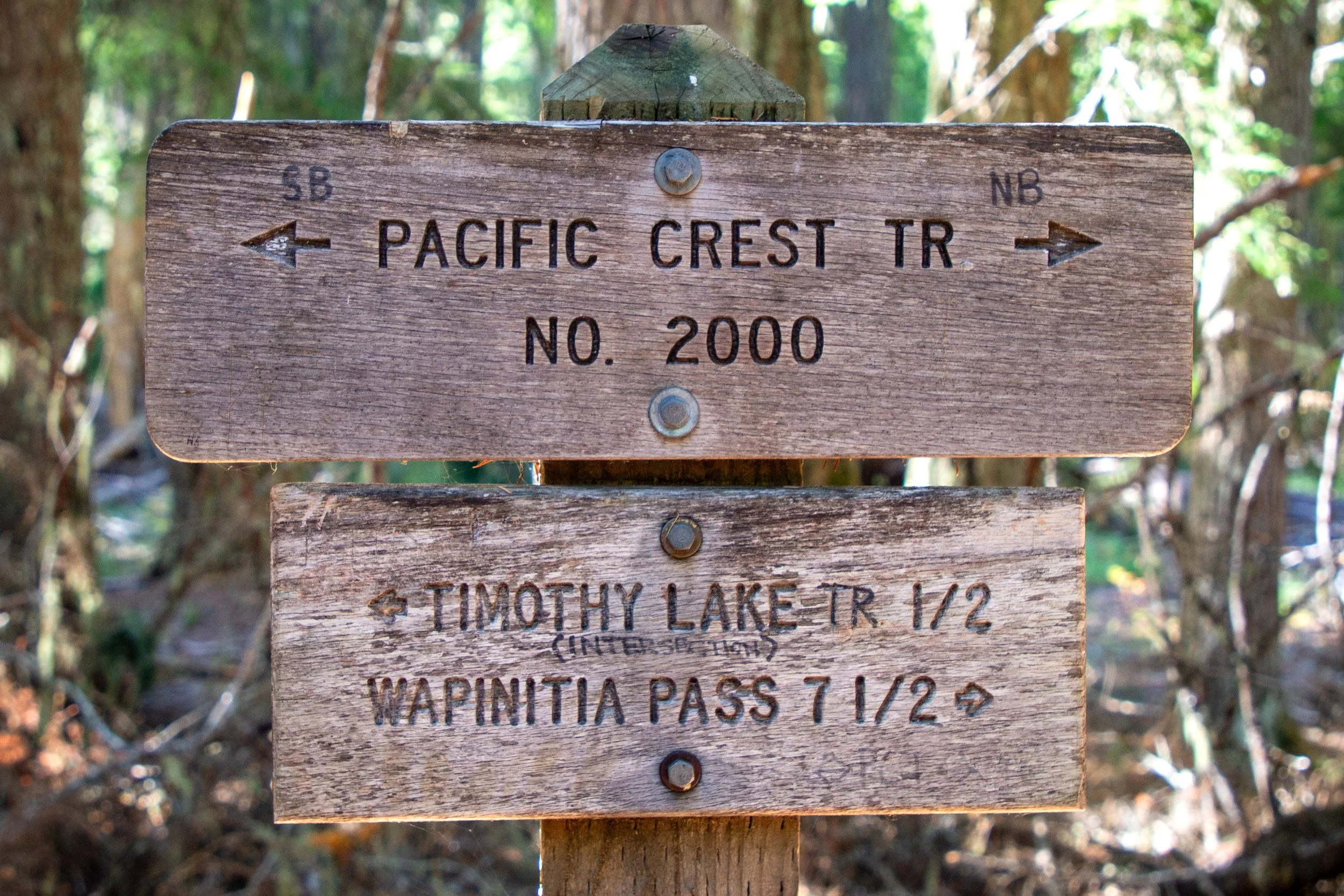
Take a left at the sign
After about half a mile, the trail splits into the north and south sides of the Timothy Lake loop. I’d say the experience is similar no matter which you take. The north side is a faster way of reaching Timothy Lake’s more remote campgrounds: North Arm Campground and Meditation Point.
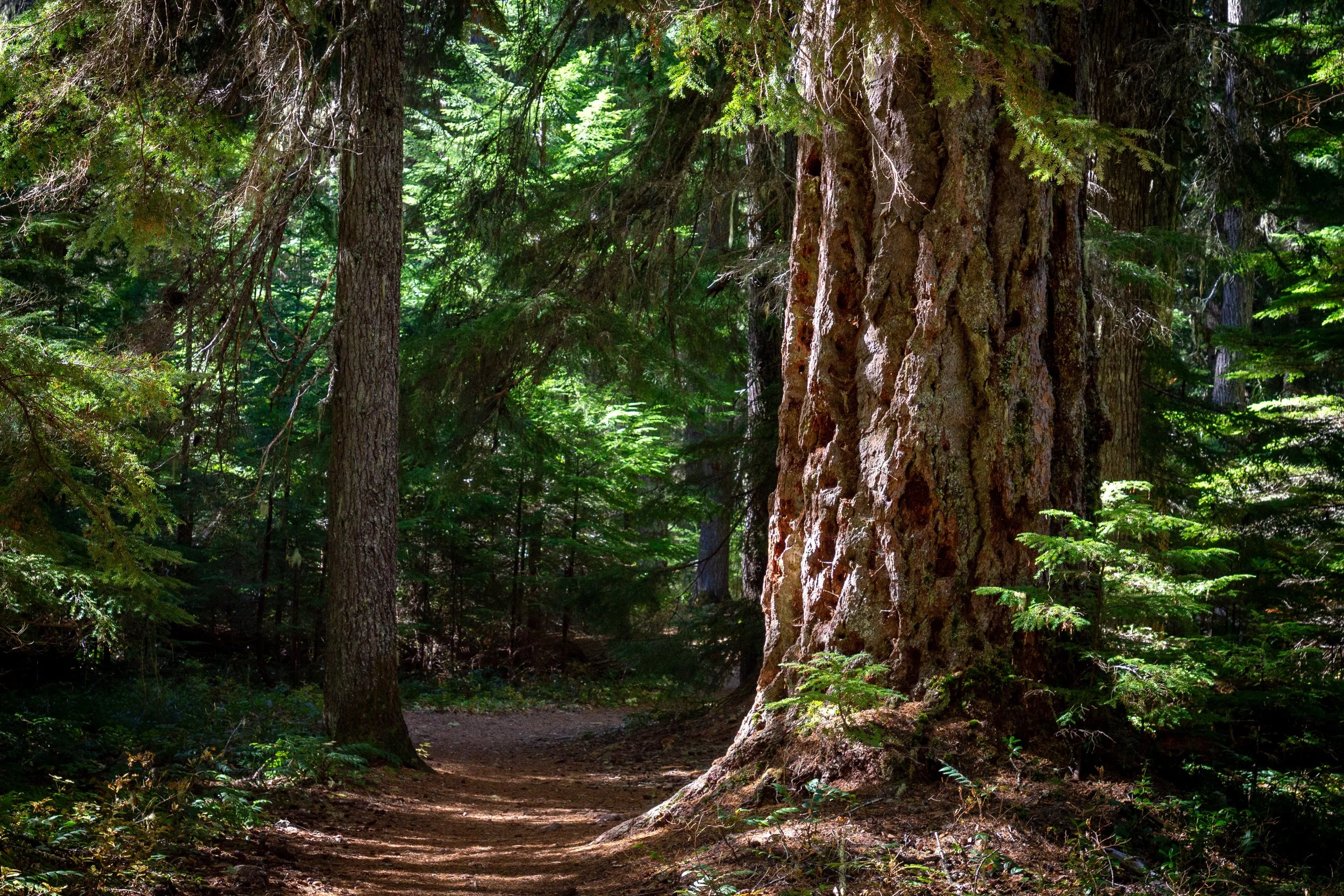
PCT
I went south, continuing on the PCT. Either way, hiking this end of Timothy Lake is more about being in the woods than the lake itself, which is marshy and mostly obscured by the trees. The impressive views of Mount Hood are on the opposite side, about 5 miles away from Little Crater Lake. If you get that far, you might as well finish the loop.
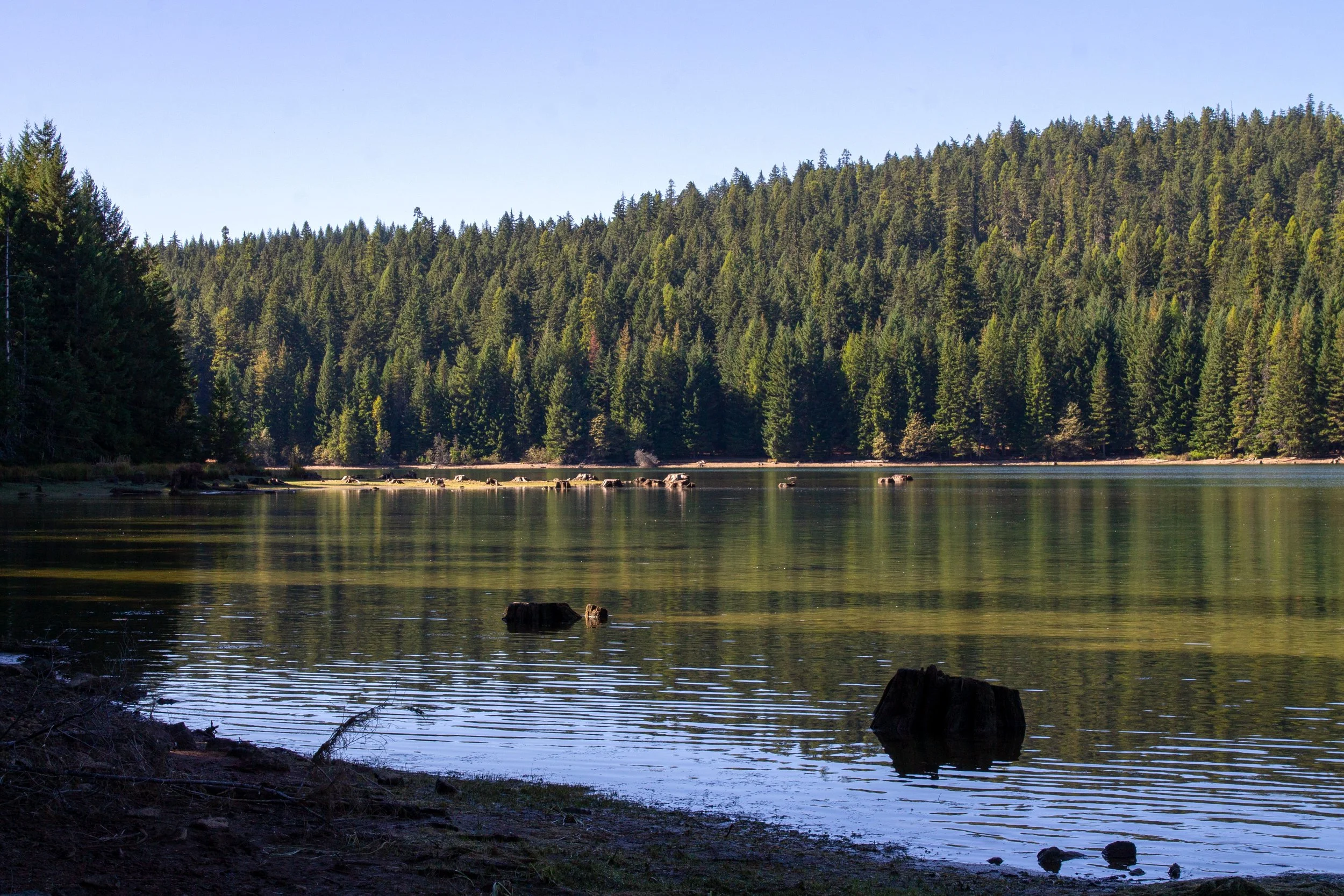
North Arm of Timothy Lake
There’s no clear turnaround point for a short hike if you take the south trail, so feel encouraged to stop whenever. Around 1-2 miles is enough to see the lake and get a feel for the forest. If you take the north trail, turning around at the North Arm Campground makes it about 3.5 miles round-trip.
Around Timothy Lake from Little Crater Lake
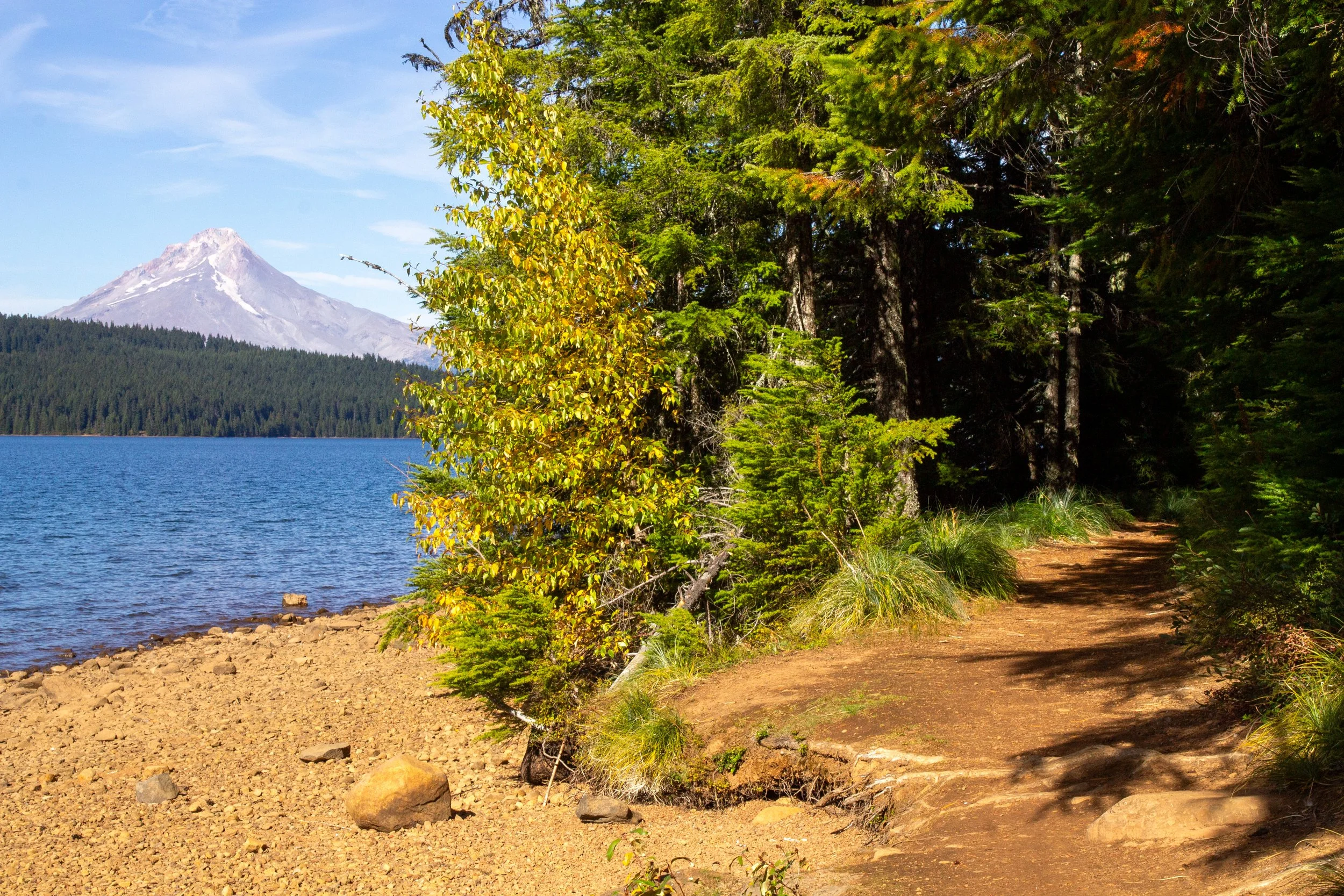
Southshore Trail
Although long, the loop around Timothy Lake isn’t very hard in terms of terrain. Starting at Little Crater Lake, it’s about 13 miles on a mostly flat and gentle trail. The whole thing is farther than I can walk on my bum leg, but I’ve done sections of it. If you also need a shorter hike, I’d recommend the south lakeshore. It’s the busiest area of the lake, but the best views of Mount Hood are from the Hoodview and Stone Creek Campgrounds.
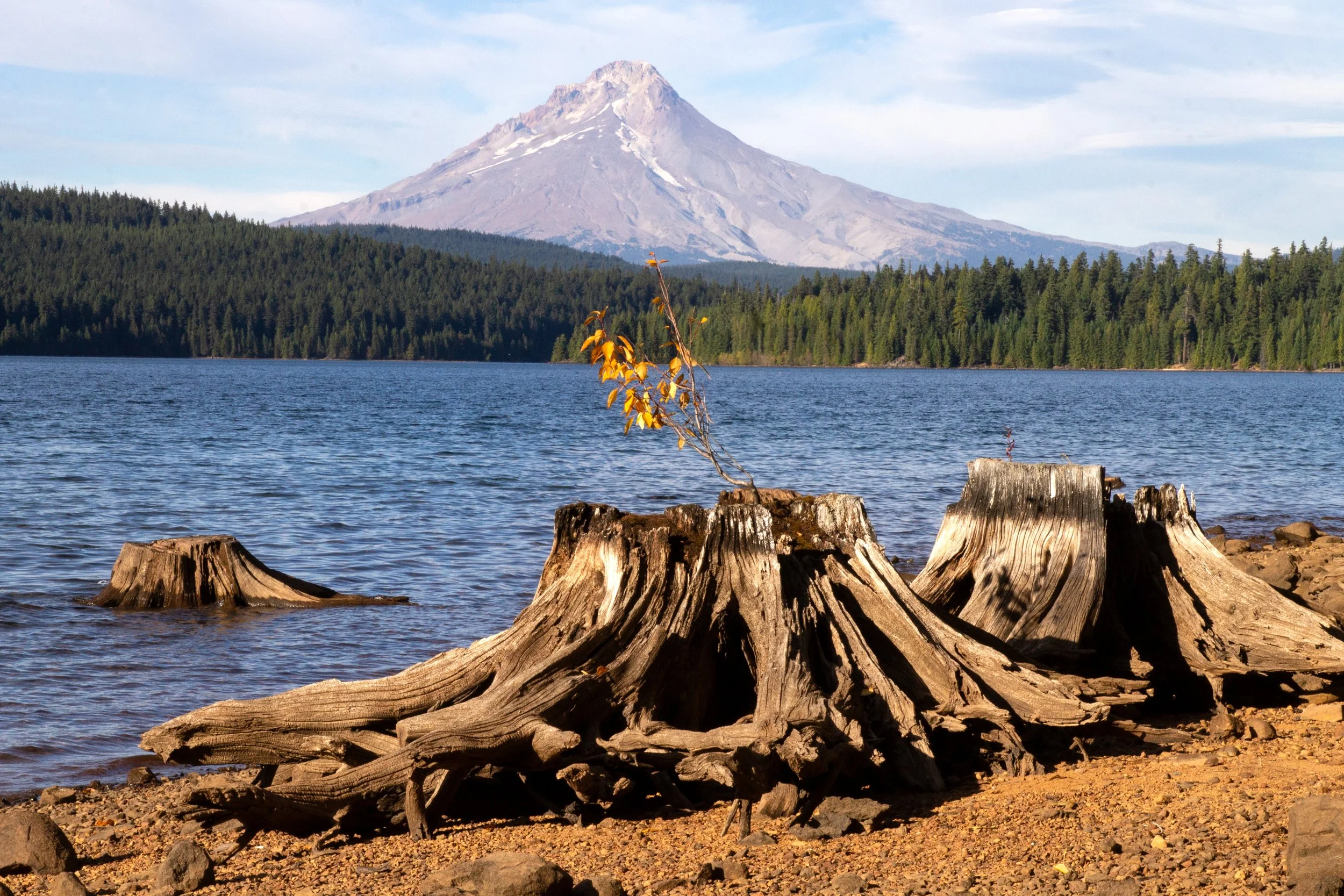
Mount Hood from the Stone Creek Campground
The trail stays close to Timothy Lake for most of the loop. During the summer, you’ll also have access to the campground restrooms. They close for the season at the end of September.
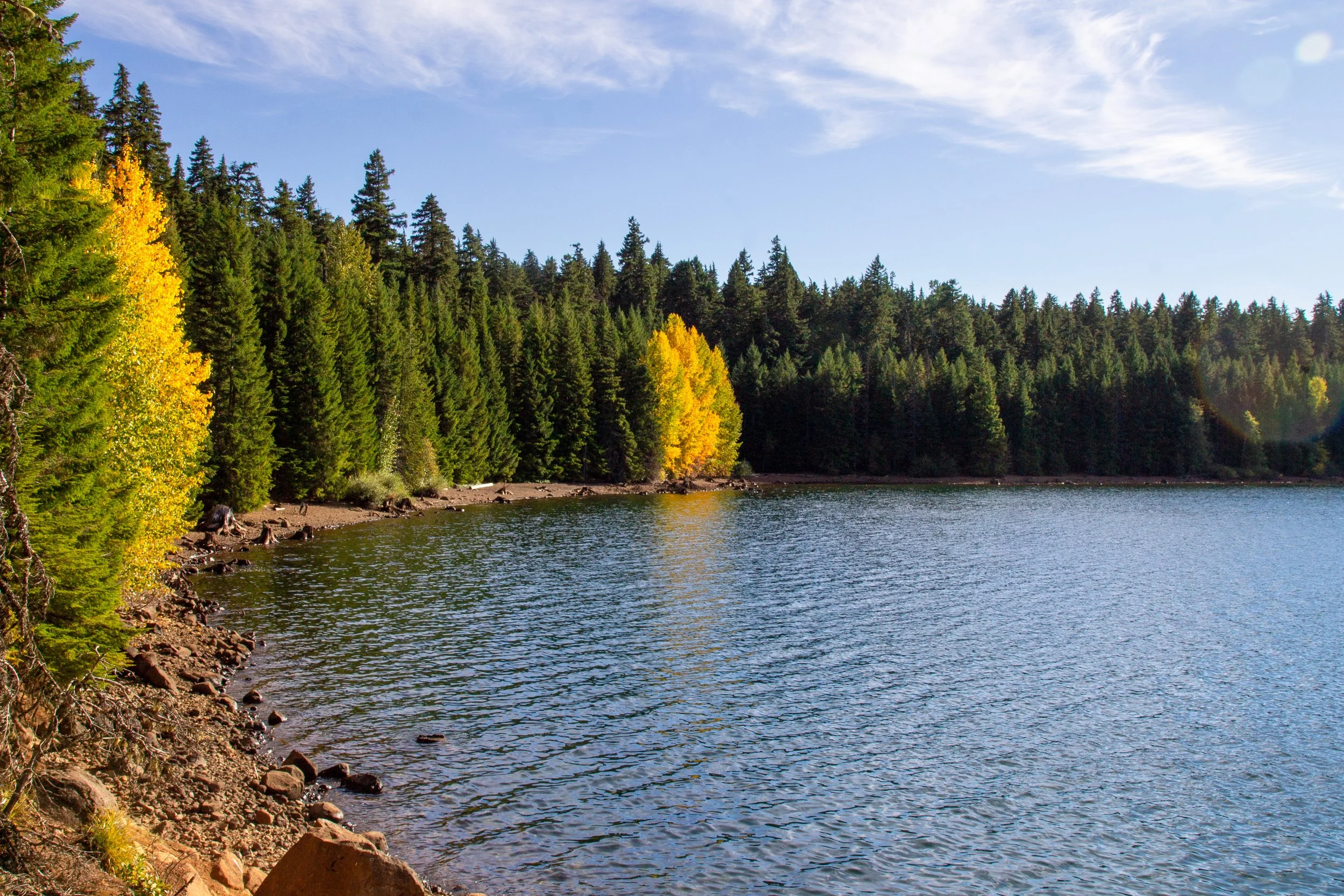
Cottonwoods turn in early October
Despite the reduced services, fall is a great time to visit. No crowds, great birdwatching, and beautiful color on the cottonwoods and vine maples. I went in October and only saw one other person on the trail. Hooded mergansers? Dozens.

Mallard at Timothy Lake
Getting there
To reach Little Crater Lake from Portland:
Take US-26 E to NF-42/Oregon Skyline Rd.
Turn right onto NF-42/Oregon Skyline Rd and continue for 4.1 miles.
Turn right onto S-457 Rd/Abbott Rd/NF-58 and continue for 2.4 miles.
Turn left when you see the big sign that says Mount Hood National Forest Campground Little Crater. Continue straight until the day-use parking lot (about 0.2 miles).
The drive from Portland takes about 90 minutes. From Little Crater Lake to the Cove day-use area at Timothy Lake, it’s about 15 minutes. The roads are paved and in good condition.
Enjoy your trip to Little Crater Lake!
With love,
Emma
Explore nearby

Check out the best short hikes near Mount Hood.
Find the best stops on a Portland-to-Bend road trip.