
Lost Lake Getaway in the Mt Hood National Forest
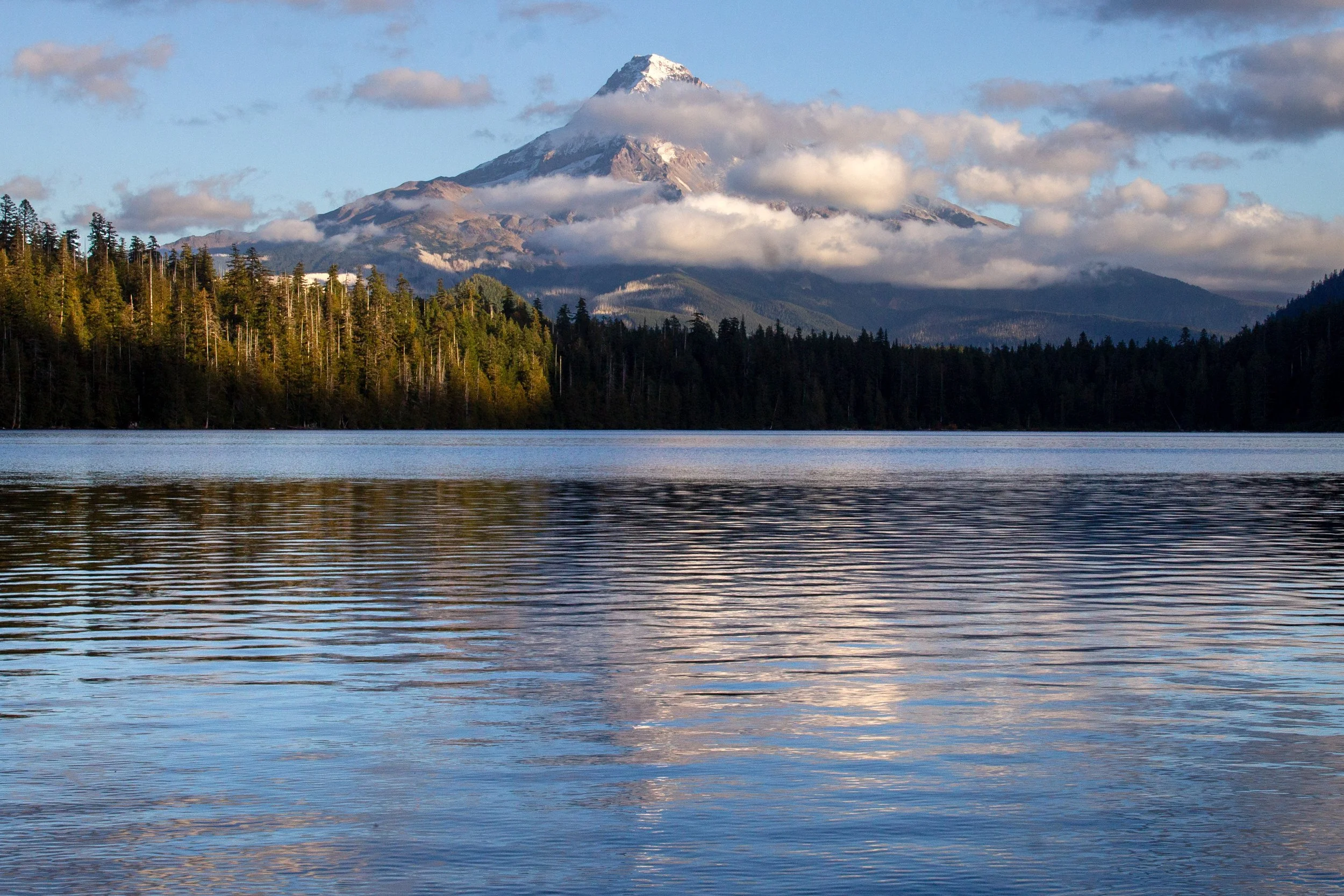
Lost Lake has all the best of the Mount Hood National Forest. Towering conifers, wild rhododendrons, and huckleberries surround the naturally formed alpine lake. The view of Mount Hood over the water has drawn photographers and sightseers for decades. By reputation, it’s Oregon’s most photographed lake. I can’t vouch for the statistics, but I did drive two hours each way to take its picture. Come for the photo op, stay for the peace and beauty of the lakeshore. Here’s how to plan the perfect getaway to Lost Lake.
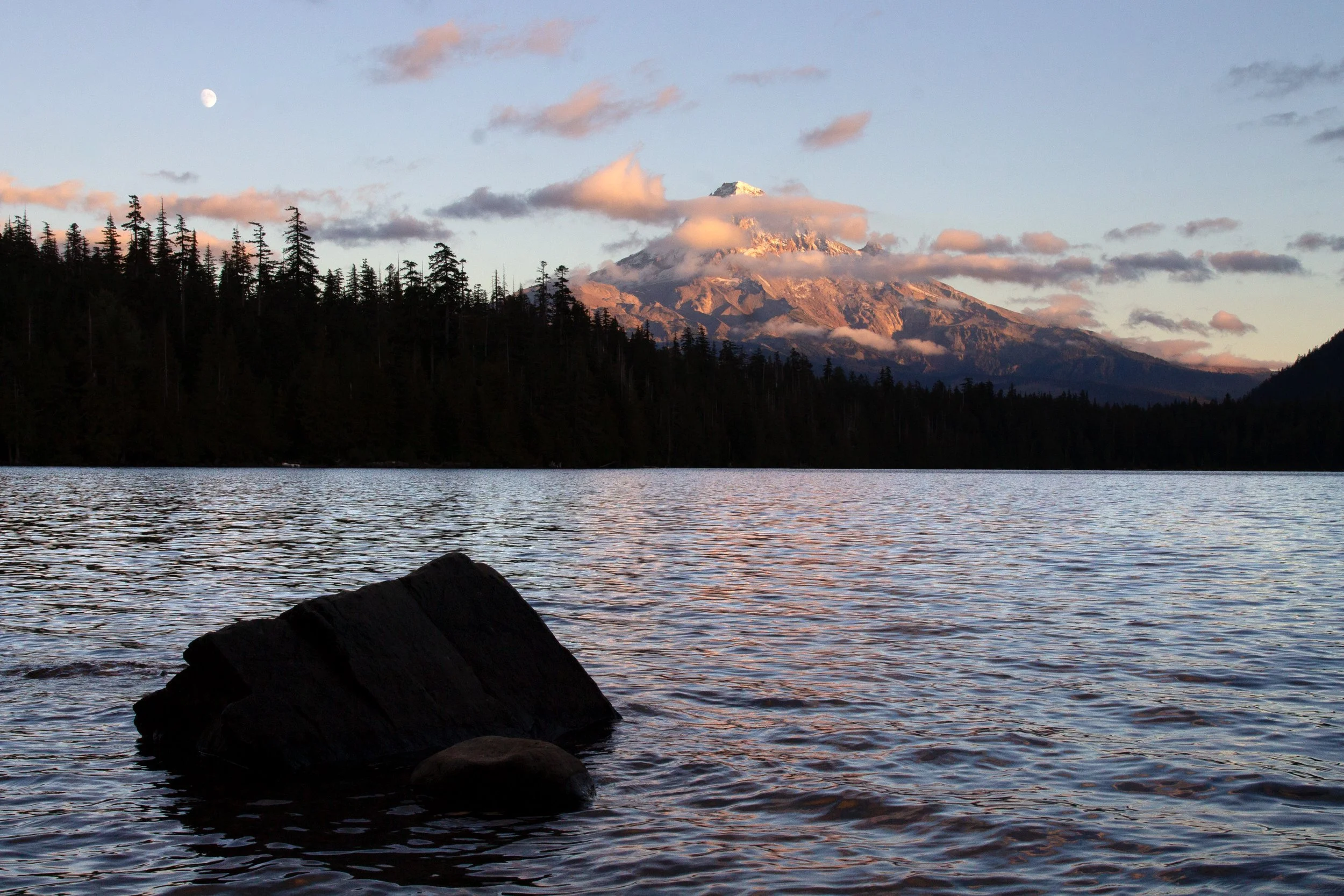
Sunset at Lost Lake
Know before you go
Cost and payment: Lost Lake Resort charges a fee to visit. Day use is $15 as of 2026. You’ll pass an admission booth on the way to the lake. It was closed when I went. A sign directed me to the General Store, where I paid with a credit card. It wouldn’t be a bad idea to bring cash just in case. The resort is privately owned and doesn’t accept recreation passes.
Roads: You can get to Lost Lake in any vehicle if you take I-84 through the Columbia Gorge, then head south. The roads are paved and in good condition.
Day use hours: Unless you’re camping, you can visit Lost Lake from sunrise to sunset.
Amenities: Vault toilets, picnic tables, and water spigots are in the campgrounds and day use areas. The General Store has a snack bar and gift shop.
Dogs: Leashed dogs can visit Lost Lake, including the hiking trails, campgrounds, and boat rentals. Some of the lodging options are dog-friendly.
Reception: Lost Lake Resort doesn’t have wifi. I lost reception well before reaching the lake. Bring an offline map, or pick up a free paper map from the General Store.
When to visit
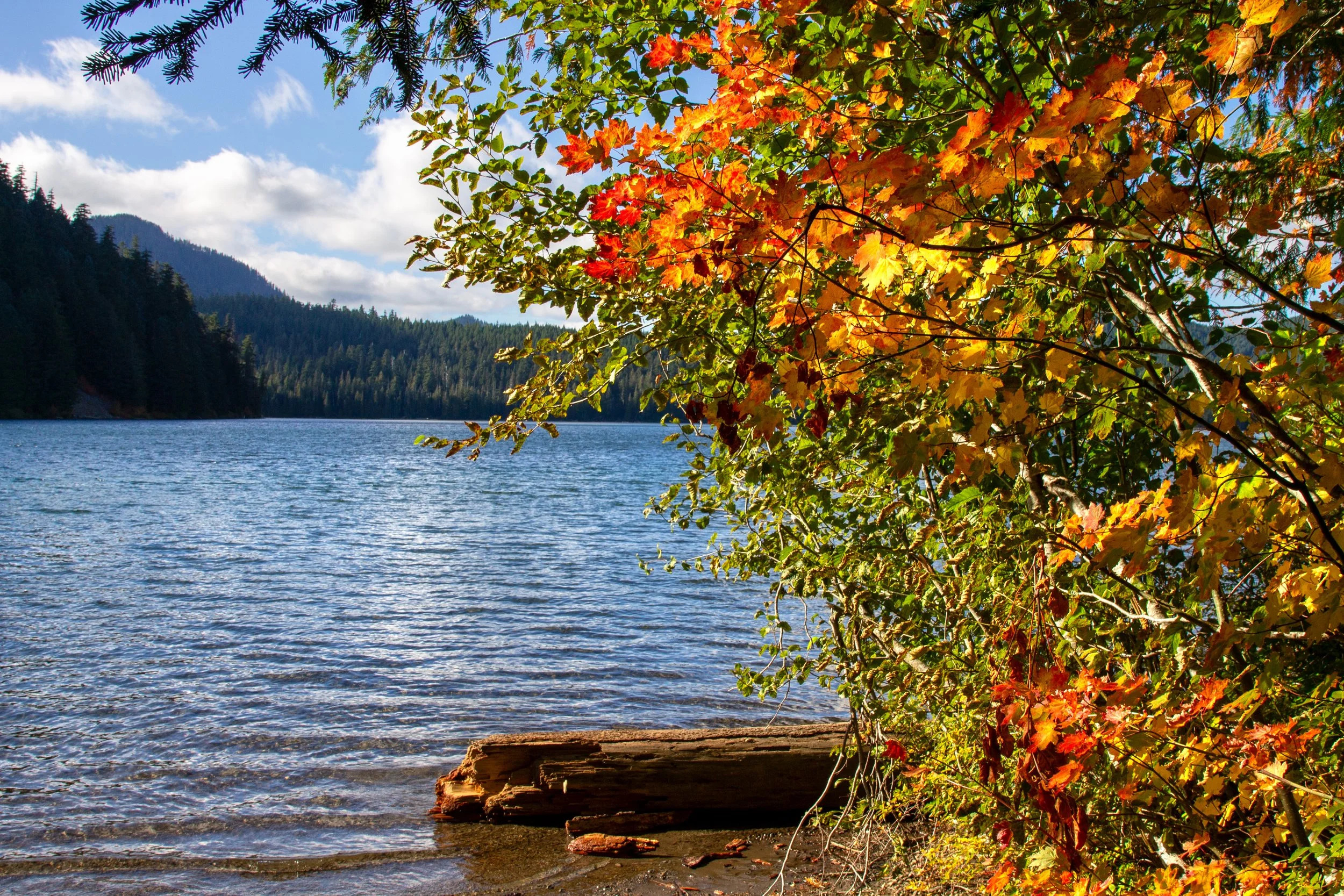
Vine maple in late September
The best time to visit Lost Lake is from May through October. Since the road to the lake isn’t maintained, snow usually makes it inaccessible in the winter. Most people visit Lost Lake in the summer. On weekends especially, it gets packed. I went on a beautiful weekday in late September and had the place almost to myself. The parking lots and campsites were mostly empty. The seasonal burn ban had been lifted. The leaves on the vine maples had just started turning. I’d expect good fall color in the undergrowth around early to mid-October. Expect fewer amenities outside of peak season. The General Store was open when I went, but the snack bar and boat rentals were closed. Lost Lake Resort closes for the season in November.
How to find Mount Hood
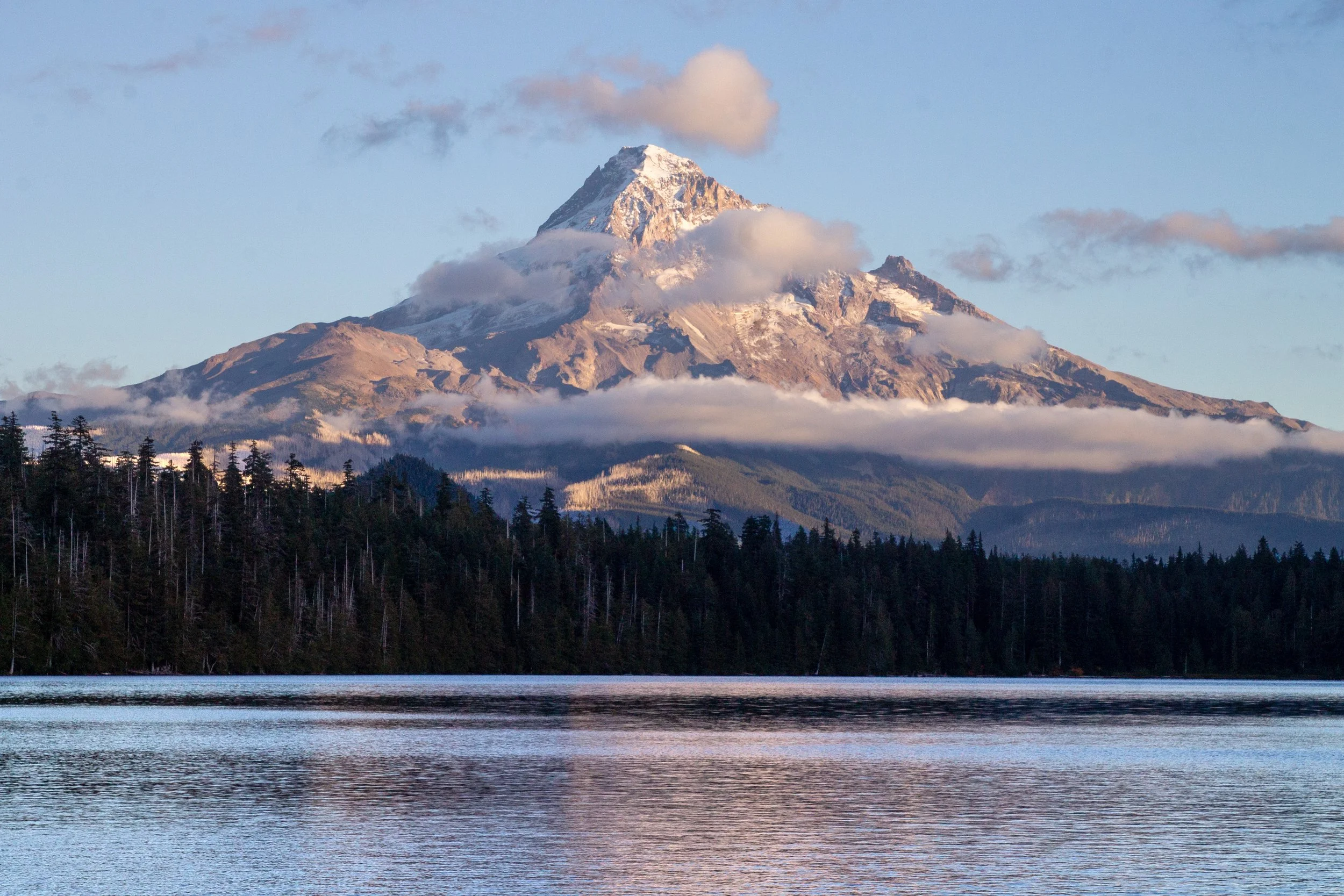
Mount Hood
The highlight of a visit to Lost Lake is seeing the picture-perfect view of Mount Hood across the water. By reputation, it’s Oregon’s most photographed lake. I’m no nature statistician, but it’s safe to say that few people with a camera could resist taking a picture or twenty on clear days when the mountain is visible.
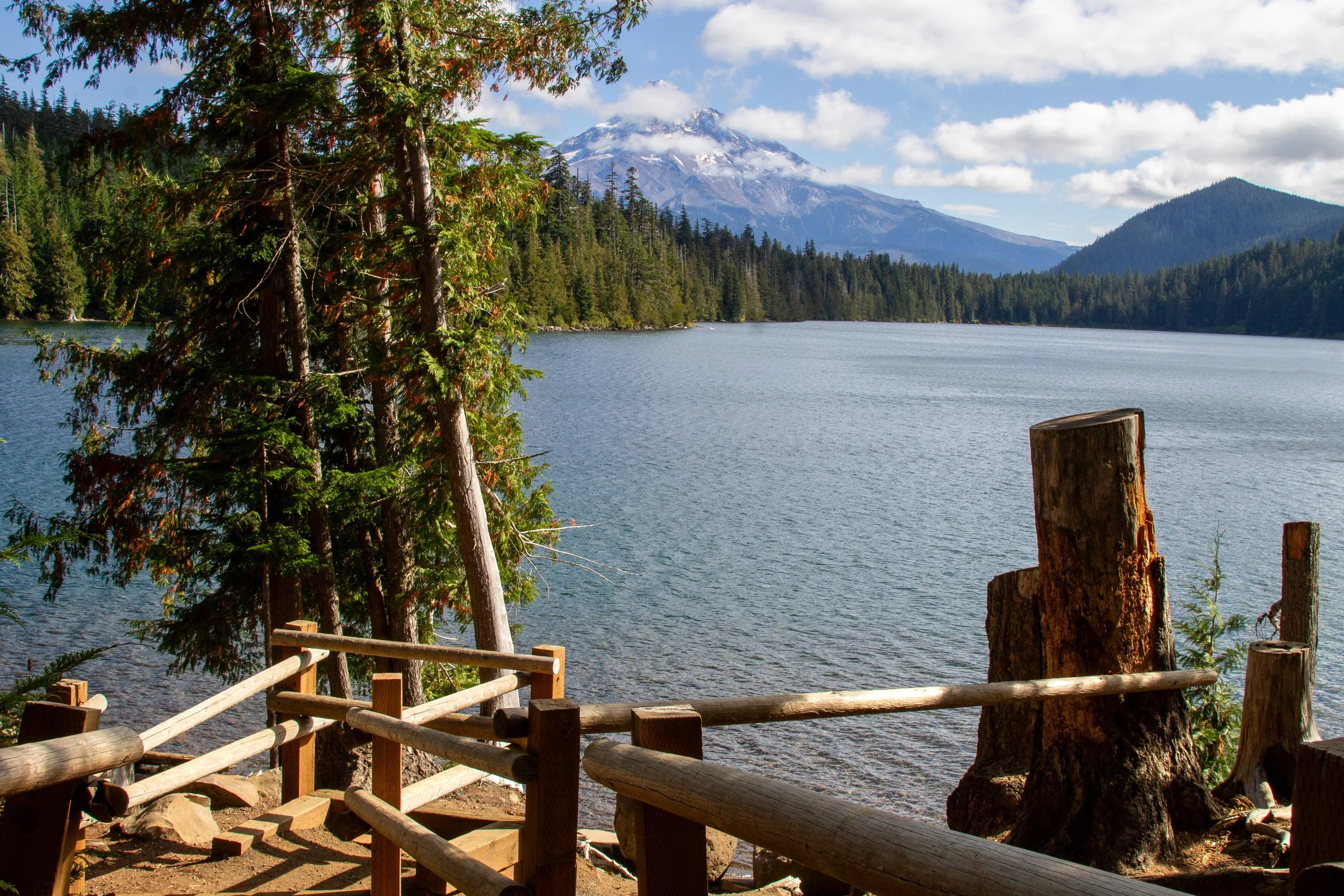
North Day Use Viewpoint
Unless you’re on a boat, you can only see the mountain from a small portion of the lakeshore. Head to the North Day Use Area to find it. Down the hill, a fenced viewpoint overlooks Lost Lake and Mount Hood. Closer to the water is a bench that’s seldom unoccupied. On windless days, you’ll see the mountain’s reflection on the water, although even a small breeze disturbs it. If you follow the hiking trail counterclockwise, you’ll see glimpses of Mount Hood through the trees for a quarter mile or so, including a second unobstructed view. The best times for photos are morning and evening.
Day use and lakeshore
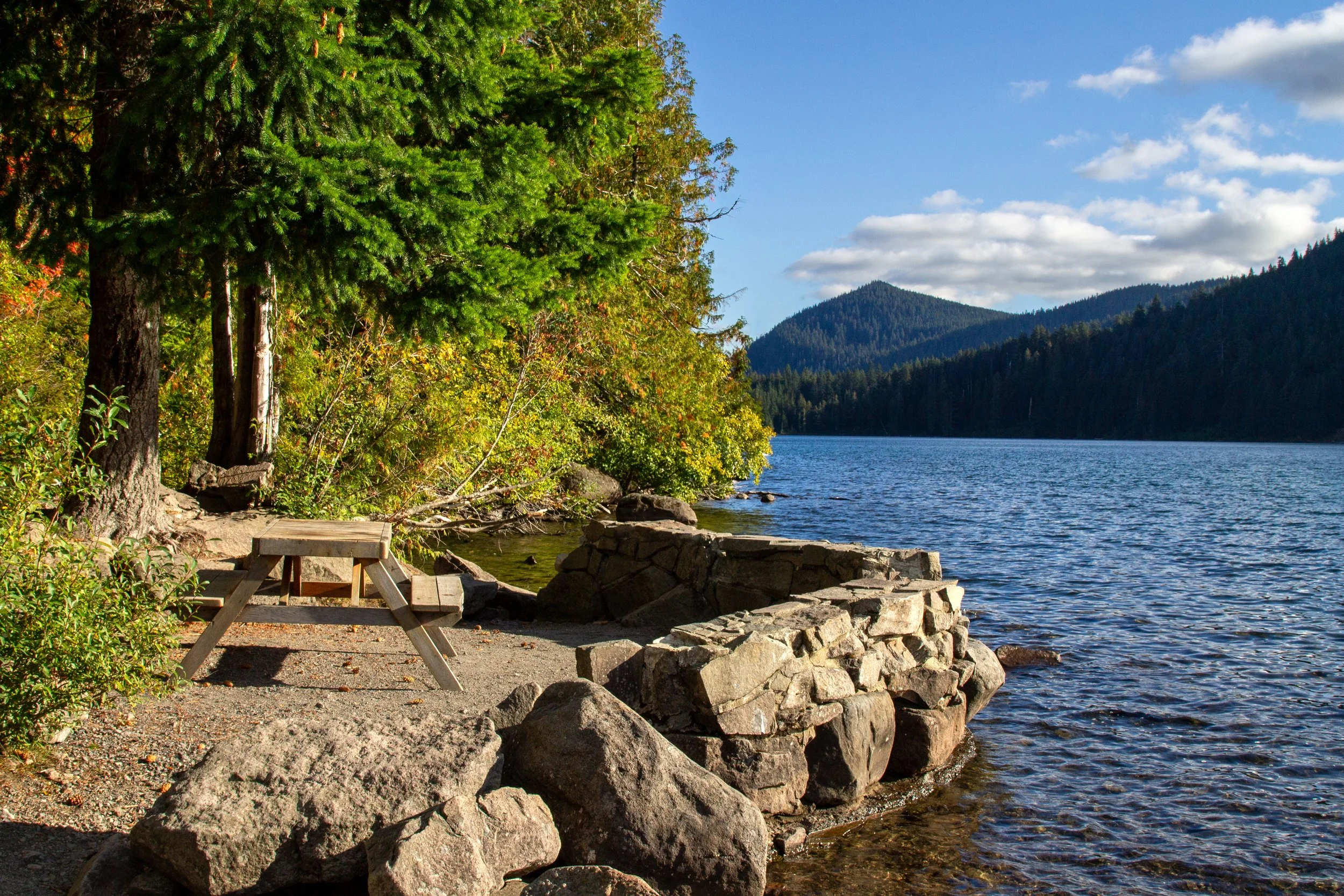
South Day Use Area
Lost Lake has two day-use areas:
North Day Use: Mount Hood view, more compact
South Day Use: no mountain view, more spread out, better accessiblity
On crowded days, park wherever you can find a spot. The two day-use areas are close together and connected by the Lakeshore Trail. The Boathouse and General Store are between them. Both day-use areas have shaded picnic tables, vault toilets, and potable water.
Hiking trails at Lost Lake
Lakeshore Trail
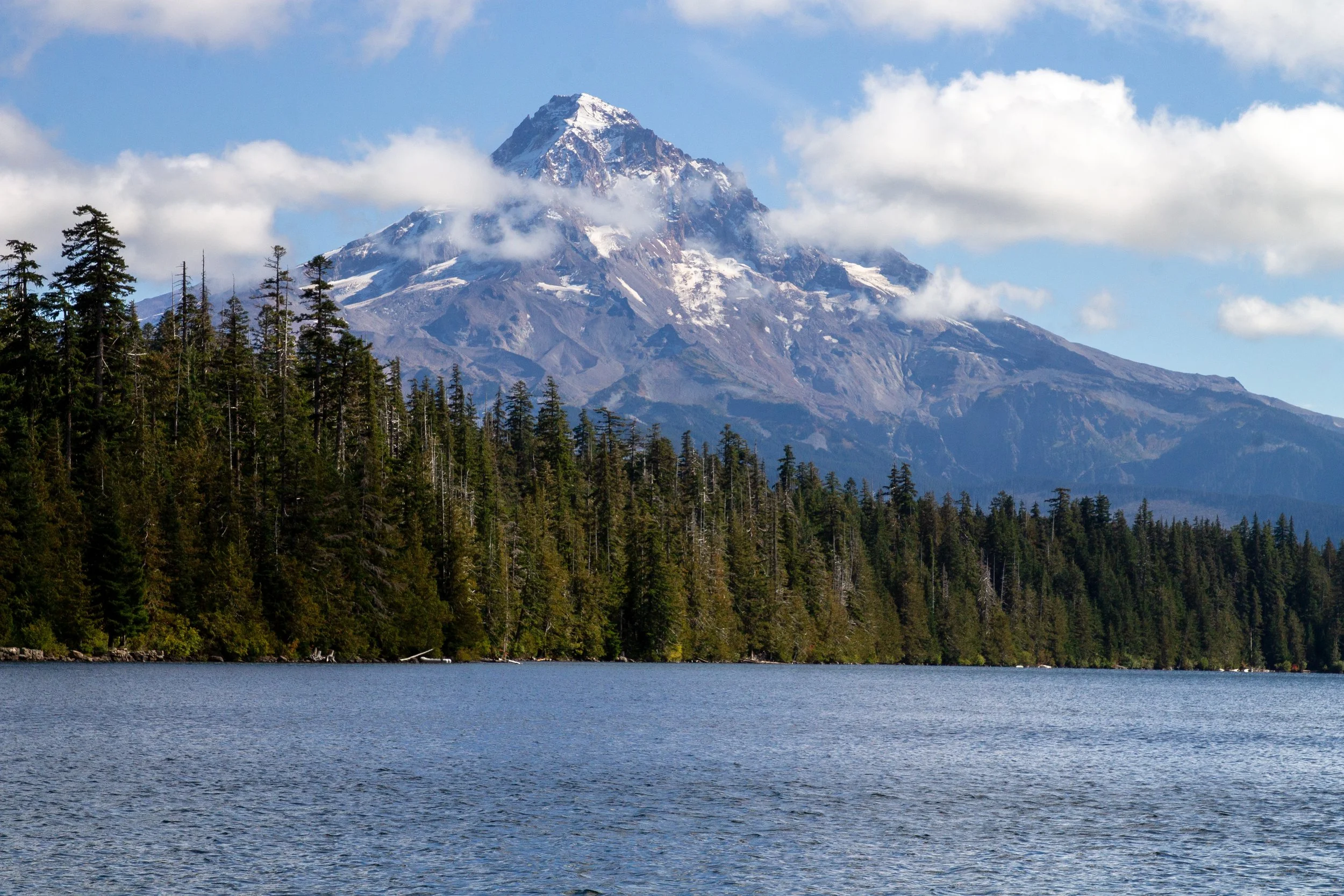
Mount Hood from the Lakeshore Trail
Distance: 3.1-mile loop
Elevation gain: 50 feet
Difficulty: Easy
ADA access: A short section of the trail by the South Day Use Area is flat, paved, and barrier-free. South of the pavement, it alternates between crushed gravel and boardwalk. It’s still nice and flat, but the boardwalks rise an inch or two above the gravel sections. The rest of the loop has irregular terrain.
About: If you only have time for one hike at Lost Lake, I’d make it the Lakeshore Trail. As you walk through the old-growth forest around the lake, you’re never far from the water. The trail is easy, shady, and kid-friendly. You’ll see some wildflowers in late spring and summer. Later in the season, huckleberries appear. You can start the hike from several places, including the viewpoint overlooking Mount Hood. Once you’re away from the day-use areas and campgrounds, the crowds thin. Most of the trail is in good shape. A few places on the west side of the lake, the wet side, are a little overgrown and swampy. Overall, a peaceful trail that offers big rewards for the effort.
Old Growth Trail
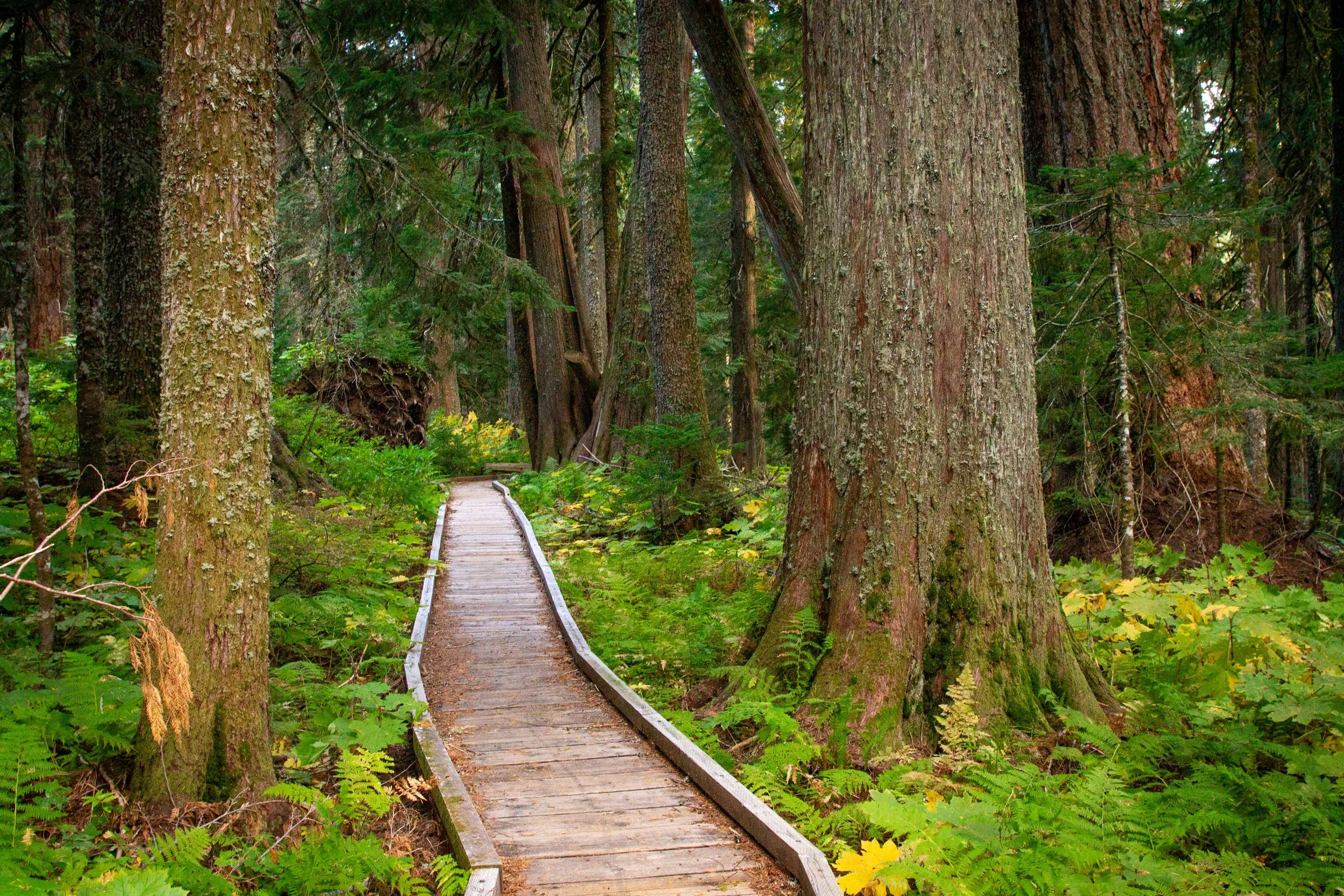
Boardwalk on the Old Growth Trail
Distance: 2 miles out and back
Elevation gain: 80 feet
Difficulty: Easy
ADA access: The trail alternates between crushed gravel and boardwalk, mostly with minimal grades. Starting at the South Day Use Area, the graded sections at the beginning of the hike could be challenging in a wheelchair.
About: I went to the Lakeshore Trail already knowing it would be cool. The beauty of the Old Growth Trail surprised me. Away from water, you won’t find any dramatic viewpoints here. It’s more about the feeling of being in the old forest. Doug fir, Western hemlock, cedar, and Pacific silver fir shade the mostly boardwalk trail. Some of the trees are over 300 years old and 200 feet tall. Interpretive signs along the hike provide context to the setting, like how the vegetation differs on the wet and dry sides of Lost Lake. The developed areas are only on the dry side, which is less sensitive to human activity. You can hike the trail out and back, or connect to the Lakeshore Trail to make a loop.
Lost Lake Butte Trail
Lost Butte Trail
Distance: 4 miles out and back
Elevation gain: 1,300 feet
Difficulty: Moderate/hard
ADA access: No
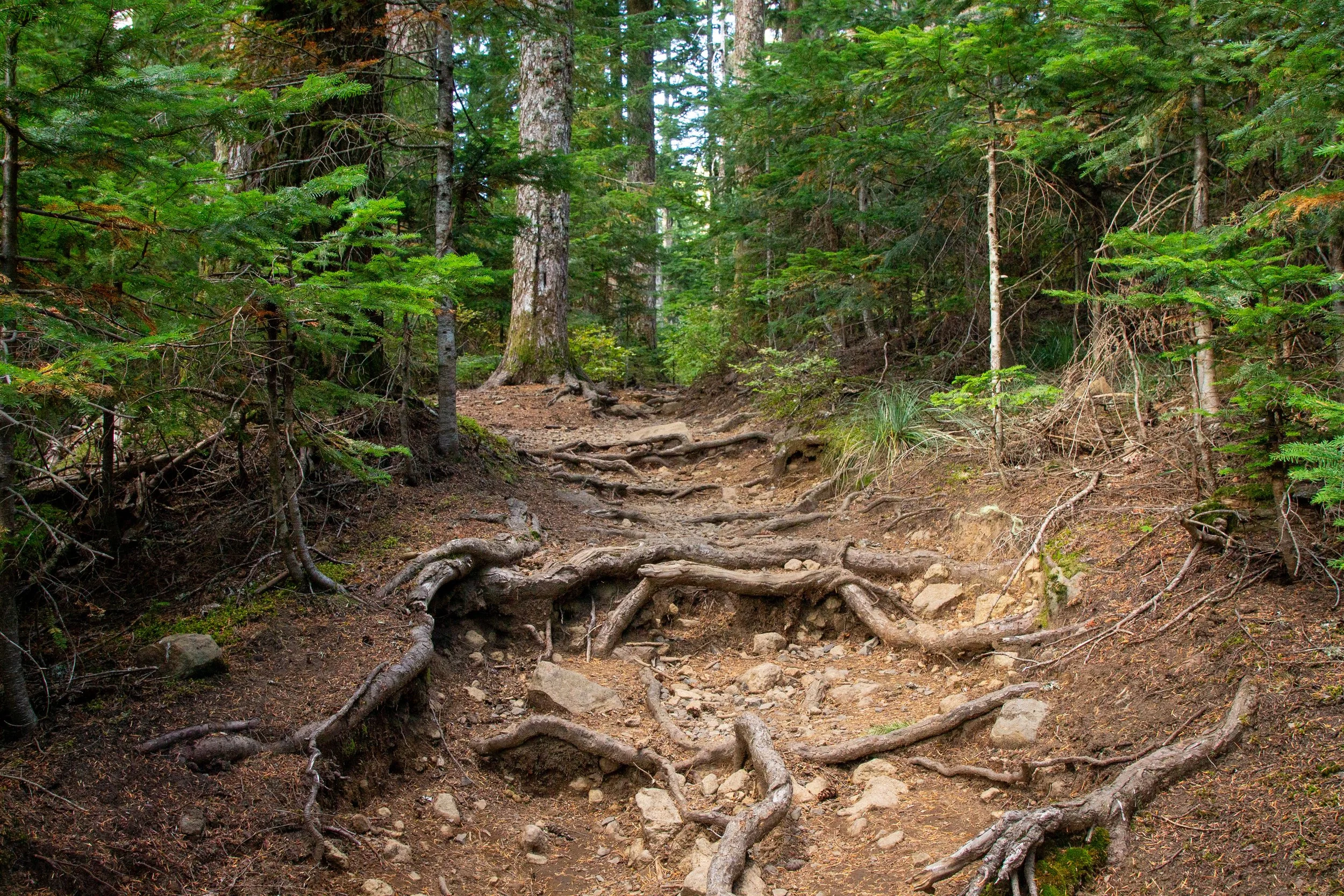
About: Lost Lake Butte Trail is a challenging hike with a satisfying finale. The clearing at the top of the butte overlooks a stunning view of Mount Hood. Unlike the Lakeshore Trail and Old Growth Trail, the journey is a steep uphill climb. Expect more difficult terrain, with rocks and some exposed roots. Early summer is a good time to see wild rhododendrons and beargrass blooming along the trail.
Other trails
The Lakeshore Express is a short trail connecting the Old Growth Trail to Lost Lake. I’d call it more of a convenience than a destination.
The Old Skyline Trail is a 2.5-mile trail that runs more or less parallel to the Old Growth Trail, just farther from Lost Lake. Unlike the Old Growth Trail, it allows bikes.
The Huckleberry Mountain Trail begins at the south end of the Lakeshore Trail and connects to the Pacific Crest Trail. It doesn’t go to anywhere called Huckleberry Mountain, but it is the start of an ambitious 16-mile hike to the top of Buck Peak.
Boating and fishing at Lost Lake
Boat rentals at Lost Lake
Taking a boat out is a great way to explore Lost Lake. The resort has two options for boating:
You can launch your own non-motorized boat from the public boat launch.
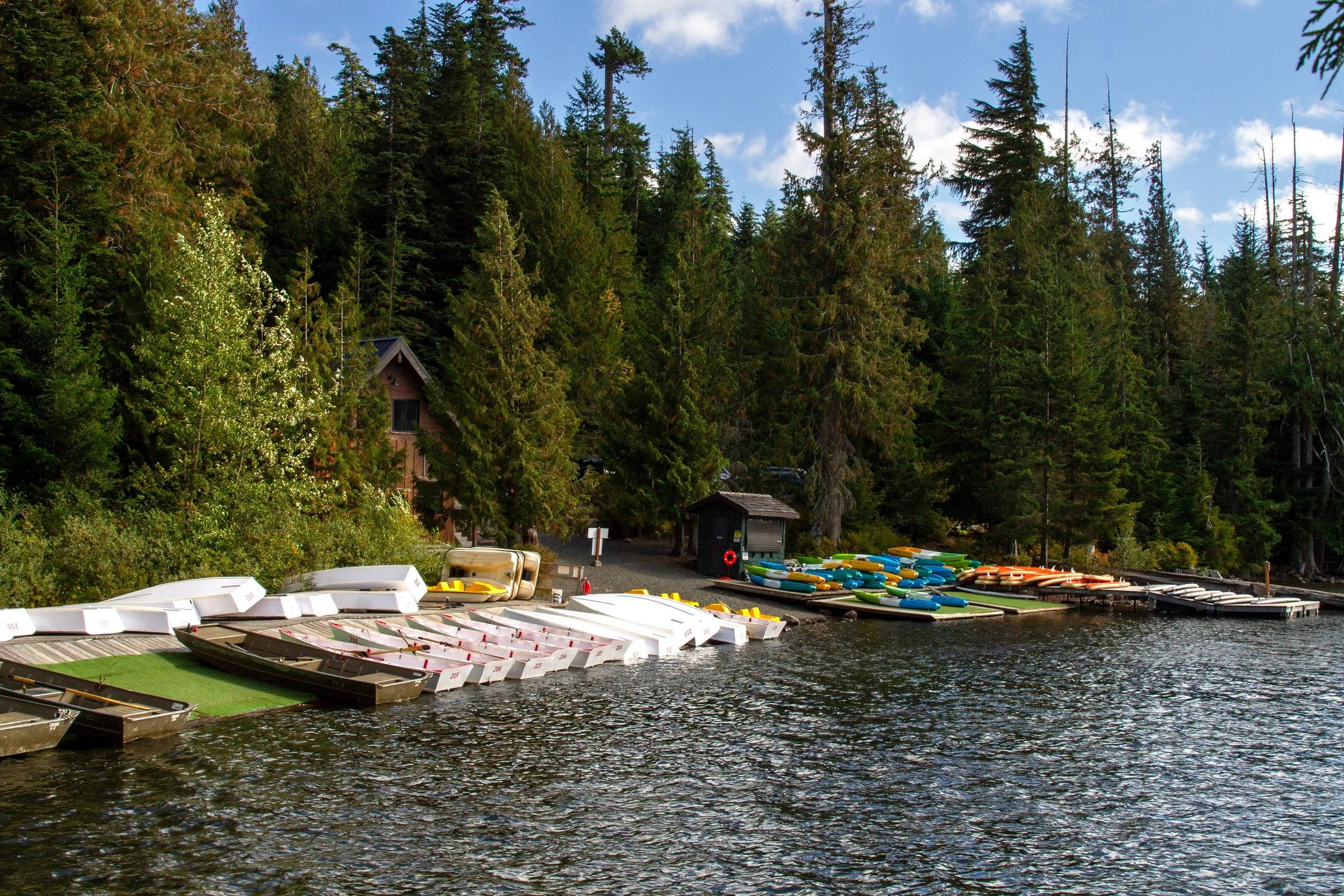
The Lost Lake Resort Boathouse rents kayaks, paddleboards, rowboats, and pedal boats by the hour. Prices range from around $25 to $45/hour. Rentals include life jackets.
Lost Lake has native and stocked trout. If you’re fishing, buy a license before you arrive. The Lost Lake Resort doesn’t sell them. You can rent fishing gear from the Boathouse if you don’t have your own.
Camping and glamping
A-frame cabin rental at Lost Lake Resort
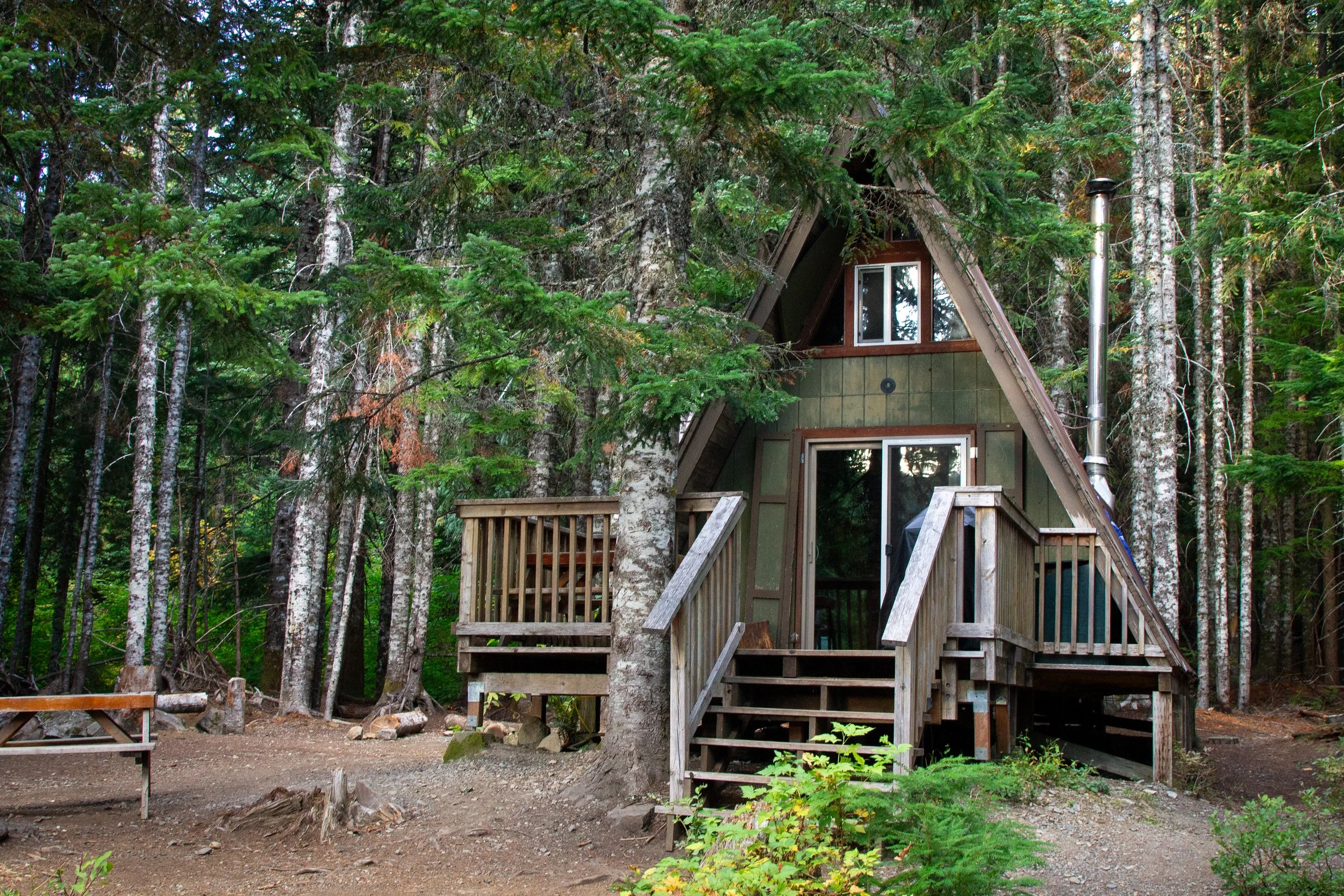
The campgrounds at Lost Lake Resort have a range of camping options, from tent and RV sites to yurts and cabins. All sites have access to vault toilets, potable water, and paid showers. Fees vary. When I looked, it was around $40-50 for a tent site, up to several hundred dollars a night for the more deluxe cabins. Most sites require reservations, which you can book up to 6 months in advance. If you’re visiting in the summer, I’d strongly recommend making a reservation. When I went in late September, getting a first come first served site would have been no problem. Besides camping, the resort has a few lodge rooms above the General Store with running water and showers. Lost Lake Resort is open from May through October.
Getting there
Address: 9000 Lost Lake Road, Hood River, OR 97031
The best way to reach Lost Lake is via I-84. Take exit 62 for US-30, then turn right onto Country Club Rd. In 2.8 miles, turn left onto Barrett Dr. Continue for 1.2 miles, then turn right onto OR-281 S. In 2 miles, take a right to stay on OR-281 S. In 6.3 miles, take a slight right, then turn left onto Lost Lake Rd. Follow the signs to stay on Lost Lake Rd. The roads are paved and in good condition the whole way. The drive from Portland takes 1.5-2 hours.
The other, less ideal route is from Zigzag via Lolo Pass Rd. It includes several miles of unpaved roads and more difficult navigation. If you go this way, I’d recommend a high-clearance vehicle and an offline map.
Explore nearby

Find the best short hikes near Mount Hood.

Take a short hike to stunning views at Mirror Lake.

Find the best things to do in Hood River.