
Smith and Bybee Wetlands


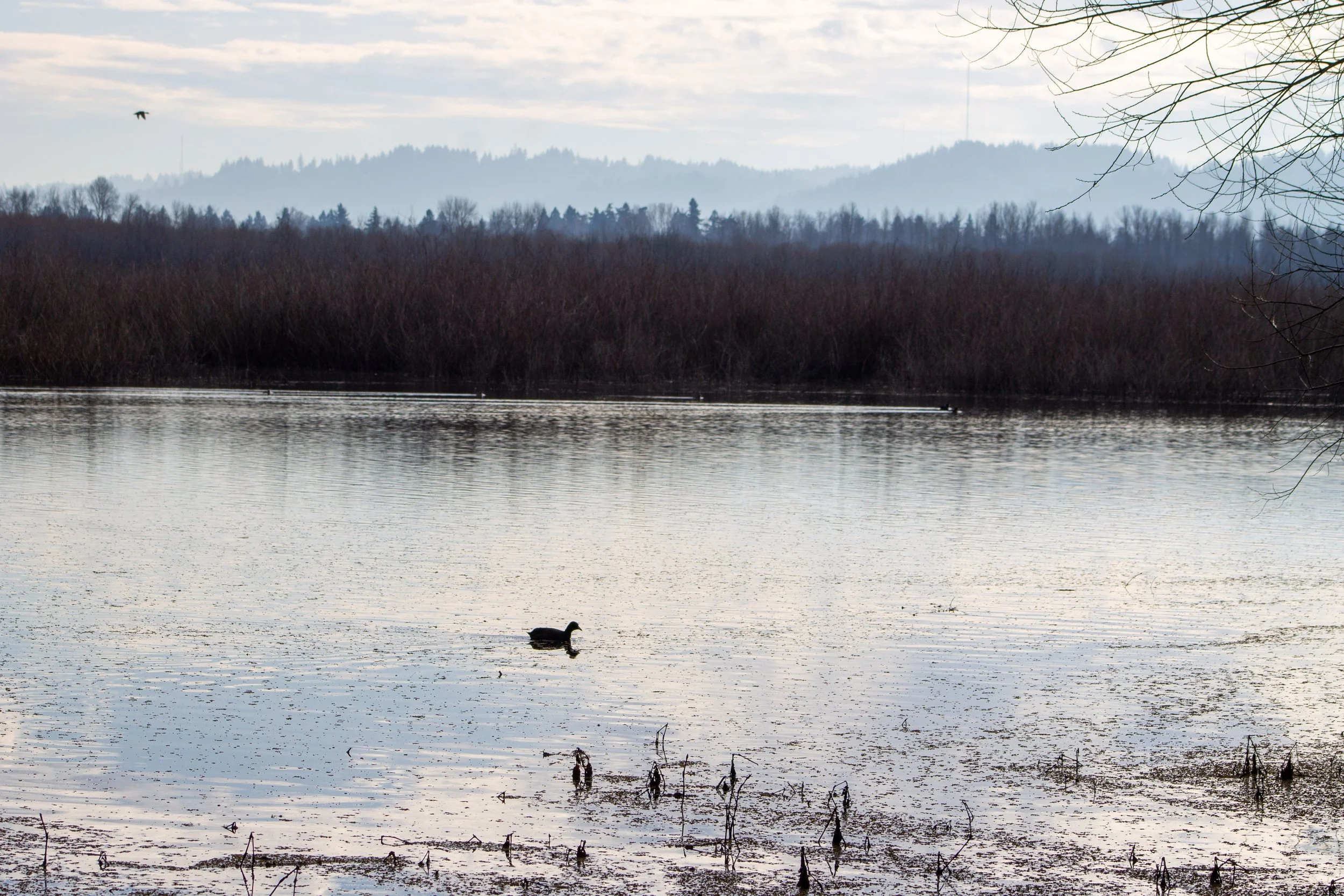
Smith and Bybee Wetlands Natural Area in northwest Portland is as beautiful as it is unlikely. Located in an otherwise charmless industrial area, it’s one of the largest urban wetlands in the US. Birdwatching is the main event, with paddling a close second. A short trail connects two marshy lakes in a cottonwood forest. It’s paved, flat, and generous with benches, welcoming hikers of all abilities. I went most recently on a dead-of-winter excursion to fight cabin fever, but it’s a great destination any time you want to step away from the stress of the world and watch some birds for an hour or two. Here’s everything you need to know about visiting Smith and Bybee Wetlands.
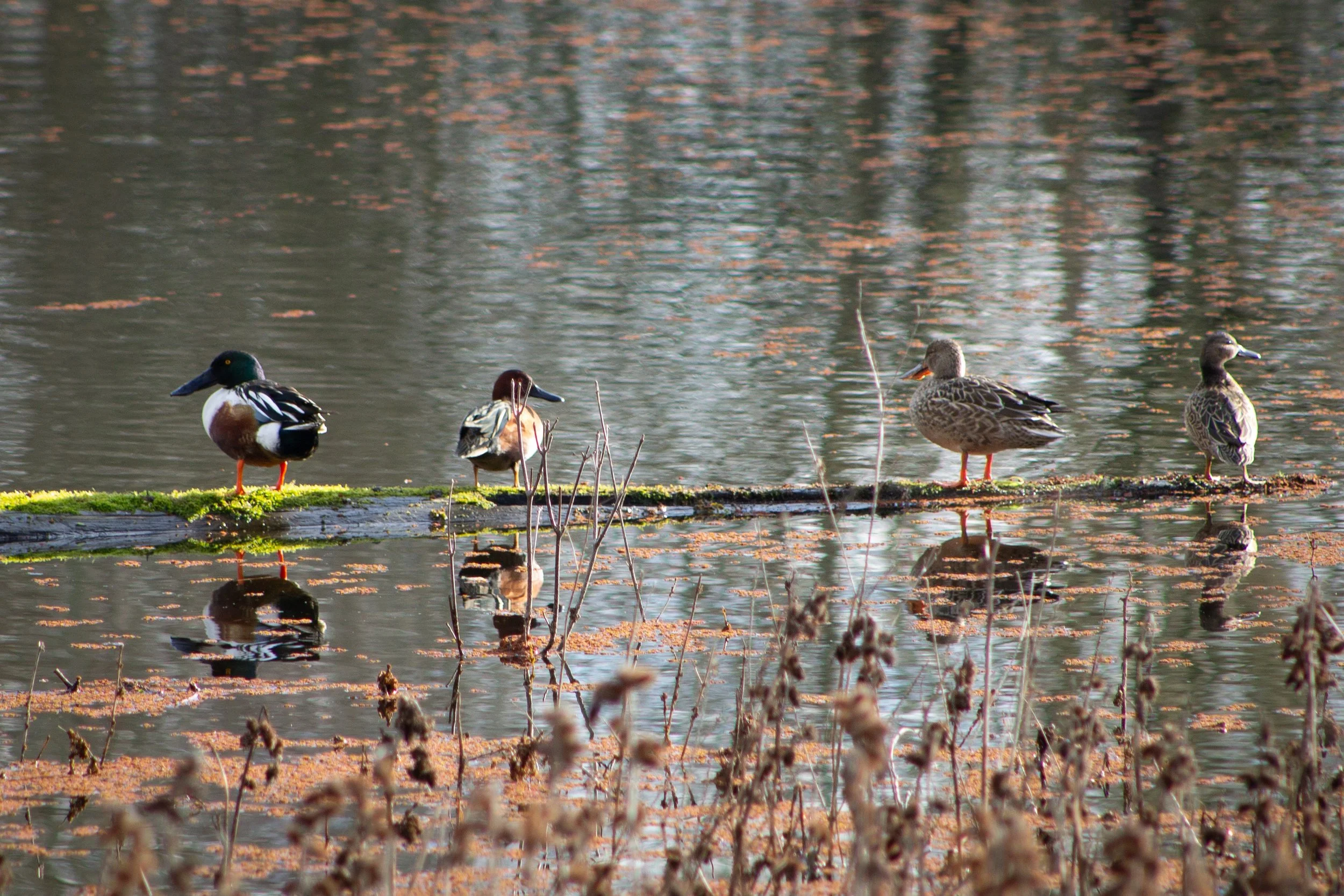
Northern shovelers and mallards in Smith Lake
Know before you go
It’s free to visit Smith and Bybee Wetlands.
Restrooms and picnic tables are next to the parking lot.
Dogs are not allowed.
Bikes are not allowed. Bike racks are in the parking lot and near the park entrance.
It’s a good idea to bring binoculars to see the birds.
Smith and Bybee Wetlands are open from sunrise to sunset.
Trimet bus #11 stops in front of the park.
Accessibility
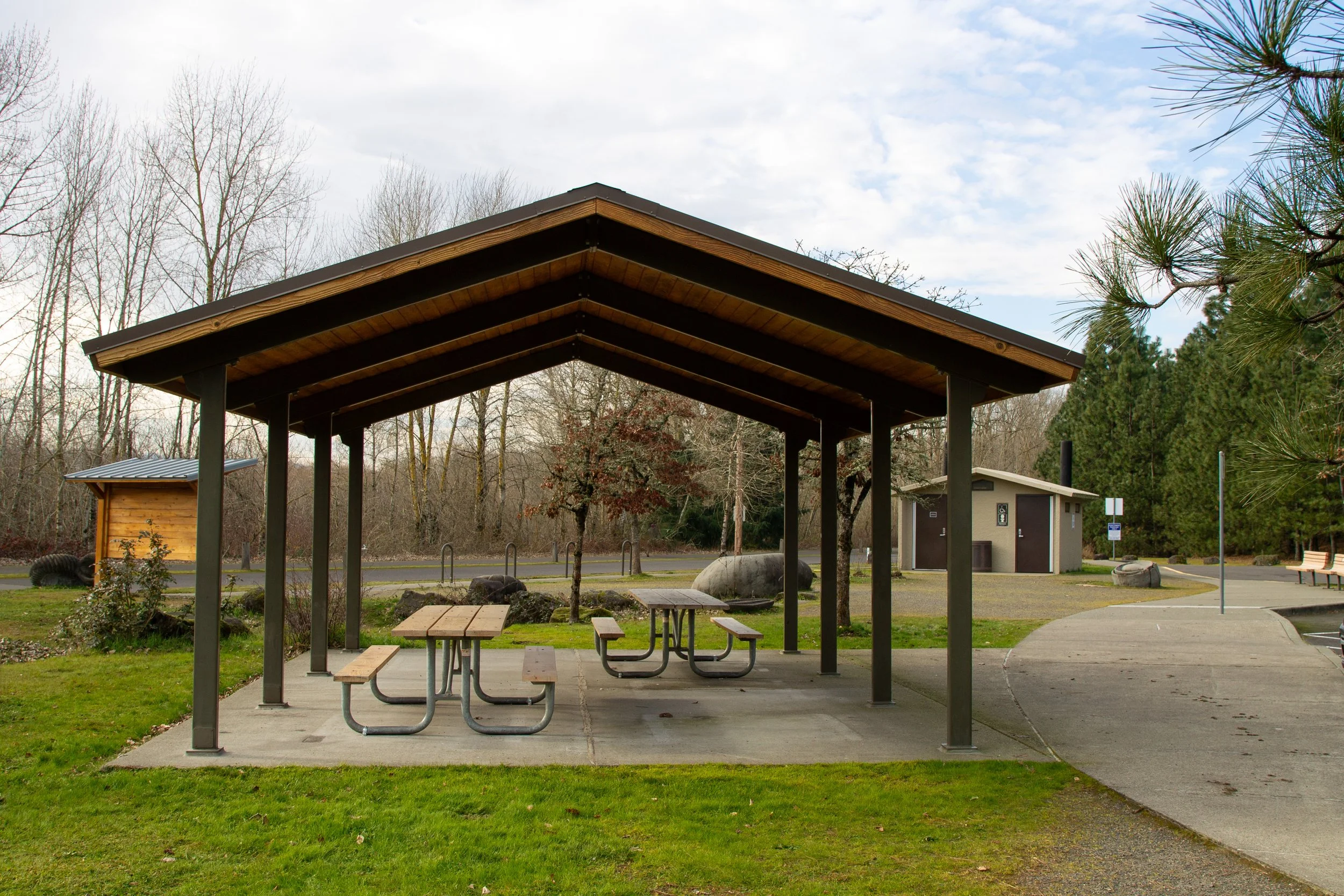
Picnic area at Smith and Bybee
Smith and Bybee Wetlands Natural Area is one of Portland’s most accessible parks. The trails are paved, flat, wide, and even. They don’t have barriers like steps. The pavement has occasional bumps and cracks that are mostly easy to avoid. Several benches are along the trails. Two optional viewpoints have metal walkways without railings.
The parking lot has a couple of ADA spaces. The restrooms and the picnic area are on flat sidewalk surfaces.
Find more information on Access Trails.
Hiking the Interlakes Trail
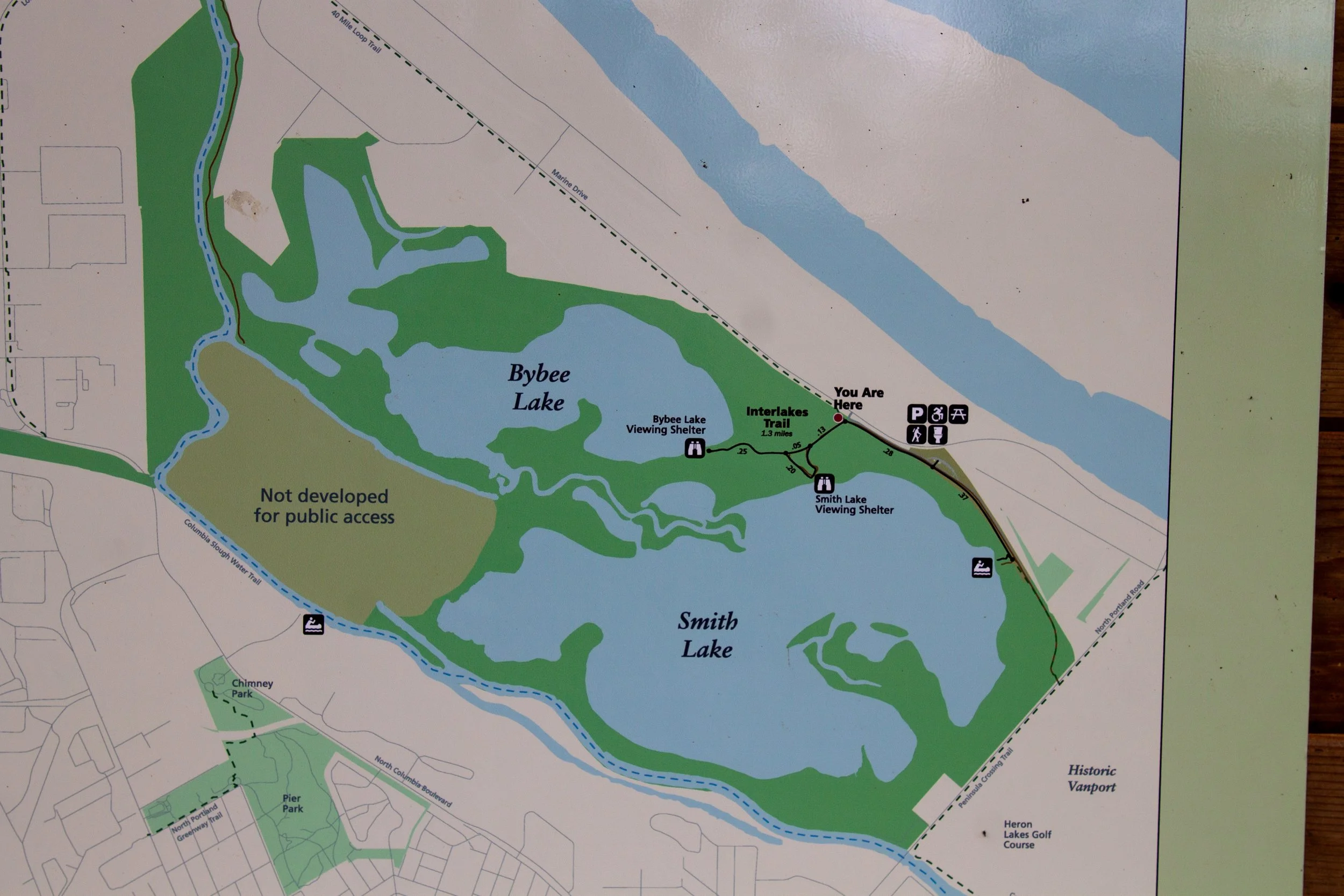
Park map
Quick info
Distance: 1.5 miles out and back
Elevation gain: Minimal
Difficulty: Easy
Pass required: None
Dog friendly: No, dogs are not allowed.
Season: All year
Details
From the parking lot, head across the road to the shared-use trail. It follows Marine Drive to the start of the Interlakes Trail, the trail through Smith and Bybee Wetlands. You’ll see a first look at Smith Lake across from the parking lot, but the best views are yet to come. Head right to make your way towards the Interlakes Trail.
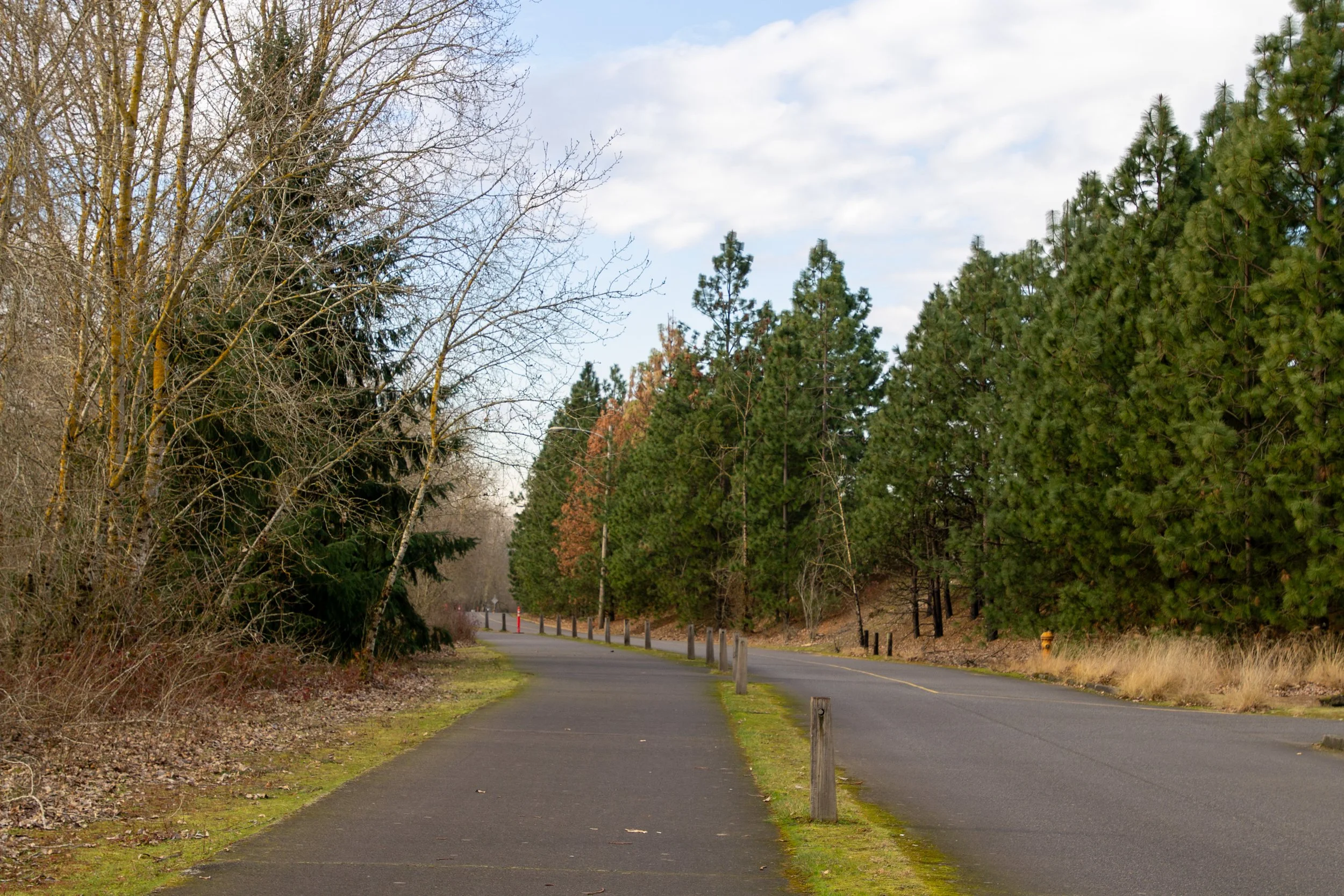
Start here
The beginning of the hike is the least pleasant and least scenic part of the journey. You’ll be walking parallel to Marine Drive, and the road noise is a nuisance. It gets better when you reach the entrance to Smith and Bybee Wetlands in a quarter mile. Take the trail that branches off to the left by the sign. It’s the Interlakes Trail. From here on, dogs and bikes are not allowed.
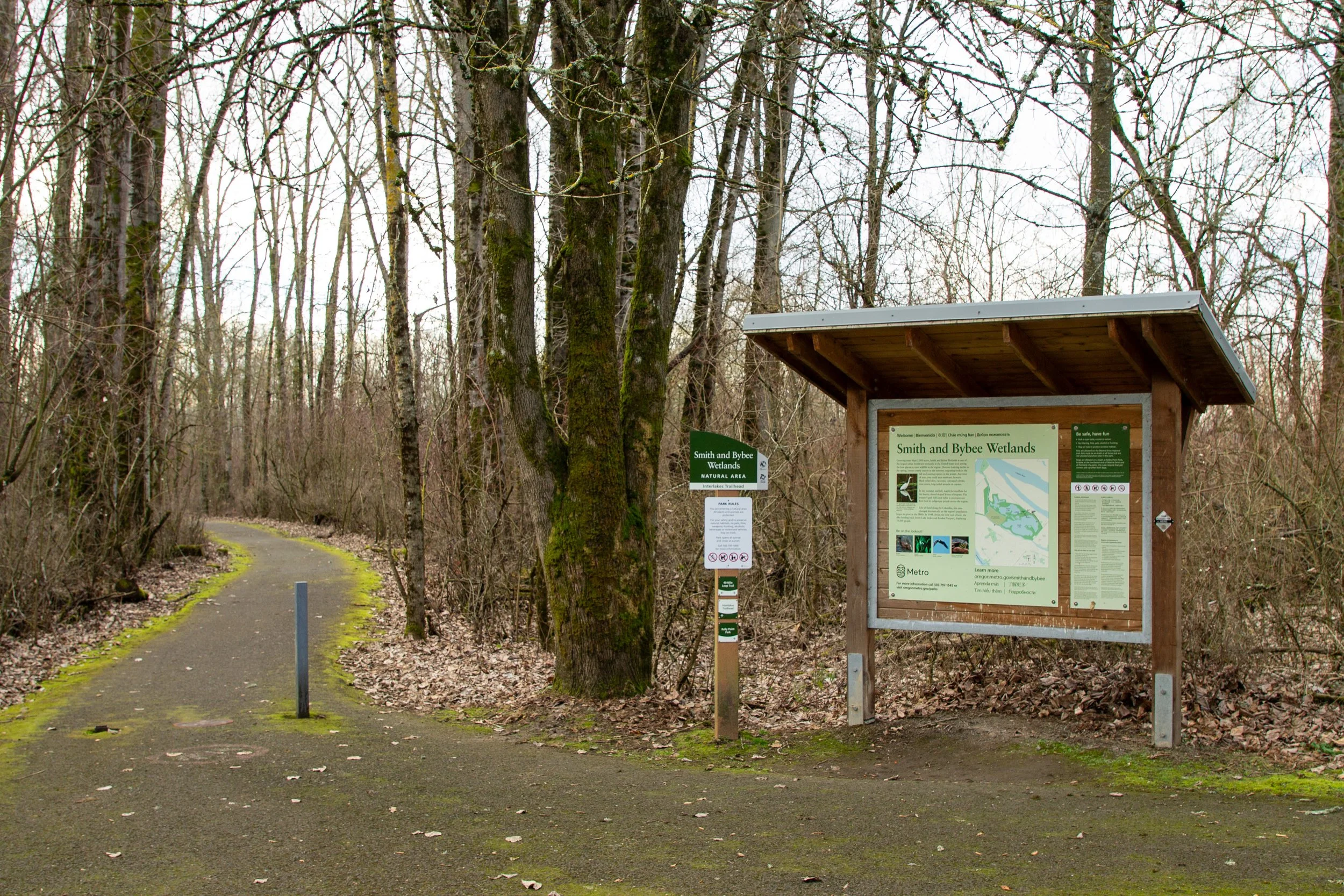
Smith and Bybee Wetlands entrance
The Interlakes Trail passes through a cottonwood forest on the way to viewpoints overlooking Smith Lake and Bybee Lake. It’s a great trail to spot wildlife. Just past the trailhead, a rabbit was hopping beneath the branches of dormant snowberry bushes, pointedly ignoring my status as an apex predator as rabbits generally do. In about 0.1 miles, you’ll reach a trail junction. To the right is a viewpoint with a bench. The Smith Lake viewpoint is to the left. The trail straight ahead goes to the Bybee Lake viewpoint.
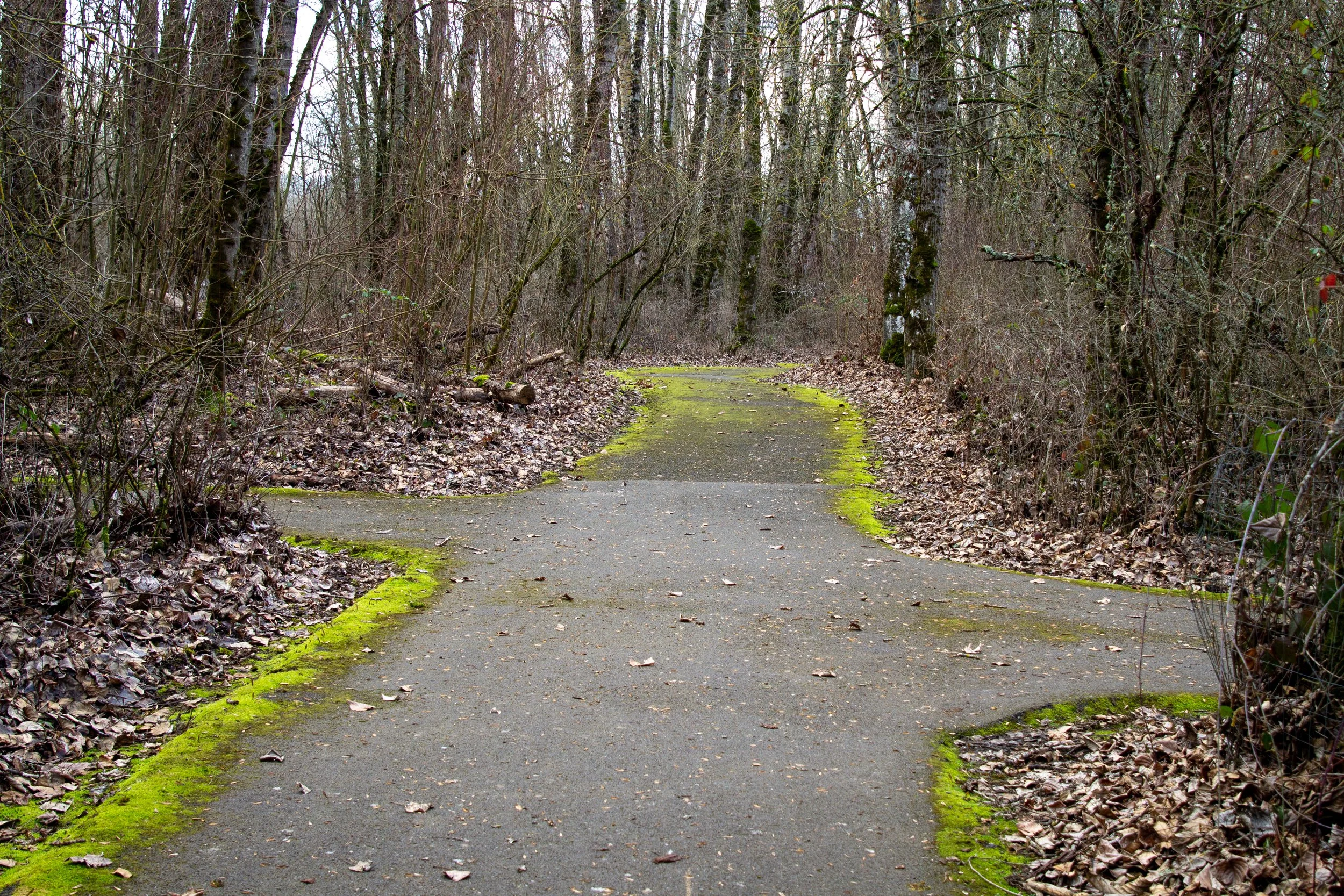
Interlakes Trail
Before heading to the lakes, it’s worth pausing at the trail junction to take in the view of the little waterway to the right. I was surprised to see it frozen on my January visit after a cold snap. No birds here this visit, but I’ve seen ducks cruising around the waterway in the past.
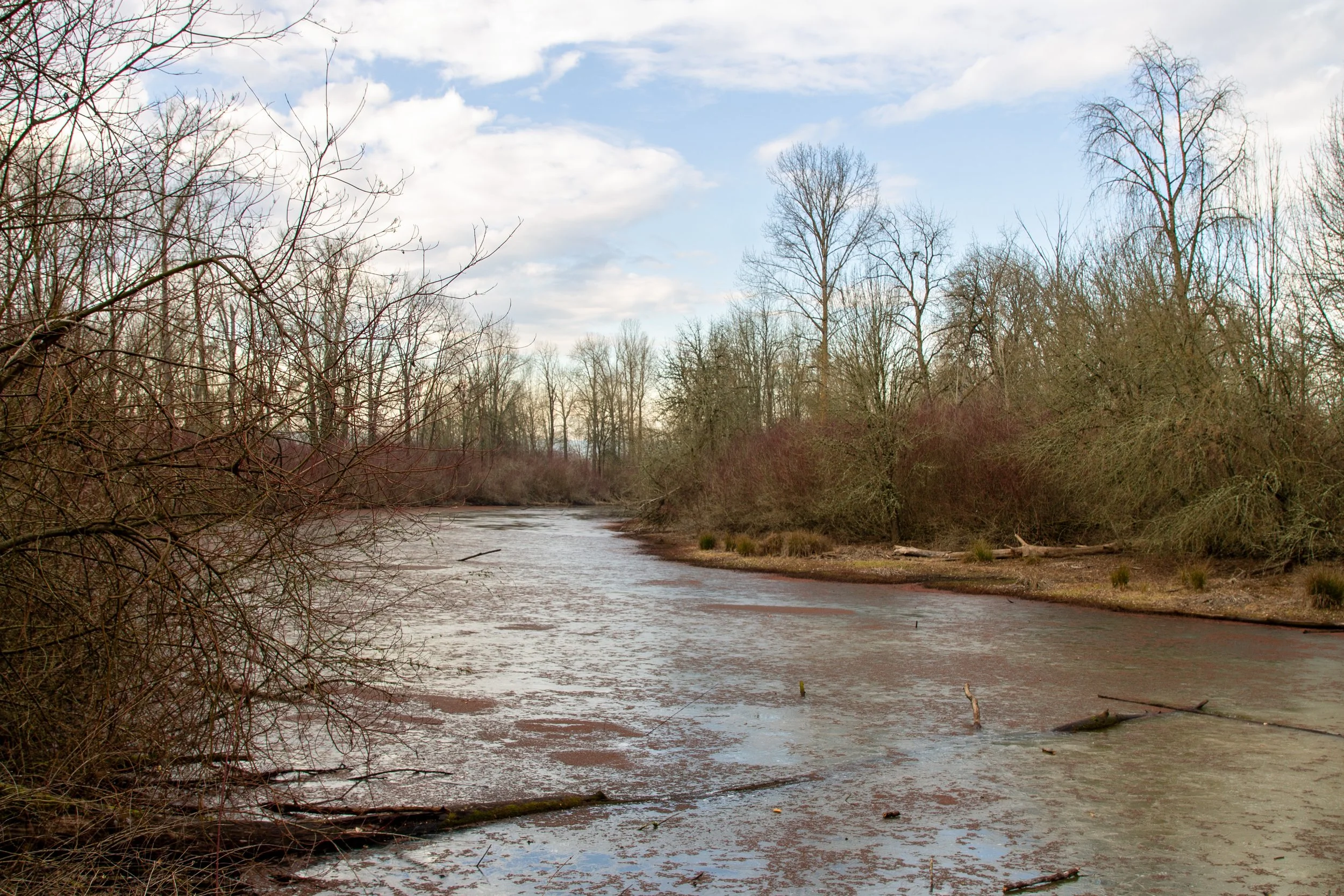
Trail junction viewpoint
From here, you can go to either lake first. We’ll head towards the Smith Lake viewpoint by taking the trail to the left. In about 0.1 miles from the junction, you’ll reach a metal walkway to a viewing shelter.
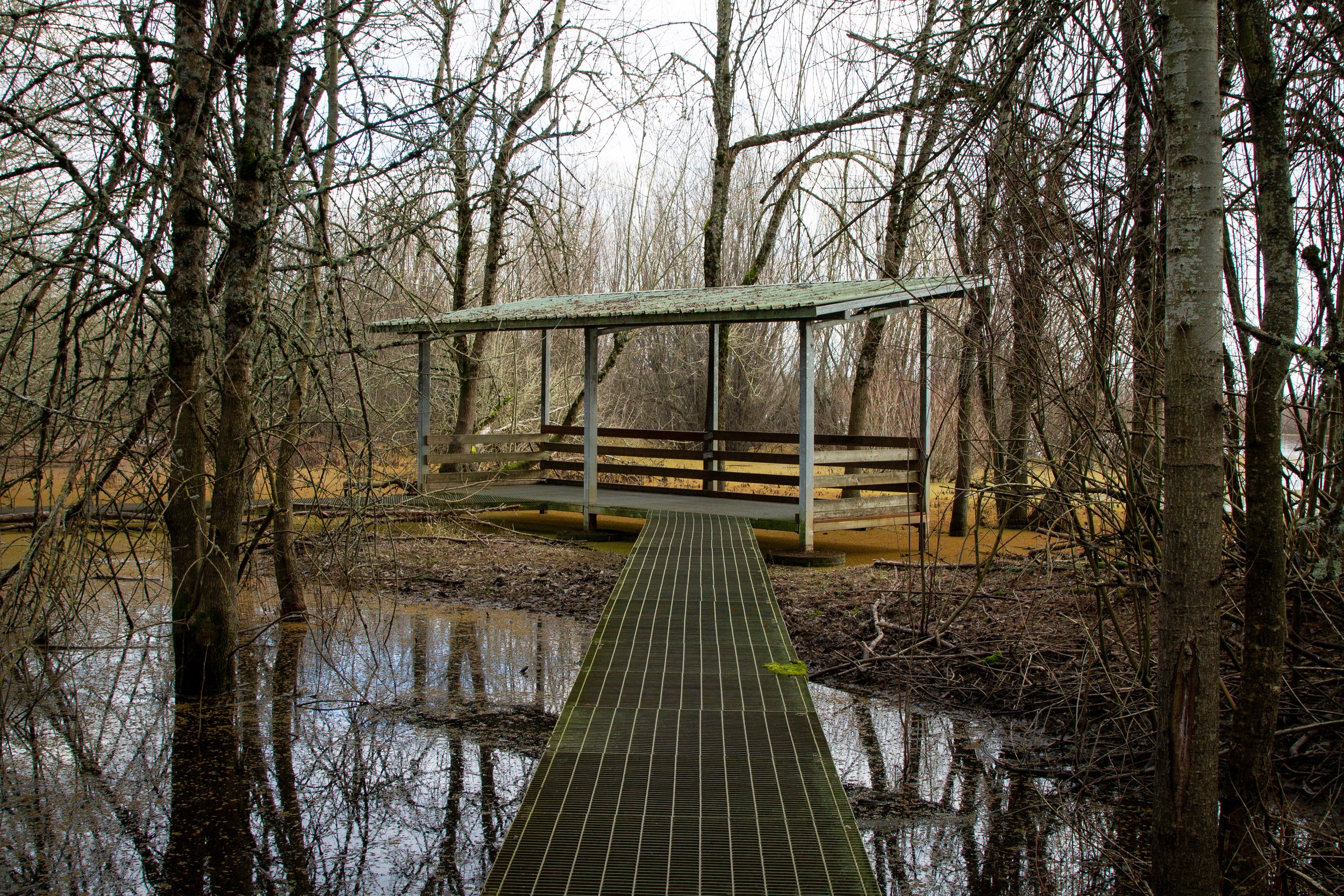
Smith Lake viewing platform
The major design flaw of the viewpoint is that the metal grating is very loud and sends the birds squawking and flying off as soon as you step on it. Even when standing still, it creaks with tiny shifts in posture. The mallards were having none of my nonsense, but the coots were unfazed.
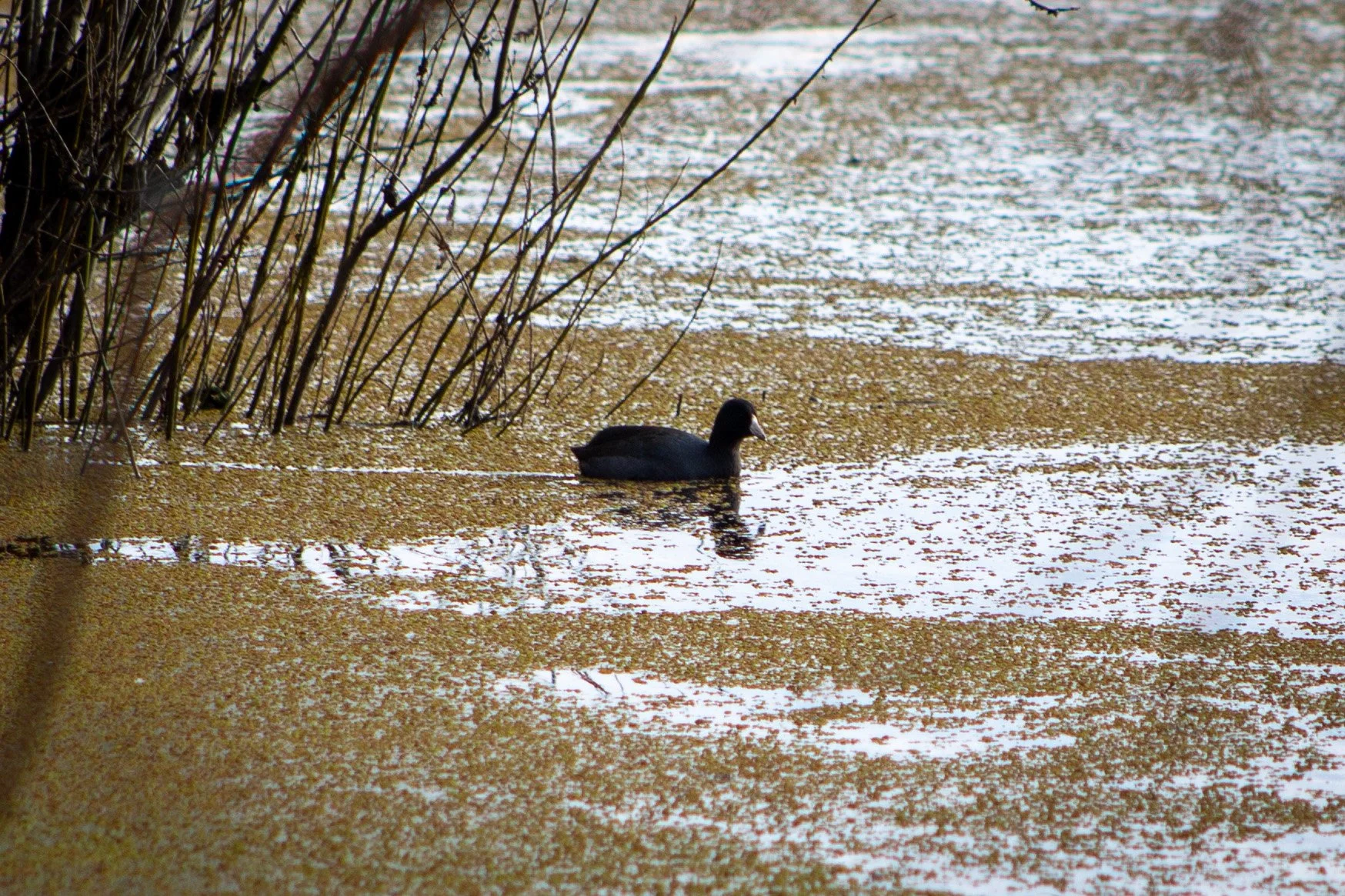
American coot in Smith Lake
Take the other metal walkway from the viewing shelter to finish the mini-loop. At the next trail junction, take a left toward the Bybee Lake viewpoint.
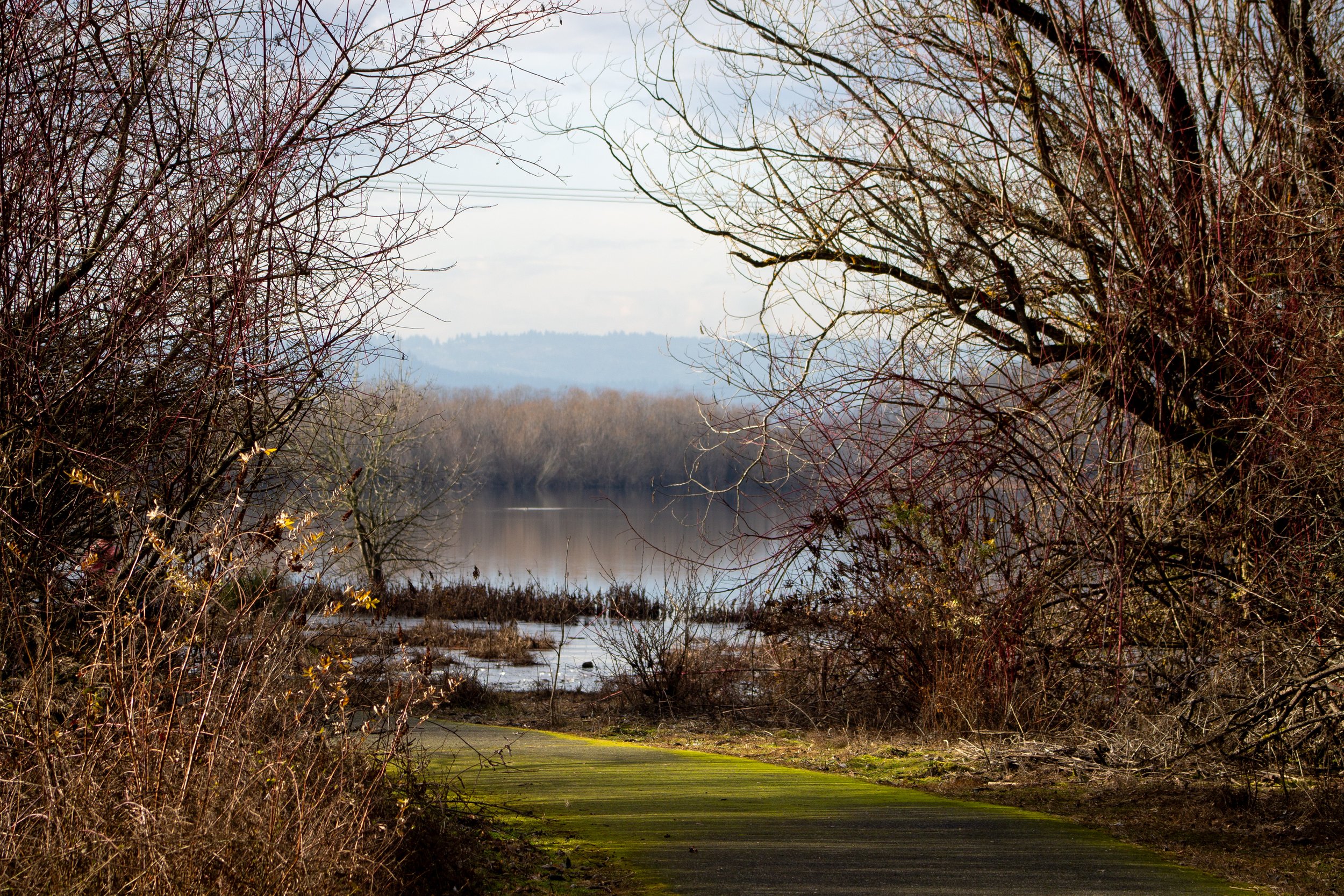
Bybee Lake
The covered viewpoint is about a quarter mile ahead. You’ll get a good look at Bybee Lake on the way. In midwinter, both lakes were full and lake-like. In late summer, Bybee Lake starts looking more like a field with a puddle in the middle.
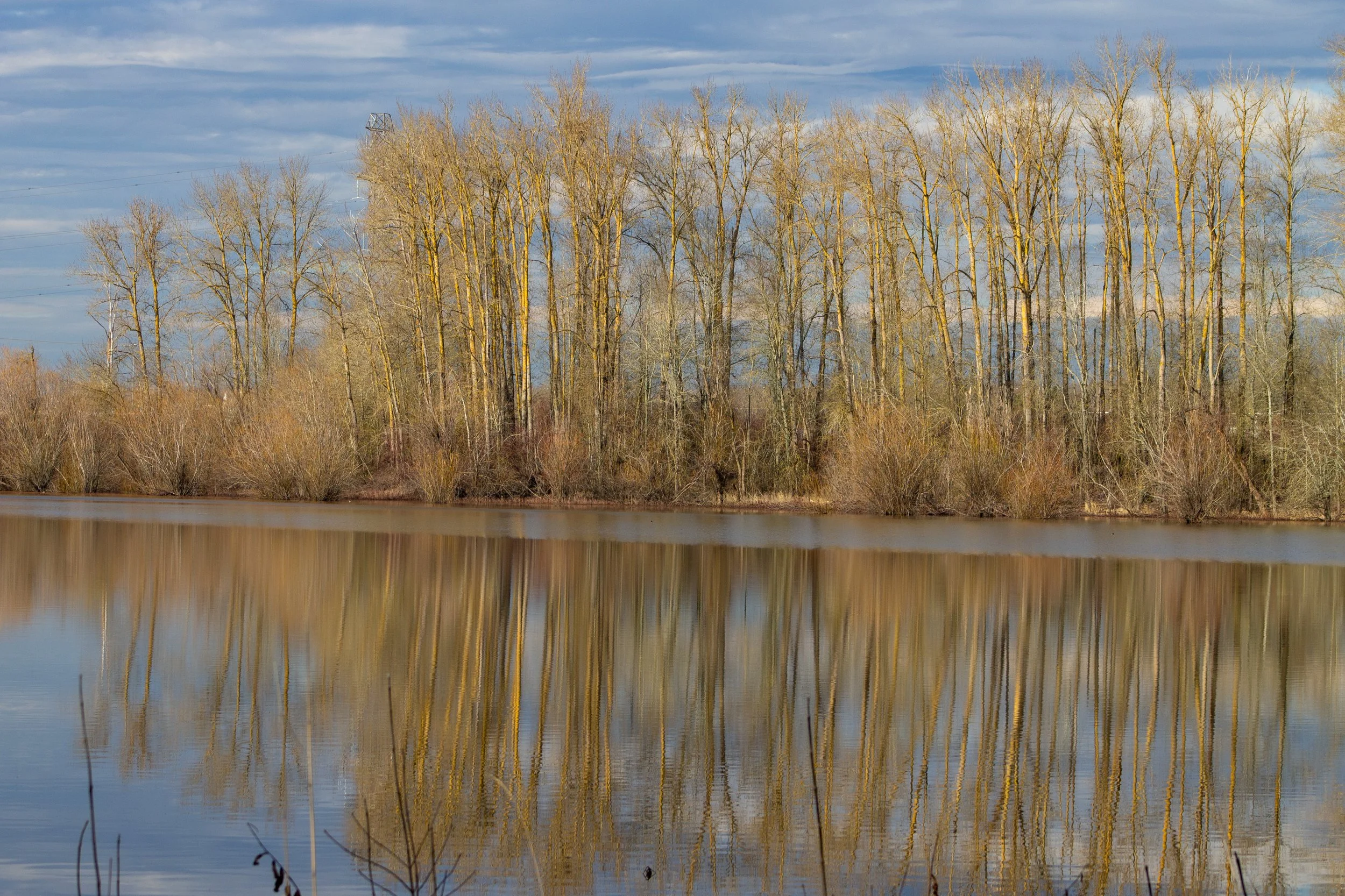
Bybee Lake
The Interlakes Trail ends at a viewing shelter overlooking Bybee Lake. This one is a little quieter when you enter it, so the birds won’t necessarily leave when you arrive.
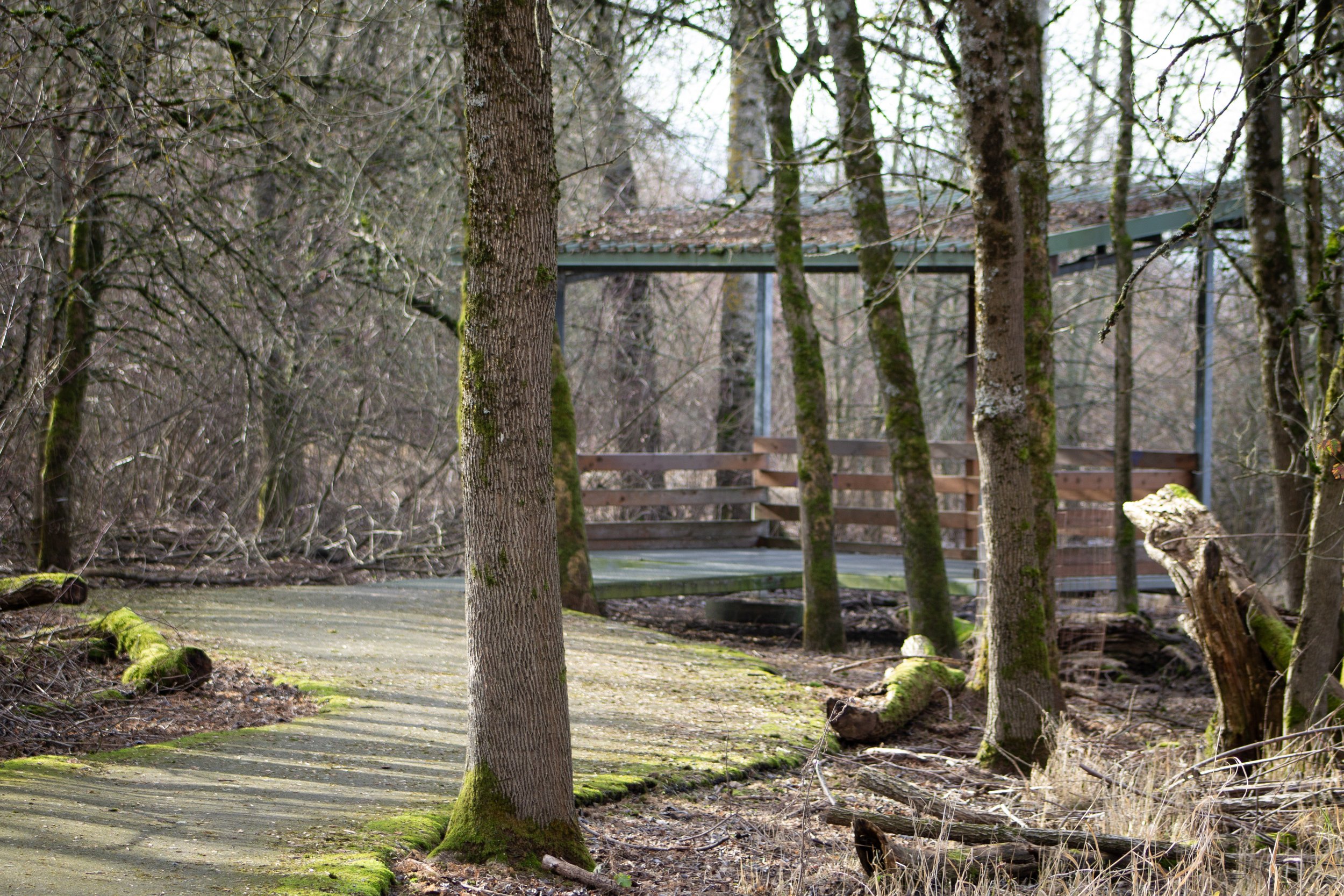
Bybee Lake viewing shelter
The birds you see in Smith and Bybee Wetlands depend on a combination of season, luck, and waiting. I’m mediocre at bird identification and lack the patience for anything as serious as a checklist, but I’ve spotted birds here whenever I’ve gone. On my January visit, a few sparrows and spotted towhees were hopping through the leaf litter. An impressive bald eagle’s nest was in the trees across Bybee Lake. Oh, and crows overhead. So many crows.
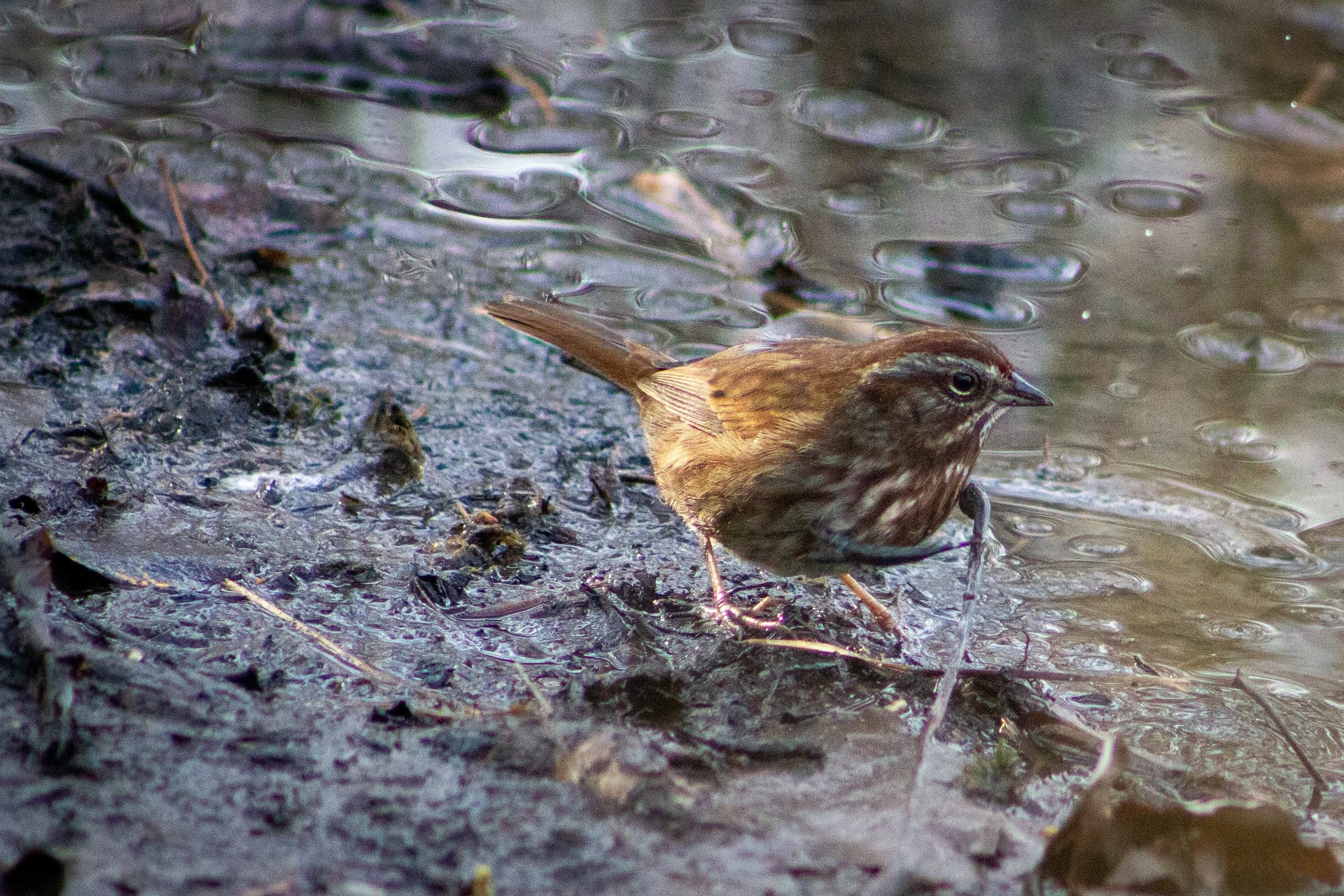
Song sparrow at Bybee Lake
A faint footpath continues a short distance past the end of the paved trail. About fifty feet past the viewing shelter is where I saw Northern shovelers and mallards swimming in Smith Lake.
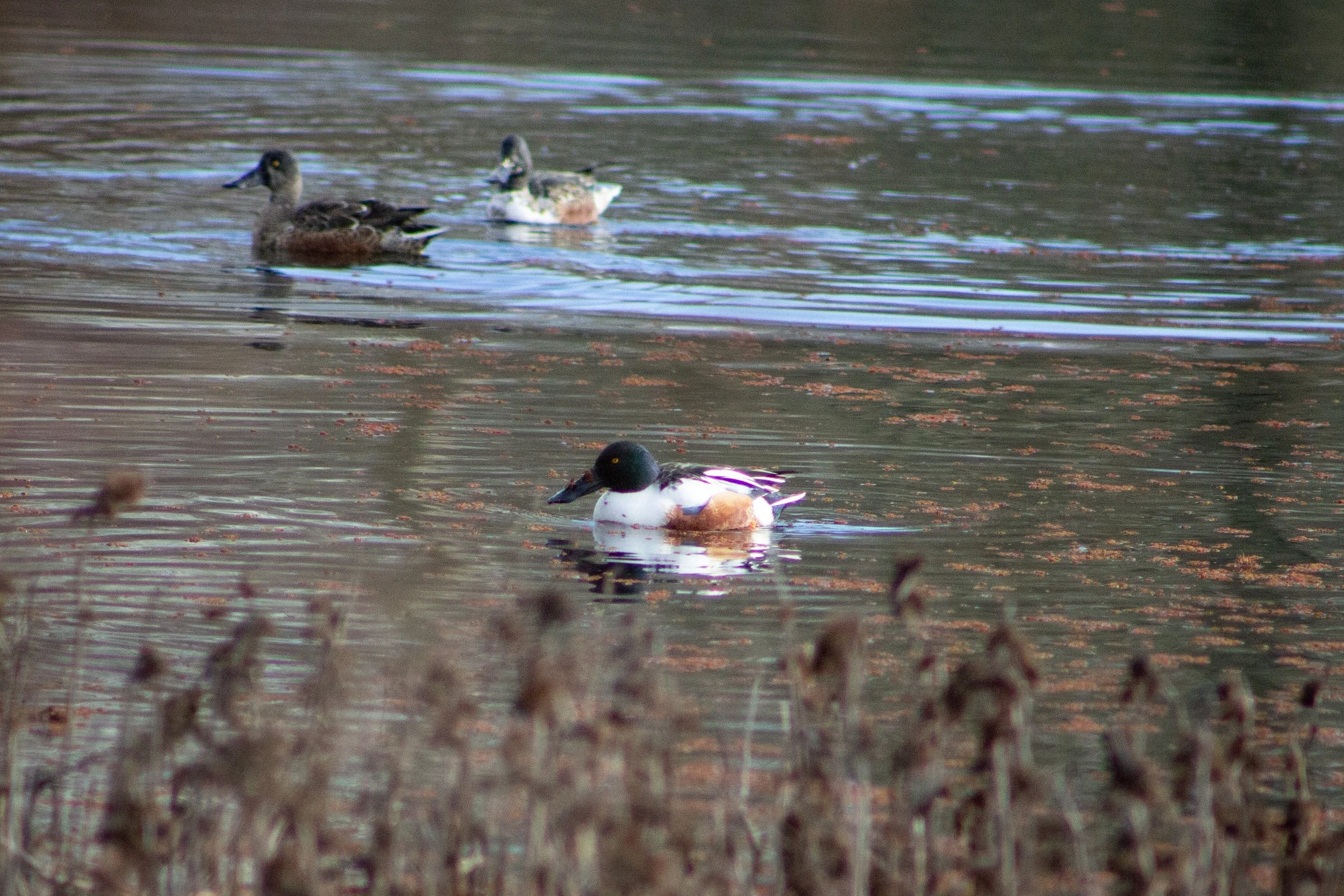
Northern shoveler at Smith and Bybee
One of the coolest potential bird sightings at Smith and Bybee is the white pelicans. Your best chance of seeing them is in late summer. I saw a flock once, along with some egrets, wading in the marsh on a September visit.
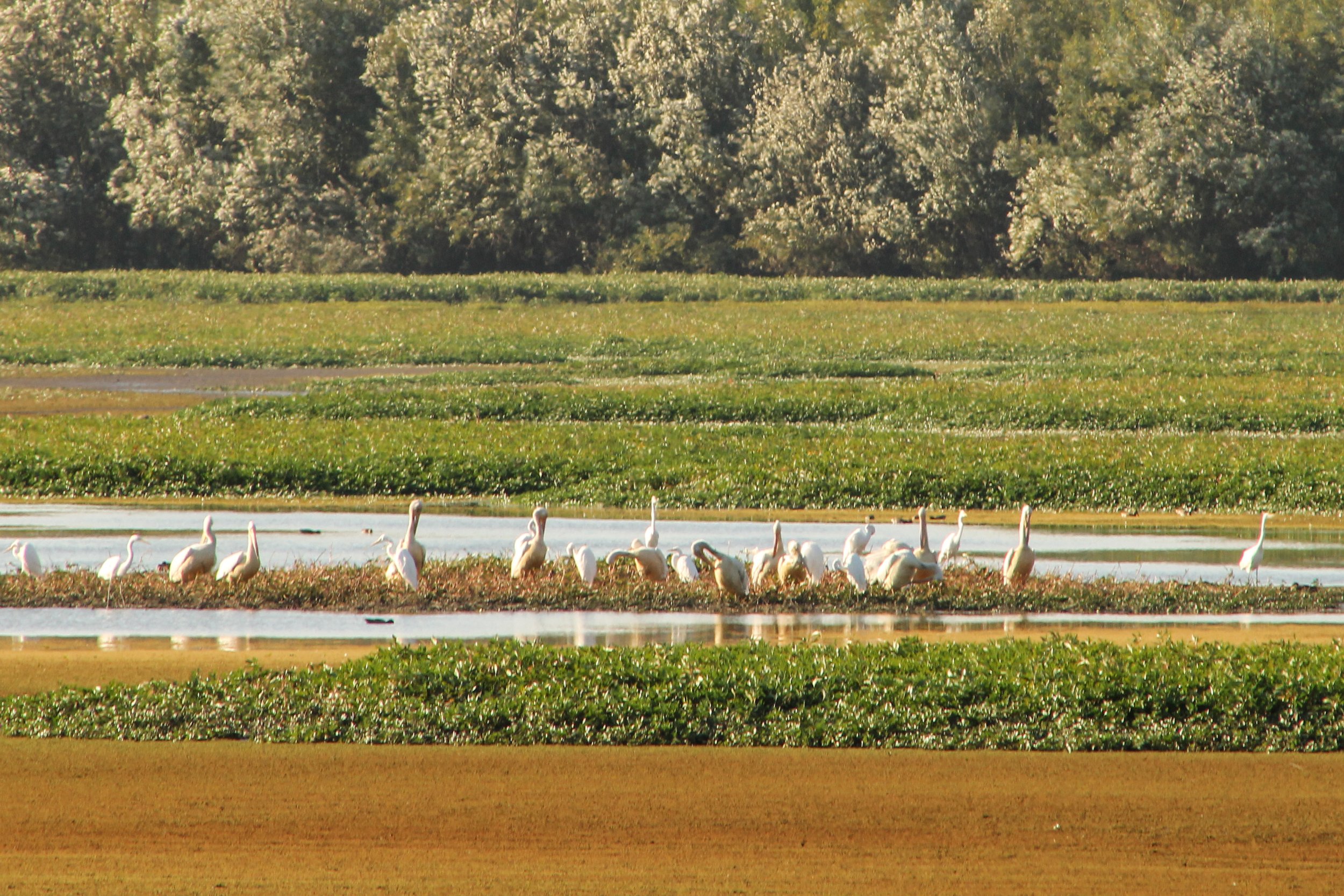
White pelicans in Bybee Lake
Other birds to look out for are bald eagles, ospreys, herons, ducks, geese, grebes, owls, sandpipers, and a variety of songbirds. You may notice some of the trees have protection around their bases, which is to fend off beaver attack. Other potential wildlife sightings include Western painted turtles, river otters, mink, and deer.
Boat launch
Smith and Bybee Wetlands Natural Area doesn’t allow motorized boats. You can launch a kayak or canoe from mid-April to late June, when the water levels are sufficient for paddling. To find the boat launch, head back to the parking lot. The easiest way to reach it is to move the car and park in one of the spots along the road near the launch spot. It’s about 0.3 miles from the main parking lot, in the direction opposite the Interlakes Trail.
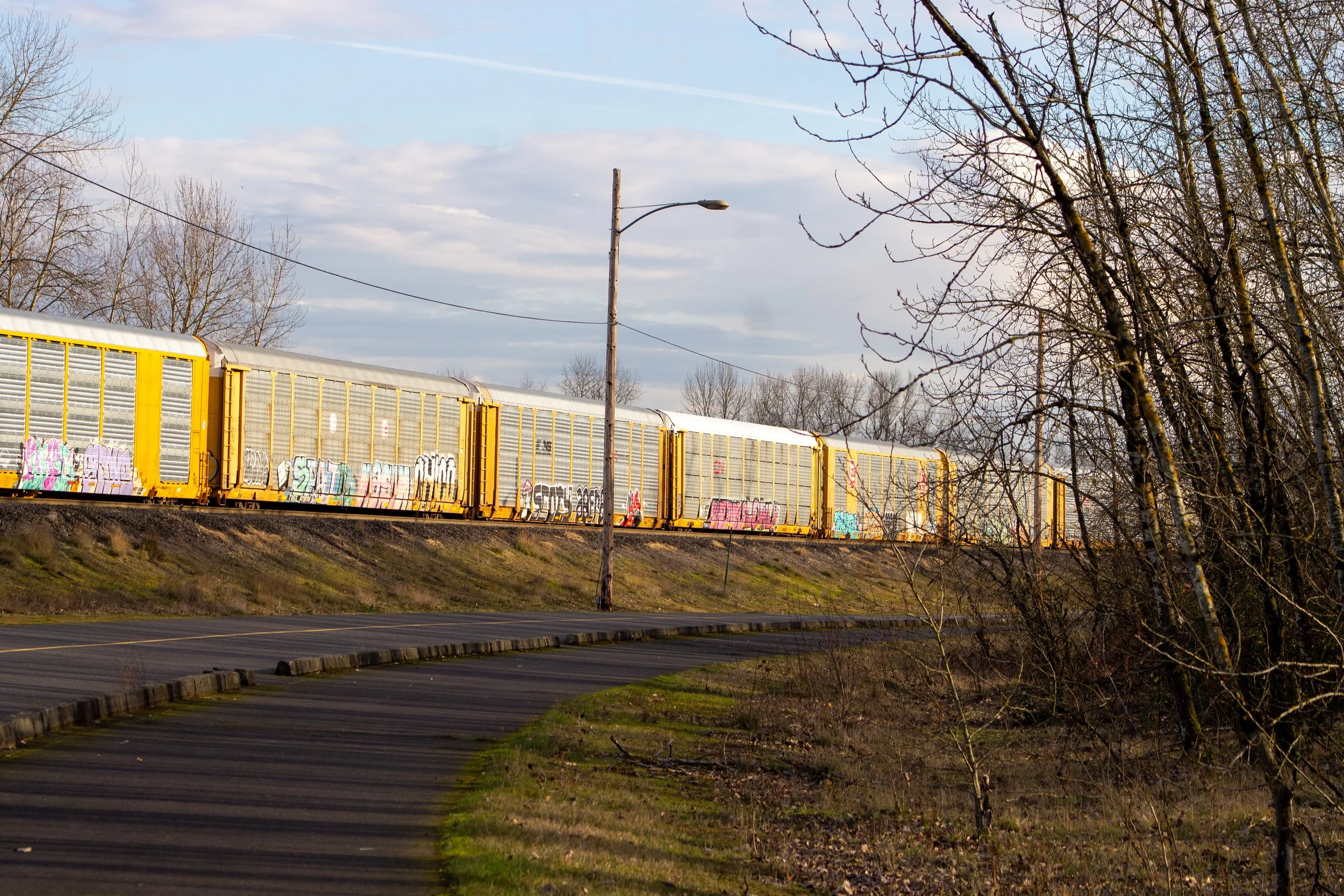
Trail to the boat launch
From the paved trail, you’ll see a gravel path down to Smith Lake, which is where to launch your kayak or canoe.
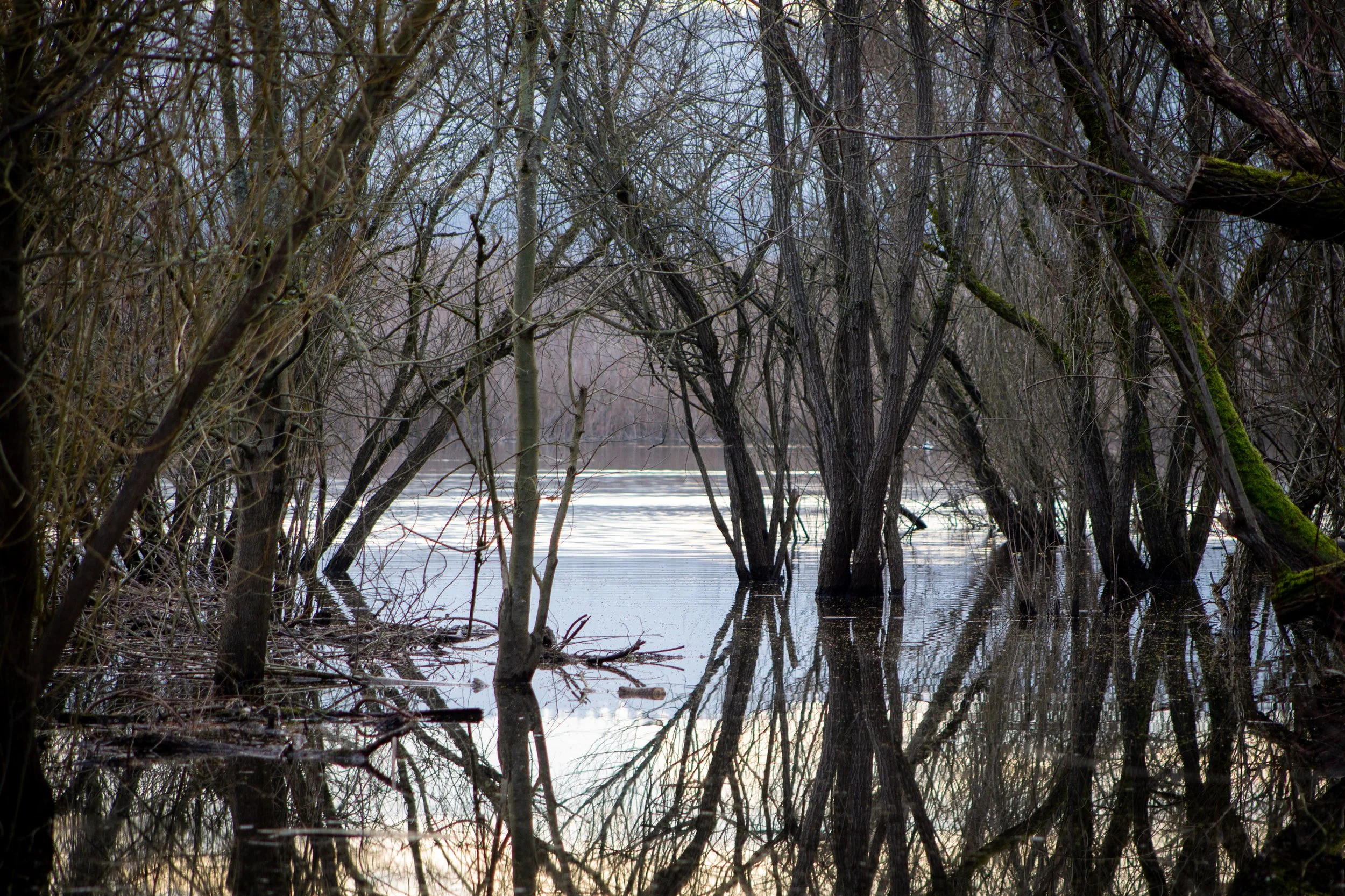
Boat launch
If you continue walking past the boat launch, the paved trail turns into a pedestrian-only road, but it’s not very scenic. Another quarter mile or so, you reach a road through an industrial part of town. The Interlakes Trail is the highlight of the area for hikers.
40-Mile Trail

Kelly Point Park
On the way to the Interlakes Trail in Smith and Bybee Wetlands, you’ll see a sign marking the 40-Mile Trail. This shared-use trail is an ambitious route around the Portland area. The whole thing would be more than most people would want to take on, including me, but a portion of it, I think, would make a fun afternoon excursion. Although you can’t bring bikes on the Interlakes Trail, they can be on the trail along Marine Drive. After visiting Smith and Bybee Wetlands on foot, biking a little over three miles on the Marine Drive trail would bring you to Kelly Point Park at the confluence of the Columbia and Willamette Rivers.
Getting there
Address: 5300 N Marine Dr, Portland, OR 97203
Smith and Bybee Wetlands has a free parking lot just off Marine Drive in North Portland. You can also get there by taking the #11 bus, which stops just outside the park.
A nice paved bike path leads to the Smith and Bybee Wetlands. You can bike there and lock your bike on the rack while you hike.
Explore nearby
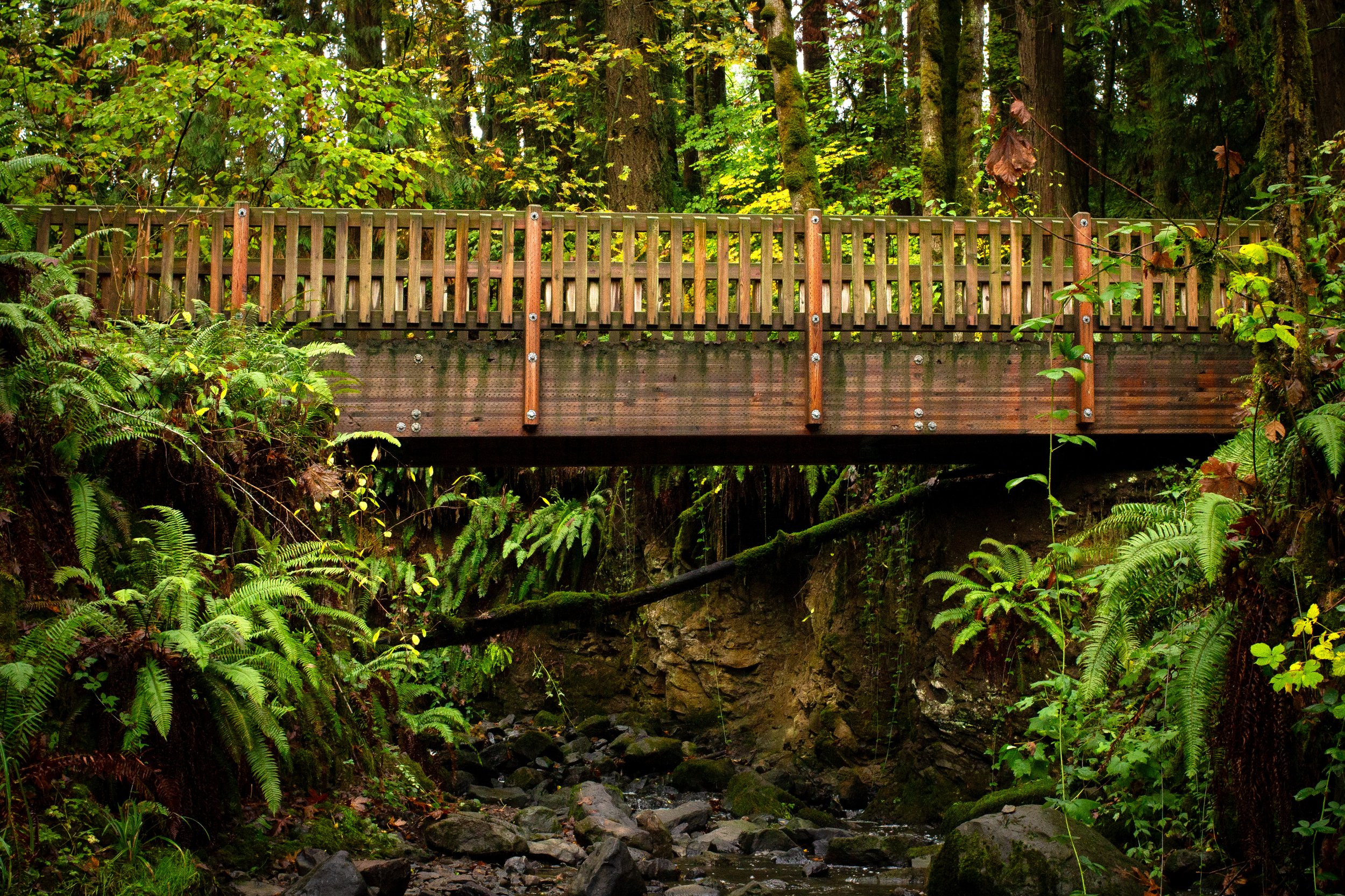
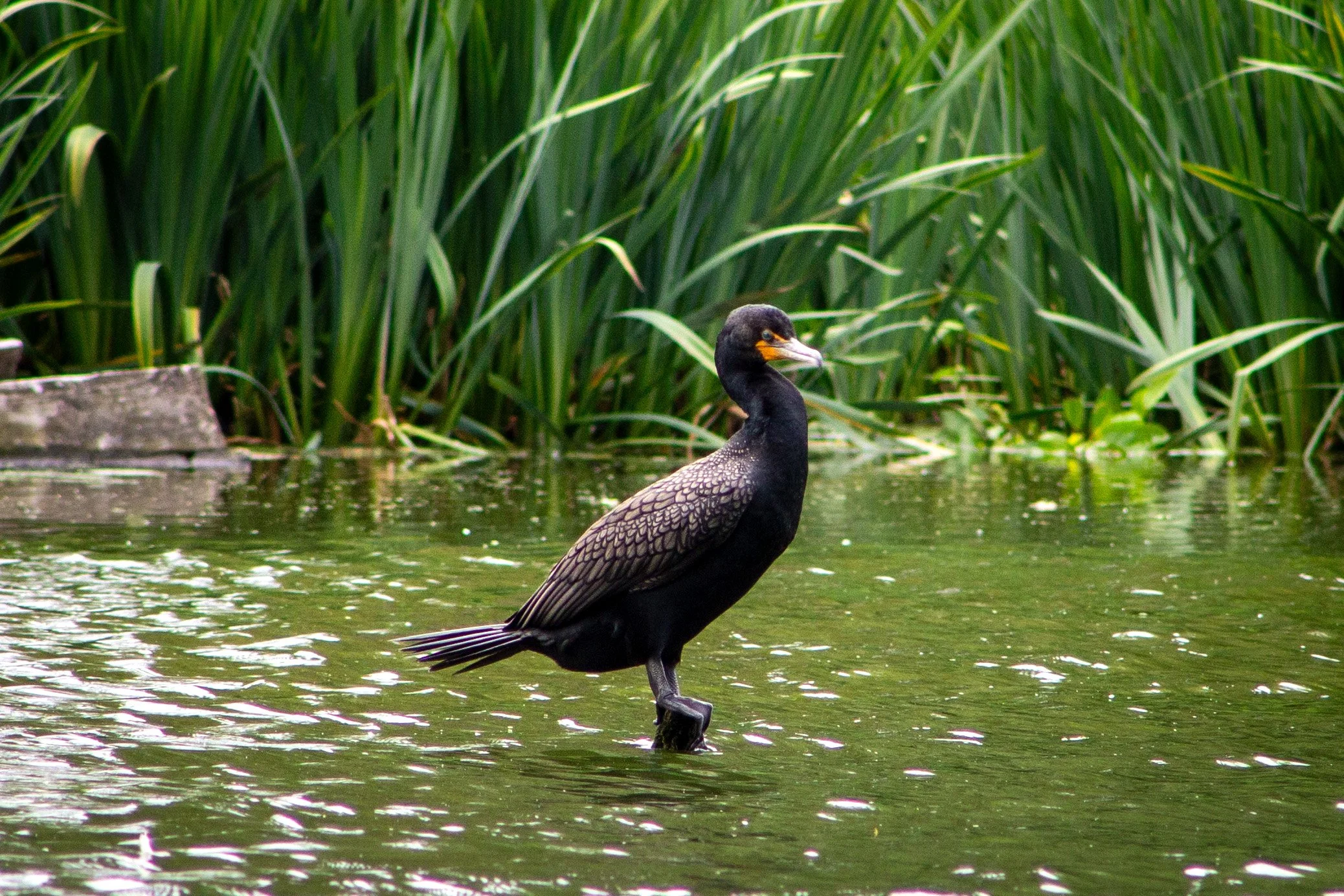
Find more wildlife hotspots near Portland.

Check out the hikes on Sauvie Island.