
7 Fun Things to Do at Yaquina Head Outstanding Natural Area
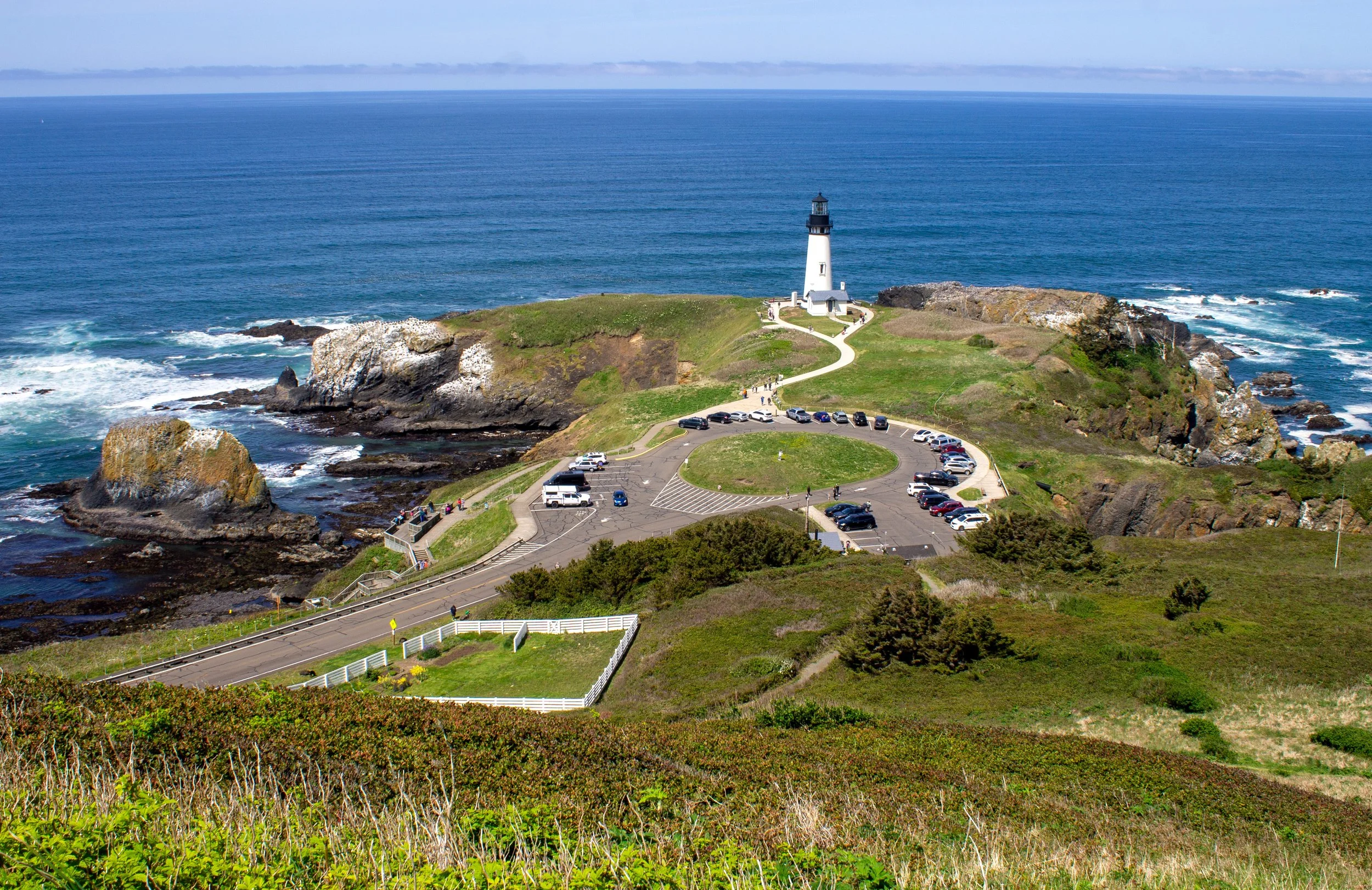
Yaquina Head Outstanding Natural Area has everything wild and wonderful about the Oregon Coast packed into one park. Here, you can find a picturesque lighthouse, towering basalt cliffs, crashing ocean waves, flocks of seabirds, seals, tidepools, and perhaps a whale sighting or two. When I visited for the first time years ago, it blew me away, and now I stop by every time I’m in Newport. Here’s everything you need to know to plan your trip to Yaquina Head Outstanding Natural Area.
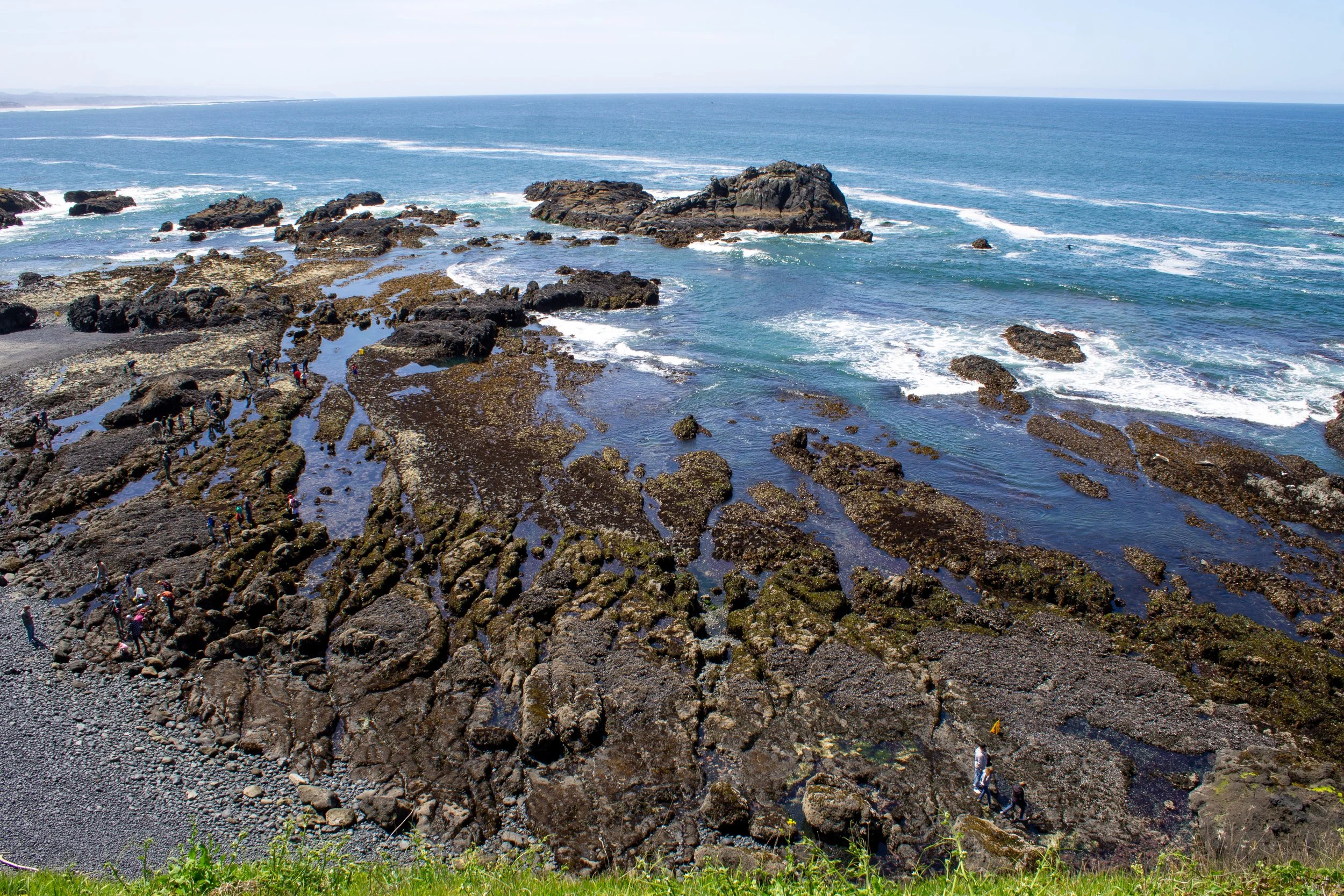
Tidepools area at Yaquina Head Outstanding Natural Area
Know before you go
It costs $7/vehicle to visit Yaquina Head Outstanding Natural Area. You can buy a day pass at the park entrance. The Oregon Coast Passport or America the Beautiful Passes are also accepted.
Visit at low tide if you can to see some of the best tidepools on the Oregon Coast.
Leashed dogs are welcome in Yaquina Head Outstanding Natural Area, but are not allowed indoors, around the lighthouse, or near the tidepools.
There are several restrooms in the park: at the Interpretive Center, next to the lighthouse parking lot, and next to the Quarry Cove parking lot.
Consider bringing binoculars for better wildlife viewing.
All plants, animals, and rocks are protected in the park. Please do not remove anything during your visit.
1. See the Yaquina Head Lighthouse
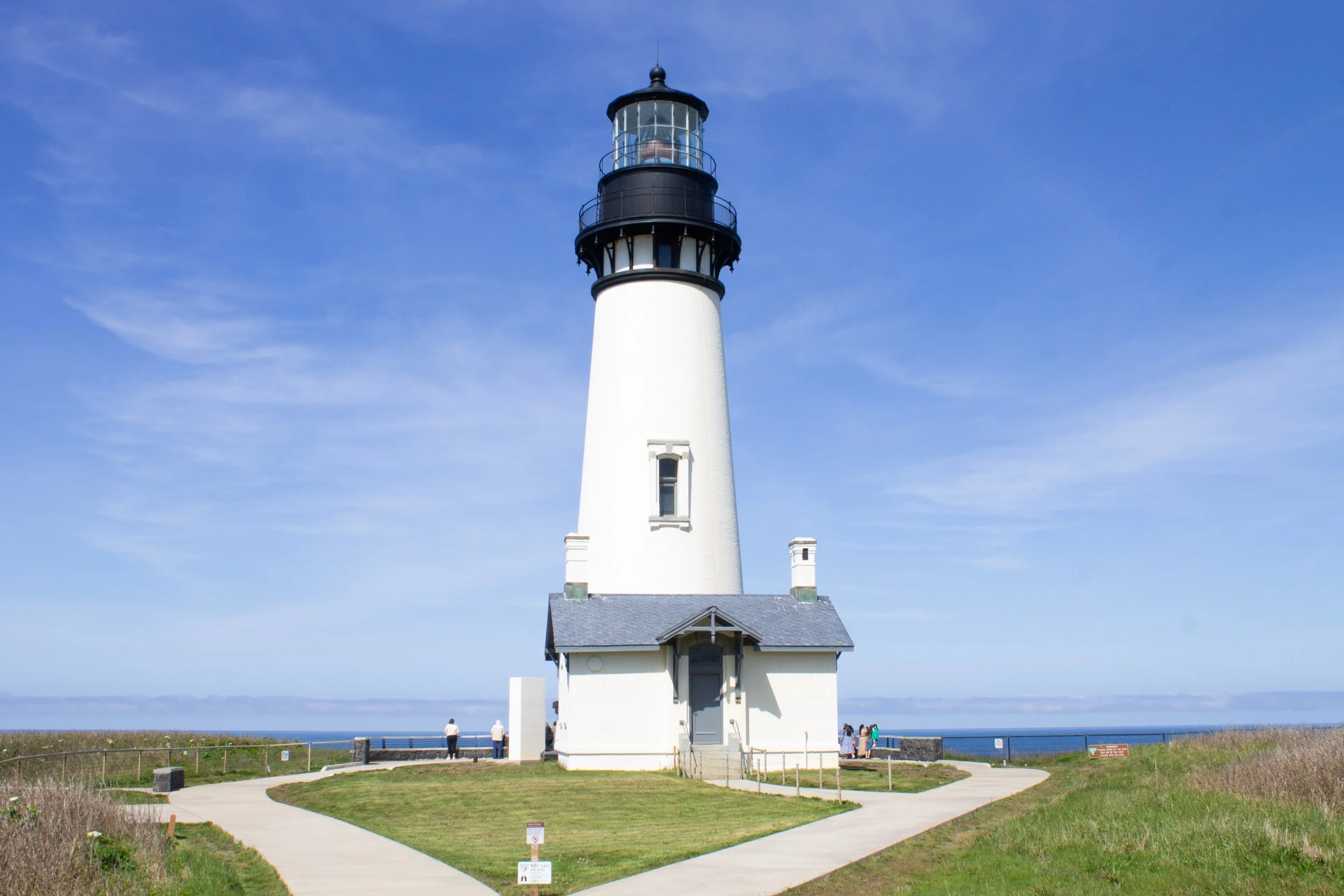
Yaquina Head Lighthouse
Yaquina Head is a long, narrow basaltic headland that extends nearly one mile out into the Pacific Ocean. If you journey to the end of this headland, you’ll find Yaquina Head Lighthouse surrounded by wave-buffeted cliffs and panoramic views of the water. At 93 feet, it is Oregon’s tallest lighthouse tower. It’s also one of the oldest lighthouses in Oregon and has been helping ships with navigation since its completion in 1873. In its rugged surroundings, Yaquina Head Lighthouse captures all the romance of coastal lighthouses, appearing at once timeless and isolated, majestic and lonely.
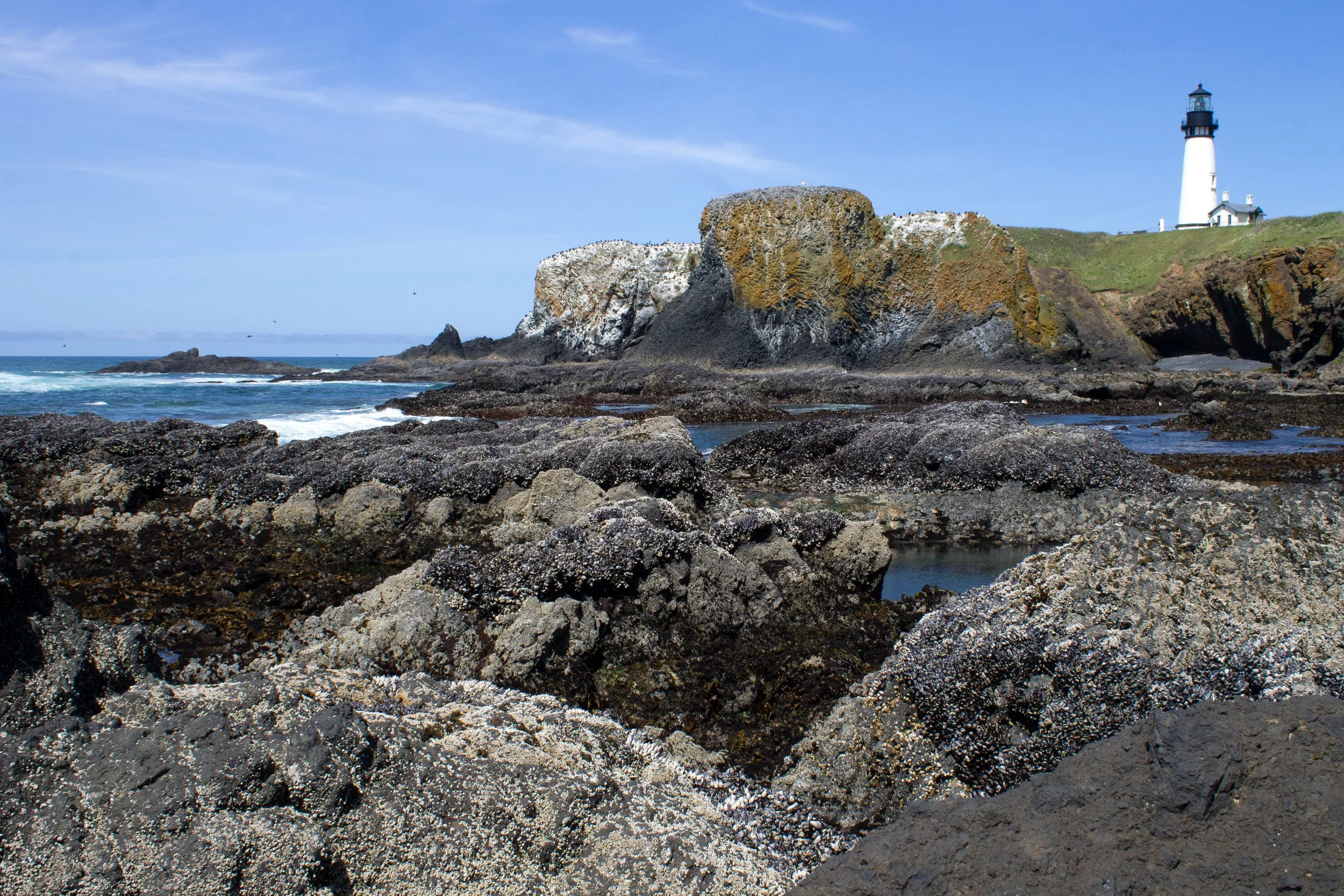
Yaquina Head Lighthouse from Cobble Beach
You can see the exterior of the lighthouse and the ocean views around it anytime the park is open. The short walk from the parking lot is on flat, even sidewalks. There are benches available to sit and watch the birds just offshore on Colony Rock and to look for whales out in the ocean waves. Rangers occasionally lead tours inside the lighthouse. Find more information on tours here.
2. Look for birds nesting on Colony Rock
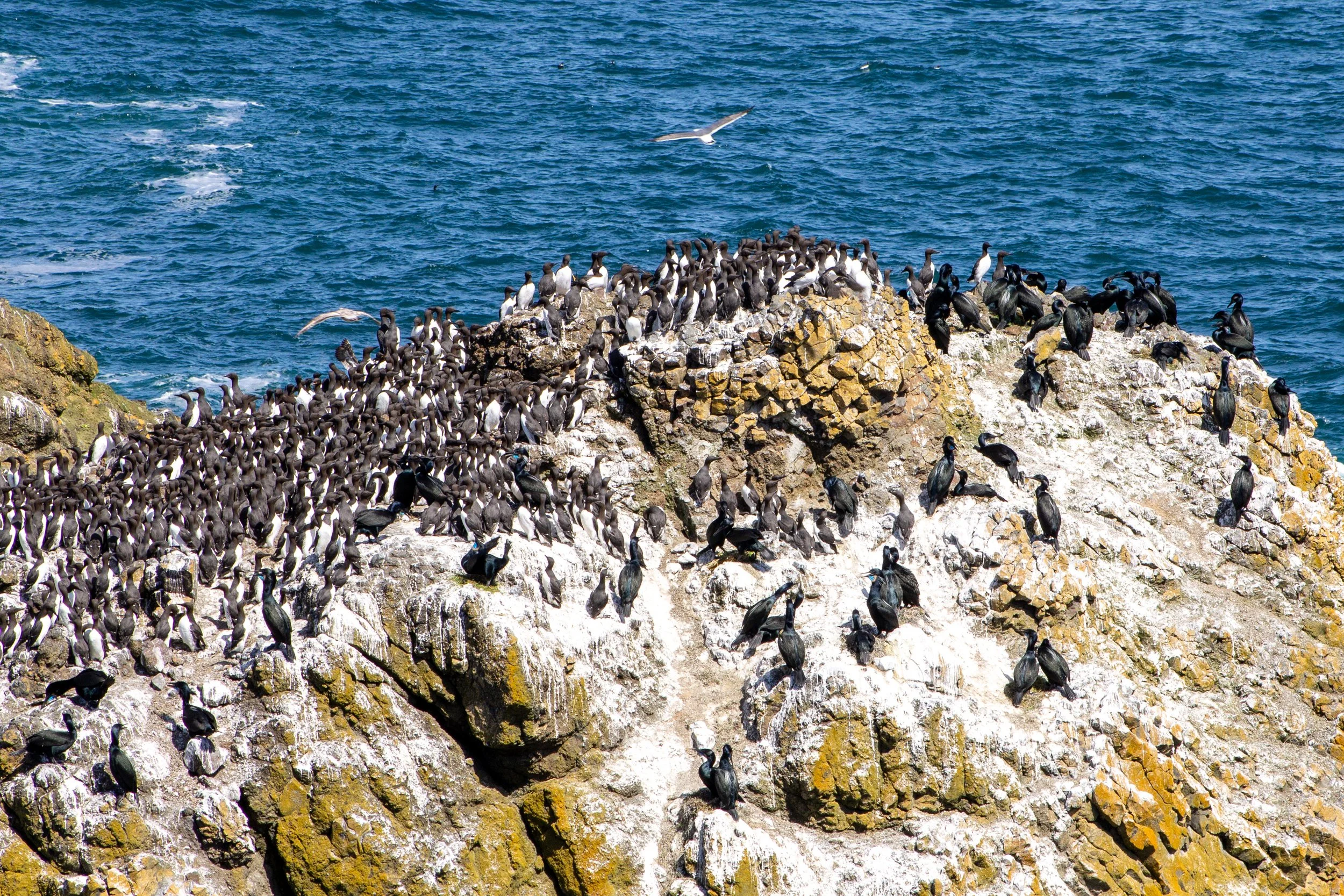
Common murres and cormorants on Colony Rock
Every year, thousands of seabirds come to nest at Yaquina Head Outstanding Natural Area. Late spring and early summer are the best times to look for large colonies of birds perched on the cliffs and sea stacks around Yaquina Head. Among the largest flocks are the common murres, black and white seabirds that look a little like small penguins. You may also see cormorants, gulls, pelicans, oystercatchers, pigeon guillemots, and bald eagles. If a group of nesting birds takes off suddenly, look around for a bald eagle. Chances are, the birds are chasing one away from the nesting sites.
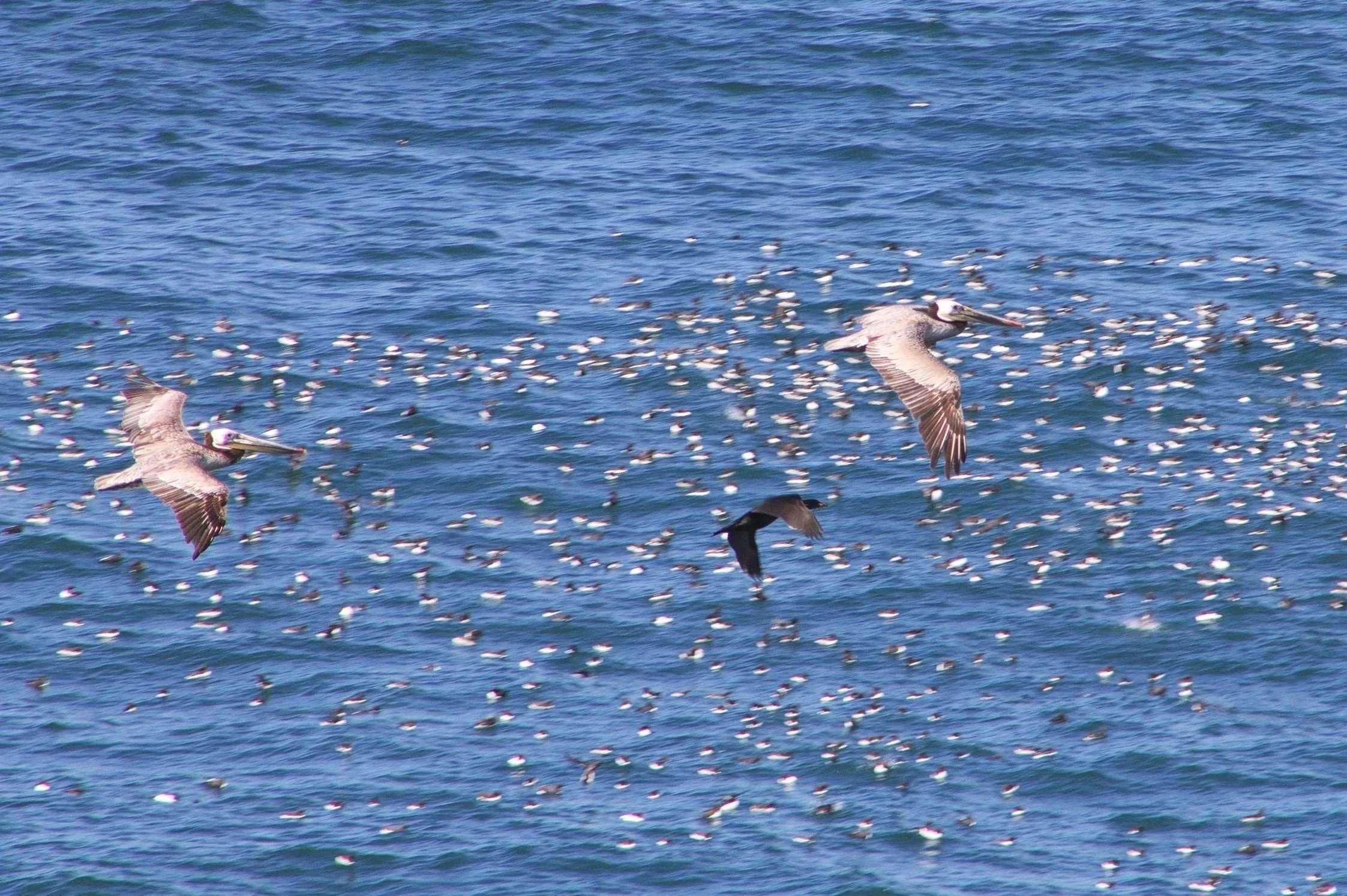
Pelicans and a cormorant fly over a group of common murres
Even if you visit outside of the nesting season, there’s a decent chance of spotting birds at Yaquina Head. The sea stacks, like Colony Rock near the lighthouse, are a good place to start your search. It’s also worth heading down to Cobble Beach for more birdwatching. Cormorants often hang out on the rocks surrounding the beach. I also saw a group of Harlequin Ducks there once on an otherwise foggy, bird-less day.

Harlequin Duck near Cobble Beach
Birdwatching pro-tip: the Interpretive Center at Yaquina Head has a whiteboard that lists the day’s wildlife sightings. Depending on weather and staffing, rangers may also be out in the park to help point out wildlife.
3. Visit the tidepools at Cobble Beach
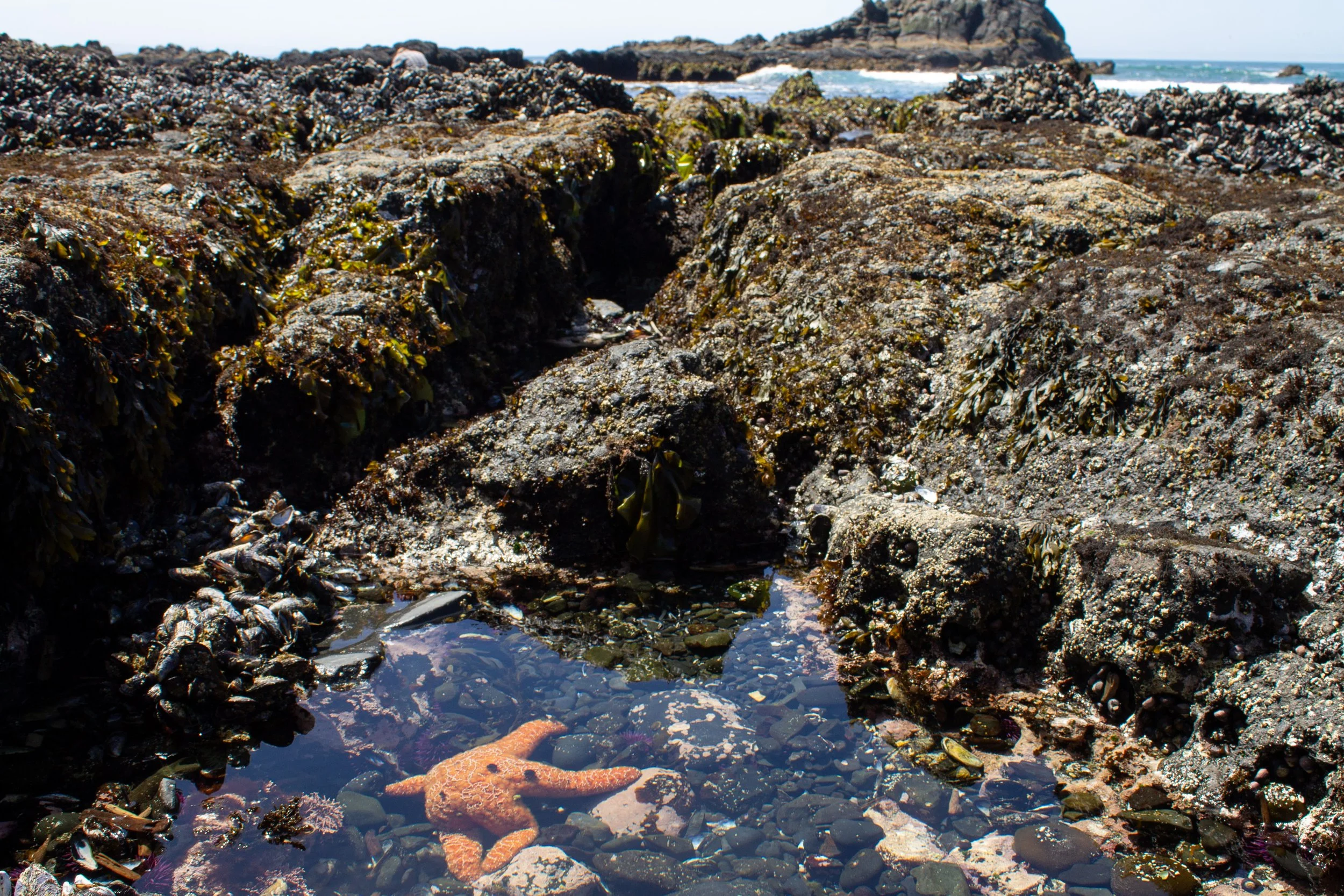
Tidepool at Cobble Beach
If you can, visit Yaquina Head at or near low tide. The tidepools at Cobble Beach are some of the best and easiest to reach anywhere on the Oregon Coast. From the parking lot near Yaquina Head Lighthouse, look for a staircase that leads down to the rocky beach at the base of the headland. The rocks, or cobbles, on this beach are basalt that has been worn smooth over the years by ocean waves. Make the short, clumsy journey over the cobbles to reach ancient volcanic breccia covered with intertidal life.

Purple sea urchins at Cobble Beach
By treading carefully on patches of bare rock, you can reach dozens of tidepools, each containing a unique world. Hermit crabs scurry over sea stars. Tiny fish dart through the clear pools to hide in clumps of kelp and seaweed. Small purple shore crabs hide in the cracks between rocks. Keep an eye out for clams, barnacles, anemones, chitons, spiny sea urchins, and nudibranchs. While you’re enjoying the tidepools, look for seals and seabirds on the rocks around the beach. Signs will indicate safe areas to explore the tidepools while avoiding getting too close to the seals.
4. Watch for whales and seals

Harbor seals lounge on the rocks at Cobble Beach
On a clear day, you can see for miles from the lighthouse viewpoint at Yaquina Head. The ocean surrounds you in three directions, providing the perfect opportunity to watch for whales out in the water. I will spare you my pathetic whale pictures from Yaquina Head, all dark specks almost indistinguishable from ocean waves, but in-person whale sightings are unforgettable. People (and not just me) jump, squeal, and point when they first spot a whale. Look for the telltale spout from a blowhole, which is a sure sign you found one. You may also see the gray arch of a back, fin, or tail. Most whales seen off the Oregon Coast are gray whales. A small population lives near the central Oregon Coast year-round, but a much larger group migrates through the area twice a year. Expect the winter whale migration from mid-December until mid-January and the spring migration from the end of March through May.

Harbor seal mom and pup
Harbor seals are frequent visitors to Yaquina Head Outstanding Natural Area and are much easier to spot (and photograph) than whales. Look for them hunting out in the water and lounging on rocky haulouts around the headland. Looking down from the lighthouse viewpoint toward Cobble Beach is a good place to see them. In late spring and early summer, look for mothers with young pups. You may see them nursing on the rocks.

Seal swims near Cobble Beach
Heading down to Cobble Beach is another good place to find seals, both on the rocks and out in the water. I came once during high tide and, while missing the tidepools, saw a seal head bobbing just a few feet offshore. If seals are on the beach, make sure to keep a safe distance. Rangers place signs on the beach when seals are present to indicate safe viewing areas. If seals aren’t around the lighthouse viewpoint or Cobble Beach, head down the road to check out the rocks at Quarry Cove.
5. Try out the hiking trails
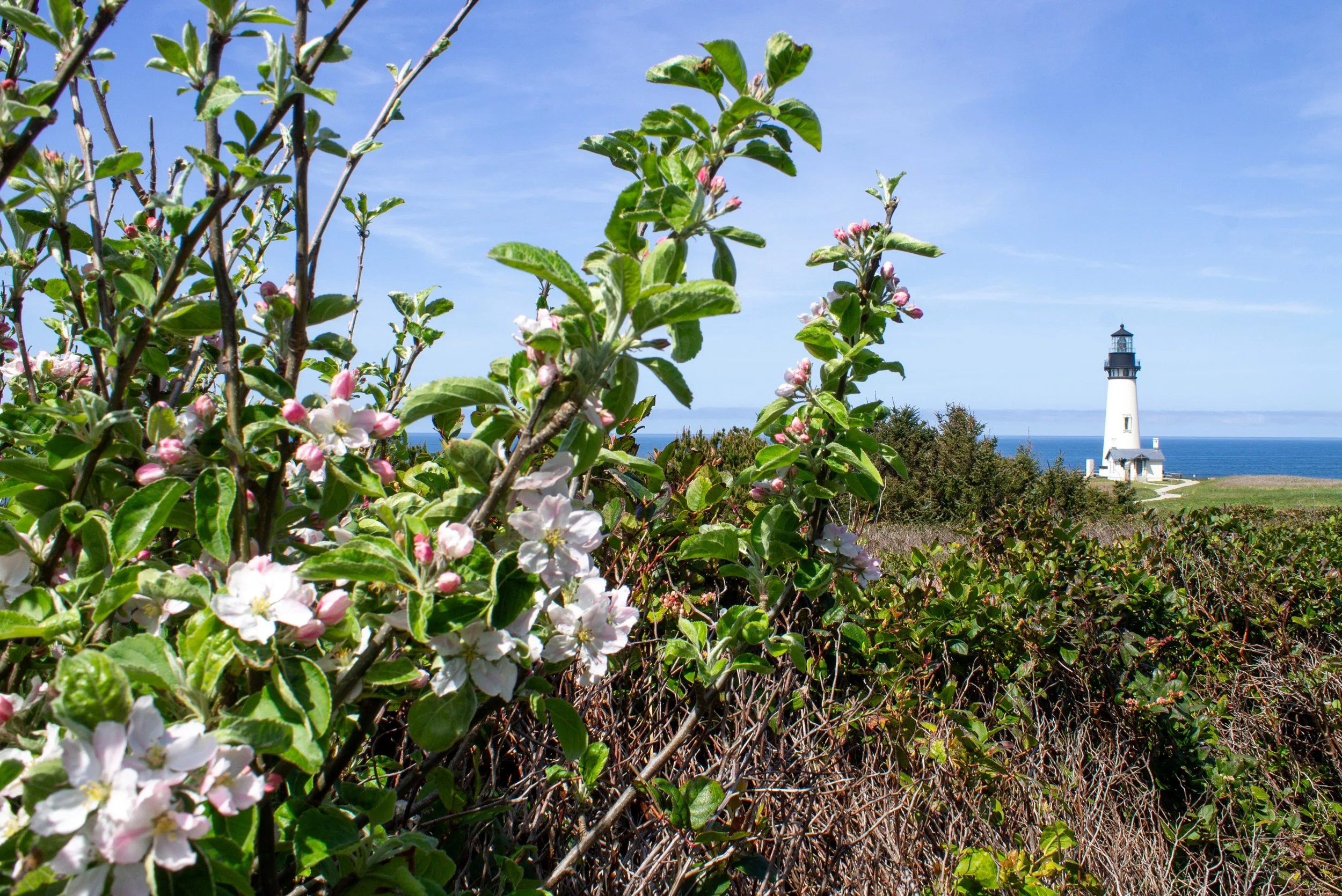
Salal Hill Trail
Yaquina Head Outstanding Natural Area has several excellent hiking trails, none of which are very long or strenuous. If you do them all, it will be about 3.5 miles of hiking. You can also drive to many of the places where the trails lead, so do as much or as little hiking as you want.
Salal Hill Trail: This is my favorite hike in the park, a 0.7-mile out-and-back journey up Salal Hill. Look for the gravel trail on the east side of the lighthouse parking lot. From start to finish, you’ll be surrounded by ocean views. Look for the sandy shores of Moolack Beach and Beverly Beach to the north and Agate Beach to the south. From the top of the hill, you get a fantastic bird’s eye view of Yaquina Head Lighthouse and 270 degrees of ocean vistas. Look for wildflowers like irises along the trail, plus lots of salal blooming in spring. This trail is also a good place to see songbirds like sparrows, wrens, and spotted towhees.

Irises bloom next to the Salal Hill Trail in spring
Lighthouse Trail: Instead of driving out to Yaquina Head Lighthouse, you can park at the Interpretive Center and follow the short trail (about 0.4 miles round-trip) along the coast that leads to the western tip of the headland. From here, you can admire the lighthouse and take the stairs down to Cobble Beach. This trail is a great place to spot seals on the rocks around Cobble Beach from above.
Communications Hill Trail: Like the Salal Hill Trail, the 0.8-mile out-and-back hike up Communications Hill is great for anyone looking for expansive beach views. Start at the Interpretive Center and take the gravel road up the hill. You’ll see Moolack Beach to the north and the beaches of Newport to the south. This trail has more trees along the way than the Salal Hill Trail, so the views are not as consistent.
Quarry Cove Trail: A short and sweet trail (about 0.5 miles round-trip) leads down to Quarry Cove on the south side of Yaquina Head. If you visit at low tide, you can find some tidepools amongst the rocks at the end of this trail. Looking south, there are great views of Agate Beach. Keep an eye out for seals on the rocks and out in the water. The cove was once the site of a basalt quarry and is one of the best places at Yaquina Head to admire its remarkable geology.
6. Walk down to Quarry Cove
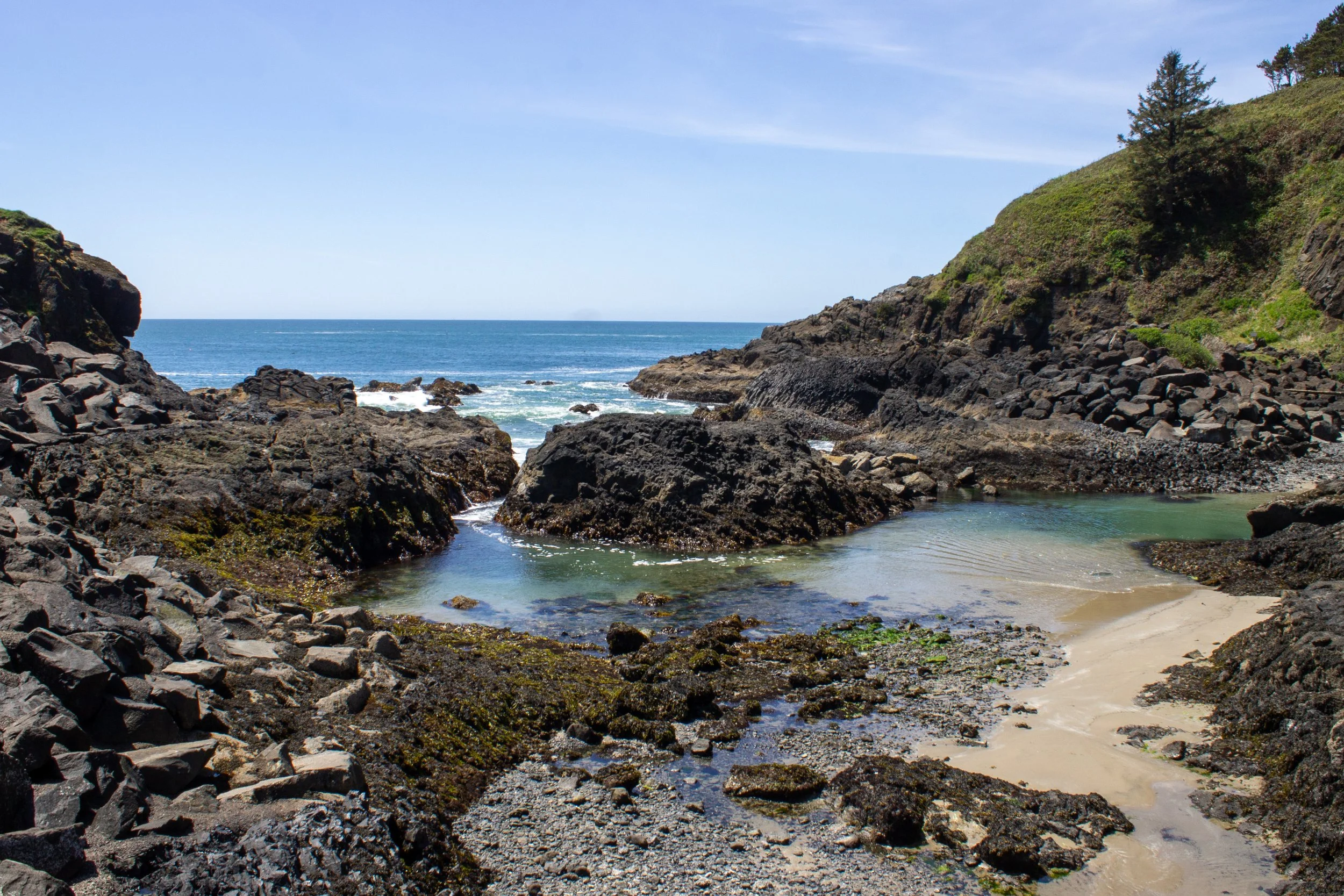
Quarry Cove
The basalt that forms Yaquina Head Outstanding Natural Area came from an ancient lava flow that began in Washington and traveled across Oregon. About 16 million years ago, lava began erupting from fissures in central Washington. This lava, known as the Gingko Flow, traveled through the area where Mt Hood now stands before the mountain rose and made it all the way to the Oregon coast. Lava that cooled here at the coast now forms Yaquina Head.
Geologists believe that Yaquina Head was once a much larger headland that has been largely worn away by the elements over millions of years. Sedimentary rock and some of the basalt eroded to leave behind only the more resistant basalt, creating the unusual shape of the headland and the sea stacks seen today.
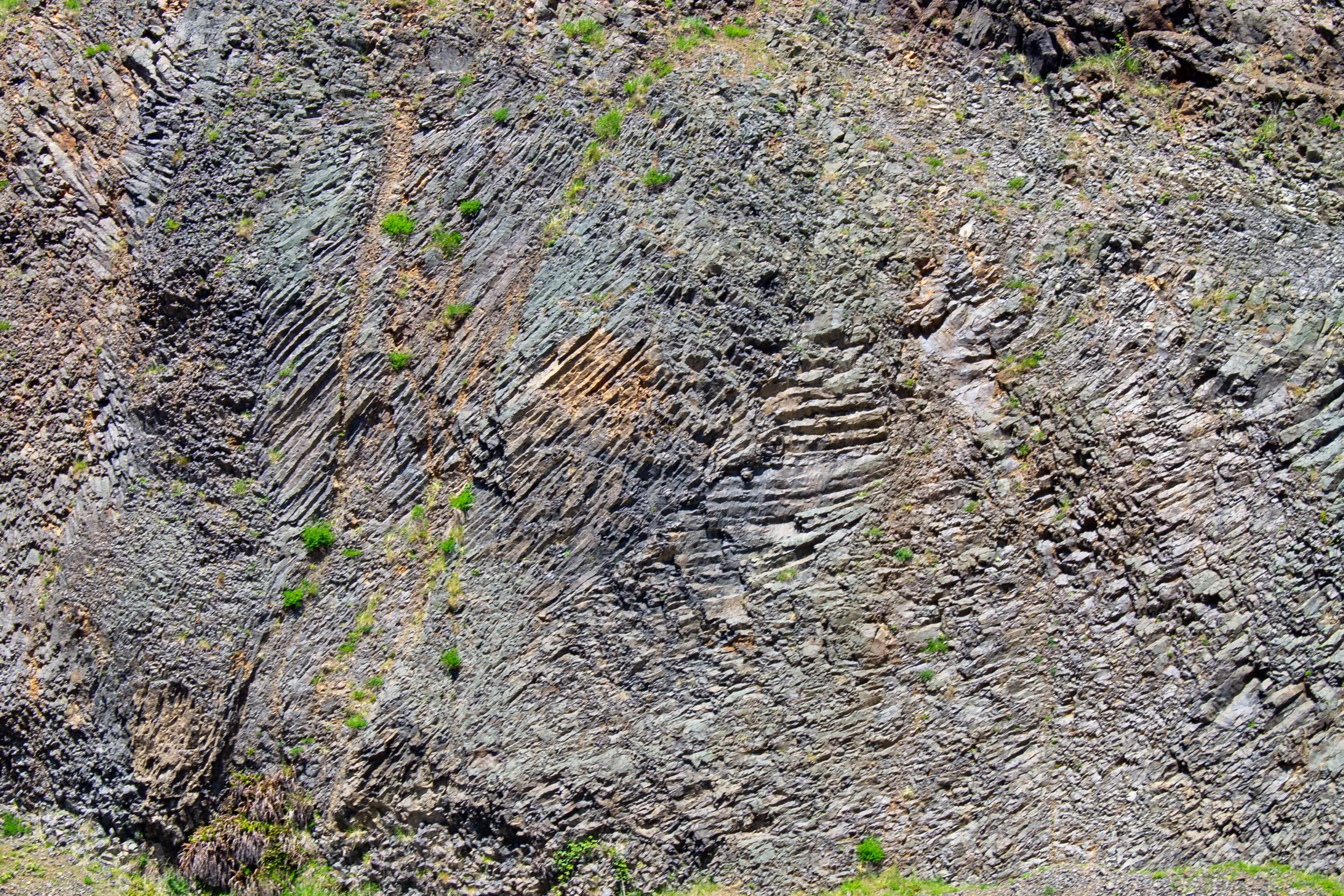
Entablature basalt
Before becoming a protected habitat, Yaquina Head Outstanding Natural Area was a basalt quarry. Workers used large amounts of rock from the quarry for construction projects in the early 1900s, like building Highway 101. The sheer cliffs around Quarry Cove and the Interpretive Center are legacies of the quarries. Quarry Cove is the perfect place to admire the basalt of Yaquina Head up close. From the Quarry Cove Trail, look north to see the rock wall with wonderful displays of entablature basalt, another way of describing the irregular columns formed in the rock.
7. Visit the Interpretive Center

Displays in the Yaquina Head Interpretive Center
Once you enter Yaquina Head Outstanding Natural Area, cones in the road will direct you to the Interpretive Center parking lot. The Interpretive Center is not only a good starting point for the hiking trails but can also be a good place visit, especially when the weather is less than ideal. Exhibits in the Interpretive Center describe the history of Yaquina Head and its lighthouse. Videos playing in small theaters give good information about the park’s plant and animal life. You can also find picnic tables behind the Interpretive Center.
Getting there
Yaquina Head Outstanding Natural Area is directly off Highway 101 on the north end of Newport, Oregon. Signs will point the way once you get close to the park. The drive from Portland takes about a little under 3 hours.
Best things to do at Yaquina Head Outstanding Natural Area, the summary:
See Yaquina Head Lighthouse
Look for birds on Colony Rock
See the tidepools at Cobble Beach
Watch for seals and whales
Try out the hiking trails
Admire the geology of Quarry Cove
Visit the interpretive Center
Enjoy your visit to Yaquina Head Outstanding Natural Area!
With love,
Emma
Explore nearby

Newport, Oregon, is one of the best places to see wildlife on the Oregon Coast.

Check out the best places to see tidepools on the Oregon Coast.
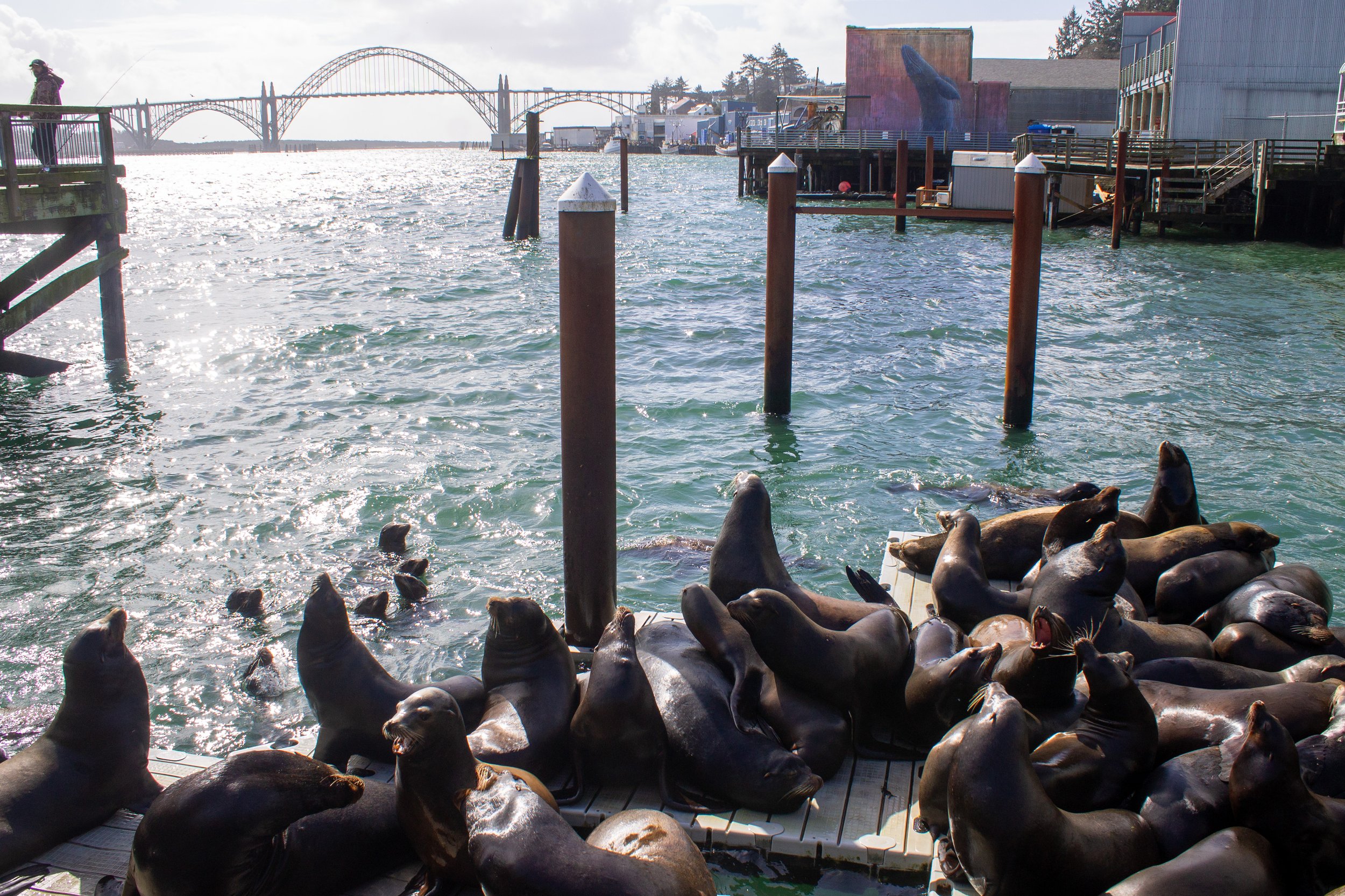
Find the best things to do in Newport.
References
Mardock, Cheryl. “A geologic overview of Yaquina Head, Oregon.” Oregon Department of Geology and Mineral Industries, vol. 56, no. 2, March 1994.
Miller, Marli B. Oregon Rocks! A Guide to 60 Amazing Geologic Sites. Missoula, Montana: Mountain Press Publishing Company, 2021.
Zetner, Nick, host. “Gingko Flow.” The Nick Zetner Geology Podcast, episode 104, Spotify, 1 March 2023.