
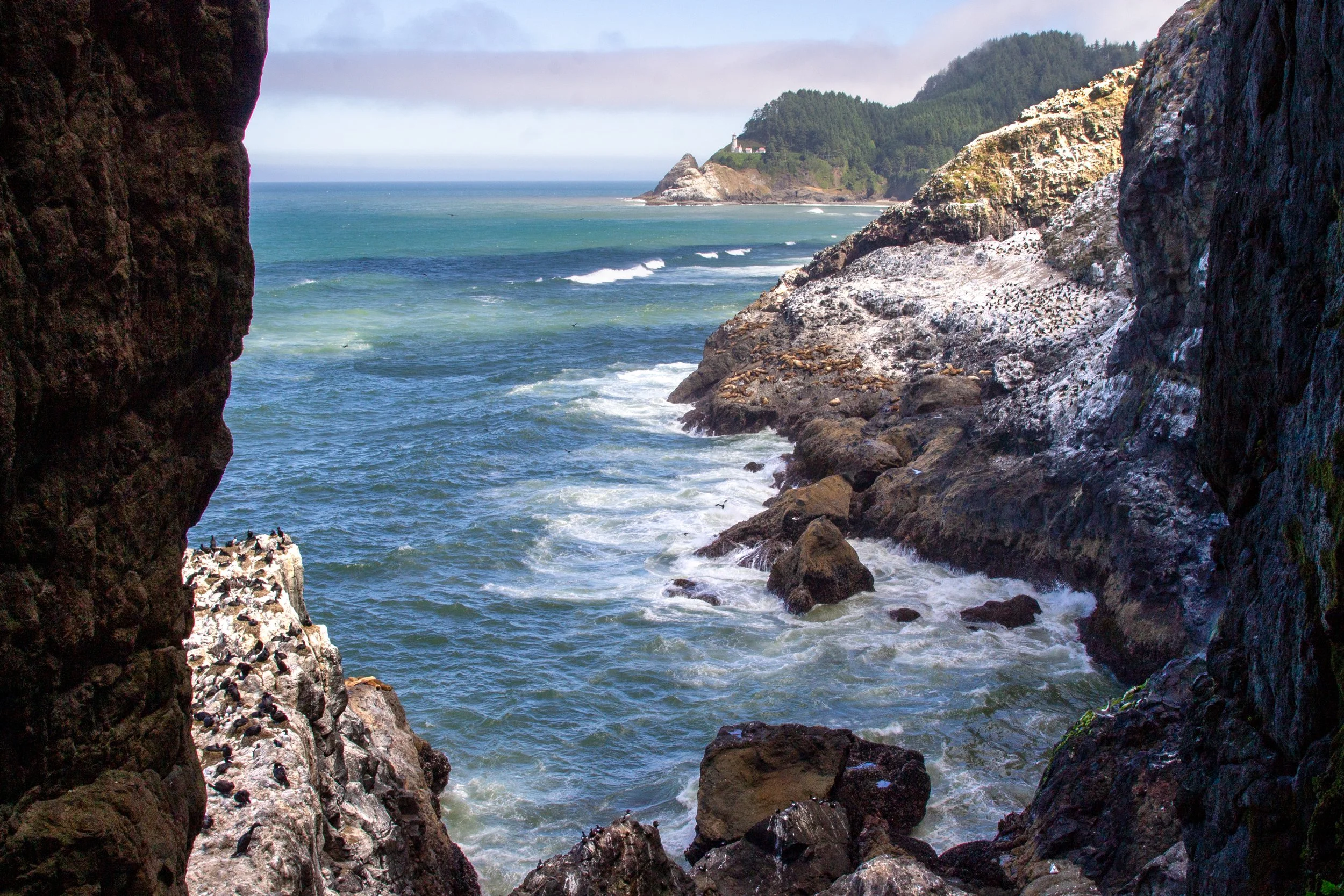
In a region of the Oregon Coast where sea lions are easier to spot than squirrels, I’ll admit that I drove past the Sea Lion Caves many times before visiting. Now that I’ve gone, I understand what makes them special. The main event is a 200-foot elevator down to the largest sea cave in the United States, where you might see over a hundred Steller sea lions. Outside are viewpoints overlooking the Pacific Ocean and Heceta Head Lighthouse, perfect for birdwatching and whale-watching. Here’s everything you need to know about visiting the Sea Lion Caves.
When to visit the Sea Lion Caves
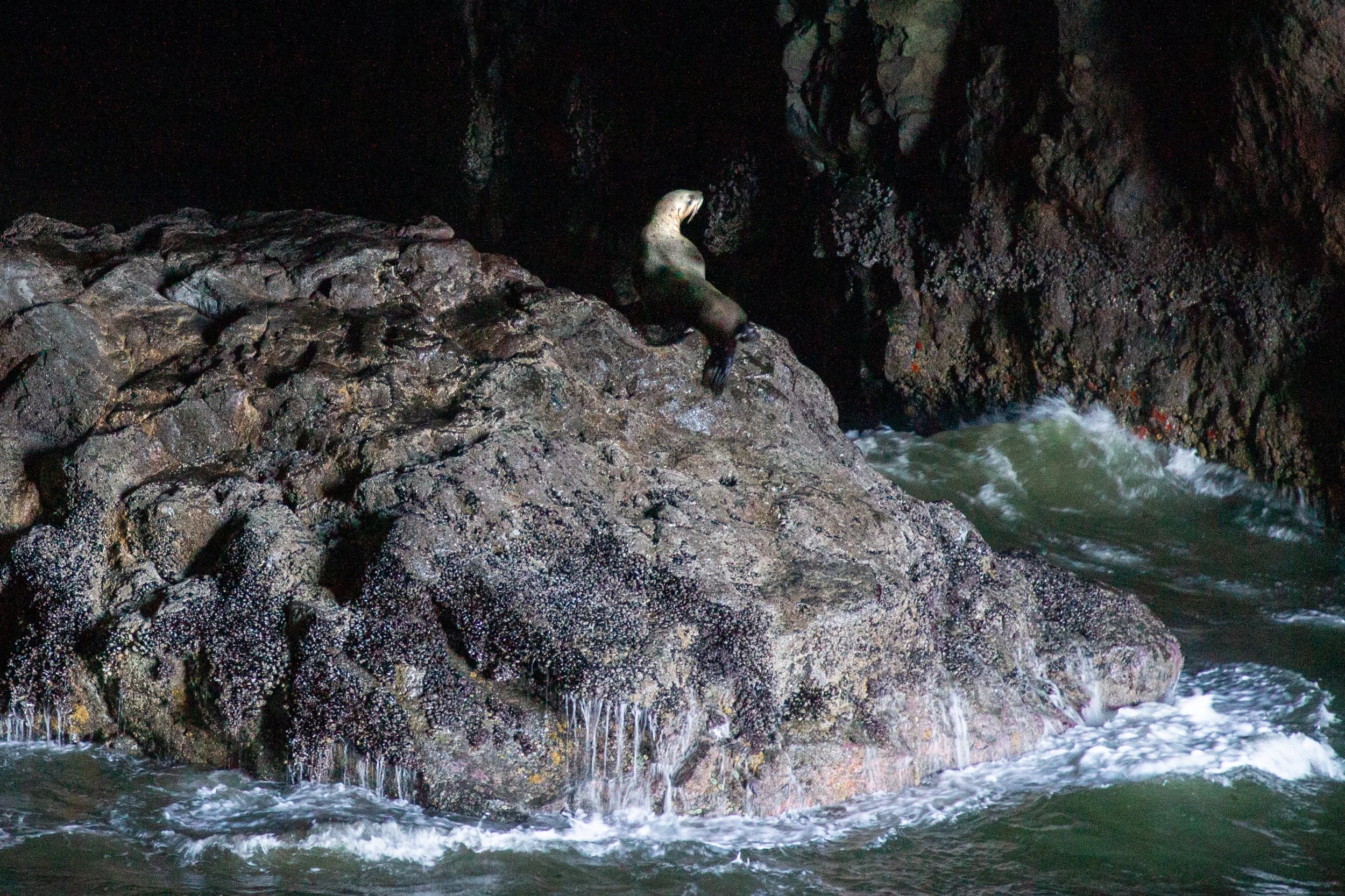
Sea lions in the cave are few in the summer
The Sea Lion Caves are open all year. Since they’re a habitat for wild animals rather than a zoo, what you see depends on when you visit. The best time to go is in the fall and winter when the sea lions are most likely to be in the cave. By late spring, they tend to stay out in the open on the rocky ledges near the cave for pupping season. You still have a good chance of seeing them, just in less unique surroundings. Don’t be discouraged by a rainy day. The most interesting parts of the visit are underground.
Late spring and summer are good times to see seabirds, some of them nesting on the cliffs around the Sea Lion Caves. On a June visit, I saw many cormorants, pigeon guillemots, common murres, gulls, and pelicans. Steller sea lions were around, too, outside of the cave. I’d say at least a hundred were on the rocks and swimming near shore.
The aboveground areas of the Sea Lion Caves are good whale-watching spots. You might see a whale any time of year, but mid-summer into early fall is a great time to look for Oregon’s resident gray whales. Other promising times are the winter and spring migrations: late December through January and mid-March through June.
Is it worth it?
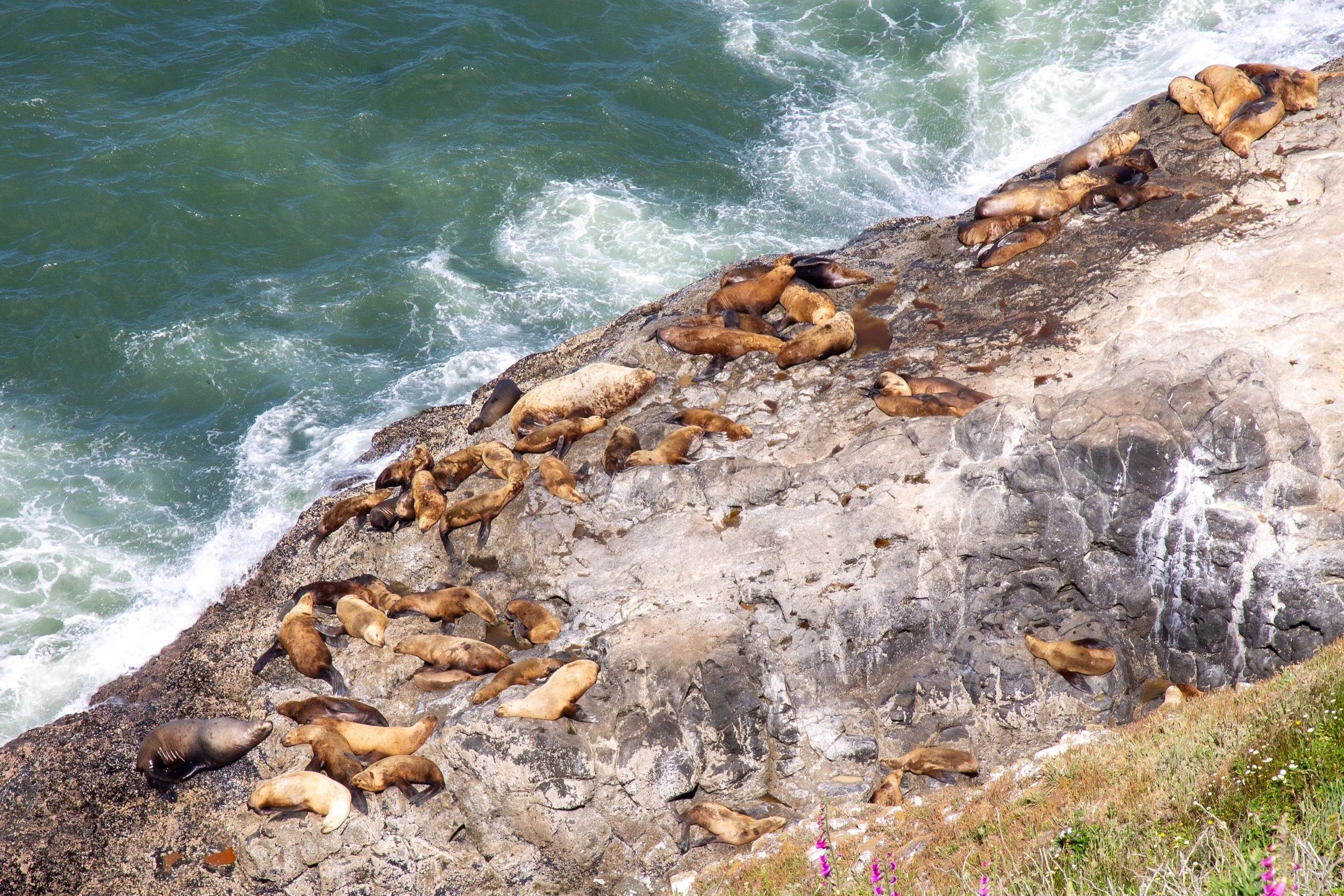
Steller sea lions from the Sea Lion Lookout
The Sea Lion Caves are a privately-owned marine garden, and one of the pricier attractions on the Oregon Coast. At first glance, it’s an old-school roadside attraction. Once you’re inside, it becomes clear that the tourist trap exterior is window dressing for natural wonders with timeless appeal. One of them is the cave itself, which is enormous and without the danger that usually accompanies sea cave exploration. Another is the wildlife. It’s a rare chance to see Oregon’s more aloof sea lion species up close, the only permanent mainland Steller sea lion colony in North America. In spring and summer, nesting seabirds are a delight.
When you arrive at the Sea Lion Caves, the staff will tell you whether sea lions are in the cave or on the shore nearby. If they’re not, the visit is admittedly less interesting. The aboveground viewpoints are good whale-watching spots, although similar to other elevated viewpoints in the area, and seeing whales is always a bit of a long shot. The sea cave is still cool, but lacks something without dozens to hundreds of boisterous sea lions. If you visit in June or July, I’d go just to see the birds. Overall, I’d say it’s worth it if animals are around. If not, maybe stop by again another time if your itinerary allows it.
What to see
Sea Lion Lookout
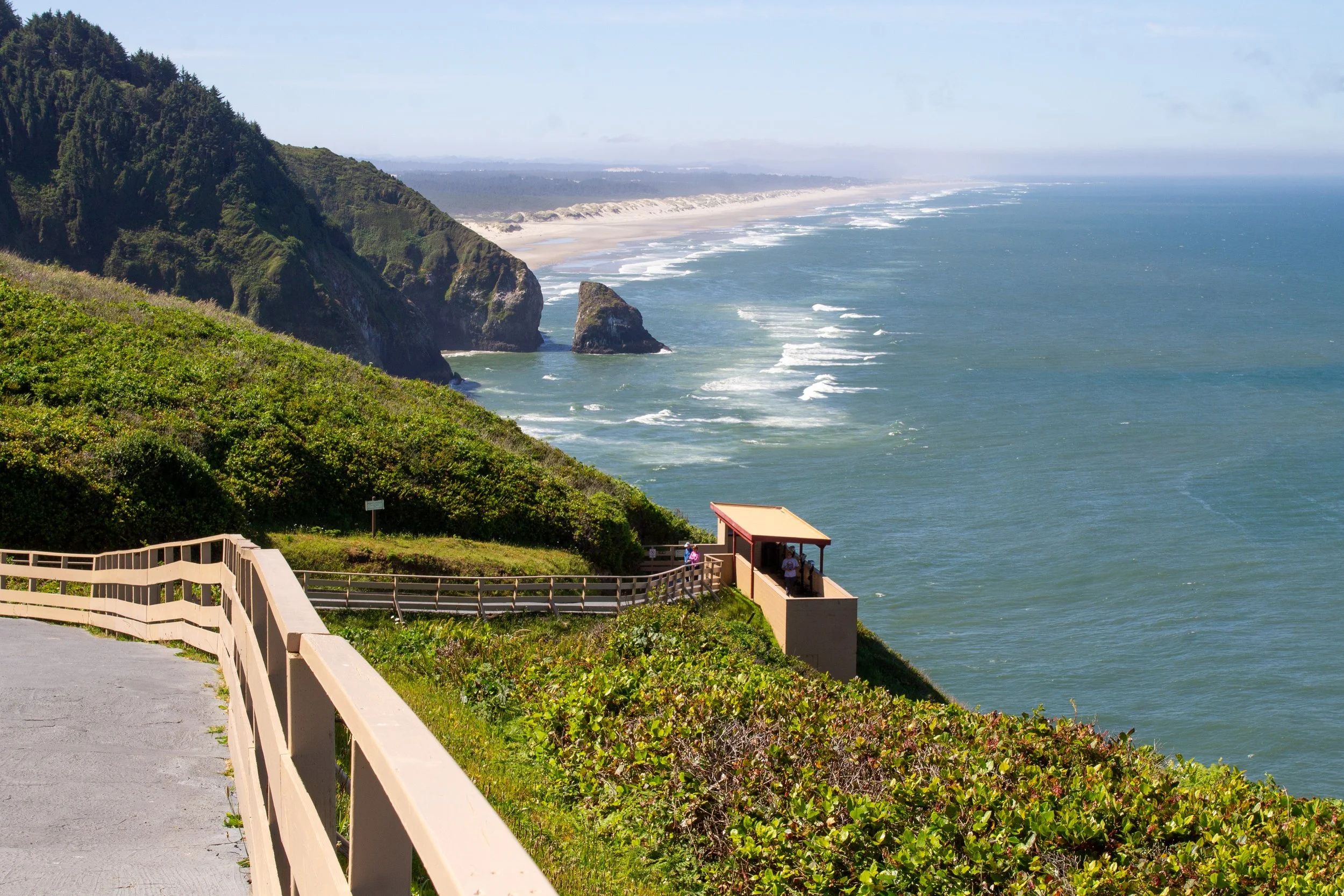
Sea Lion Lookout
The self-guided tour of the Sea Lions Caves begins aboveground. Walkways along steep coastal bluffs bring you to breathtaking views of the Pacific Ocean from around 300 feet up. Before taking the elevator down to the sea cave, it’s worth spending some time watching for birds and whales from the viewpoints. Heading left from the gift shop takes you to the Sea Lion Lookout, a covered overlook above a rocky ledge where Steller sea lions often lounge. In summer, watch for pelicans flying over the water in V-formations. Looking south is a long sandy shore stretching toward Florence.
The sea cave
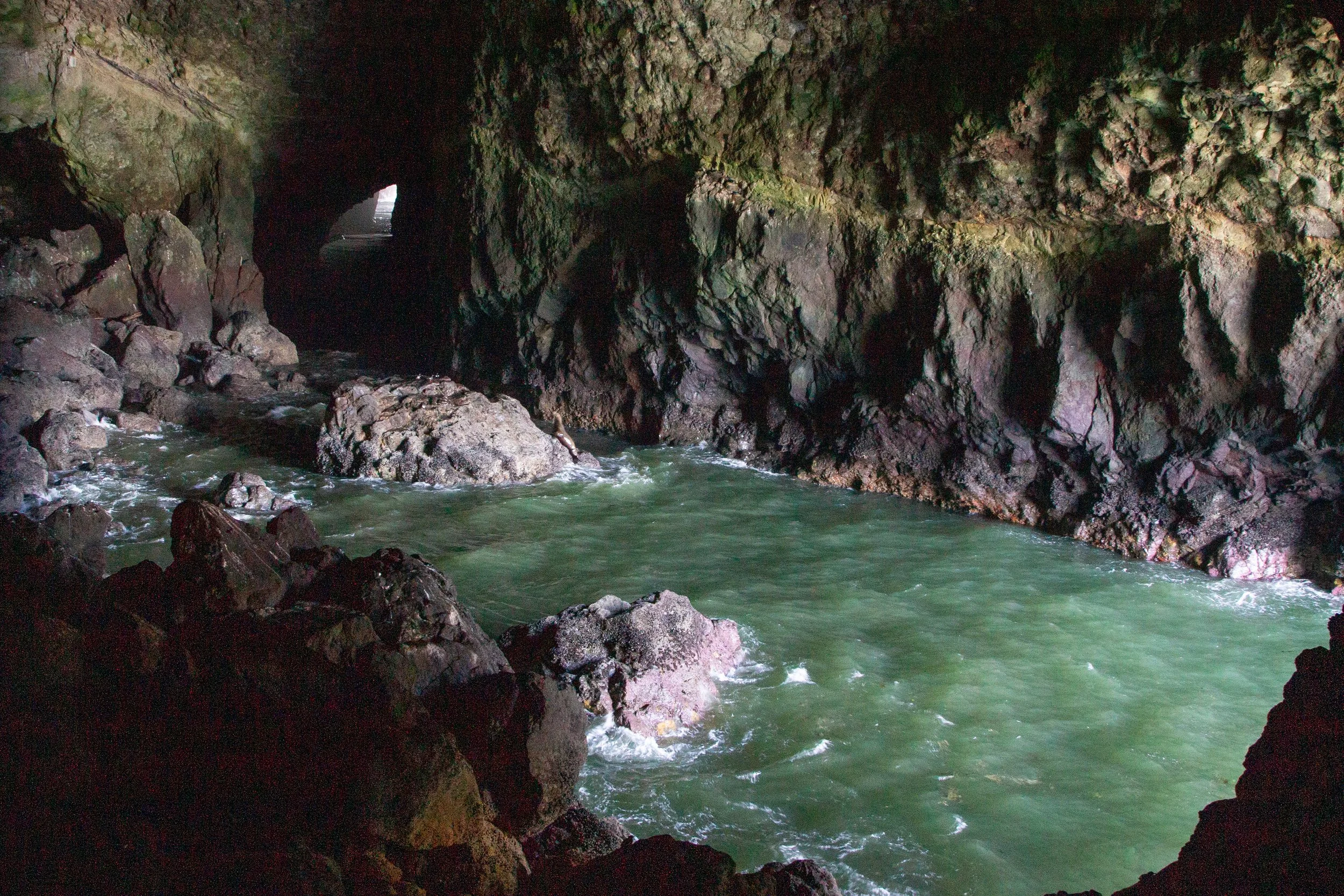
The cave
The main attraction at the Sea Lion Caves is, you guessed it, the giant cave. Over 100 feet high and covering about two acres, the Guinness Book of World Records calls it the largest sea cave in the United States. Channels through the 25-million-year-old basalt cliffs allow ocean water to enter. In the fall and winter, you might see hundreds of Steller sea lions. During my summer visit, I saw a whomping two, and even they didn’t stay long. Instead of sea lions, pigeon guillemots covered the rocks. Seabirds nest in the cave during part of the year. None of the animals showed any concern about human onlookers. The viewing area is behind a cable fence that keeps it safe and unobtrusive to the wildlife.
Heceta Head Viewpoint
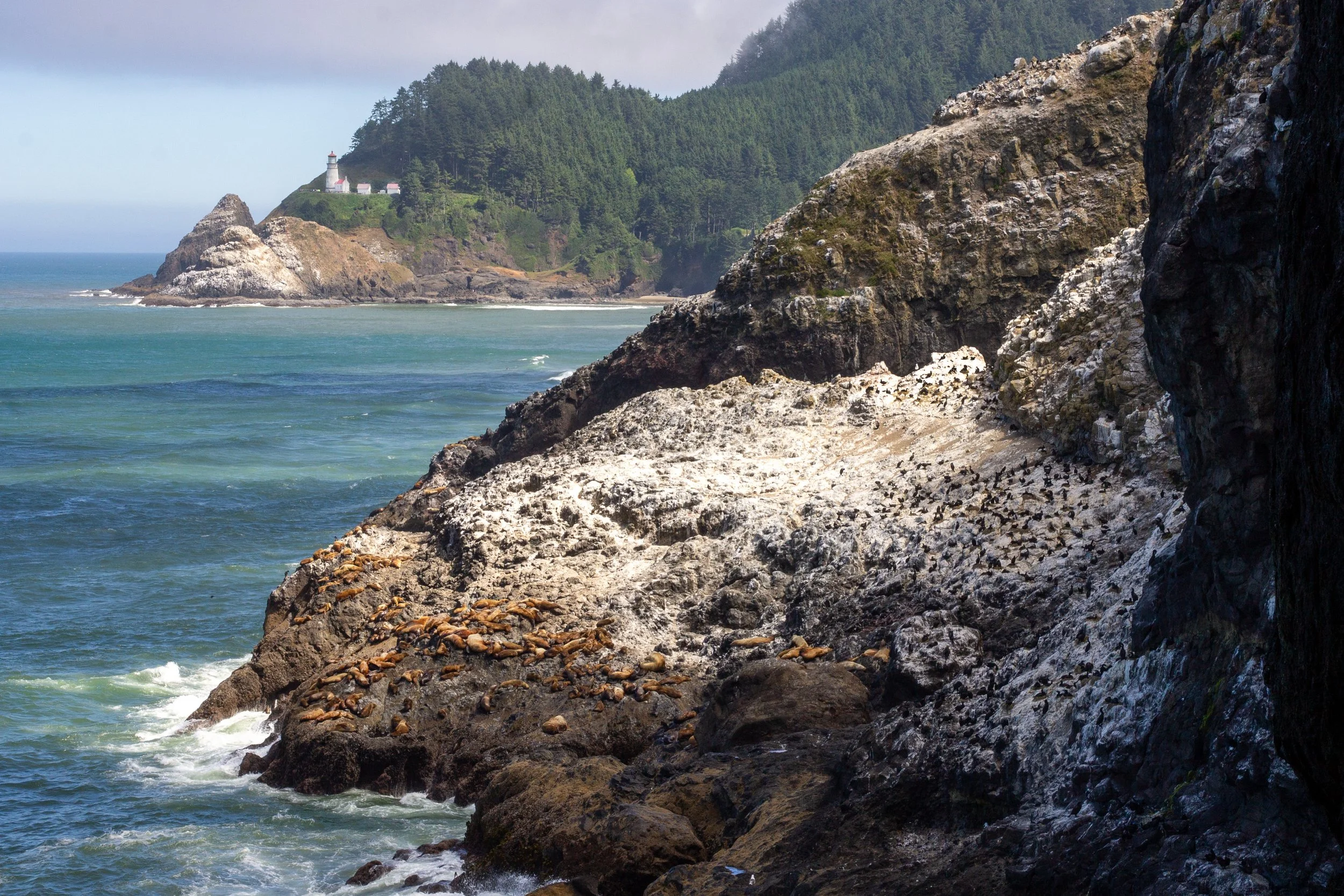
Views from the Sea Lion Caves
The Sea Lion Caves had been on my radar for a long time before I went, and I felt like I knew what to expect. For most of the tour, that was true. Then, I saw the viewpoint looking out of the cave and had to pick my jaw off the floor. Partly, it was the time of year. I went at the wrong time to see sea lions in the cave, but at the perfect time to see nesting sea birds. Looking north through an opening in the rock, Steller sea lions, cormorants, pigeon guillemots, and common murres covered the rocky bluffs along the Pacific. In the distance is Heceta Head Lighthouse perched on a forested headland. Pigeon guillemots flew up to the viewpoint to show off their red feet. I got the sense they enjoyed the attention. Nearby, Brandt’s cormorants did their mating dances and built nests.
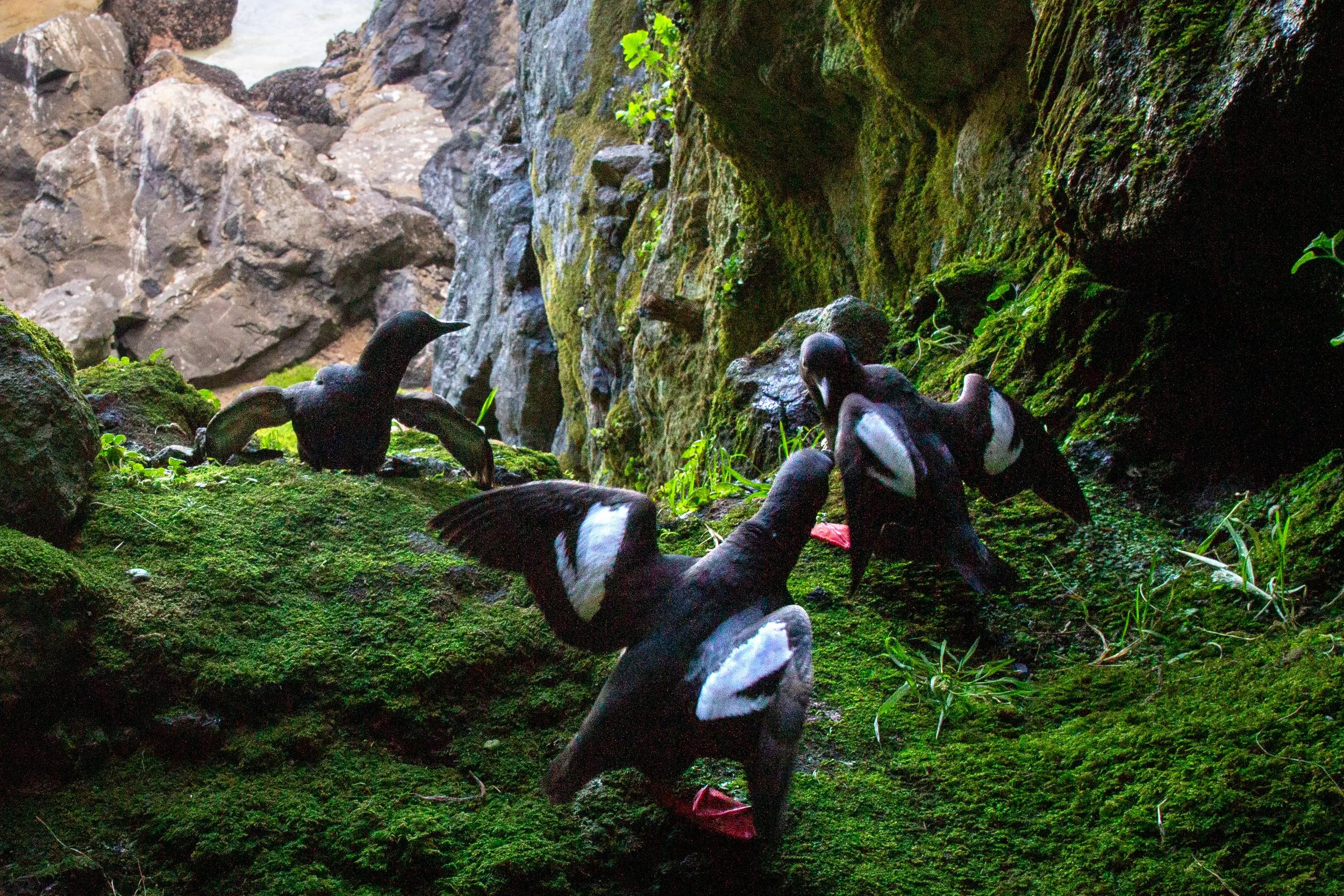
Pigeon guillemots
Logistics
Hours: The Sea Lion Caves are open daily from 9 AM to 5:30 PM. They close on Thanksgiving, Christmas Eve, and Christmas.
Cost: Adult admission is $18. Discounts for seniors and children 4-12. Children under 4 can visit for free.
Parking: The Sea Lion Caves have two parking lots, one on either side of Highway 101. Parking is free and can accommodate RVs.
Restrooms are in the gift shop. Stop by before or after your tour. There are none in the caves.
Accessibility: The Sea Lion Caves are not wheelchair accessible or stroller friendly. You need to walk down several sets of stairs on the tour, starting right at the entrance. Walkways are paved and have grades of 10-20%.
Sea Lion Caves wildlife
Steller sea lions
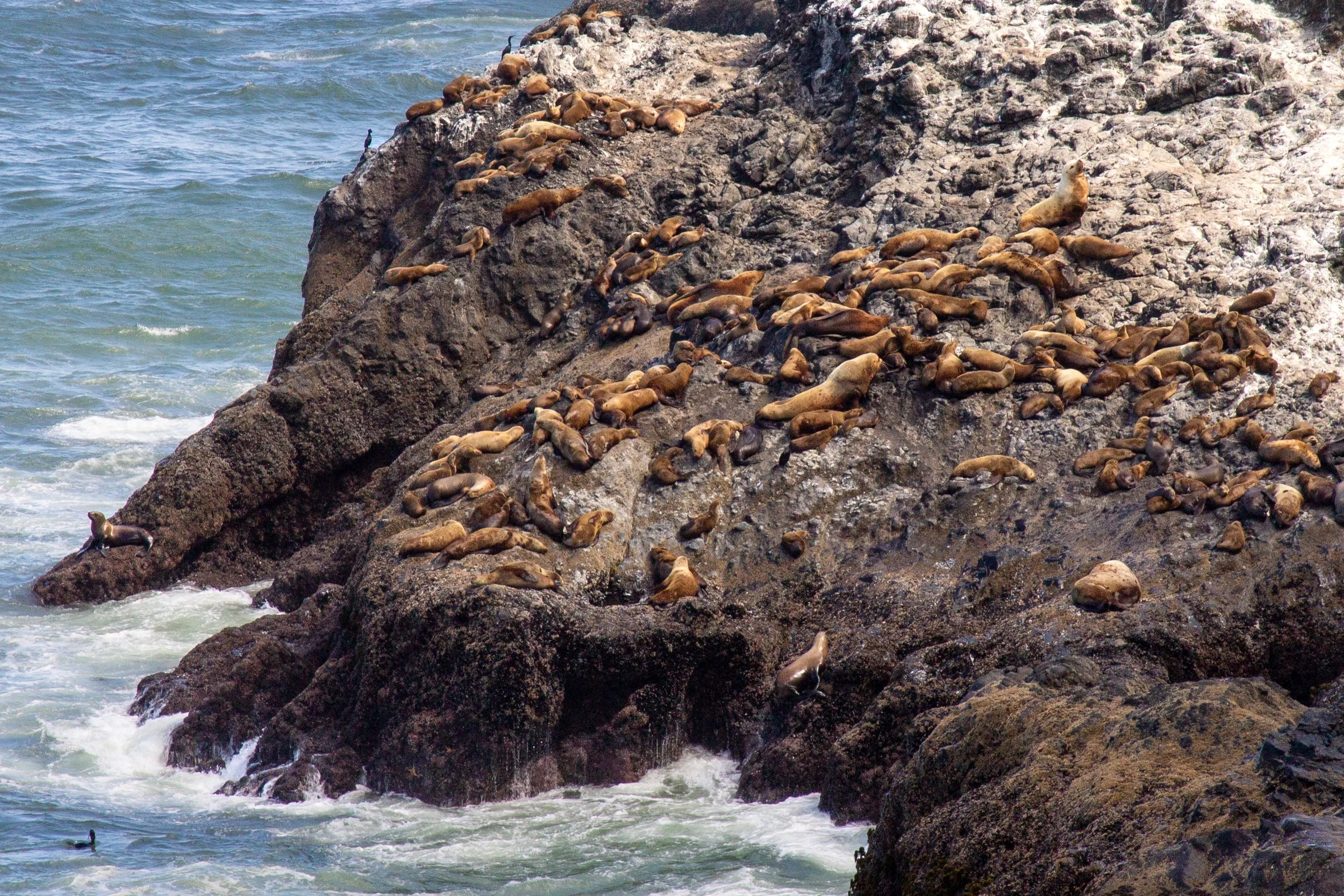
Steller sea lions move outside the cave in summer
The Oregon Coast has two types of sea lions: Steller sea lions and California sea lions. Steller sea lions usually prefer remote areas. The Sea Lion Caves are an exception. You can see large numbers, sometimes hundreds, within an easy viewing distance. The only times I’ve been closer to them, I was on a boat. Steller sea lions tend to be larger and lighter in color than California sea lions. Both males and females are year-round residents at the Oregon Coast. They make a groaning sound that reminds me of a displeased cow.
California sea lions are comfortable hanging out in areas with lots of people around, like Newport’s marina. Be sure to give them space when you see them. They bark more or less constantly, making them easy to recognize from a distance. The California sea lions in Oregon are males. They return to California in the summer to mate before heading back to Oregon for the rest of the year. You might see them around the Sea Lion Caves, but not in the same large numbers as the Steller sea lions and not with pups.
Birds
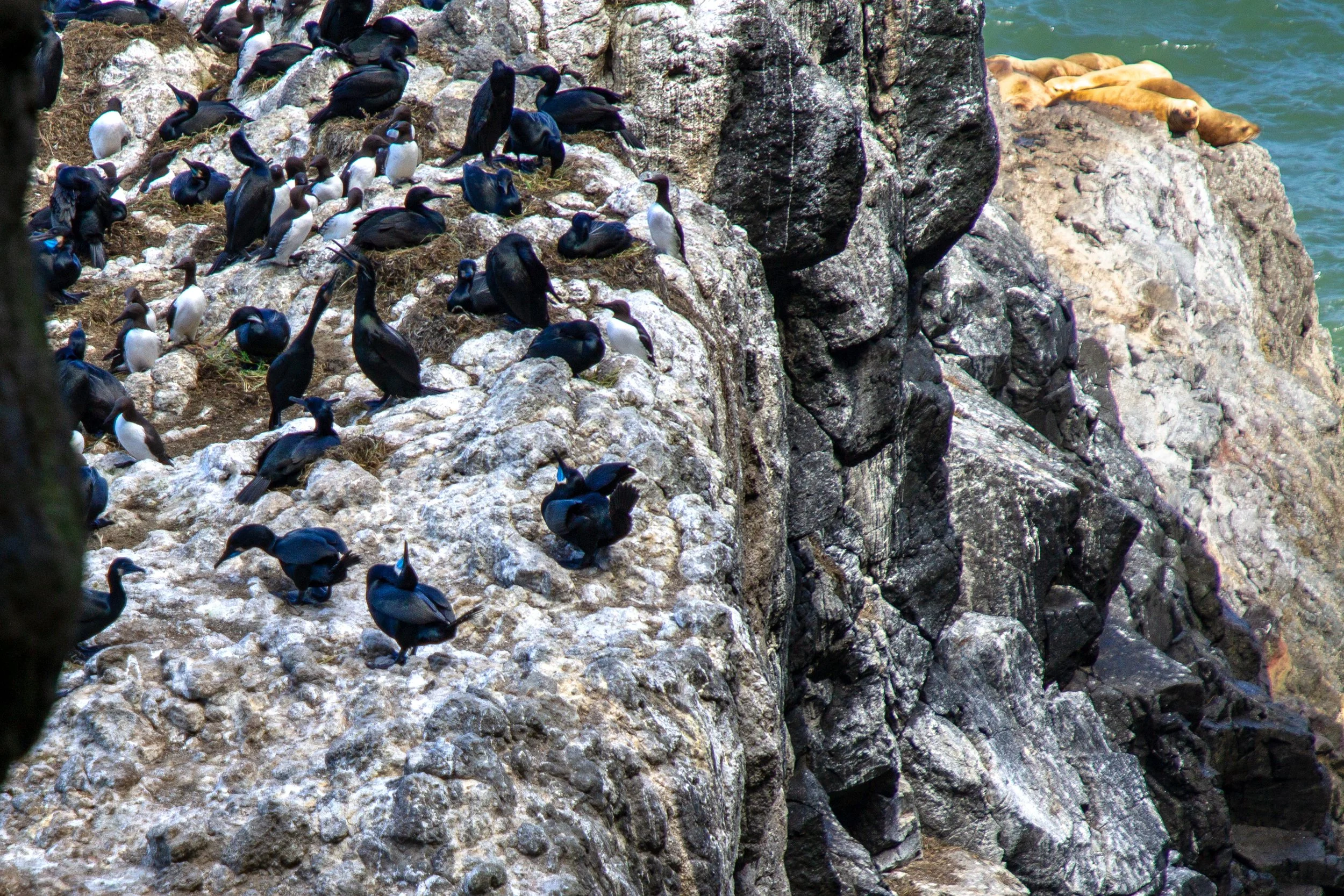
Brandt’s cormorants and common murres (and sea lions)
The Sea Lion Caves are great for bird-watching, especially in spring and summer. From around April through August, nesting season draws large numbers of cormorants, pigeon guillemots, and common murres to the area. These birds spend most of their lives at sea, returning to shore only to nest. A viewpoint in the Sea Lion Caves overlooks nesting sites that would otherwise be inaccessible to birdwatchers. Like the sea lions, the birds acted unfazed by human attention. The cormorants and common murres ignored us. A few of the pigeon guillemots seemed to enjoy admiration.
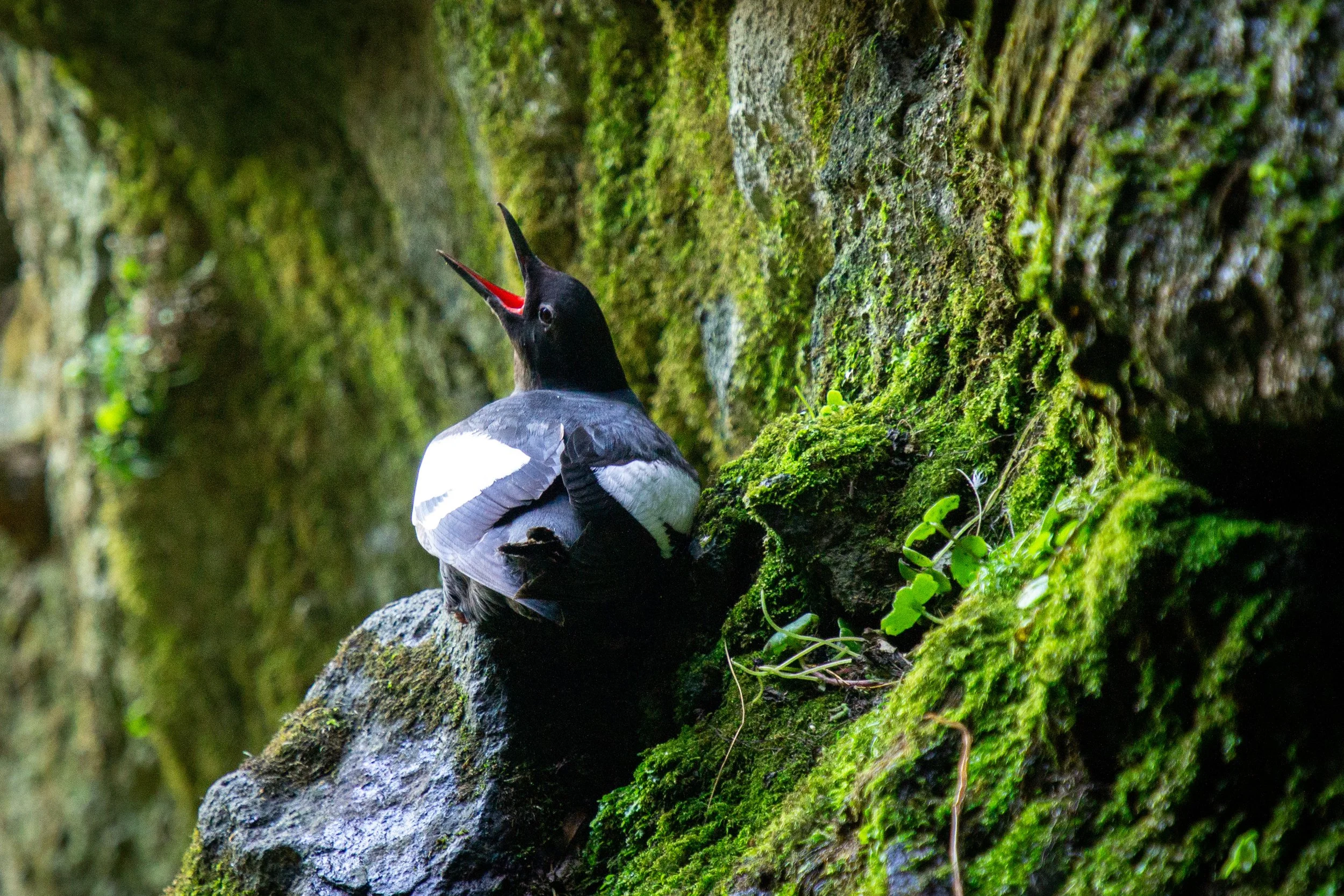
Pigeon guillemots nest on rock crevices
Wherever you see nesting birds, you might also see raptors. If the colony gets agitated and starts flying, there’s a good chance that a bald eagle or hawk is nearby. Other likely bird sightings are gulls and, in the summer, brown pelicans. The aboveground areas at the Sea Lion Caves are good places to look for them.
Cave history
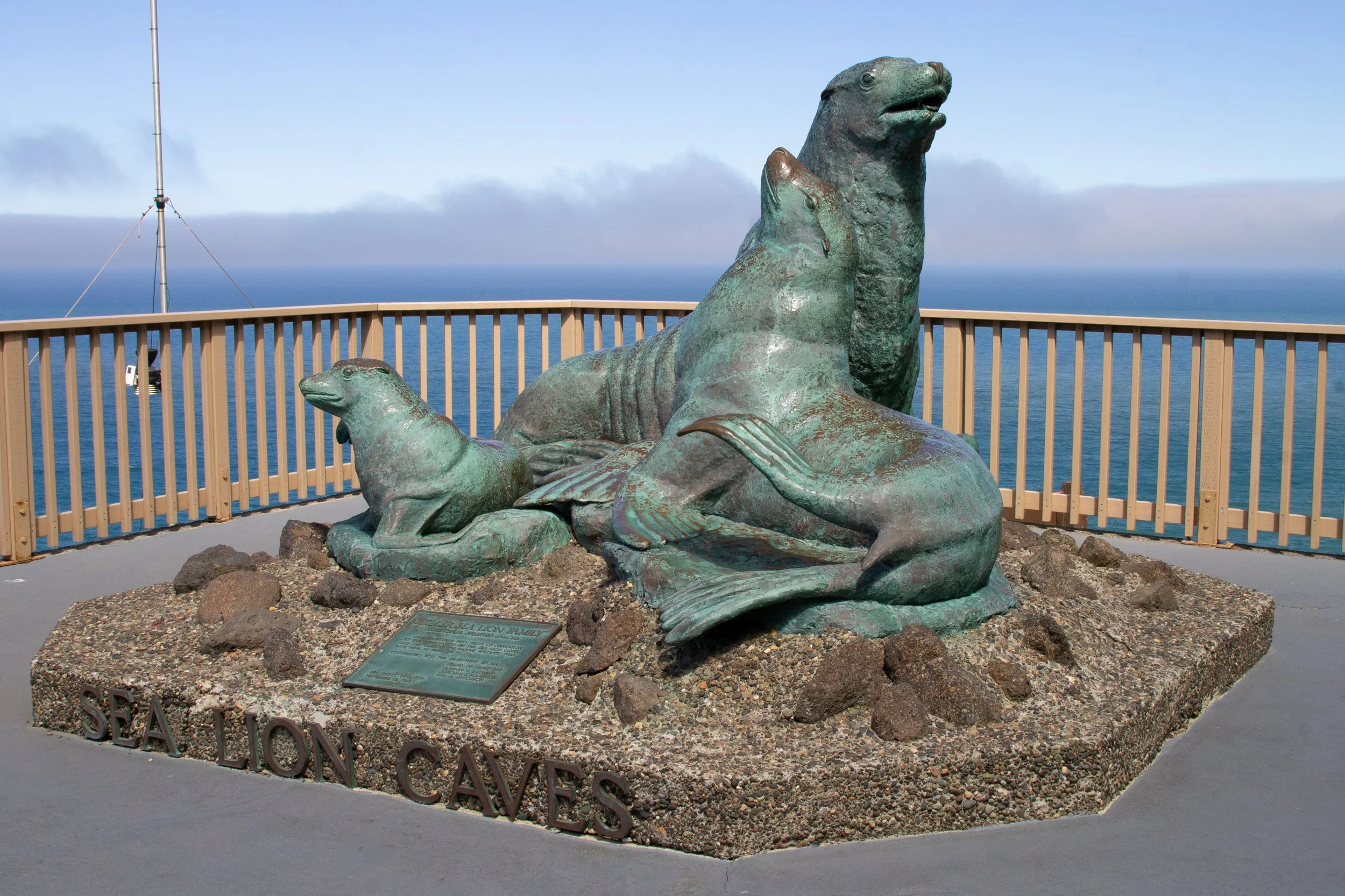
Statue at the Sea Lion Caves commemorates its 50th anniversary
The Sea Lions Caves are the style of wildly ambitious roadside attraction that seems unique to the early to mid-20th century. Around 1930, the impending construction of Highway 101 prompted three business partners to turn an obscure sea cave into a tourist destination by creating public access. They built a 1,500-foot trail by hand, on a cliff face, down to the cave. It opened to the public in 1932, when Highway 101 was still gravel.
The next major development was in 1958, when workers began construction on an elevator shaft down to the Sea Lion Caves. It took three years to complete, partly because workers could only blast through the rock in the spring to avoid disturbing the sea lions. After the elevator started operating, accessing the cave became a lot easier. The same elevator is in use today.
More sea lion hotspots
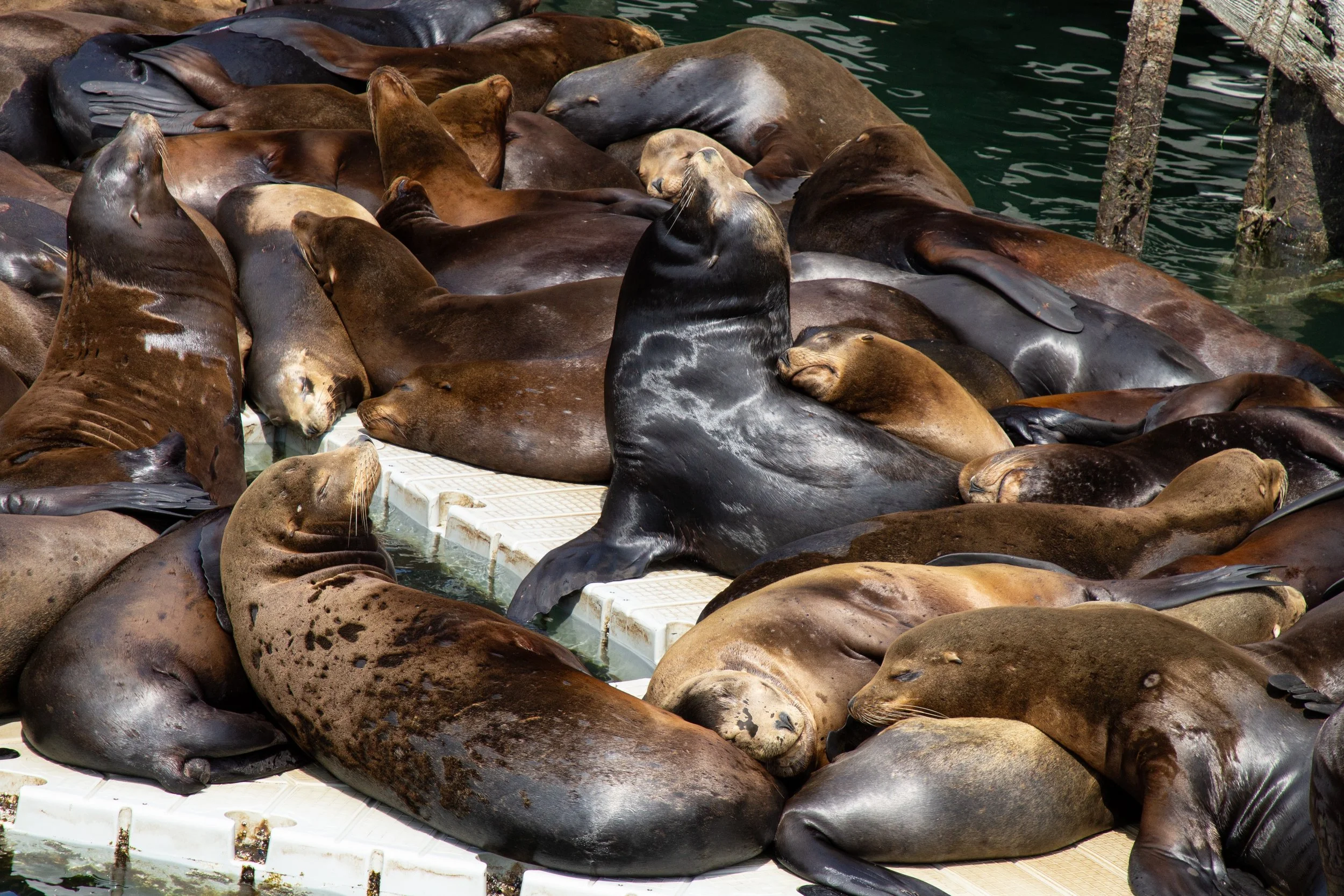
California sea lions on Port Dock One in Newport
You might see sea lions anywhere along the Oregon Coast. Places where a river meets the ocean are always good bets. Here are some hotspots where I’ve had luck finding them:
Unsurprisingly, areas near the Sea Lion Caves are likely places to spot sea lions. The viewpoints along Highway 101 are good places to look, as is Heceta Head Lighthouse.
Newport’s Historic Bayfront is almost a sure thing for seeing California sea lions, except for the short time in summer when they leave for the mating season. Look for them on Port Dock One, in the marina, on the jetties, and swimming in the bay.
Cape Arago State Park is a hotspot for sea lions. If you have a good pair of binoculars, look for them on Shell Island.
Sea lions love Astoria. Look for them in the water and on the jetties.
Three Arch Rocks National Wildlife Refuge off the coast of Oceanside is an important breeding site for Steller sea lions. Bring binoculars to look for them.
Getting there
Address: 91560 US-101, Florence, OR 97439
The Sea Lion Caves are directly off Highway 101, about 15 minutes north of Florence, Oregon. You can’t miss the big sign on the building. You’ll need a car to get there.
Explore nearby
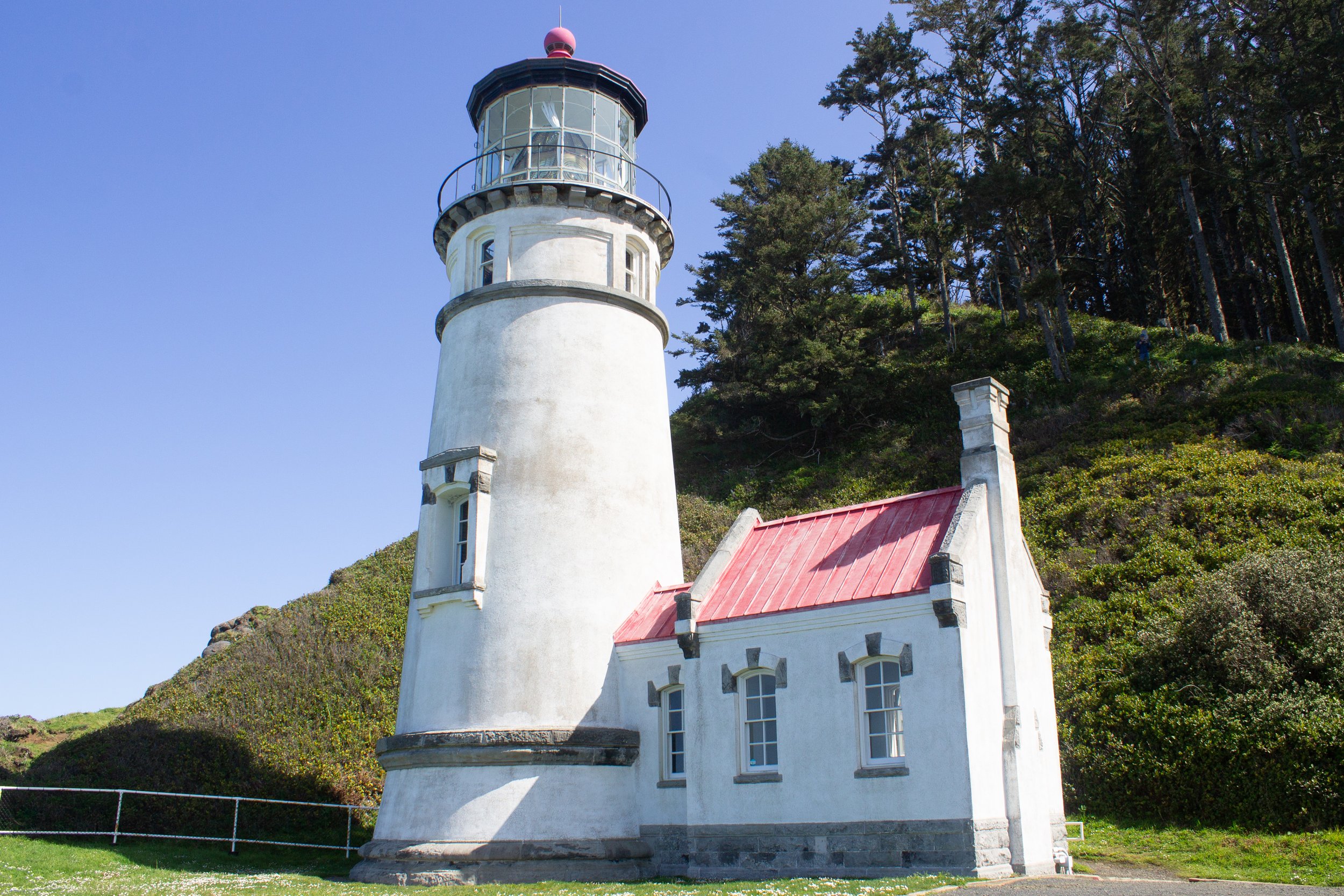
Heceta Head Lighthouse is only a few minutes away from the Sea Lion Caves.

See the geological wonders of Cape Perpetua.
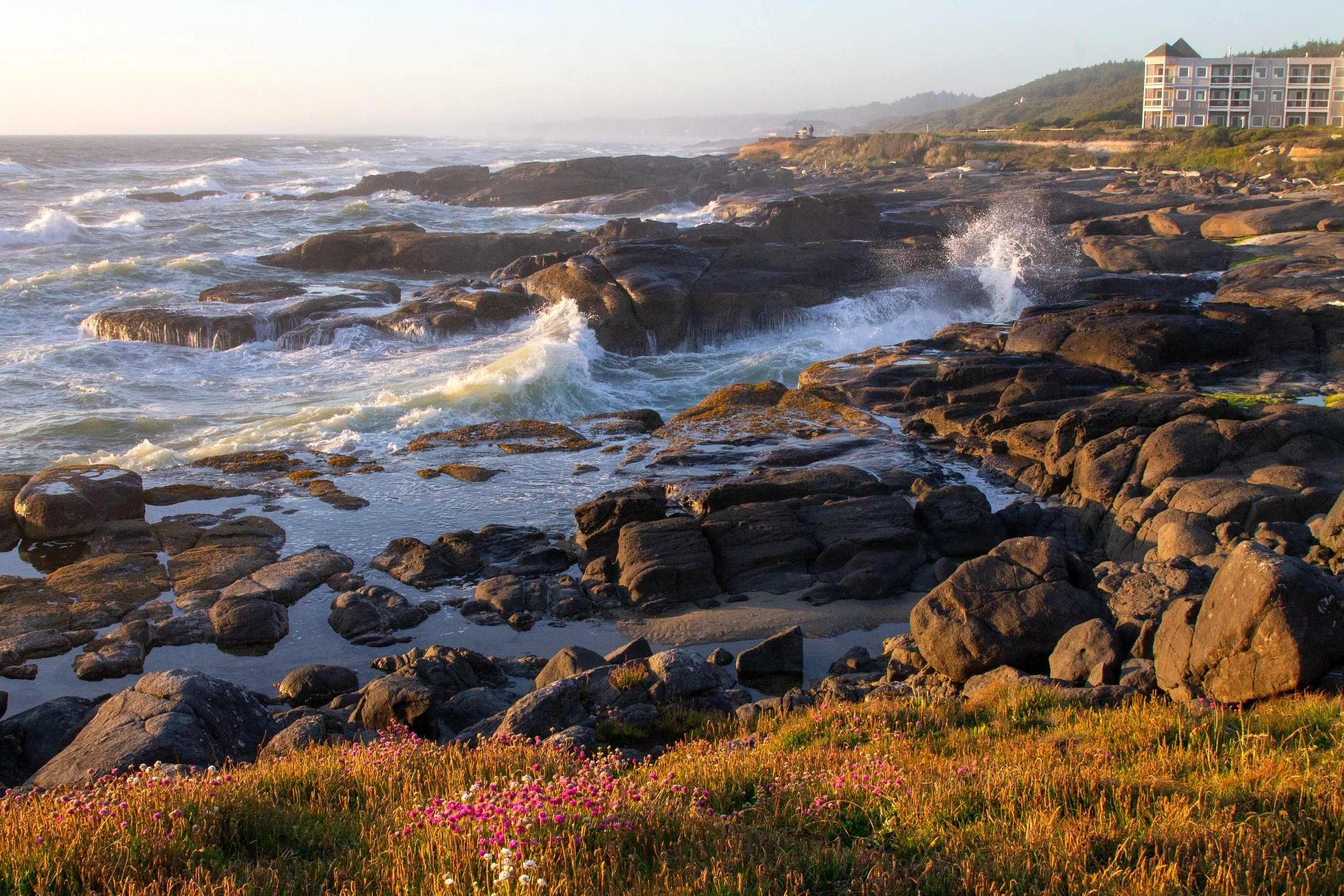
Spend the perfect weekend in Yachats, Oregon.

Check out the best places to see wildlife on the Oregon Coast.