
20 Uncrowded Oregon Marvels
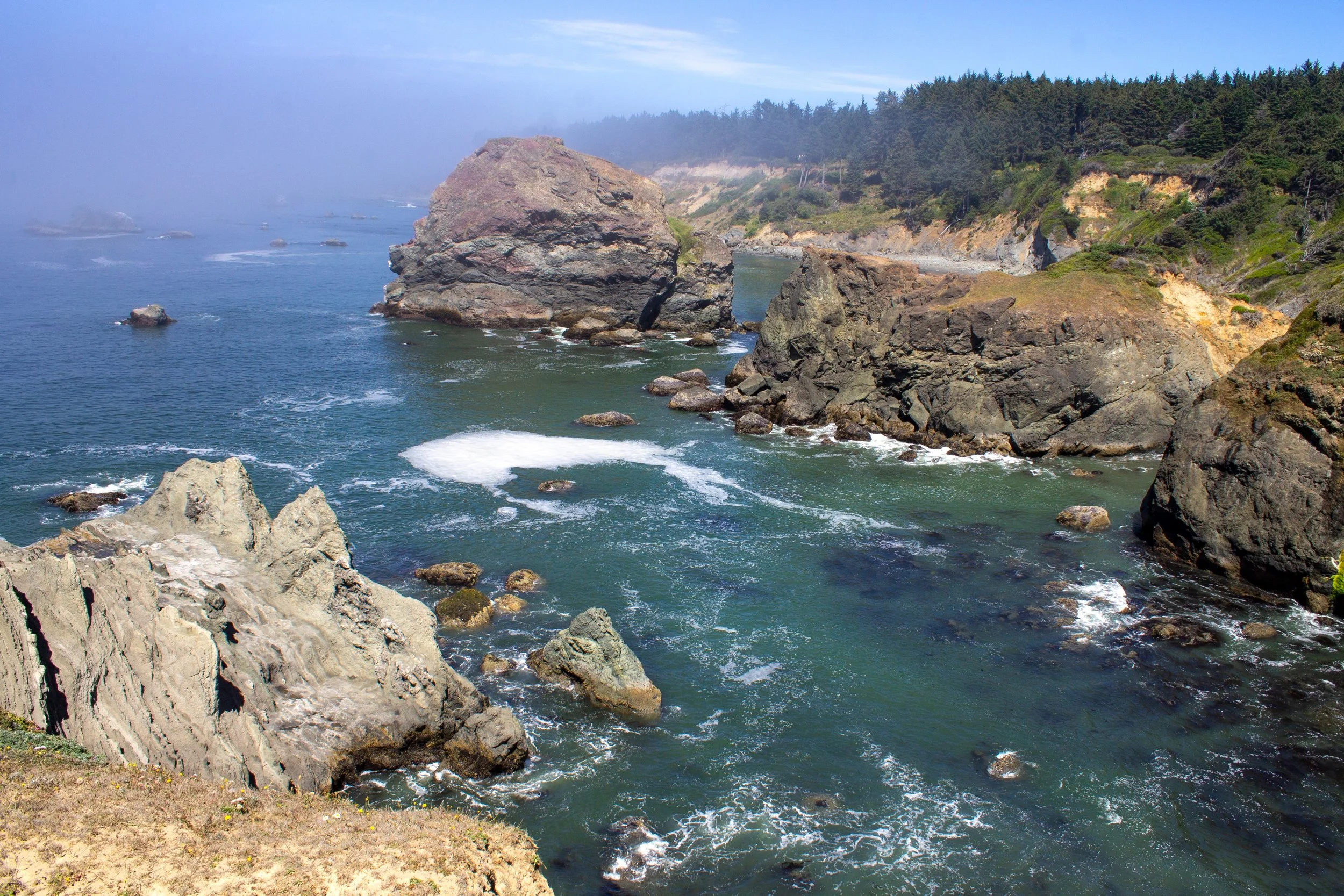
Bring on the rain, the rattlesnakes, and the lumpy motel mattresses. Sunburns and poison oak are all part of the fun. It’s the full parking lots I can’t handle. Because I plan most of my trips around avoiding the crowds, I love finding places where it doesn’t matter. Go ahead and show up at 12:05 PM on a Saturday in August. Or whenever. At these overlooked destinations in Oregon, it won’t be a problem.
1. Fort Rock
Pass required: None
Hiking: Optional
Amenities: Restroom and picnic area
Season: Any, best in spring and fall.
Location: Central Oregon
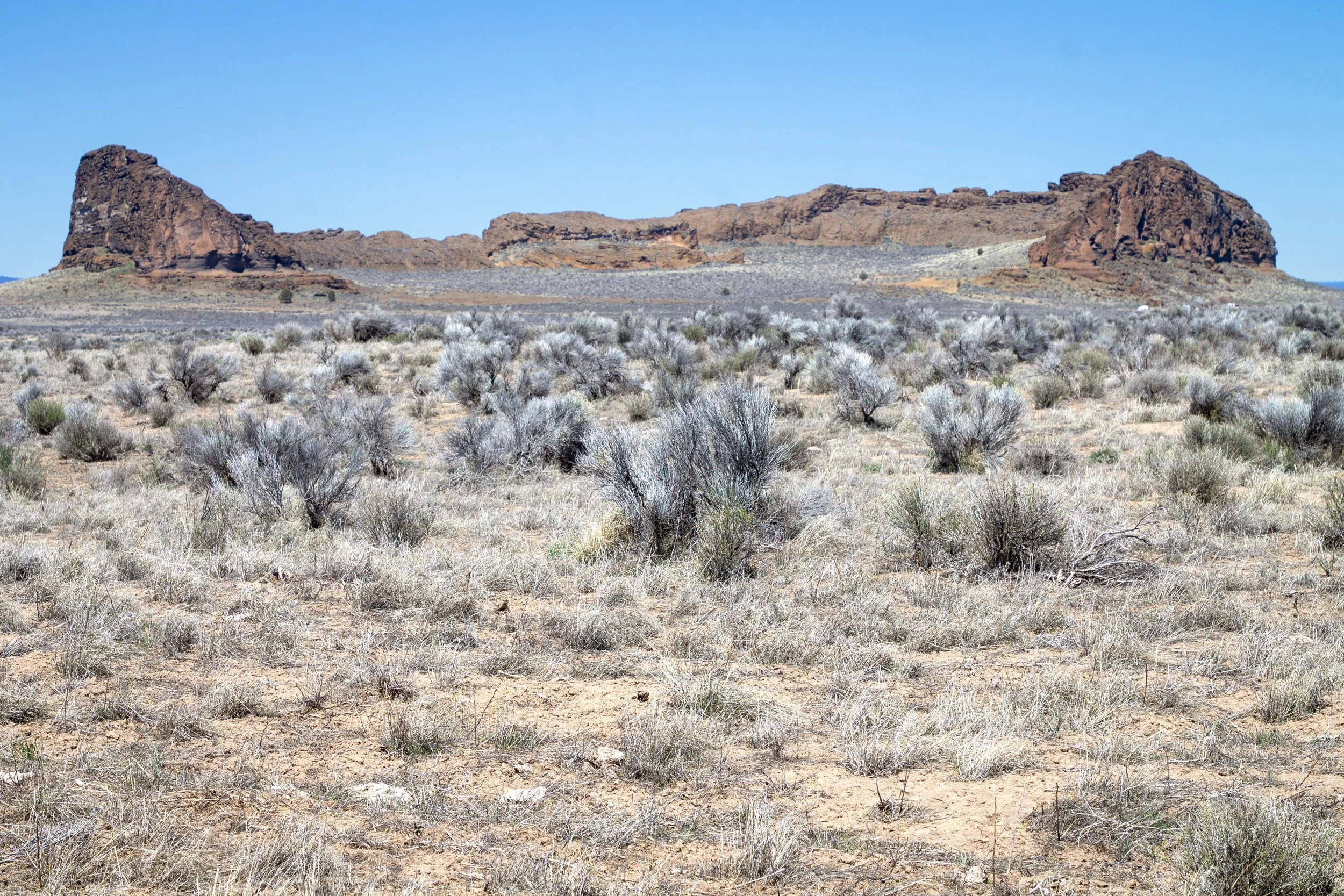
After driving through miles of unbroken flatness, Fort Rock is as surprising as a thunderclap. The enormous, crescent-shaped rock formation is the remains of an extinct volcano. Around 50,000 years ago, glassy lava erupted into what was then a lakebed and hardened into a ring. Today, the craggy cliffs are prime lizard habitat and nesting sites for raptors. Human visitors are more scarce. Despite being only an hour south of Bend, Fort Rock is one of Oregon’s least visited state parks. If you’re trying to avoid the masses at Smith Rock, it’s a great alternative. You’ll see it long before you arrive, but the best way to appreciate the scale is to take the 1-mile trail around the interior.
Learn more about Fort Rock.
2. Otter Point State Recreation Site
Pass required: None
Hiking: 0.4+ miles
Amenities: None
Season: Any
Location: Southern Oregon Coast, near Gold Beach
Hazards: Unfenced cliffs
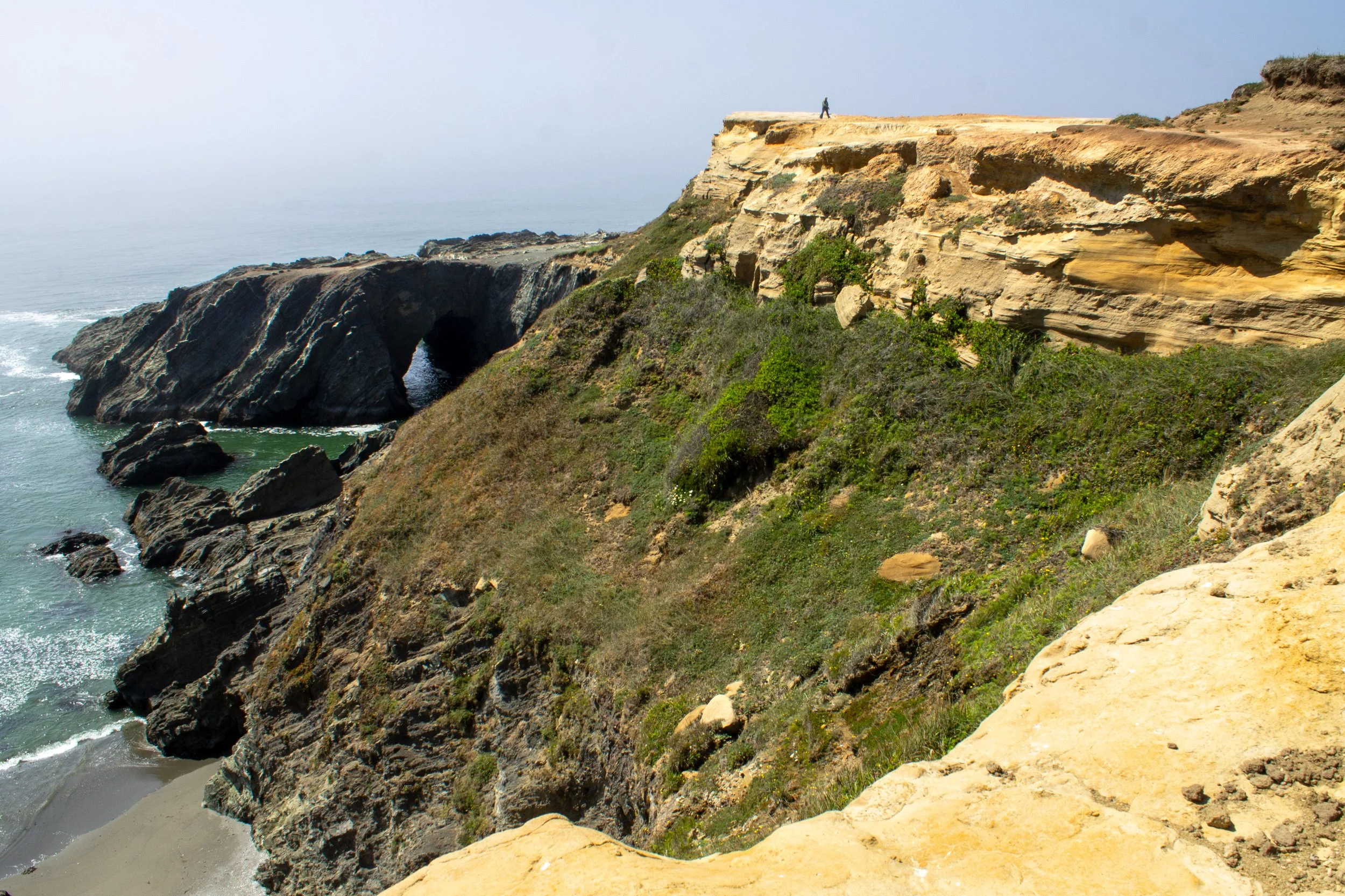
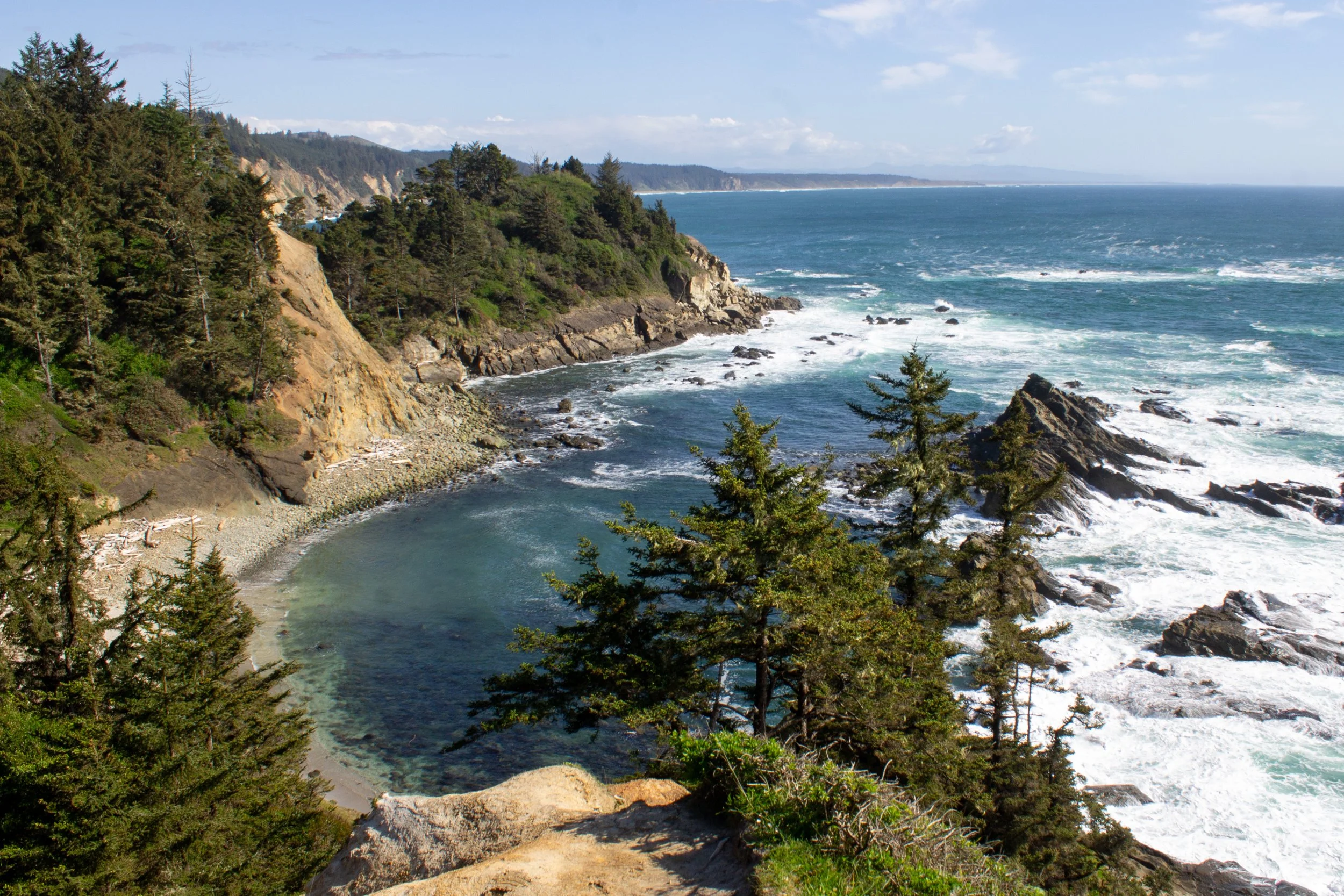
Otter Point has world-class views and no name recognition. The 5-hour drive time from Portland and absence of signage help keep it obscure. Still, the same could be said about Secret Beach, one of the most visited beaches on the southern Oregon Coast. It’s hard to say why this one’s stayed under the radar, but I suspect the name is part of the reason. It’s easily confused with the better-known Otter Rock and Otter Crest. And there are no otters. Whatever the reason, it isn’t the scenery. A short trail leads to the end of the Otter Point peninsula, where the views extend from Cape Blanco to northern California on clear days. Explore with caution, especially with kids. Otter Point has unstable cliffs and no fences. North of Otter Point is a little cove called Agate Beach. To the south is long and sandy Bailey Beach.
Learn more about Otter Point.
3. Hell’s Canyon and Hat Point
Pass required: None
Hiking: Optional
Amenities: Vault toilets and picnic tables at Hat Point.
Season: July through October
Location: Northeastern Oregon
Hazards: The road to Hat Point is narrow and close to drop-offs.
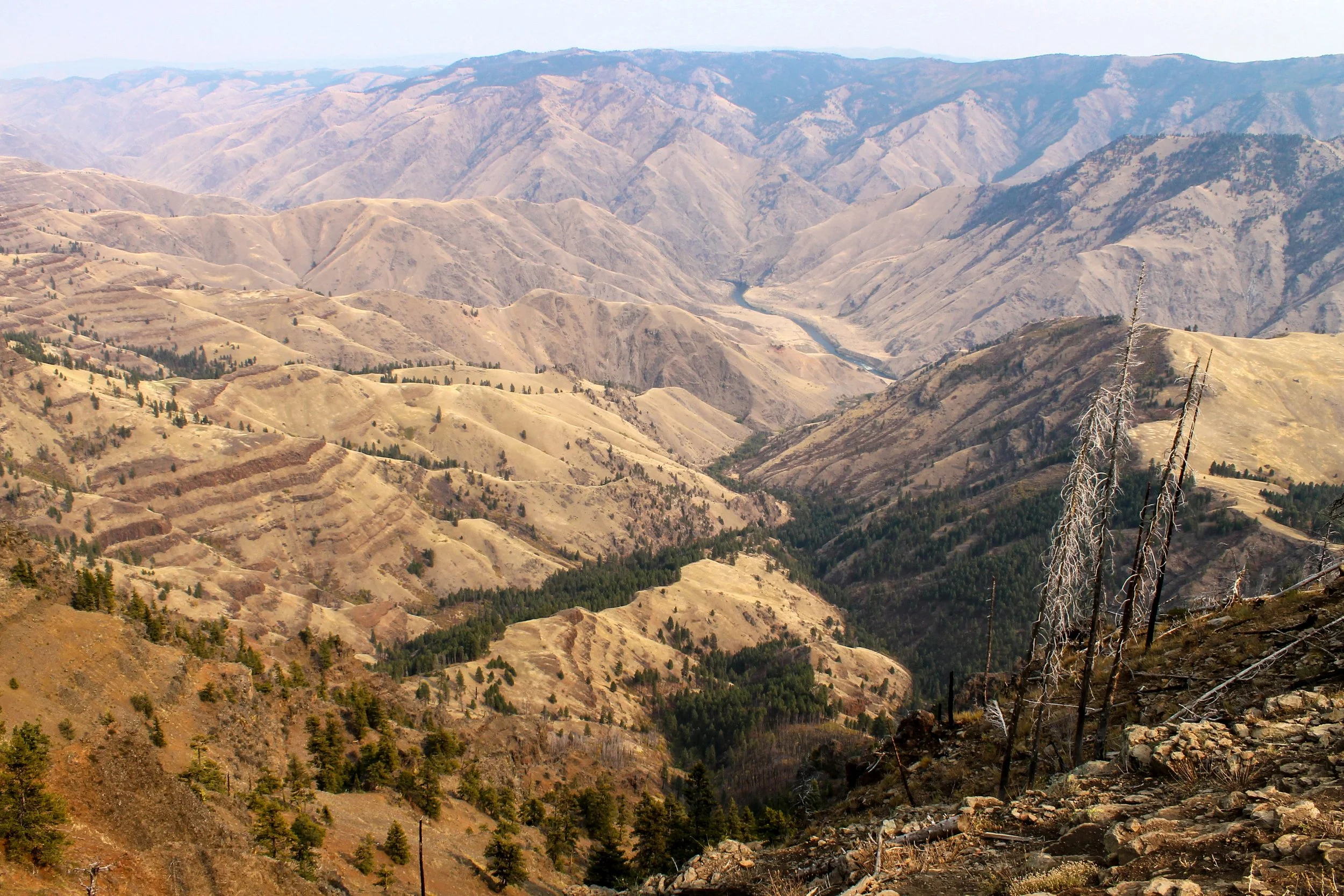
Hell’s Canyon could easily be a national park. With a scale and majesty to rival the Grand Canyon, it has the kind of scenery you need to see to believe. Its remote location and lack of development keep it off the radar of most travelers. If I left Portland now, it would take me seven hours to drive there. The canyon’s massive size might also limit the crowds. Hell’s Canyon spans a vast area across northeastern Oregon and extends into Idaho, making it hard to know which destination to put in your GPS. A good choice is the Hat Point Overlook. After a long and somewhat harrowing drive to the top of Hat Point, you’ll reach incredible panoramic views of Hell’s Canyon, the Snake River, and the Seven Devils Range.
4. Salt Creek Falls
Pass required: NW Forest Pass or America the Beautiful Pass
Hiking: Optional
Amenities: Restrooms and picnic tables
Season: Late spring through fall to avoid the snow
Location: 75 minutes southeast of Eugene
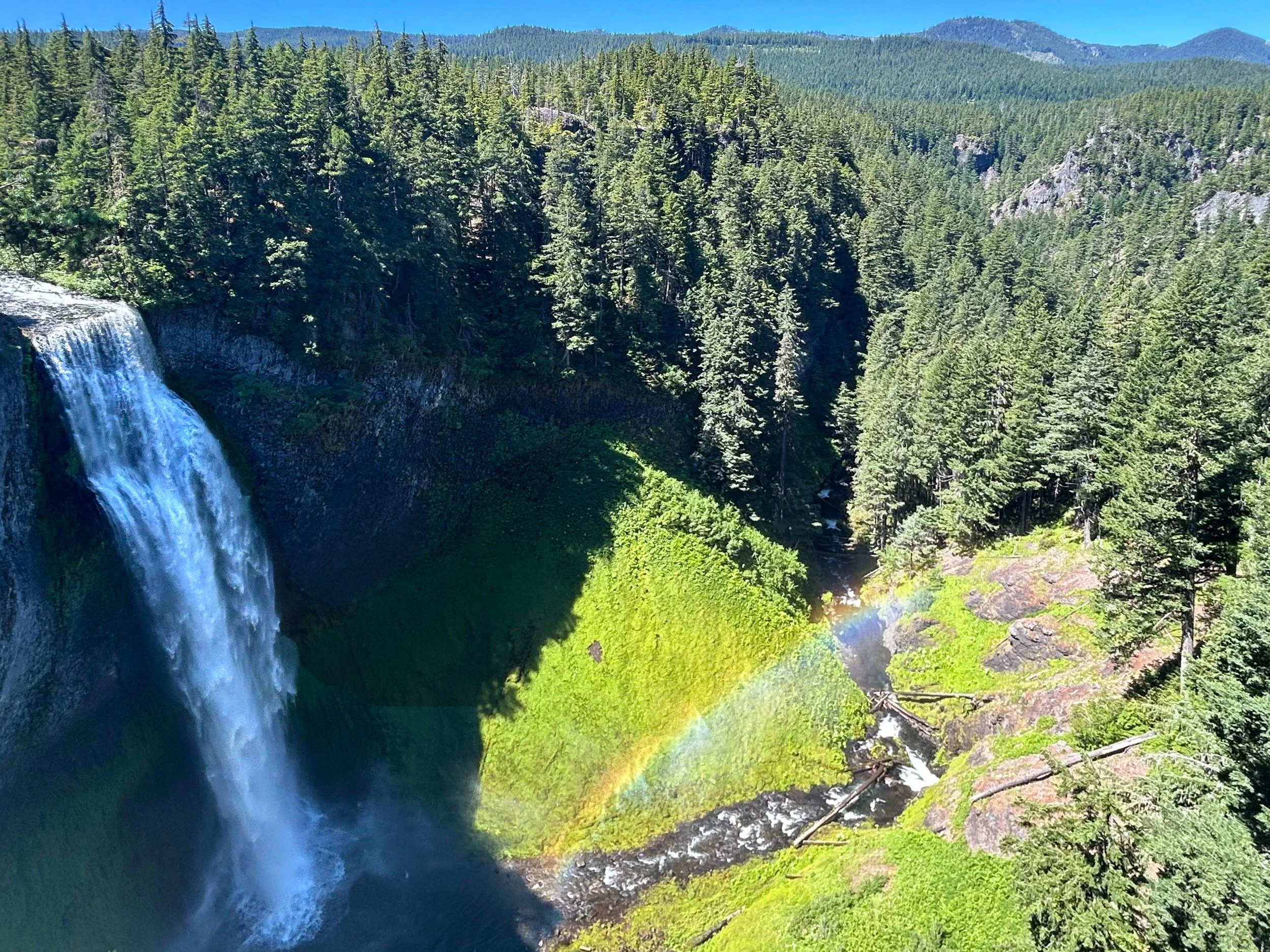
Salt Creek Falls is not, as it’s often called, the second-tallest waterfall in Oregon. Second most impressive? Yep, I’d buy that. The roaring waterfall plunges 286 feet over a basalt cliff into a glacially carved canyon. At its base, electric green moss blankets a forest clearing. Although one of the most popular destinations on this list, the parking lot is large, and I had no trouble finding a spot on a beautiful summer Saturday. The best views of Salt Creek Falls are from the wheelchair-accessible observation platform near the parking lot. It’s fenced and kid-friendly. For a short hike, you can take the quarter-mile trail to a viewpoint near the base of the falls, or make a longer trek to stunning Diamond Creek Falls (4 miles) or Vivian Lake (8 miles).
Learn more about visiting Salt Creek Falls.
5. Painted Hills
Pass required: None
Hiking: Optional
Amenities: Restrooms and picnic tables
Season: All year
Location: Central Oregon
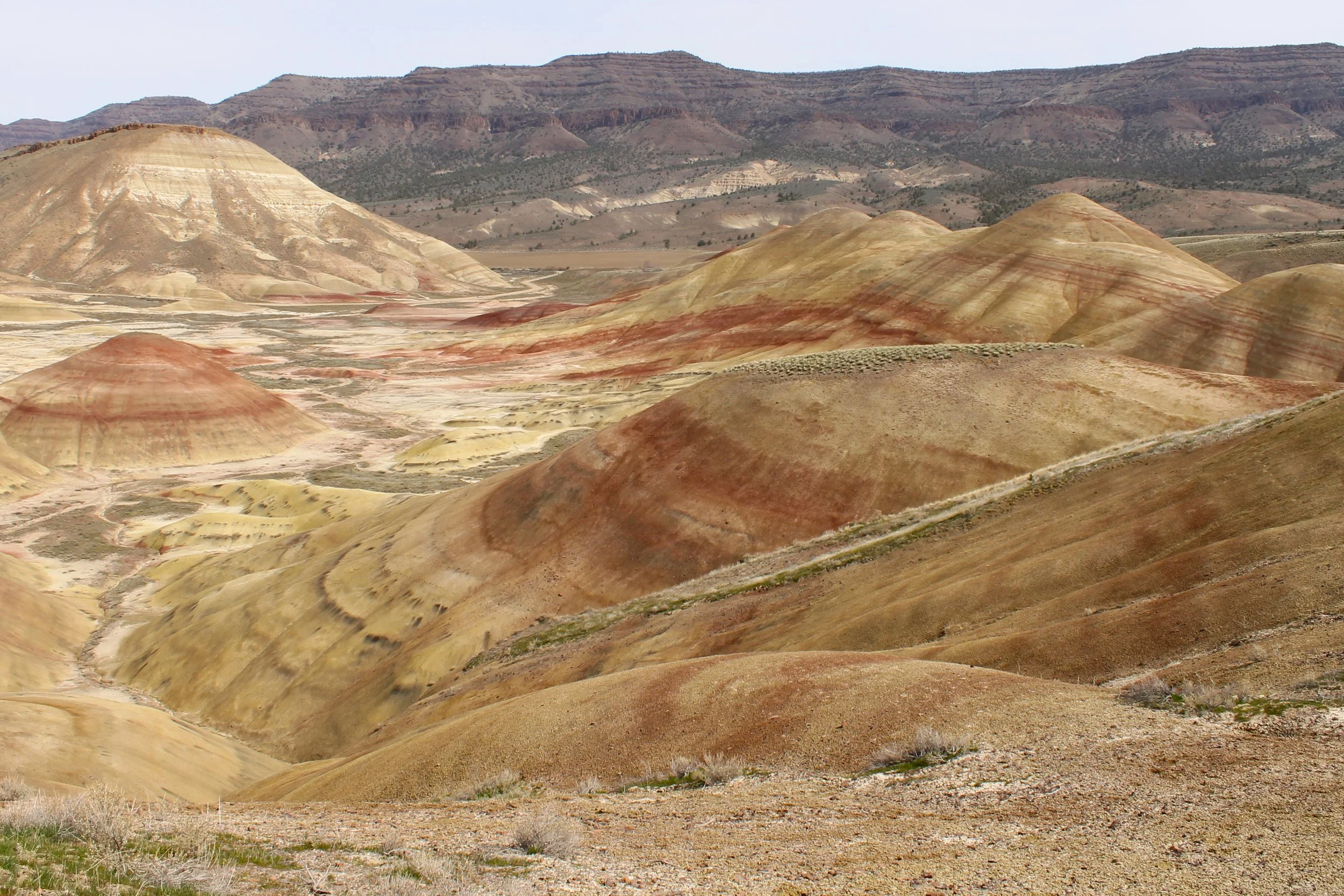
John Day Fossil Beds National Monument has three areas, called “units,” in Central Oregon. None are crowded, not even the Painted Hills, one of the 7 Wonders of Oregon. This otherworldly landscape looks like the surface of Mars. Fossilized soil layers in the hills are colorful and distinct, as though they’ve been painted on with a giant brush. A road through the park connects several points of interest. Each has a short hiking trail, most under half a mile long. All the stops are worth seeing, but I’d call the Painted Hills Overlook and the Painted Cove Trail the priorities.
Learn more about the Painted Hills.
6. Samuel Boardman Corridor
Pass required: None
Hiking: Optional
Amenities: At Arch Rock State Park, Whaleshead Beach, and Lone Ranch Beach.
Season: Any
Location: Southern Oregon Coast
Hazards: Stay on trails and away from cliffs.
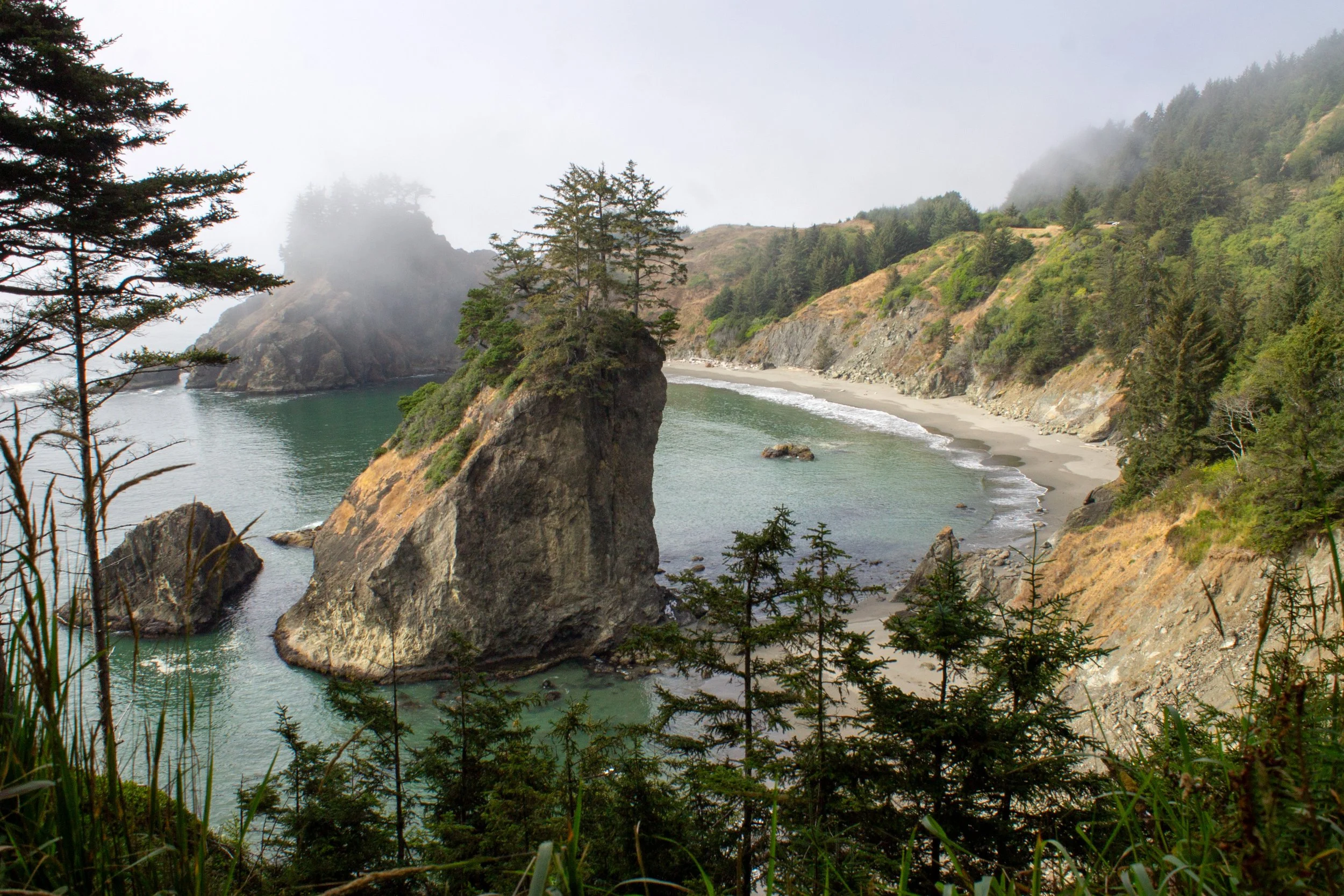
The Samuel Boardman Corridor is a 12-mile stretch of the Oregon Coast full of breathtaking viewpoints, beaches, and hiking trails. Except for Natural Bridges, I’ve never seen any of the parking lots full, even on summer weekends. My votes for the most underrated spots are Indian Sands and Lone Ranch Beach. The best chance of a deserted beach is China Beach, which, besides being obscure, is pretty darn hard to find. For a unique experience, check out a kayak tour of Secret Beach. Since development is minimal in the Samuel Boardman Corridor, it’s important to explore with caution. Have offline trail maps if you’re hiking. Stay back from unfenced cliffs, like those at Indian Sands. Don’t enter unsafe areas, like hiking onto the Natural Bridges.
Learn more about the Samuel Boardman Corridor.
7. White River Falls
Pass required: None
Hiking: Optional
Amenities: Restrooms and picnic tables. Reduced services in winter.
Season: Any. Park in front of the gate in the winter.
Location: 40 minutes south of The Dalles
Hazards: Drop-offs, river currents, rattlesnakes, and poison ivy.
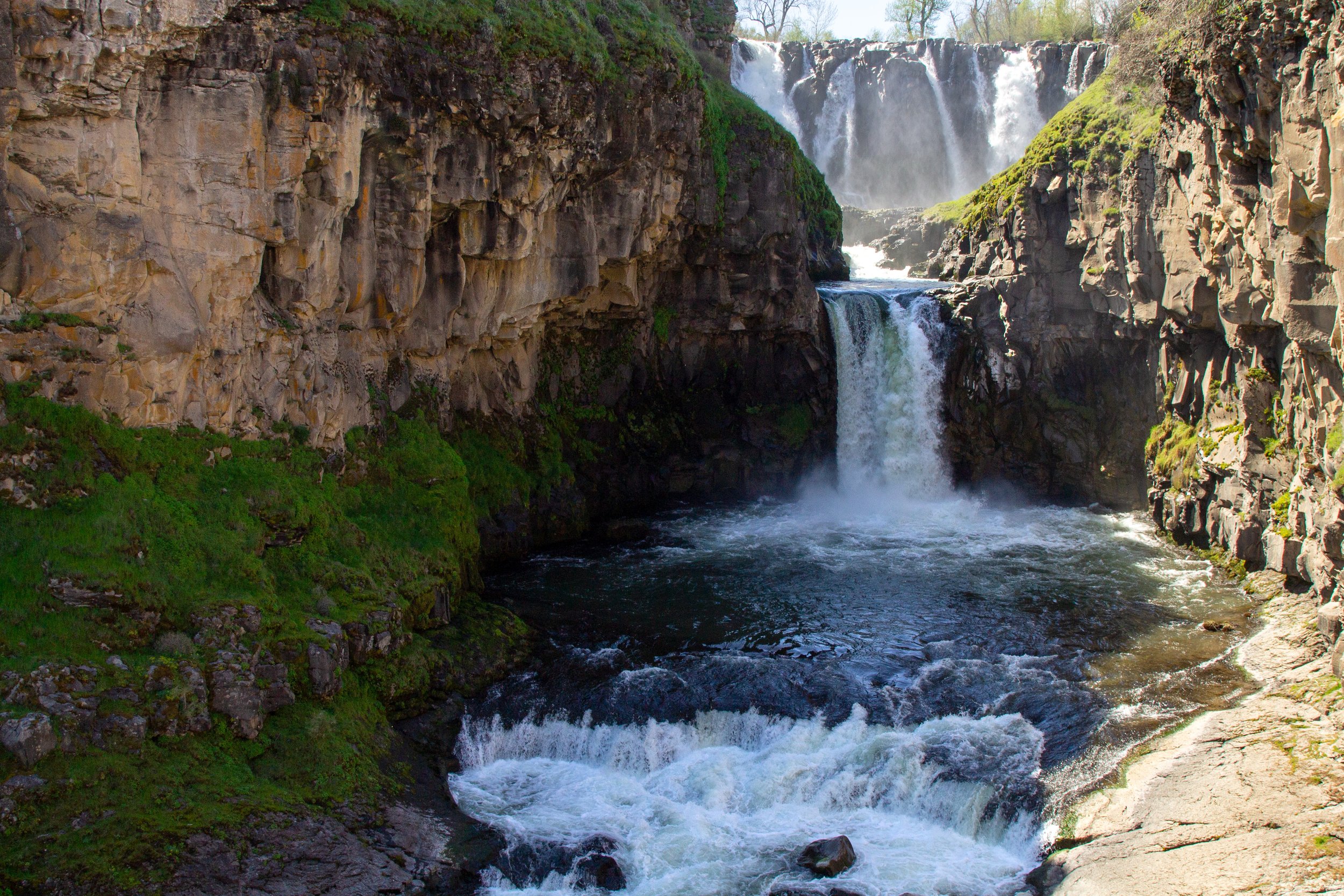
White River Falls is a long drive from pretty much anywhere. If you find yourself on Highway 197, it’s one of Oregon’s best road trip stops. Officially two side-by-side waterfalls, White River Falls and Celestial Falls look like two magnificent tiers tumbling down a dramatic canyon. The fenced, family-friendly viewpoint next to the mostly empty parking lot offers a great view of the upper falls. From here, a short but rugged trail leads down to the White River and an abandoned hydroelectric powerhouse. The views are great, but stick to dry land. The river currents make it unsafe for swimming. Most people stop here, but the trail continues another quarter mile or so along the White River.
Learn more about White River Falls State Park.
8. Rockaway Big Tree
Pass required: None
Hiking: 1.2 miles, wheelchair-accessible
Amenities: Port-a-potty at the trailhead. Picnic area on the trail.
Season: Any
Location: Rockaway Beach
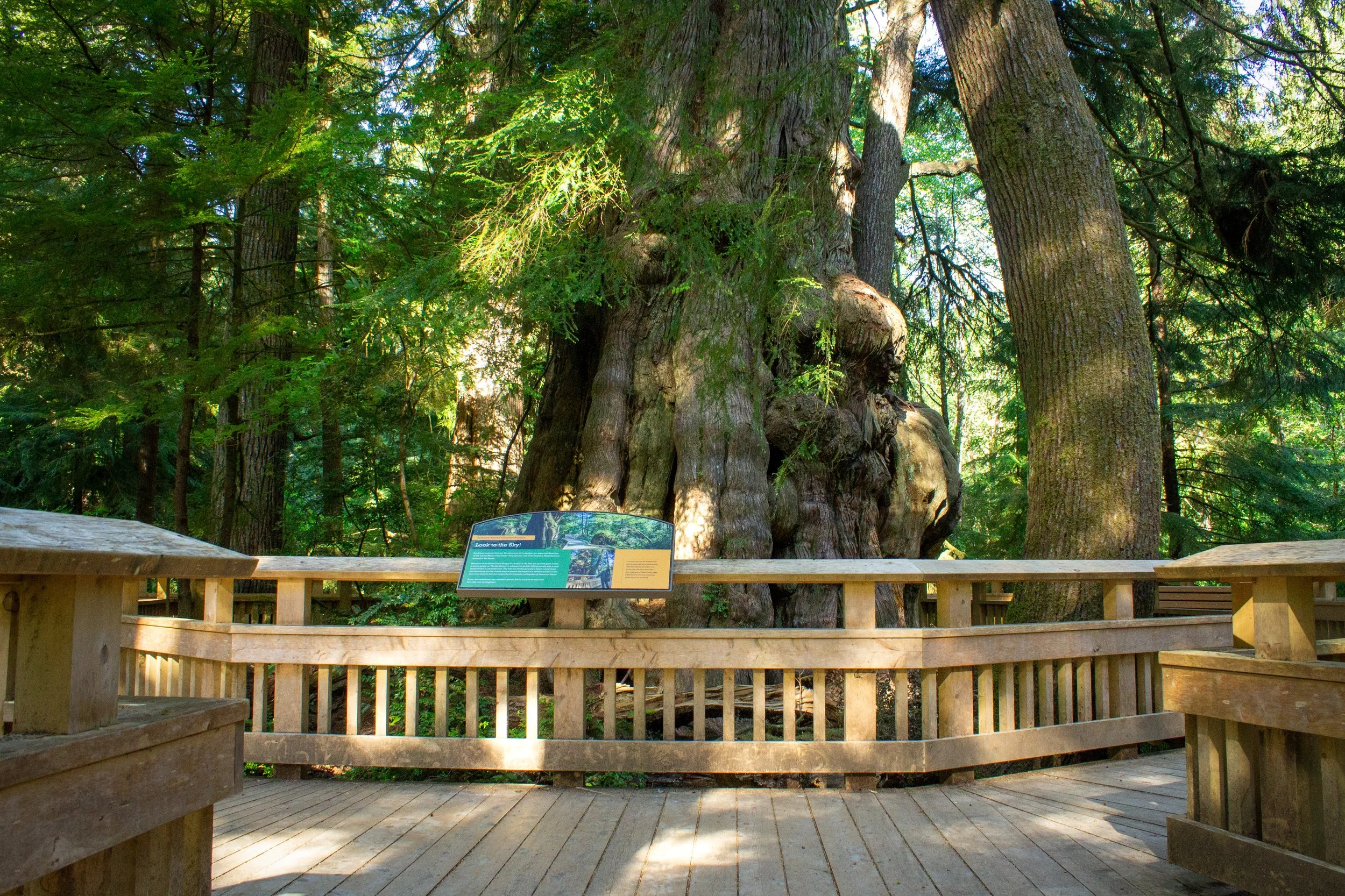
The Rockaway Big Tree Trail is one of the most underrated hikes on the northern Oregon Coast. Part of the draw is the trail itself. From start to finish, it’s a beautiful boardwalk made of yellow cedar. It takes you through a swampy coastal forest full of nurse stumps, songbirds, and giant skunk cabbage, all without ankle-deep mud or knobby tree roots. The hike ends at a magnificent finale, an observation deck around the Rockaway Big Tree. This 154-foot cedar is around 1,000 years old. It’s survived storms, logging, and, likely, at least one earthquake. After your hike, Rockaway Beach is only a few minutes down the road.
Learn more about the Rockaway Big Tree Trail.
9. Wallowas

Pass required: Check individual trailheads
Hiking: Optional
Amenities: Mostly minimal
Season: Late spring to early fall
Location: Northeastern Oregon
One of the 7 Wonders of Oregon, the Wallowa Mountains are so far east that they’re closer to Boise than Portland. From what I’ve seen, many more people think about visiting than make the journey. The tourist-friendly town of Joseph is a great home base for a trip. A stop at Arrowhead Chocolates is a must. The main draw, though, is the region’s natural beauty. Wallowa Lake reflects snow-capped peaks. Long rambling trails explore breathtaking alpine scenery. The most popular time to visit is in summer, when you can rent kayaks, play mini golf, and ride the Wallowa Lake Tramway to the top of Mount Howard. If you really want to avoid the crowds and are willing to risk an early snowfall, consider a fall visit. I went in October and saw maybe two other people in an average day of hiking.
10. Munson Creek Falls
Pass required: None
Hiking: 0.5 miles
Amenities: Port-a-potty
Season: Any
Location: Oregon Coast, near Tillamook
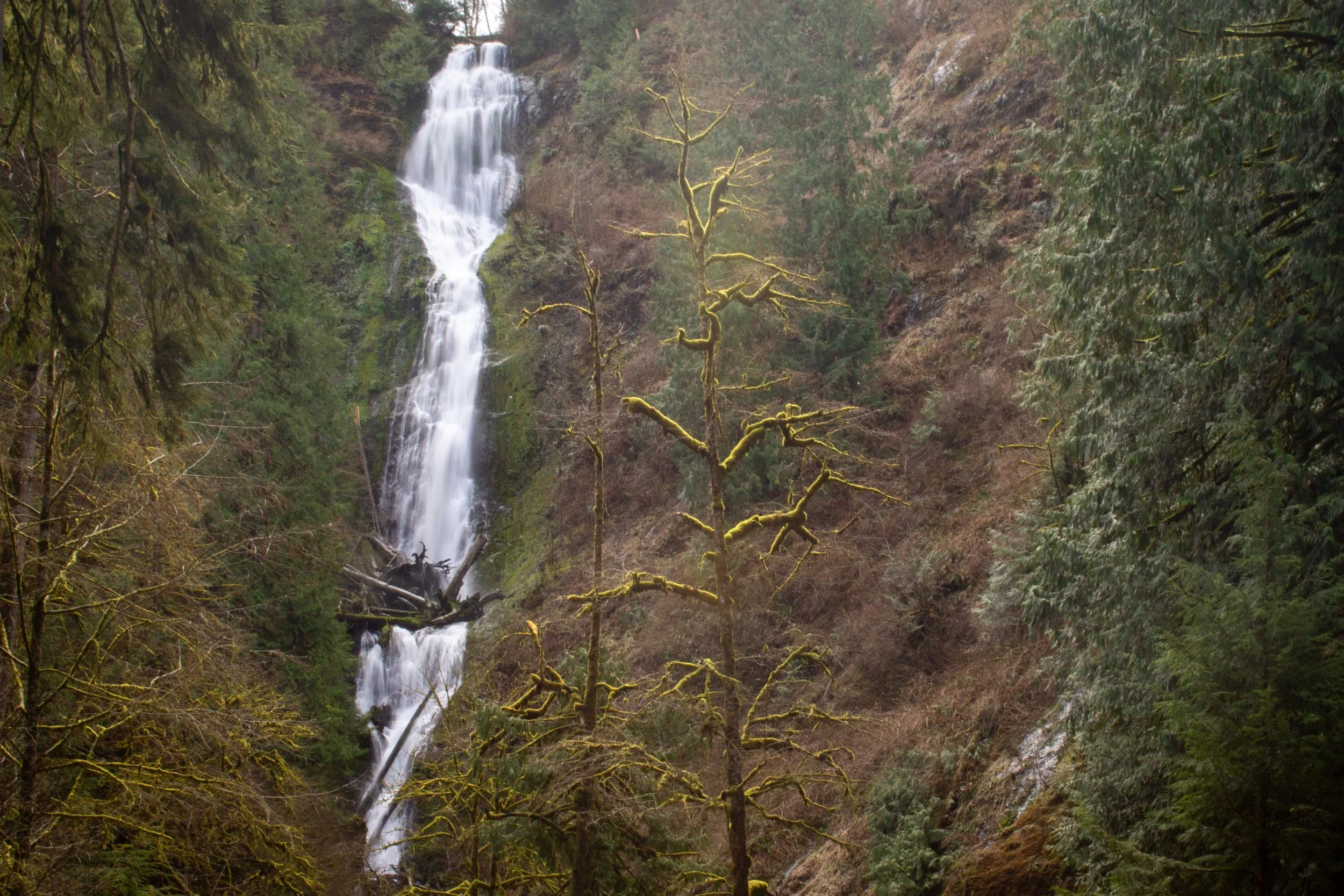
Except for the extremely popular Drift Creek Falls, waterfalls near the Oregon Coast tend to get less attention than they deserve. Munson Creek Falls is a perfect example. It’s a rare uncrowded gem within an easy day trip from Portland. At 319 feet, it’s the tallest waterfall in the Coast Range. The short, easy hike to the falls viewpoint follows Munson Creek through a mossy old-growth forest. Look for salmon spawning in late fall and winter. After a quarter mile, you’ll see Munson Creek Falls tumbling down a cliff in several tiers. I suspect part of what keeps it obscure is the viewpoint, which isn’t very close to the waterfall. While the scale is hard to capture in pictures, you’ll have no trouble appreciating it in person. After visiting, check out Sitka Sedge State Natural Area, an overlooked park on the Oregon Coast.
11. Cape Blanco
Pass required: Oregon State Park Pass
Hiking: Optional
Amenities: Restrooms, picnic tables, and a campground.
Season: Any
Location: Southern Oregon Coast
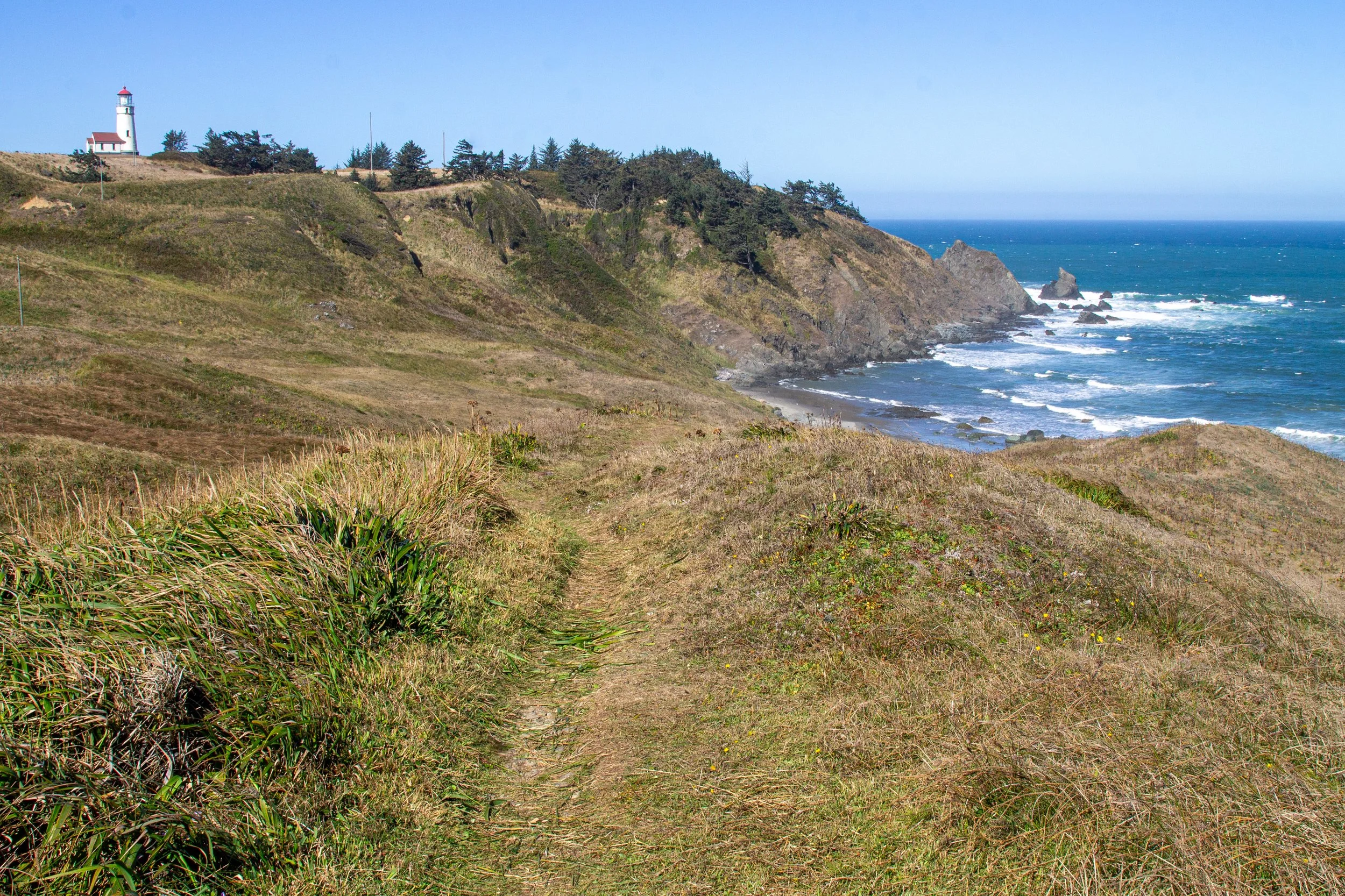
If you’re looking to stay at the Cape Blanco Campground, make a reservation. They fill up. For day use, go ahead and show up whenever. I’ve never had trouble with crowds. The weather is a different story. Cape Blanco is Oregon’s westernmost point. The majestic Cape Blanco Lighthouse stands at the end of a grassy peninsula. On beautiful days, it’s paradise. Other times, driving rain and gale-force winds have sent me straight back to my car. If you’re unlucky with the weather, touring the Hughes House is a welcome break from the rain. The beautifully preserved property was once the home of early dairy farmers.
Learn more about Cape Blanco State Park.
12. Chimney Rock
Pass required: None
Hiking: 2.6 miles
Amenities: Restrooms, picnic tables, and campground
Season: Best in spring and fall
Location: Central Oregon
Hazards: Watch for rattlesnakes. Stay on the trail to avoid drop-offs.
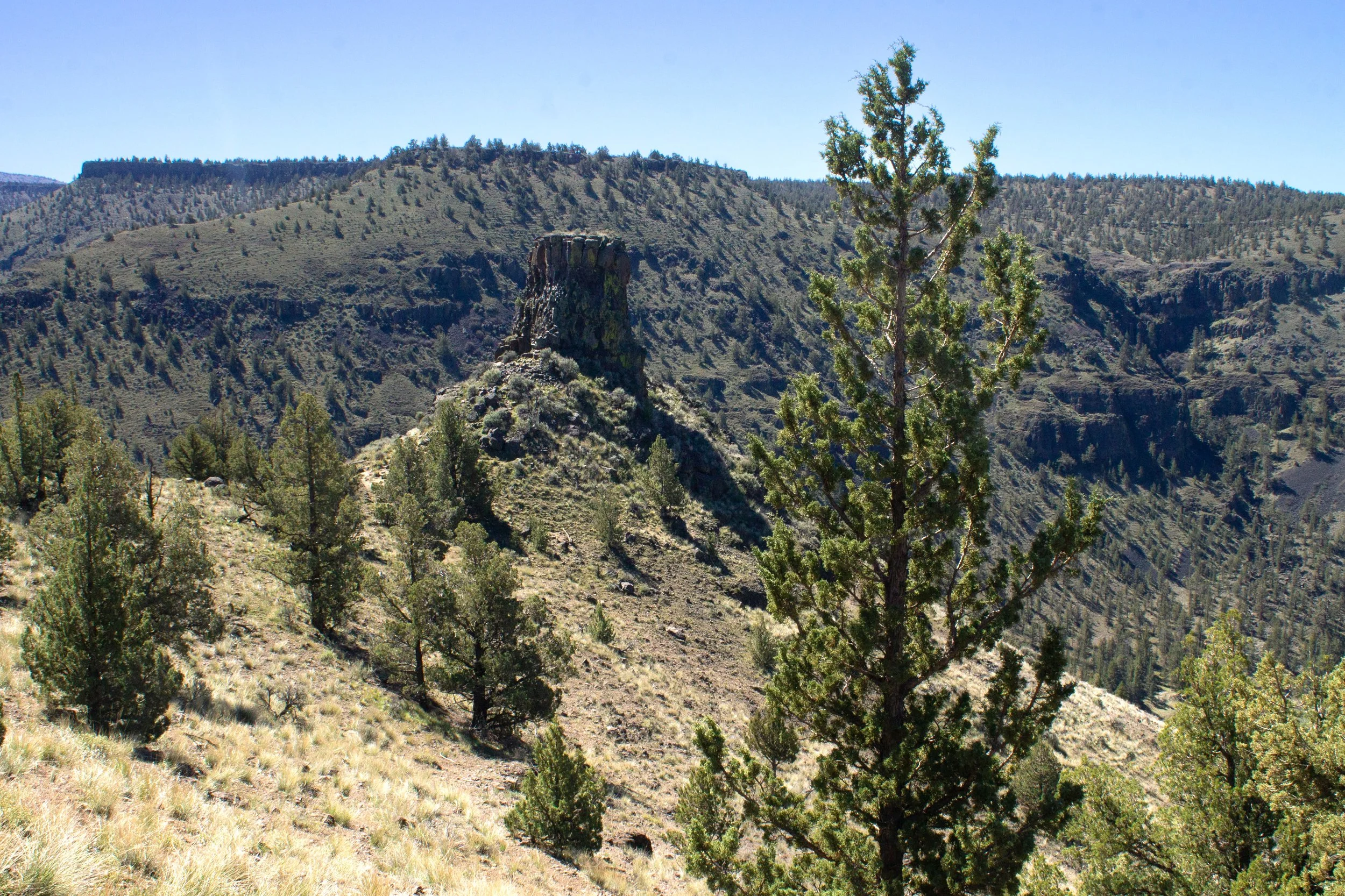
If you’re trying to avoid the crowds on the trails near Bend, one of my best tips is to drive east. I went to Chimney Rock after trying and failing to find a parking permit reservation anywhere in the Mount Jefferson Wilderness. It was no sad consolation prize. This overlooked gem offers spectacular Cascade Mountain vistas on the way to a basalt tower perched above the Crooked River Canyon. Junipers and sagebrush surround the trail. Butterflies flit between the wildflowers in spring and summer. Other hikers are few and far between. The trail is pretty easy and kid-friendly. Just keep your distance from the drop-offs towards the end. I’d also avoid visiting on hot summer days. The trail has no shade.
Learn more about visiting Chimney Rock.
13. Highway of Waterfalls
Pass required: Usually none
Hiking: Optional
Amenities: Rest areas and campgrounds
Season: Late spring through fall
Location: Southern Oregon, east of Roseburg
Hazards: This area includes land impacted by wildfires. Stay on the trails and respect any closures.
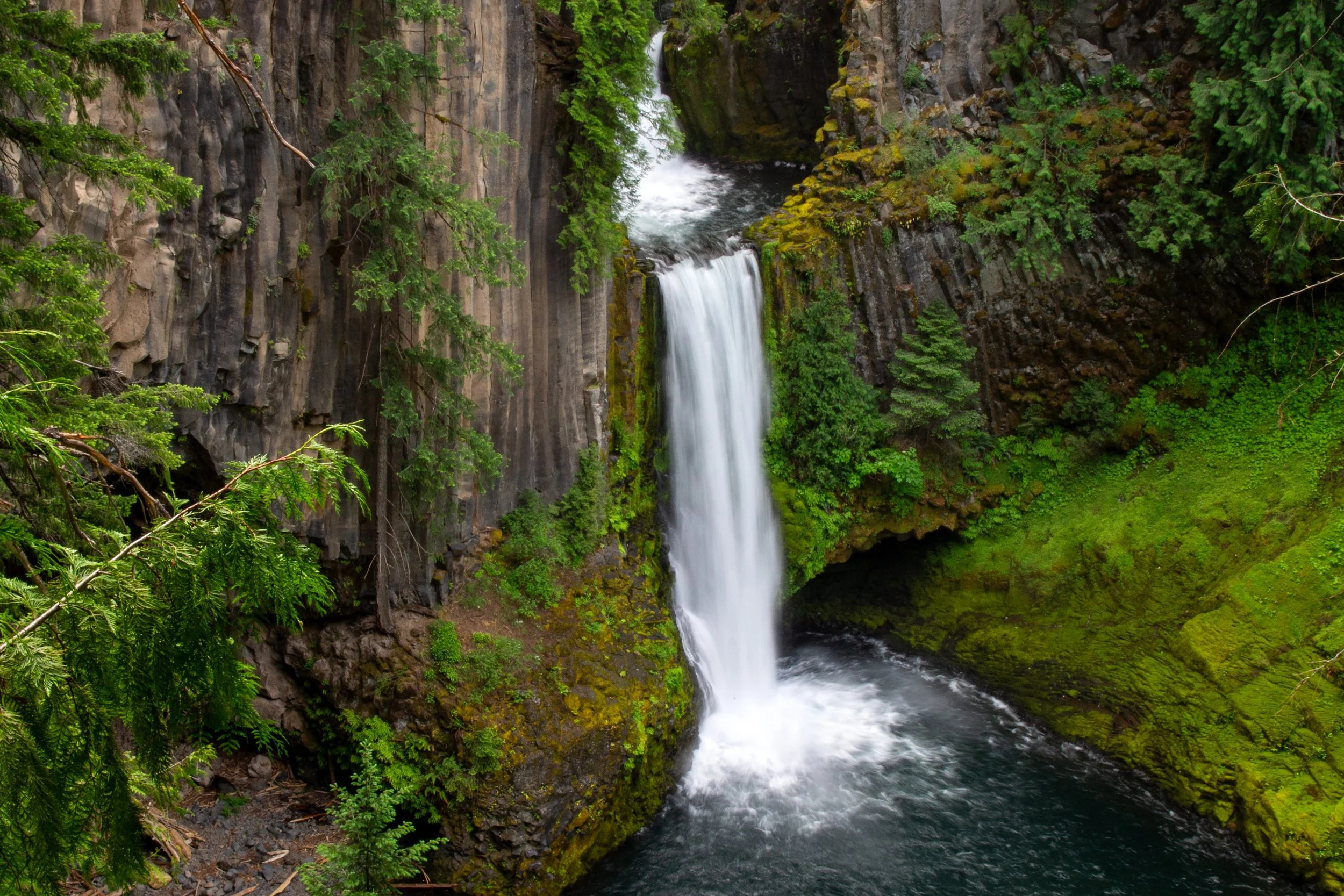
If you like the Columbia Gorge, chances are you’ll fall in love with southern Oregon’s Highway of Waterfalls. The stretch of Highway 138 between Roseburg and Crater Lake’s north entrance offers a similar waterfall density with fewer people and less development. Several of the waterfalls are quick and easy viewpoint stops. Most involve a little hiking, including the most impressive, Toketee Falls and Watson Falls. The most remote, like Lemolo Falls and Warm Springs Falls, require a detour from the highway and then some hiking. Have offline maps with you. Reception is limited to nonexistent. Parking is seldom competitive at any of the stops, except one. The Umpqua Hot Springs get crowded.
Learn more about the Highway of Waterfalls.
14. Jewell Meadows Wildlife Area
Pass required: ODFW Wildlife Area Permit. Buy one ahead of time.
Hiking: No
Amenities: Restroom and picnic tables
Season: Best from November to March.
Location: Jewell, northern Coast Range
Hazards: Keep your distance from the elk.
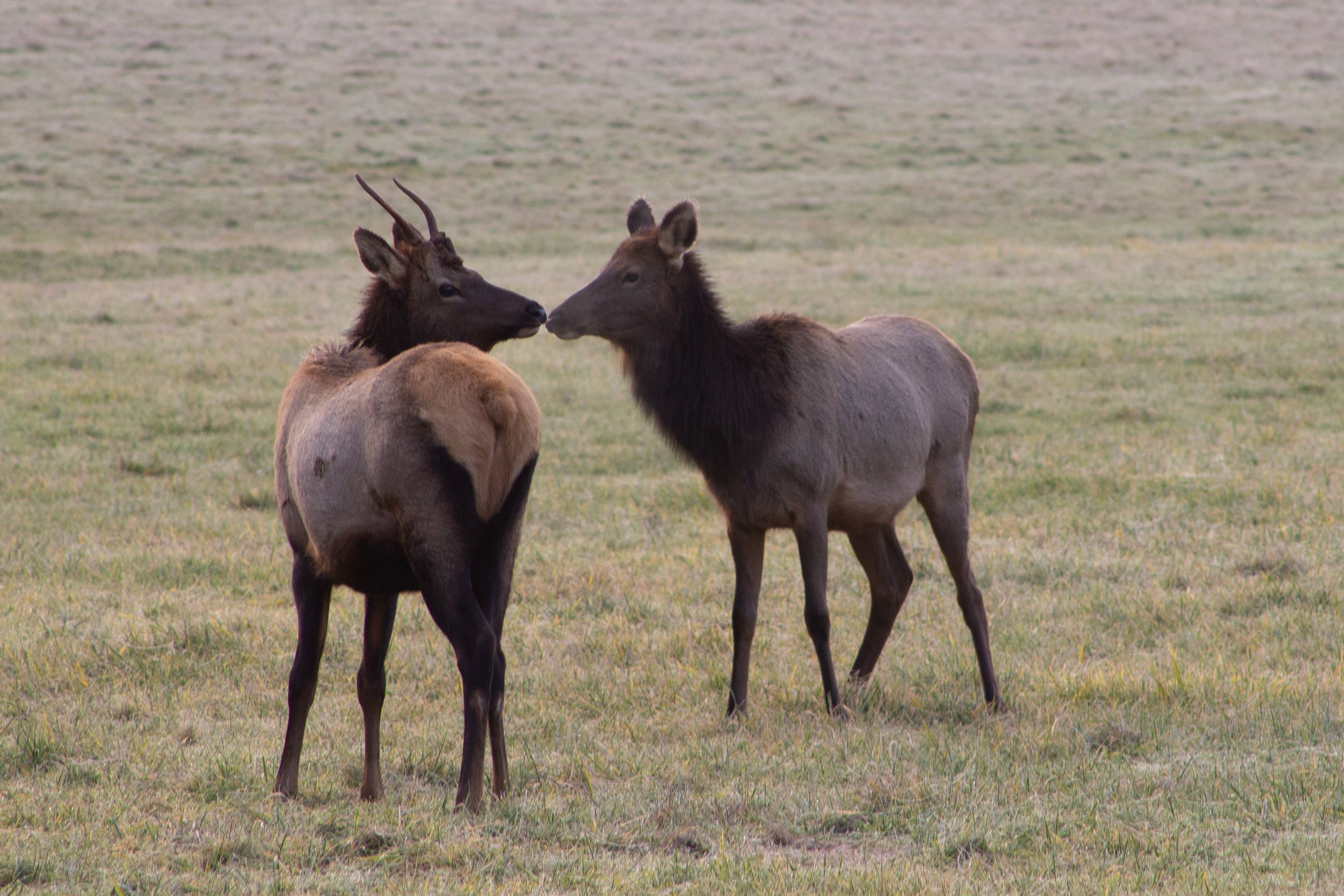
Wildlife watching is never a sure thing, but Jewell Meadows in the winter is an excellent bet for seeing wild elk. The Oregon Department of Fish and Wildlife runs a supplemental feeding program for them, increasing the appeal of habitat they already like. When I visited in December, I watched dozens of elk move from the forest to the meadows a little before dawn. They were still hanging out when I left in the early afternoon. On another visit in summer, not one elk. If you plan ahead and are very patient, you can get a reservation to join one of the elk feeding tours. They happen from December through February. Otherwise, just show up, drive down the road, and look for elk. You’ll pass several viewing areas where you can stop and park. Afterwards, check out Fishhawk Falls, a beautiful, obscure waterfall in a mossy forest only a few minutes away.
Learn more about Jewell Meadows Wildlife Area.
15. Dean Creek Elk Viewing Area
Pass required: None
Hiking: No
Amenities: Restrooms and viewing platforms
Season: Any
Location: Reedsport, southern Oregon Coast
Hazards: Keep your distance from the elk.
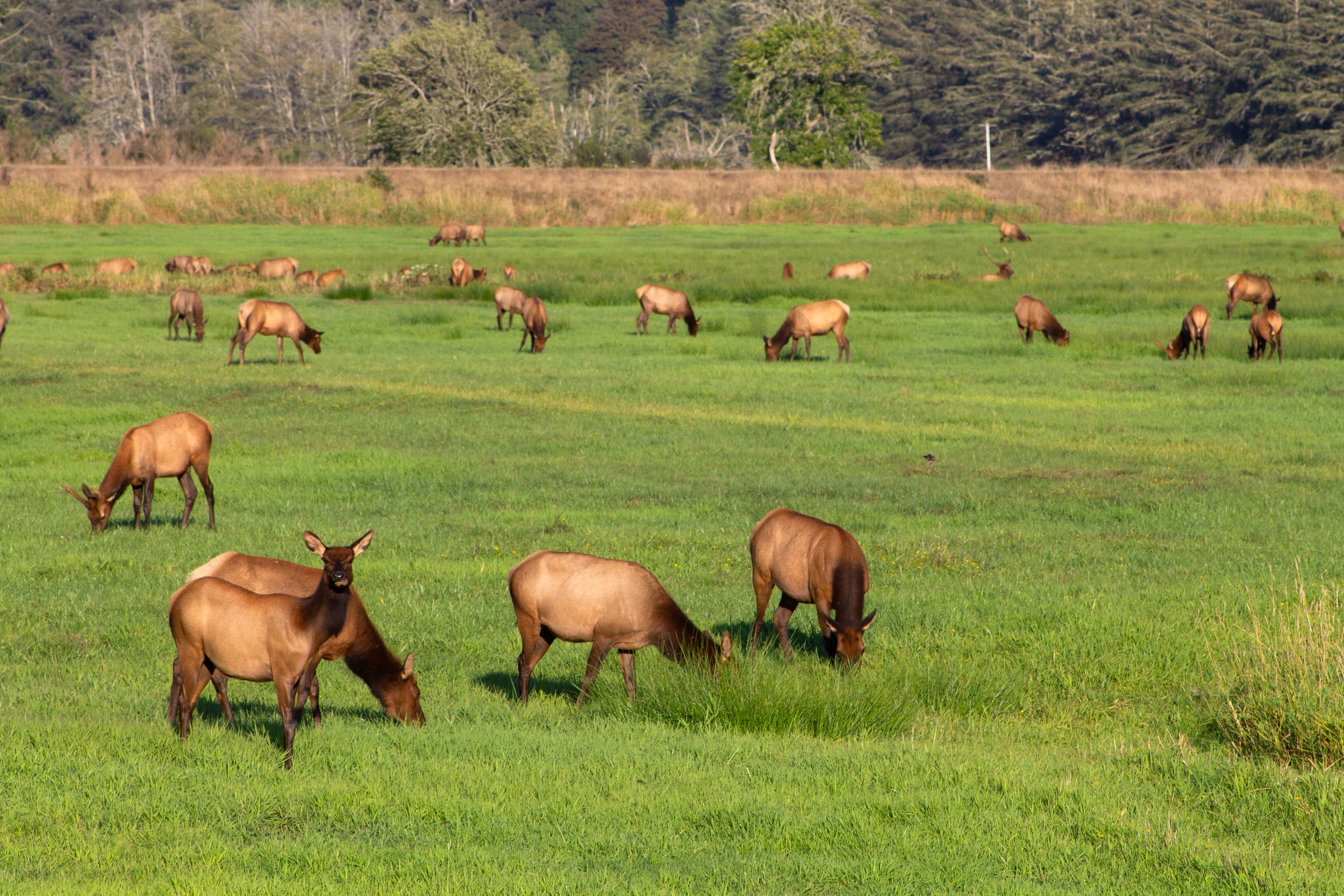
The Dean Creek Elk Viewing Area is one of the most reliable spots in Oregon to see elk. A herd lives in the area year-round and stops by the pastures most days. Fenced, wheelchair-accessible platforms provide safe vantage points to watch them graze. The timing of your visit can improve your odds of seeing them. Early morning and just before sunset are the best times to look. I’ve been a few times, but only saw a large herd once. It was in the evening. If the elk aren’t around, it’s a lot less interesting, but you might spot other wildlife, like ducks, geese, songbirds, beavers, and river otters.
16. Neskowin Ghost Forest
Pass required: None
Hiking: No
Amenities: Restrooms
Season: Any, best at low tide
Location: Northern Oregon Coast
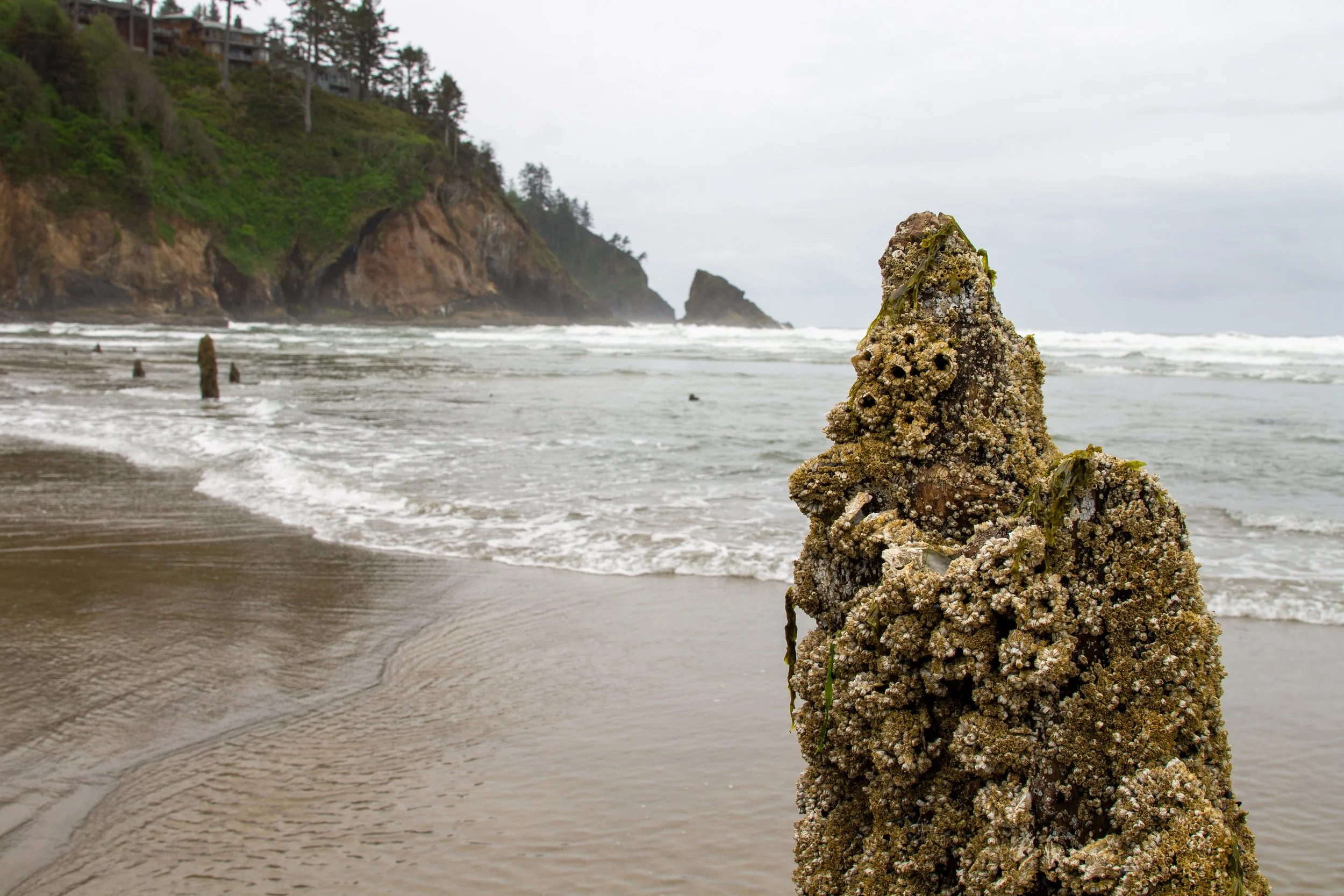
Unlike most destinations on this list, Neskowin is pretty famous. Even though many Oregonians know and love it, I’ve never seen it crowded. The sleepy town between Pacific City and Lincoln City feels like a world away from either. Proposal Rock is a picture-perfect centerpiece for the secluded beach. The Ghost Forest makes it unlike anywhere else on the Oregon Coast. Dozens of barnacle-encrusted, 2,000-year-old Sitka spruce stumps are visible on the beach at low to medium tides. They’re the remains of an ancient forest. Encroaching sand buried the trees long ago, preserving the stumps until winter storms unearthed them in the 1990s. They won’t last forever. Until then, go and be haunted.
Learn more about the Neskowin Ghost Forest.
17. Sisters Rock State Park
Pass required: None
Hiking: 1 mile
Amenities: None
Season: Any
Location: Southern Oregon Coast
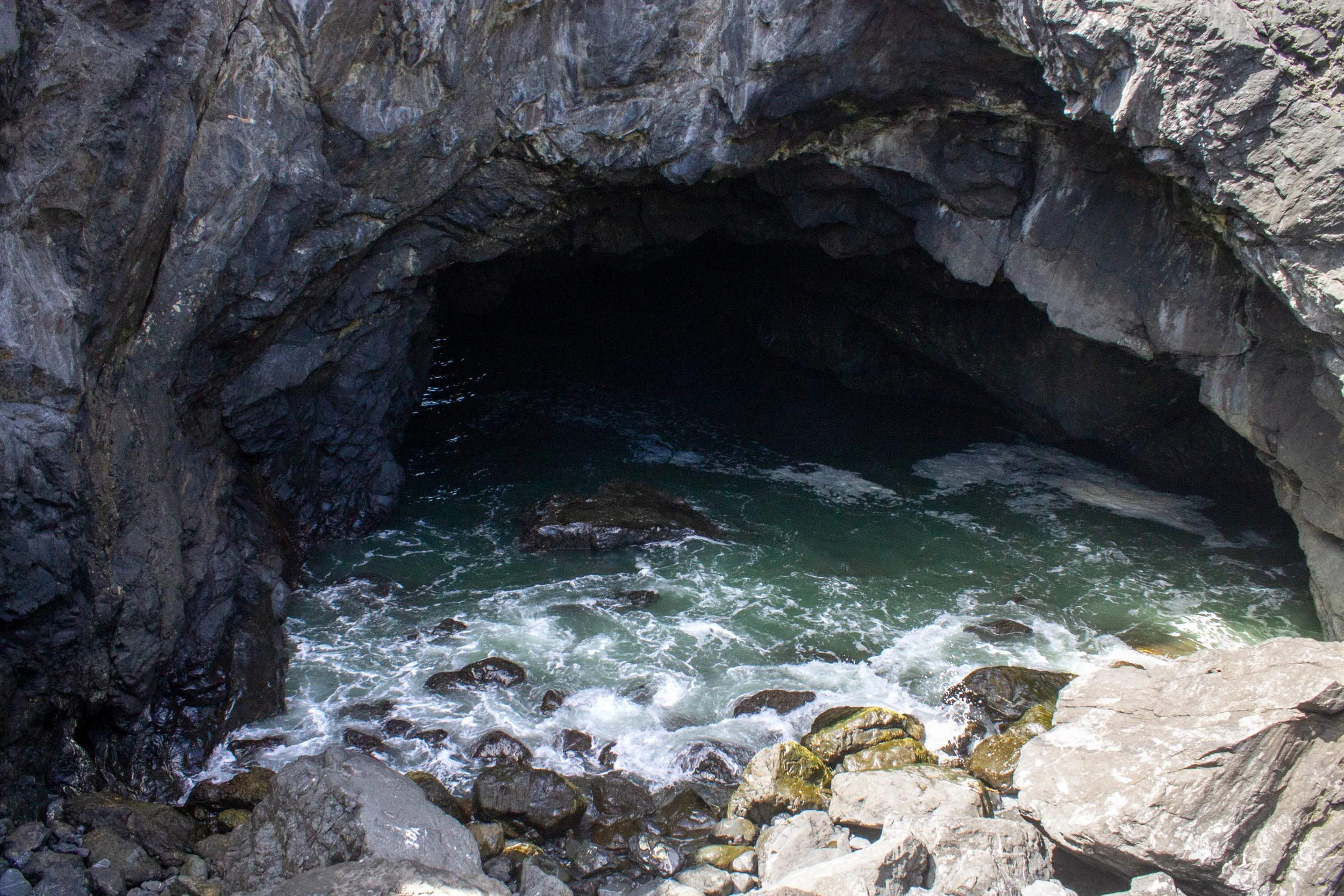
Most people traveling between Port Orford and Gold Beach drive past Sisters Rock State Park without stopping. The low-profile signage and parking make it easy to do. If you do pull over, wonders abound. An easy, half-mile trail leads from Highway 101 to two towering monoliths at the end of a peninsula. Another is just offshore, the third Sister. The ocean views extend for miles in three directions. To the north are Humbug Mountain and Cape Blanco. To the south is Frankport Beach, where a shipping dock once stood. The park’s highlight is hidden inside the largest Sister: a giant sea cave. Follow the trail up to a ledge where you can look down and watch ocean waves lap against the rocks.
Learn more about Sisters Rock State Park.
18. McDowell Creek County Park
Pass required: None
Hiking: 1.6 miles
Amenities: Vault toilets and picnic tables
Season: Any, but may get icy in the winter
Location: Cascade foothills
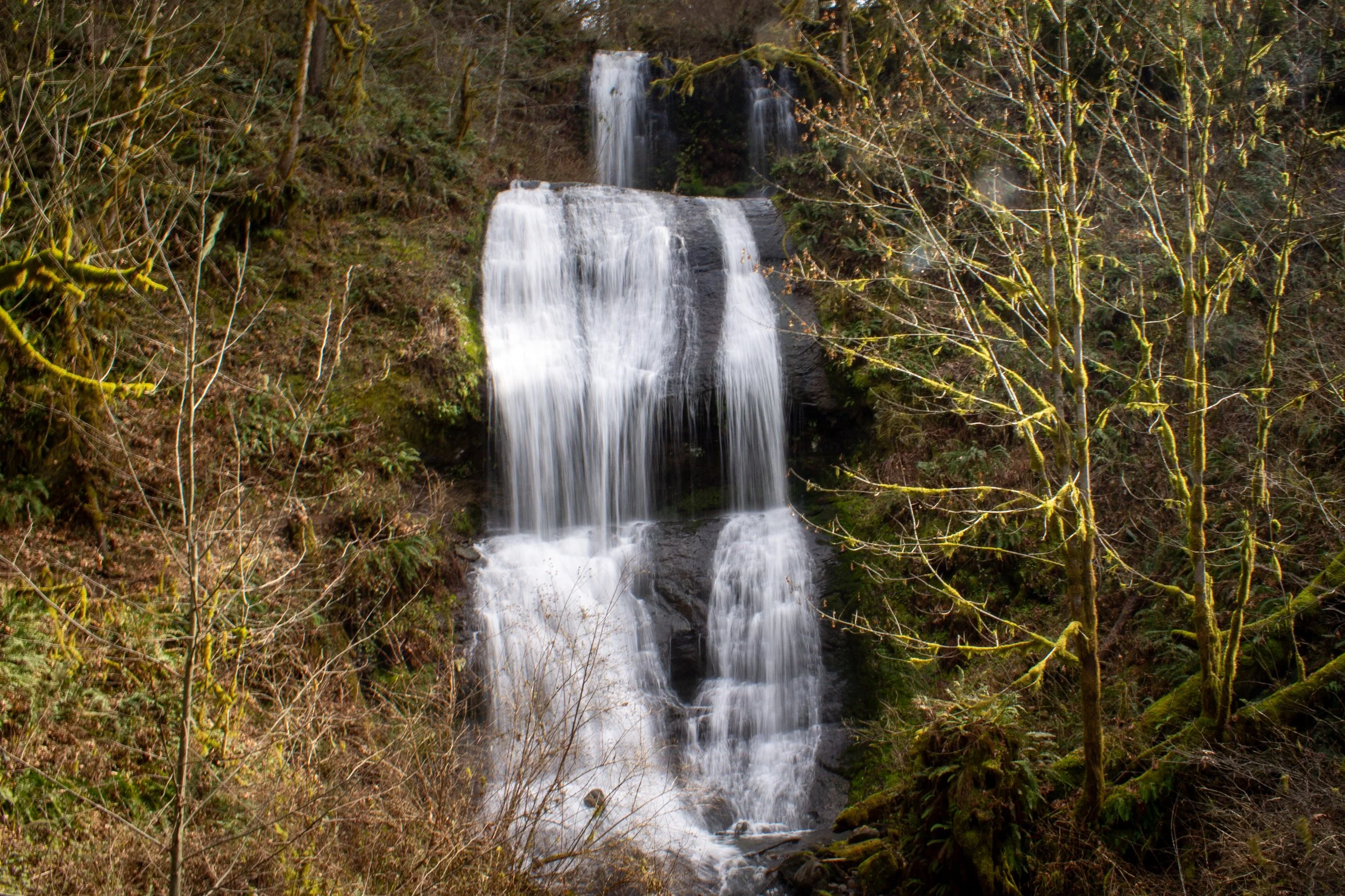
McDowell Creek Falls County Park has spectacular waterfalls along a short loop hike. Royal Terrace Falls is one of the most unusual in Oregon, dropping down three rounded tiers like a giant staircase. Majestic Falls plunges 40 feet over a mossy cliff. Between the waterfalls is a forest wonderland of cascading creeks and moss-blanketed maple branches. Full disclosure, I’ve never visited on a hot summer weekend when it’s likely to be most crowded. On a beautiful spring day, traffic on the trail was light and parking ample. The park has several lots, which help meet demand.
Learn more about McDowell Creek Falls County Park.
19. Neptune State Scenic Viewpoint
Pass required: None
Hiking: Optional
Amenities: Vault toilets and picnic tables
Season: Any, best at low tide
Location: Central Oregon Coast
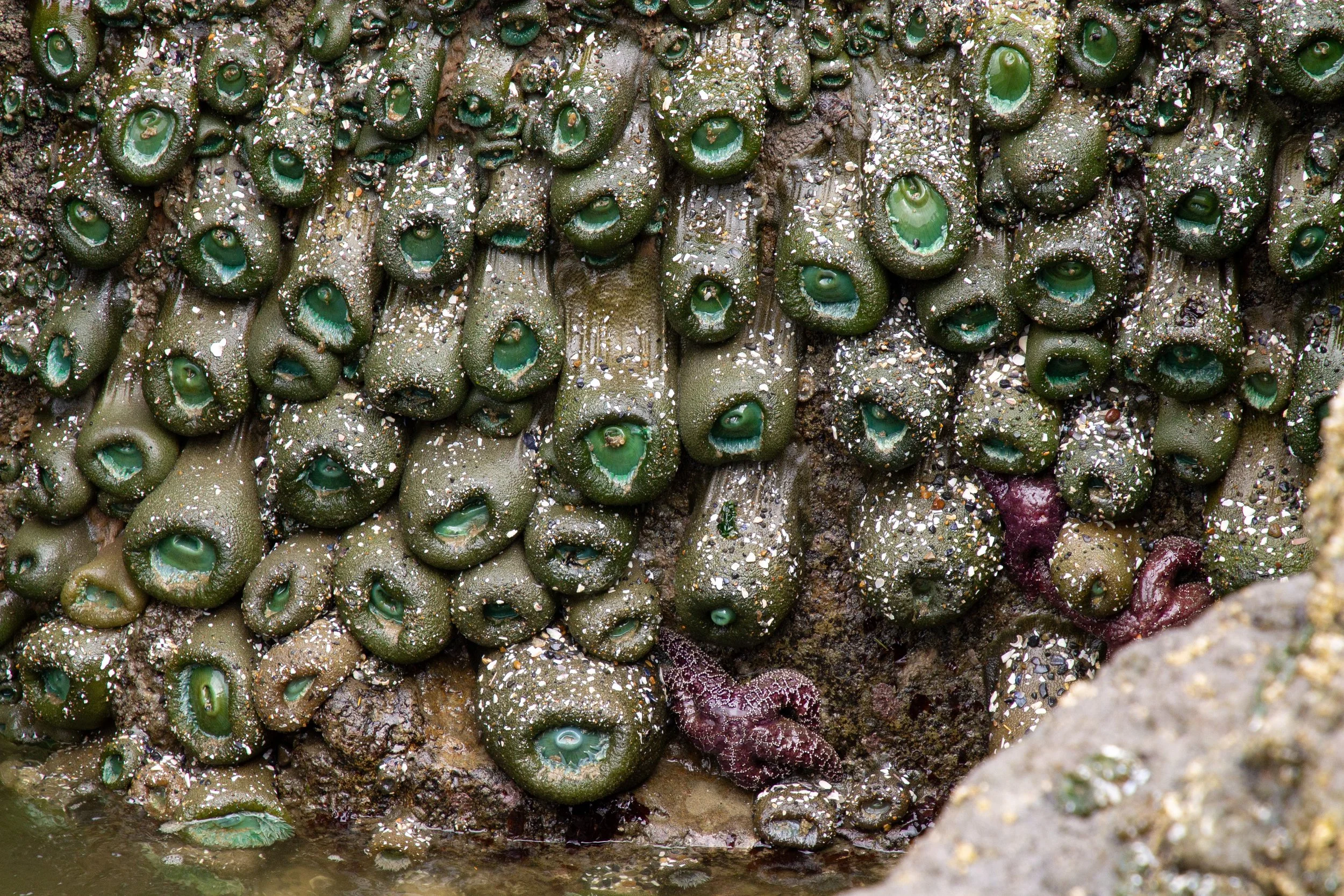
Given the popularity of Cape Perpetua, it’s surprising how few people stop to explore the coastline two minutes down the road. Neptune State Scenic Viewpoint isn’t so much a viewpoint as four separate parks: Neptune North, Neptune South, Strawberry Hill, and Bob Creek. Each has a small parking area. Two of them fill up during busy times: Bob Creek because of its rockhounding reputation, and Strawberry Hill because of frequent harbor seal sightings. The other two, I’ve never seen get even close to crowded. All four have a rugged beauty reminiscent of Cape Perpetua. Low tide reveals a magical world of intertidal life covering the rocky shore, including some of the droopiest anemones you’ll find anywhere.
Learn more about Neptune State Scenic Viewpoint.
20. Cottonwood Canyon
Pass required: None
Hiking: Optional
Amenities: Restrooms, picnic tables, and campground
Season: Any, best in spring and fall
Location: Central Oregon
Hazards: Watch for rattlesnakes and ticks. Carry water.
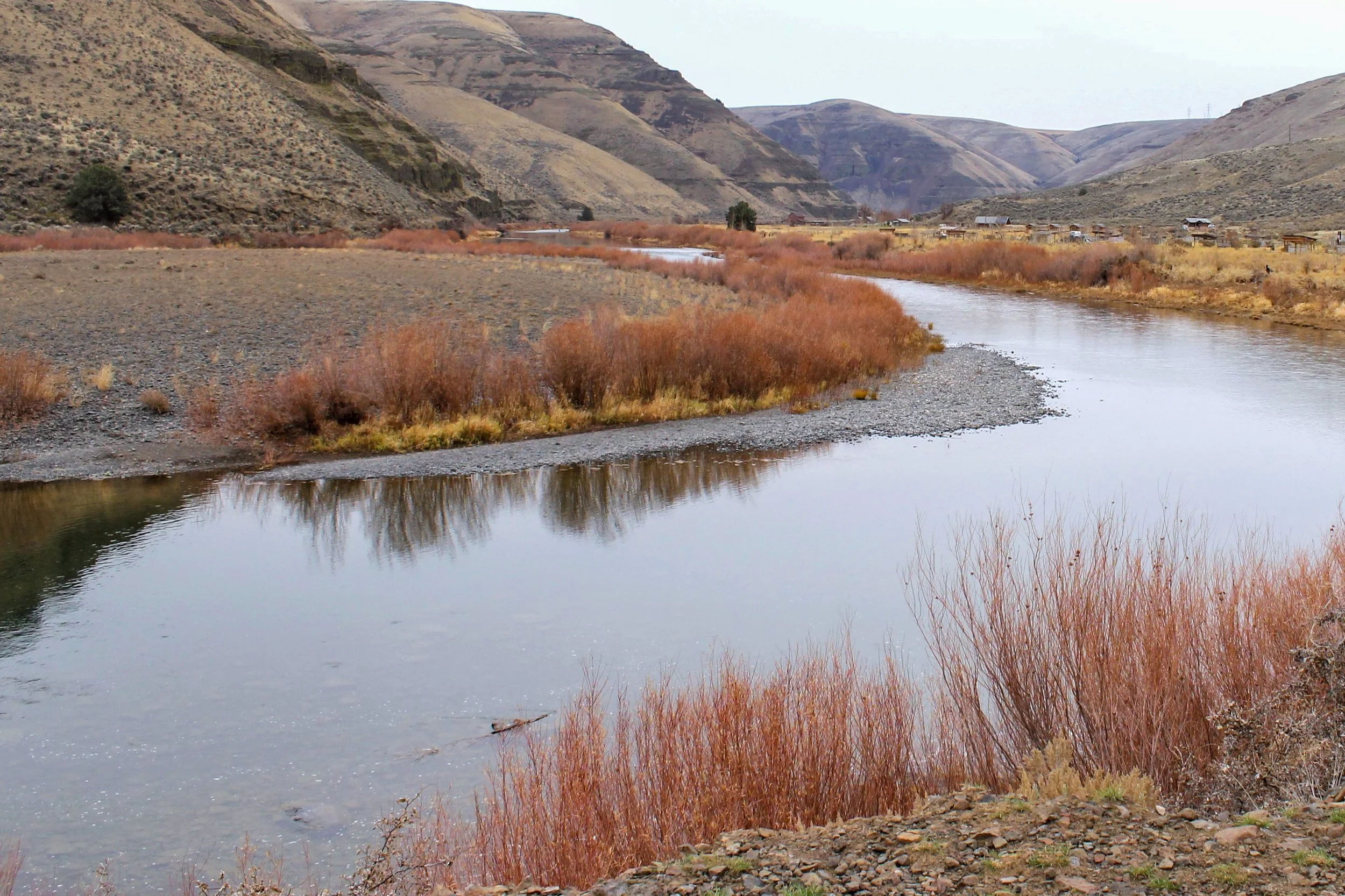
Cottonwood Canyon is one of Oregon’s least-visited state parks. At first glance, the scale is a little overwhelming. Covering 8,000 acres, this park is all about wide open spaces. The focal point is the campground next to the John Day River. From here, rugged trails follow the river through rolling hills of grasslands and basalt cliffs. Look for wildflowers in April and May. At night, stargazing becomes the main event. Cottonwood Canyon is a certified International Dark Sky Park. On a daytime winter visit, I saw zero other hikers in several hours. Bring offline maps, snacks, and water. Tell someone where you’re going. It doesn’t take long to leave civilization behind.
Uncrowded marvels in Oregon, the summary:
Fort Rock
Otter Point State Recreation Site
Hell’s Canyon and Hat Point
Salt Creek Falls
Painted Hills
Samuel Boardman Corridor
White River Falls
Rockaway Big Tree
Wallowa Mountains
Munson Creek Falls
Cape Blanco
Chimney Rock
Highway of Waterfalls
Jewell Meadows Wildlife Area
Dean Creek Elk Viewing Area
Neskowin Ghost Forest
Sisters Rock State Park
McDowell Creek County Park
Neptune State Scenic Viewpoint
Cottonwood Canyon
Enjoy Oregon’s hidden gems!
With love,
Emma
Explore nearby

Visit the secret beaches of the Oregon Coast.
Find the best weekend trips from Portland.